What To Do After Car Accident Colorado – The Steps That Protect Your Case
What To Do After a Car Accident in Colorado
A car accident or auto accident in Colorado can happen in seconds, but the decisions you make afterward can affect your health, finances, and legal rights for months or years to come. This guide is for Colorado drivers who want to know exactly what to do after a car accident to protect their health, finances, and legal rights. Taking the right steps after a car accident can make a significant difference in your ability to recover compensation and avoid costly mistakes. Whether you were just involved in a car crash on I-25 near Pueblo or a rural two-lane highway in Huerfano County, knowing what to do after car accident Colorado situations arise is essential. This guide walks you through the critical steps that protect your case and help you seek fair compensation.
You should notify your insurance company about the auto accident as soon as possible after the incident. In Colorado, you have three years from the date of the accident to file a personal injury lawsuit.
Immediate Steps After a Colorado Car Accident (Pueblo & Statewide)
If you’re searching for what to do after a car accident in Colorado, this section gives you the answers you need right now. These steps apply whether you’re in Pueblo, Otero, Fremont, Custer, Huerfano, Las Animas, or Crowley Counties.
Your first priorities are safety, calling 911, and protecting your future injury claim under Colorado law. Every action you take at the accident scene can influence your ability to receive fair compensation later.
Move to Safety
Move vehicles out of traffic when possible
Turn on hazard lights immediately
Set out flares or reflective triangles if available, especially on highways like I-25, US-50, and CO-96
Check for Injuries
Check yourself, passengers, and others for visible injuries
Call 911
Call 911 immediately if there is any sign of injury or significant property damage
It is crucial to seek immediate medical attention after a car accident, even if injuries seem minor. This ensures proper diagnosis and creates important documentation for insurance or legal purposes.
Calling 911 serves two purposes: it summons emergency medical help and gets law enforcement to the scene to create an official accident report. This police report becomes critical evidence for insurance claims and any personal injury lawsuit.
Need guidance from the scene? Once you’re safe, you can call Johnston Law Firm, LLC at (719) 309-9484 for immediate direction on protecting your case.
Even in smaller communities like La Junta, Cañon City, or Walsenburg, the same basic steps apply: stay calm, call 911, and do not leave the scene. Injured drivers can also message Johnston Law Firm, LLC online 24/7 to get started on their case.
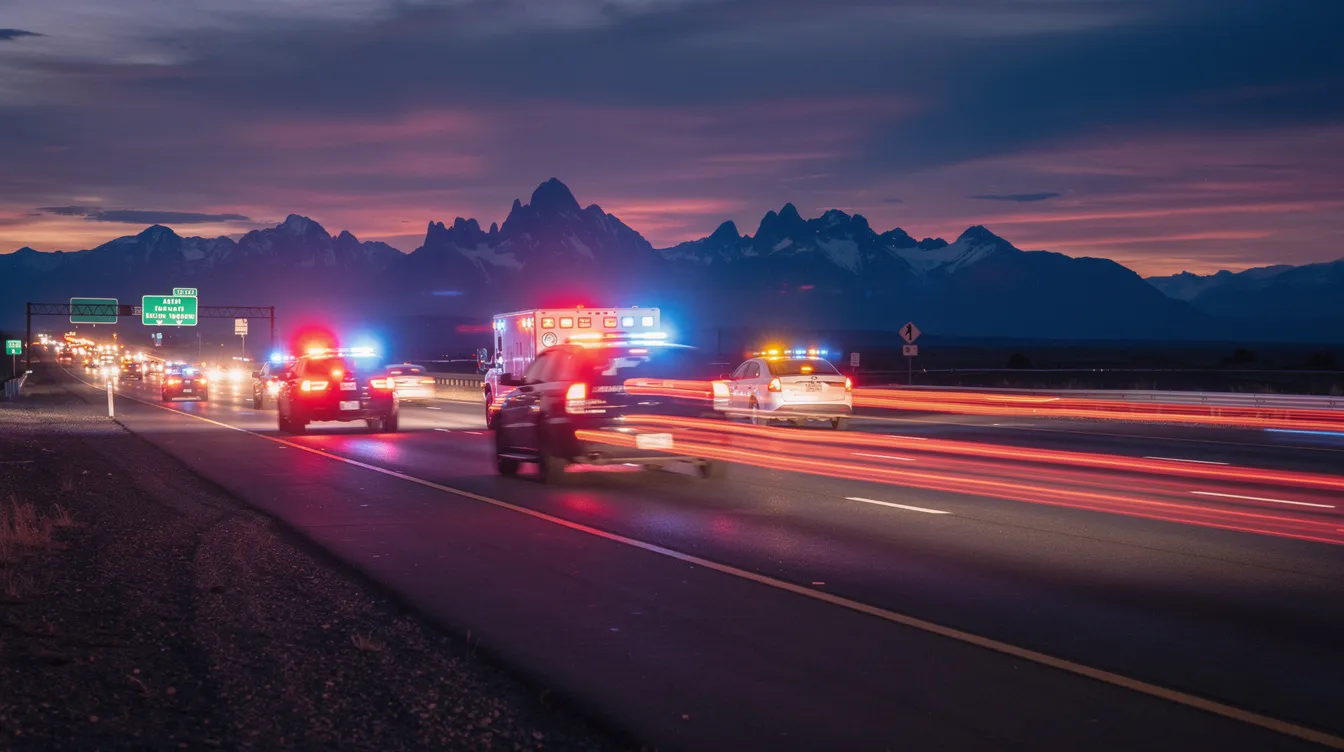
Check for Injuries and Get to a Safe Location
Health and safety must be your top priority after any Pueblo or Colorado car crash. Before worrying about insurance details or who was at fault, focus on protecting yourself and others from further accidents.
Self-Assessment Checklist
Check for pain, bleeding, dizziness, confusion, or difficulty moving
If you’re unsure whether you’re hurt, assume you are injured
Ask passengers the same questions
When to Move Your Vehicle
Minor crash with operable vehicle
No serious pain, especially neck or back pain
Clear path to pull safely off active lanes
When to Stay Put and Wait for EMS
Any neck or back pain
Suspected head injuries
Severe impact or rollover
Difficulty moving or standing
On I-25, US-50, US-160, or rural two-lane roads, move vehicles to a safe spot off active lanes when possible. Use hazard lights and reflective triangles if available. Keep seat belts buckled if you remain in the vehicle, and avoid standing between vehicles on shoulders or in blind curves common in mountain or canyon areas.
Staying safe now prevents a secondary crash and allows you to later protect your legal claims effectively.
Call 911 and Comply with Colorado Reporting Laws
Colorado law requires reporting accidents involving injury, death, or significant property damage. Your 911 call initiates this legal process and creates documentation essential for your case.
What to Report When Calling 911
Your exact location (for example, “northbound I-25 near Pueblo Blvd” or “on US-50 just east of Fowler”)
Number of vehicles involved
Any obvious injuries
In Pueblo, depending on where the accident occurred, Colorado State Patrol troopers, Pueblo County Sheriff’s deputies, or city police may respond. The responding police officer will prepare an official report documenting time, location, parties involved, witness names, initial observations, and any cited violations.
The Colorado traffic accident report is critical evidence for insurance claims and any future personal injury case. Under C.R.S. § 42-4-1606, drivers involved in accidents with injuries or property damage exceeding $1,000 must file a written report with the Colorado Department of Motor Vehicles within 60 days.
If officers cannot respond (for very minor accidents), drivers may need to file online. However, law enforcement will not investigate accidents reported only online, making officer-generated reports preferable for disputed liability cases.
Steve Johnston can help clients obtain and interpret their traffic crash report as part of building a strong case.
Exchange Information and Gather Evidence at the Scene
What you collect at the accident scene in Colorado can make or break your future injury claim. Proper documentation protects your legal rights and strengthens your position with insurance companies.
Information to Exchange with Every Driver
Information Type |
Why It Matters |
|---|---|
Full name and address |
Identifies all drivers involved |
Phone number |
Enables follow-up contact |
Driver’s license number |
Verifies identity |
License plate number |
Links to vehicle registration |
Insurance company and policy number |
Needed for insurance claims |
Vehicle make and model |
Documents vehicles involved |
Critical behavioral guidance: Do not admit fault. Do not apologize. Do not guess about what happened. Simply exchange information and wait for the police officer to arrive.
Witness Information to Collect
Full names and phone numbers
Ask if they’re willing to speak to police
Include pedestrians, nearby business employees, and other drivers who stopped
Photos to Take with Your Phone
Wide shots of vehicle positions
Close-ups of vehicle damage
Skid marks and debris
Traffic lights and signs
Weather and lighting conditions
Visible injuries
Document conditions unique to Colorado roadways: snow or ice, sand or gravel on curves, wildlife near the road, and construction zones. This evidence can prove causation beyond driver negligence.

Documenting Expenses for Your Colorado Accident Report
After a car accident in Colorado, keeping thorough records of every expense related to your accident is one of the most important steps you can take to protect your car accident claims and your financial future. Proper documentation not only strengthens your case with insurance companies but also lays the groundwork for a successful personal injury lawsuit if needed.
Types of Expenses to Document
Medical expenses: Emergency room visits, doctor appointments, prescription medications, physical therapy, specialized treatments (e.g., soft tissue injuries, head injuries), over-the-counter medications, medical equipment, transportation to and from medical appointments
Lost wages: Days and hours missed from work, documentation from your employer verifying absence and lost income
Vehicle repairs: Repair estimates, invoices, receipts for work done, towing expenses, rental car costs
Other out-of-pocket costs: Any additional expenses directly related to the accident
Keeping Records and Communicating with Insurance
Save every receipt, invoice, and bill connected to your accident
Keep a log of every conversation with insurance companies, including dates, times, the name of the insurance adjuster, and a summary of what was discussed
Insurance adjusters may try to minimize your claim or dispute the necessity of certain expenses, so having a detailed record can help you respond effectively and protect your rights.
Legal Guidance for Documentation
A car accident attorney or personal injury lawyer can provide invaluable legal guidance throughout this process. They can help you organize your documentation, communicate with insurance companies, and ensure that your accident report accurately reflects all your losses. Acting quickly is crucial, as Colorado law limits the time you have to file a personal injury lawsuit—typically three years from the accident date.
Medical Attention After a Colorado Car Accident
Many serious injuries common on Colorado roads—whiplash, concussions, internal injuries, back and neck damage—may not show symptoms at the accident scene. Soft tissue injuries and head injuries often have delayed onset, appearing hours or days after impact. That’s why it’s essential to seek immediate medical attention after a car accident, even if you feel fine, to ensure proper diagnosis and to create documentation for legal or insurance purposes.
Medical Steps to Take
Accept EMS evaluation at the scene
Go to the ER, urgent care, or your doctor the same day, even if you feel “okay”
Follow all doctor’s orders completely
Attend every follow-up visit, physical therapy session, and specialist appointment
Keep a detailed list of all medical professionals and appointment dates
For Pueblo-area residents, Parkview Medical Center is a primary option. Those in surrounding counties can seek medical care at hospitals in La Junta, Cañon City, Trinidad, or Salida.
Prompt medical treatment creates medical records connecting your injuries to the crash. This documentation is crucial when dealing with insurance adjusters who may try to argue your injuries aren’t serious or aren’t crash-related.
Symptom Tracking Tips
Keep a daily journal of pain levels
Note sleep disruption and how it affects daily life
Record missed work days
Document emotional distress and anxiety
Johnston Law Firm handles not only automobile accidents but also related personal injury and social security disability issues when car accident injuries are life-changing.
Colorado Insurance Rules, Fault, and Your Legal Rights
Colorado is a fault-based state, meaning the other driver who caused the accident is generally responsible for paying damages. Understanding Colorado law limits on liability and comparative negligence is essential for protecting your claim.
Colorado’s Modified Comparative Negligence Rule
If you are 50% or less at fault, your compensation is reduced by your percentage of fault
If you are more than 50% at fault, you cannot recover from the other driver
Example: If you’re 30% at fault and damages total $100,000, you can recover $70,000
Colorado Minimum Liability Coverage Requirements
Coverage Type |
Minimum Amount |
|---|---|
Bodily injury per person |
$25,000 |
Bodily injury per crash |
$50,000 |
Property damage |
$15,000 |
These minimums often do not cover medical expenses from serious injuries, which makes uninsured/underinsured motorist coverage critically important. Verify your own policy—it can serve as a backstop if the at-fault driver’s coverage is insufficient.
Insurance Reporting Guidelines
Notify your insurance company promptly
Stick to basic facts only
Avoid giving recorded statements before talking to a lawyer
Do not sign anything without legal guidance
Insurance adjusters often try to shift blame or downplay injuries, especially in cases involving soft tissue injuries, chronic pain, or delayed symptoms. Legal representation early in the process can prevent costly mistakes.
Common Mistakes That Can Hurt Your Colorado Car Accident Case
What accident victims do—and do not do—in the days after a crash in Colorado can dramatically change the outcome of their personal injury claim. Avoiding these errors protects your ability to seek compensation.
Mistakes That Damage Your Case
Admitting fault or apologizing at the scene or to insurance companies
Speculating about speed, distraction, or other causes without knowing the facts
Delaying medical care or skipping appointments, giving insurers an excuse to argue injuries aren’t serious
Posting on social media about the accident or your injuries
Accepting fast, low settlement offers before understanding the full medical picture
Giving recorded statements to the other driver’s insurance adjuster without an attorney
Insurance companies use these mistakes against accident victims. A casual statement like “I’m sorry” can be construed as an admission of liability in a fault-based state like Colorado.
Social media posts showing activities—even innocent restaurant visits or family outings—can be twisted by insurance adjusters to minimize your claim and argue your injuries aren’t severe.
How to Protect Yourself
Contact Johnston Law Firm at (719) 309-9484 so the firm can handle communications and protect your rights from day one.
How Johnston Law Firm, LLC Protects Your Case
Steve Johnston is a Pueblo-based attorney who represents injured people throughout Colorado, including Otero, Fremont, Custer, Huerfano, Las Animas, and Crowley Counties. He also serves clients in Fort Collins, bringing local expertise in car accident and personal injury cases. He understands the legal complexities that follow a serious collision on Colorado roads.
Automobile accidents are one of his six key practice areas, along with workers’ compensation, personal injury, estate planning, criminal law, and social security law. As a personal injury attorney, this broad background helps clients whose cases overlap multiple areas—for example, car crashes at work that involve both auto liability and workers’ compensation claims, or injuries that lead to permanent disability requiring social security benefits. You should consult an attorney if you suffered serious injuries or if liability is disputed.
Steps Johnston Law Firm Takes in Car Accident Cases
Obtaining and reviewing the official crash report
Preserving evidence before it disappears
Interviewing witnesses while memories are fresh
Gathering complete medical records and bills
Analyzing all available insurance coverages
Handling all adjuster communications
Pushing back on lowball settlement offers
Preparing each case as if it may go to court
The firm evaluates not just immediate medical bills but also future treatment needs, lost wages, and long-term effects on earning capacity. Steve Johnston has handled injury and accident matters throughout Colorado and understands how different local courts and insurers approach these cases.
Ready to discuss your case? Call (719) 309-9484 or send a secure message online for a no-obligation consultation.

Understanding the Colorado Car Accident Claims Process
Most people in Pueblo and across Colorado have never been through a car accident injury claim before. The legal process can feel overwhelming, but understanding the basic steps helps you know what to expect.
Typical Claims Process Timeline
Initial medical care and reporting – Seek medical attention and file required reports
Insurance notification – Report to your own insurer; avoid the other driver’s insurer
Investigation of fault – Gathering police report, witness statements, and evidence
Documenting injuries and damages – Medical records, bills, lost wages, repair estimates
Settlement negotiation – Working with insurance companies to reach fair compensation
Filing a lawsuit – If necessary, pursuing a personal injury lawsuit in court
Early stages focus on gathering records: police report, photos from the accident scene, medical records and medical bills, proof of lost wages, and vehicle repairs documentation. Many car accident cases are resolved through insurance negotiations without litigation, but Johnston Law Firm prepares every file as if trial is possible.
Colorado law limits the time you have to act. The general statute of limitations for car accident injury claims is three years from the accident date. However, evidence is best preserved early—witness memories fade and scene conditions change quickly.
Some related legal claims (like certain wrongful death or non-auto injury claims) can have different deadlines. Getting individualized legal advice early prevents missing critical deadlines.
Types of Compensation Available After a Colorado Car Accident
The goal of a Colorado personal injury claim is to fairly compensate the injured person for losses caused by the at-fault driver. Understanding what damages you may be entitled to helps you evaluate settlement offers.
Main Categories of Damages
Damage Type |
Examples |
|---|---|
Medical expenses |
ER visits, surgery, imaging, therapy, medications |
Lost wages |
Time missed from work during recovery |
Loss of earning capacity |
Reduced future income due to permanent disability |
Property damage |
Vehicle repairs or replacement |
Pain and suffering |
Physical discomfort and emotional distress |
Loss of enjoyment of life |
Inability to participate in activities you enjoyed |
Serious crashes in Pueblo and surrounding counties can lead to long-term or permanent injuries requiring careful analysis of future medical needs and work limitations. Additional claims may include household services you can no longer perform, mileage to medical appointments, and out-of-pocket costs related to the accident.
Every case is different. Johnston Law Firm evaluates medical records, employment history, and long-term prognosis before recommending whether to accept or reject a settlement offer. Do not rely solely on the insurance company’s valuation—seek a legal review before making any final decision about your financial future.
When to Contact a Colorado Car Accident Lawyer
While minor accidents with only property damage might not require an experienced attorney, many injury cases do—especially where there is pain lasting more than a few days or more serious injuries requiring ongoing medical treatment.
Situations Where Legal Representation Is Especially Important
Significant injuries requiring hospital stays
Fractures, head injuries, or spinal damage
Disputed fault or unclear liability
Crashes involving uninsured or underinsured drivers
Work-related car accidents
Insurance company denies your claim
Insurer blames you for the accident
Settlement offer won’t cover medical bills and lost wages
Johnston Law Firm can coordinate with workers’ compensation and social security claims when a crash overlaps with those systems, helping avoid mistakes that cost clients benefits. A person injured in a work-related car accident may have both a workers’ comp claim and a third-party personal injury claim against the at-fault driver.
Take the next step: Call (719) 309-9484 for a free consultation or send a message through the online contact form to have your situation reviewed. There is no obligation to hire the firm after a consultation, and getting answers early can prevent costly errors with insurers.
Frequently Asked Questions: What To Do After a Car Accident in Colorado
These questions reflect what Steve Johnston hears most often from car accident clients across Colorado.
Do I really need medical care if I feel fine after a low-speed crash?
Yes. Many car accident injuries—including whiplash, concussions, and internal injuries—have delayed symptoms that appear hours or days later. Prompt medical attention creates documentation connecting any injuries to the crash, which insurance adjusters require when processing claims.
How long do I have to file a claim after a Colorado car accident?
Colorado’s general statute of limitations for car accident injury claims is three years from the accident date. However, evidence is best preserved early, and waiting too long can weaken your case as witness memories fade and records become harder to obtain.
Do I need to call the police for every crash?
Colorado law requires reporting accidents involving injury, death, or property damage exceeding $1,000. Even for minor accidents where reporting isn’t legally required, getting an official report is usually wise because it creates documentation that protects your legal claims later.
Should I talk to the other driver’s insurance company?
It’s better to speak with a car accident attorney before giving the other driver’s insurer a recorded statement or signing anything. Insurance adjusters work to minimize payouts, and statements made without legal guidance can be used against you.
How much does it cost to talk with Johnston Law Firm about my car accident?
Initial consultations for automobile accident and personal injury cases are free. You can discuss your situation with no obligation to hire the firm.
Protect Your Case After a Colorado Car Accident – Talk With Johnston Law Firm
Taking the right steps immediately after a Pueblo or Colorado car wreck—calling 911, getting medical care, documenting the accident scene, and avoiding common mistakes—can significantly strengthen your ability to receive fair compensation for your injuries.
Steve Johnston brings experience representing individuals in automobile accident, personal injury, and related workers’ compensation and social security matters throughout Colorado. His law firm understands the legal process, how insurance companies operate, and what it takes to build a strong case for accident victims.
Call (719) 309-9484 today to discuss your accident and learn about your options for compensation. If you prefer online contact, message Johnston Law Firm, LLC online through the secure contact form.
You do not have to navigate Colorado insurance rules and legal proceedings alone. Johnston Law Firm is ready to help protect your legal rights and your financial future.