Intersection Accident Colorado: Liability, Injuries, and Legal Steps
Who Is Liable In T-Bone and Cross-Traffic Crashes?
One moment you’re driving through a familiar Pueblo intersection—maybe at Abriendo Ave and Lake Ave or crossing U.S. 50—and the next, another vehicle slams into your driver’s side door at 40 mph. In that split second, everything changes. Your car is totaled, you’re being loaded into an ambulance, and the medical bills are already piling up before you even reach the emergency room.
If this sounds like what you or someone you love just experienced, you need answers fast. This guide is for Colorado drivers, accident victims, and their families seeking to understand liability and legal options after an intersection accident. Intersection accidents are a leading cause of serious injuries and financial hardship in Colorado, making it crucial to understand your rights and options. This page explains who is liable in Colorado T-bone and cross-traffic crashes, what steps you should take immediately, and how Johnston Law Firm, LLC can help you pursue compensation. Call (719) 309-9484 now or message us online for a free consultation—don’t wait while critical evidence disappears.
Introduction to Colorado Intersection Accidents
Intersections are among the most common sites of motor vehicle accidents. Approximately 40% of all crashes occur at intersections according to the Federal Highway Administration. Certain groups, such as pedestrians, face heightened risks at intersections, and nearly a third of pedestrian deaths in Colorado occur at intersections, according to the National Highway Traffic Safety Administration (NHTSA). These statistics highlight the importance of understanding intersection safety and legal rights after a crash.
Intersection accidents are a leading cause of serious injuries and fatalities on Colorado roads, accounting for nearly 40% of all crashes according to the Federal Highway Administration. These collisions often result in devastating consequences, from severe injuries and mounting medical expenses to lost wages and long-term pain and suffering. Factors such as driver error, hazardous weather conditions, and poorly designed intersections can all contribute to these incidents.
If you or a loved one has been involved in an intersection accident, it’s crucial to understand your legal options. Navigating the aftermath of a car accident can be overwhelming, especially when dealing with insurance companies and the complexities of Colorado law. Consulting with a Denver car accident lawyer can make a significant difference in your ability to recover compensation for your injuries, medical bills, and lost income. An experienced accident lawyer will guide you through the personal injury lawsuit process, helping you pursue the full compensation you deserve for both economic and non-economic damages. Don’t let the stress of an accident derail your recovery—seek legal representation to protect your rights and secure your future.
Intersection Accident Lawyer in Pueblo & Southern Colorado
Intersection collisions are among the most violent motor vehicle accidents on Colorado roads. When two vehicles meet at a 90-degree angle, there’s no front-end crumple zone to absorb the impact. The result is often severe injuries, totaled vehicles, and medical expenses that can quickly exceed $100,000—far more than Colorado’s minimum liability insurance of $25,000 per person can cover.
Steve Johnston at Johnston Law Firm, LLC focuses on representing injured people throughout Pueblo, Otero, Fremont, Custer, Huerfano, Las Animas, and Crowley Counties. With experience spanning automobile accidents, personal injury, and workers’ compensation, Steve understands how intersection crashes ripple through every part of your life—your health, your job, your family’s financial security.
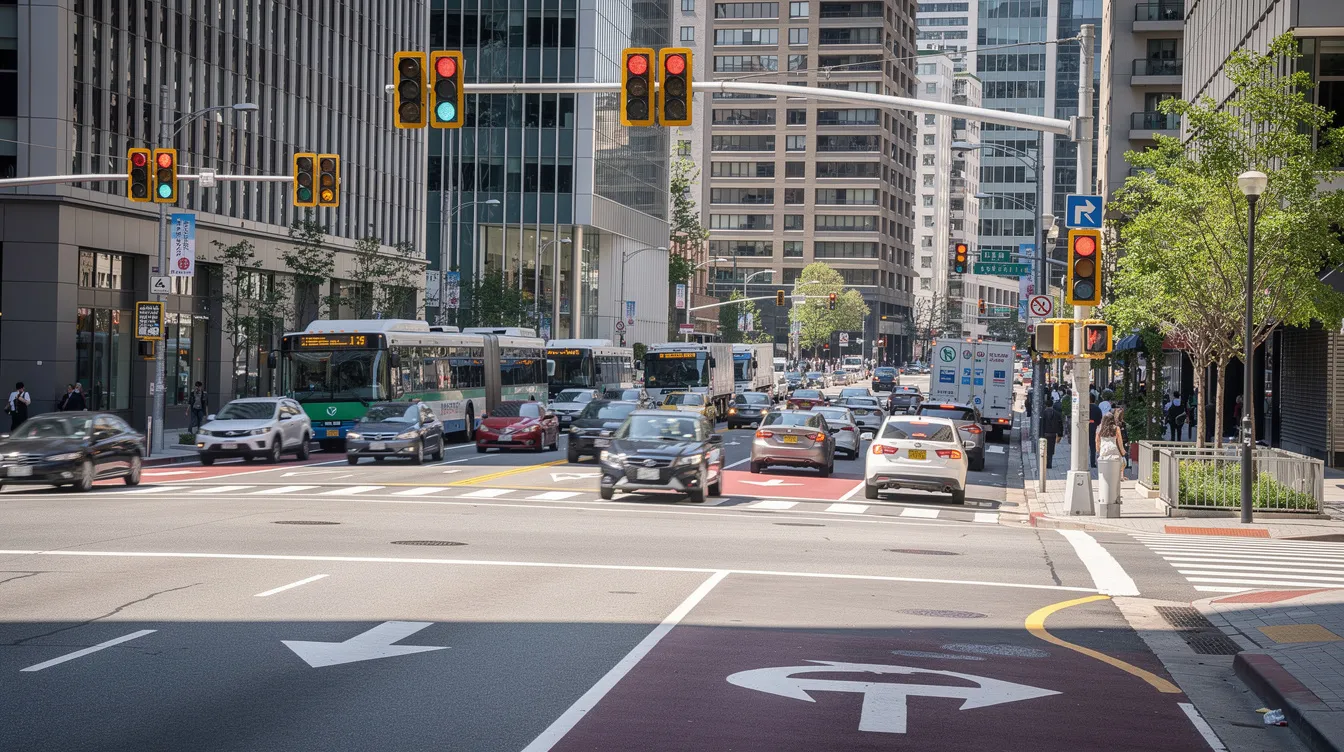
Whether you were T-boned by a red-light runner or sideswiped by a truck pulling onto Highway 50, you deserve a qualified attorney who will fight for full compensation. Failing to yield to other motorists at intersections is a common cause of these serious accidents, making it crucial for all drivers to exercise caution and respect right of way. Reach out today at (719) 309-9484 or message us online to schedule your free consultation.
How T-Bone and Cross-Traffic Crashes Happen at Colorado Intersections
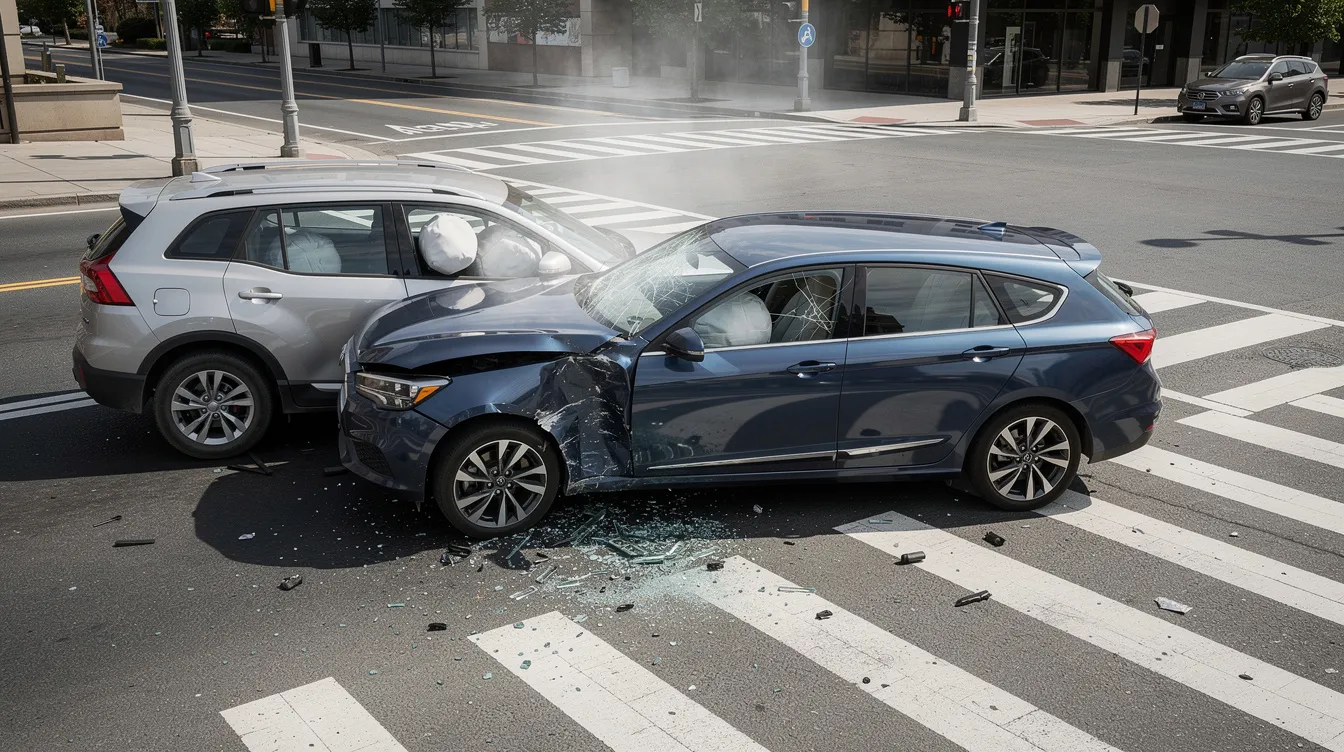
A T-bone crash occurs when the front of one vehicle strikes the side of another at roughly a 90-degree angle. These side-impact collisions are sometimes called “broadside” crashes. Cross-traffic collisions happen when vehicles traveling in perpendicular directions cross paths—whether at a controlled intersection with traffic signals or an uncontrolled rural crossroads with only a stop sign.
In Southern Colorado, these accidents happen in predictable ways:
Running red lights: A driver on Northern Avenue accelerates through a stale yellow, only for the light to turn red—and they plow into cross-traffic already entering the intersection.
Rolling through stop signs: Rural county roads in Crowley or Custer Counties often have simple stop-sign controls. A distracted driver who fails to come to a complete stop can T-bone an oncoming vehicle at full speed.
Unsafe left turns on Highway 50: Left-turning drivers misjudge the speed of oncoming traffic and pull directly into the path of a vehicle traveling 50+ mph.
Ignoring flashing signals: Small towns like La Junta use flashing red and yellow lights. Drivers unfamiliar with these signals may fail to yield right of way.
Many intersection crashes in Pueblo and surrounding counties happen at 30–50 mph. At those speeds, the side of a vehicle absorbs the full force of impact with almost no protection for the driver or passengers.
Why are these crashes so dangerous?
Intersection design flaws (poor signage, obstructed sight lines from hills or parked vehicles)
Heavy traffic volumes, especially along U.S. 50
Driver inattention from texting, GPS use, or simple distraction
Sun glare on east-west roads during morning and evening commutes
Winter ice at rural intersections where maintenance is limited
Commercial trucks entering from side roads with limited acceleration
When these factors combine, the results can be catastrophic—including multi-vehicle pileups with multiple parties sharing fault.
T-bone and cross-traffic crashes often result in a car accident claim, and many intersection accident claims involve complex circumstances that require thorough investigation to establish liability.
Who Has the Right-of-Way at Colorado Intersections?
Determining fault in an intersection collision almost always comes down to right-of-way rules under Colorado law. The relevant statutes, including C.R.S. § 42-4-701 and related provisions, establish who must yield in various situations.
Here’s a plain-language breakdown of key scenarios:
Intersection Type |
Right-of-Way Rule |
|---|---|
Four-way stop |
The first vehicle to arrive proceeds first. If two arrive simultaneously, the driver on the right goes first. |
Uncontrolled rural intersection |
Yield to vehicles approaching from the right or those already in the intersection. |
Left turns |
Drivers turning left must yield to oncoming traffic proceeding straight or making a right turn. |
Flashing red light |
Treat as a full stop; yield to traffic with a green or flashing yellow. |
Flashing yellow light |
Proceed with caution; yield to vehicles already in the intersection. |
Determining fault in intersection accidents involves a thorough investigation of the wreck, including identifying the other party's negligence. Insurance adjusters, police reports, and witness statements all play a role in determining fault in intersection accidents. |
Important: Having the green light doesn’t automatically make you fault-free. If you were speeding, looking at your phone, or otherwise negligent, you may share liability under Colorado’s comparative negligence rules.
Misunderstanding these right-of-way rules is one of the leading causes of intersection crashes in Pueblo and surrounding counties. Negligent drivers who violate these rules put everyone at risk.
Common Causes of T-Bone and Cross-Traffic Crashes in Colorado
Identifying the precise cause of your intersection accident is essential to determining which driver—or combination of drivers and entities—is legally responsible.
The most frequent causes include:
Failure to yield right of way (the primary cause of intersection crashes statewide)
Running red lights and stop signs (approximately 40% of urban intersection crashes)
Distracted driving—texting, adjusting GPS, eating, or talking on the phone
Drunk or drug-impaired driving (15–20% of nighttime crashes)
Speeding through intersections (increases impact severity by roughly 50% for every 10 mph over the limit)
Aggressive left turns across oncoming traffic
After identifying the cause, a lawyer will thoroughly investigate the accident to identify and prove the responsible party's negligence, which is a key element in building a strong legal case.
Local conditions that contribute to crashes in Southern Colorado:
Sun glare on east-west roads in Pueblo during morning and evening hours
Winter ice on rural Highway 50 intersections
Limited visibility from hills, parked vehicles, or poorly placed signage
Commercial vehicles and work trucks entering highways from side roads
When a commercial truck causes a side-impact collision while the driver is on the job, the accident may involve both workers’ compensation and a third-party personal injury lawsuit. Understanding how these claims interact is critical to recovering full compensation.
Denver Intersections and Accident Risk
Denver’s bustling intersections are notorious for their accident risk, thanks to heavy traffic, complex road layouts, and frequent congestion. Navigating these intersections requires heightened awareness, as even a momentary lapse in attention can lead to a serious car accident. Certain intersections in Denver are especially prone to collisions, making it vital for drivers to exercise extra caution in these high-risk areas.
If you’re involved in a crash at a Denver intersection, a skilled Denver car accident lawyer can be your strongest ally. By thoroughly analyzing police reports, gathering witness statements, and securing other critical evidence from the accident scene, your attorney can help determine liability and build a compelling case. Insurance companies often attempt to minimize payouts or dispute fault, but with an experienced accident lawyer on your side, you’ll be in a stronger negotiating position to pursue a fair settlement. Don’t underestimate the importance of prompt legal action—early investigation and documentation can make all the difference in the outcome of your claim.
Dangerous Intersections in Denver and Colorado
Some intersections in Denver and across Colorado are well-known for their heightened risk of vehicle related accidents. Factors such as high traffic volumes, poor visibility, confusing lane markings, and inadequate traffic signals can turn these locations into hotspots for intersection accidents. Intersections with multiple lanes, sharp turns, or a history of frequent crashes—like those along South Santa Fe or major downtown corridors—require drivers to be especially vigilant.
If you find yourself in an accident at one of these dangerous intersections, your first priority should be to seek immediate medical attention, even if injuries aren’t immediately apparent. Afterward, it’s essential to consult with a qualified attorney who understands the complexities of Denver intersection accident claims. A knowledgeable accident lawyer can help you recover damages for medical expenses, lost wages, and pain and suffering by negotiating with insurance companies and, if necessary, representing you in court. With the right legal support, you can explore all your legal options and work toward the compensation you need to move forward after a serious accident.
Who Is Liable in Colorado Intersection, T-Bone, and Cross-Traffic Accidents?
Fault in intersection crashes is rarely black and white. The at fault driver is typically the one who:
Failed to yield right of way
Ran a red light or stop sign
Turned left across traffic without a safe gap
Entered the intersection unsafely
Colorado follows a modified comparative negligence law. This means your compensation may be reduced by your percentage of fault. Under Colorado's comparative negligence system, your final payout is directly tied to your level of fault in the accident. Colorado's modified comparative negligence law allows an injured person to pursue compensation as long as they were not primarily responsible for causing the accident. In other words, you can recover damages if you are less than 50% at fault, but your compensation will be reduced by your share of responsibility.
Example scenarios:
Driver A runs a red light and T-bones Driver B, who was traveling straight with a green light. Driver A is primarily liable—likely 100%.
Driver A runs a red light, but Driver B was speeding 15 mph over the limit. A jury might assign 70% fault to Driver A and 30% to Driver B. If Driver B’s damages total $100,000, they recover $70,000.
A left-turning driver is struck by an oncoming vehicle. The left-turner is usually liable unless the oncoming driver was negligent (speeding, distracted, etc.).
Other potentially liable parties:
Government entities: A city, county, or state agency may be liable for malfunctioning traffic signals, dangerous intersections, or inadequate signage. Note that claims against government entities have shorter notice deadlines.
Vehicle manufacturers: Defective brakes, steering systems, or airbags may contribute to the crash or worsen injuries.
Employers: If a negligent driver was on the job, their employer may share liability.
Insurance companies often try to overstate the injured person’s share of blame. A Pueblo-based accident lawyer who understands Colorado liability rules can prevent adjusters from unfairly shifting fault to the victim.
How Johnston Law Firm, LLC Proves Fault After an Intersection Crash
Building a strong case requires evidence—and evidence disappears quickly. Steve Johnston conducts thorough investigations that include:
Police crash reports from Pueblo Police, Pueblo County Sheriff, or Colorado State Patrol
911 recordings that capture real-time accounts of what happened
Traffic camera footage and surveillance video from nearby businesses (often erased within 30 days)
Dashcam and phone video from drivers or witnesses
Witness statements and interviews conducted promptly while memories are fresh
Accident scene documentation: photographs of skid marks, debris patterns, vehicle positions, and traffic signals
Accident reconstruction specialists who analyze physics, speed, and impact angles for complex or fatal crashes
Vehicle event data recorders (“black boxes”) that capture speed, braking, and other critical evidence
Phone records to prove distracted driving
Medical records linking the crash mechanism to specific injuries
This evidence is used to counter insurance company narratives that try to shift blame to the injured driver or minimize the severity of the collision.
Typical Injuries in Colorado Intersection and T-Bone Collisions
Side-impact crashes cause some of the most devastating injuries because the side of a vehicle offers minimal protection compared to the front or rear. Common injuries include:
Broken ribs and pelvis from direct lateral force
Shoulder and hip injuries including fractures and dislocations
Traumatic brain injuries (TBI) when the head strikes the side window or door frame—approximately 30% of side-impact victims experience some level of concussion
Spinal cord and disc injuries potentially causing paralysis
Internal bleeding including aortic tears and organ damage
Serious soft-tissue trauma affecting ligaments, tendons, and muscles
Children and older adults face particular risk because there is less crumple zone on the side of a vehicle to absorb impact energy.
Delayed symptoms are common. Concussions, whiplash, and internal organ damage may not be obvious at the accident scene but can become life-threatening or disabling days later. That’s why it’s essential to:
Seek immediate medical evaluation—even if you “feel okay”
Follow all medical advice and attend follow-up appointments
Keep copies of all medical bills, prescriptions, and treatment notes
Documenting your injuries from day one protects both your health and your legal claim.
What to Do After an Intersection Accident in Colorado
The steps you take immediately after an intersection collision can make or break your personal injury claim. Here’s what to do:
At the scene:
Move to safety if possible—get your vehicle out of traffic if it’s drivable
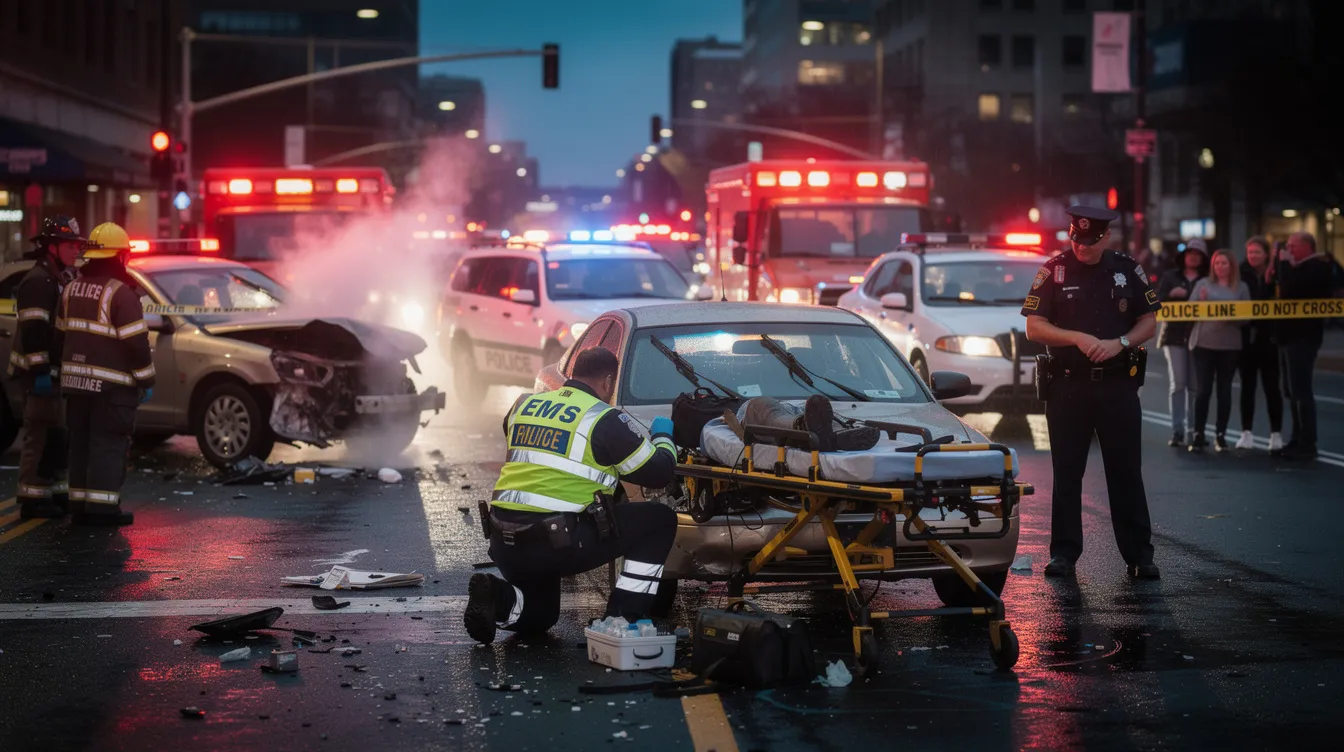
Call 911 and request police and emergency medical services
Do not leave the accident scene until law enforcement releases you
Exchange insurance and contact information with the other driver
Do not admit fault or make speculative statements like “I didn’t see you”
Document everything:
Photograph vehicle damage from multiple angles
Capture skid marks, intersection signals, and road conditions
Take pictures of any visible injuries
Get names and phone numbers of witnesses
Note the weather conditions, time of day, and traffic patterns
After leaving the scene:
Seek prompt medical treatment and follow through with all recommended care
Do not give recorded statements to insurance adjusters before speaking with a lawyer
Keep copies of all medical records, bills, and work excuse notes
Save repair estimates and receipts for property damage
Contact Johnston Law Firm immediately at (719) 309-9484 or message us online. Traffic camera footage and surveillance video are often erased within 30 days. Witness memories fade. Acting quickly ensures critical evidence is preserved and legal deadlines are met.
How Colorado’s Comparative Negligence Law Affects Your Intersection Crash Case
Colorado’s modified comparative negligence rule means you can still recover compensation even if you were partially at fault—as long as your fault is less than 50%.
How it works in practice:
Your % Fault |
Total Damages |
Your Recovery |
|---|---|---|
0% |
$100,000 |
$100,000 |
20% |
$100,000 |
$80,000 |
30% |
$100,000 |
$70,000 |
49% |
$100,000 |
$51,000 |
50%+ |
$100,000 |
$0 |
Insurance companies know this rule—and they exploit it. Adjusters may claim you were speeding, failed to brake in time, or “could have avoided” the collision if you’d been paying attention. Even a minor increase in your assigned fault can cost you tens of thousands of dollars. |
Steve Johnston uses evidence, expert opinions, and detailed analysis of Colorado traffic laws to minimize the client’s assigned fault and maximize net recovery. Every percentage point matters, and you need a lawyer who will fight for the most accurate fault determination.
Compensation Available After a Colorado Intersection Accident
If you’ve been injured in an intersection crash, you may be entitled to both economic damages and non economic damages.
Economic damages (out-of-pocket losses):
Emergency room care and ambulance costs
Hospital stays at facilities like Parkview or St. Mary-Corwin in Pueblo
Surgery, physical therapy, and ongoing rehabilitation
Future medical treatment for long-term conditions
Lost wages while recovering
Reduced earning capacity if you can’t return to your previous job
Loss of employment benefits (health insurance, retirement contributions)
Non-economic damages (quality-of-life losses):
Pain and suffering
Emotional distress
Loss of enjoyment of life
Permanent disability or disfigurement
Property damage:
Vehicle repair or replacement costs
Personal items destroyed in the crash (phones, child car seats, tools, work equipment)
For workers in physically demanding industries common throughout Southern Colorado—construction, agriculture, manufacturing, and energy—even a “moderate” injury can end a career. Johnston Law Firm documents both current and future losses to support a claim for full compensation.
In some cases involving egregious conduct (such as drunk driving), punitive damages may also be available to punish the at fault driver and deter similar behavior.
Intersection Crashes Involving Work or On-the-Job Driving
If you were driving for work when the intersection accident occurred—whether as a delivery driver, construction supervisor, home health worker, or any other employee—you may have access to multiple sources of compensation:
Workers’ compensation benefits:
Medical expenses paid regardless of fault
Temporary disability payments for lost wages
Permanent impairment benefits if applicable
Third-party personal injury claim:
Lawsuit against the at fault driver (and their employer, if applicable)
Compensation for pain and suffering (not available through workers’ comp)
Full lost wage recovery beyond workers’ comp limits
Steve Johnston’s experience in both workers’ compensation and personal injury law allows the firm to coordinate these claims so you don’t leave money on the table—or accidentally harm one case while pursuing another.
If you were injured in a company vehicle or while running a job-related errand, contact Johnston Law Firm quickly to determine which insurance coverages apply and how to maximize your total recovery.
How Johnston Law Firm, LLC Helps Victims of Intersection Accidents
Johnston Law Firm provides comprehensive legal representation for intersection crash victims:
Investigate liability by gathering police reports, witness statements, video footage, and expert analysis
Deal with insurance adjusters so you don’t have to face their tactics alone
Calculate damages including future medical costs and lost earning capacity
Negotiate settlements that reflect the true value of your claim
File lawsuits when insurance companies refuse to offer a fair settlement
Steve Johnston’s experience across six practice areas—automobile accidents, personal injury, workers’ compensation, estate planning, criminal law, and social security law—gives clients an advantage in complex cases where multiple legal issues intersect.
Geographic focus: While the firm represents individuals throughout Colorado, Steve has deep roots in Pueblo, Otero, Fremont, Custer, Huerfano, Las Animas, and Crowley Counties. He knows the local courts, understands how local juries think, and has experience dealing with the insurance companies that operate in this region.
No upfront costs: Personal injury and auto accident cases are typically handled on a contingency fee basis. You pay no attorney fees unless the firm recovers compensation for you.
Personal attention: Calls are returned promptly. Questions are answered clearly. You’ll understand every step of the claim process.
Do You Need a Lawyer After an Intersection Accident in Colorado?
T-bone and cross-traffic cases often involve:
Disputed fault between multiple parties
Multiple insurance policies with different coverage limits
Serious injuries requiring long-term treatment
Insurance companies pushing quick, undervalued settlements
Going it alone against experienced insurance adjusters is risky. They may contact you within days of the crash, seeking recorded statements or pressuring you to accept a settlement before you understand the full extent of your injuries.
An experienced Pueblo-based car accident lawyer understands local courts and insurance company tactics. Legal representation levels the playing field and helps ensure you receive a fair settlement—or a favorable verdict at trial.
At minimum, you should speak with a lawyer before:
Giving any recorded statement to your own insurance company or the other party’s negligence insurer
Signing any documents or accepting any settlement offers
Making decisions about medical treatment based on what insurance will cover
Initial consultations with Johnston Law Firm are free and carry no obligation.
Deadlines and Statutes of Limitation for Colorado Intersection Crash Claims
In most Colorado auto accident cases, injured people have three years from the date of the crash to file a personal injury lawsuit under C.R.S. § 13-80-101.
However, shorter deadlines may apply:
Claims involving government vehicles or dangerous road design (e.g., against a city or county) require notice within 180 days under C.R.S. § 24-10-109
Wrongful death claims have different timelines
Workers’ compensation claims have their own reporting deadlines
Why delay is dangerous:
Traffic camera footage is often erased within 30 days
Dashcam videos may be overwritten
Witness memories fade quickly
Vehicle damage may be repaired before documentation
Medical records become harder to connect to the accident
Don’t risk losing your case because you waited too long. Call (719) 309-9484 or message us online as soon as possible to protect your rights.
Contact Johnston Law Firm, LLC After an Intersection Accident
If you or someone you love has been injured in an intersection accident, T-bone collision, or cross-traffic crash anywhere in Colorado—especially in Pueblo and the surrounding Southern Colorado counties—Johnston Law Firm is ready to help.

Schedule your free, confidential consultation today:
📞 Call: (719) 309-9484
💬 Online: Message us here
You don’t have to navigate complex Colorado traffic laws, comparative negligence rules, and aggressive insurance adjusters alone. Steve Johnston and his team will handle the legal burden while you focus on healing.
Johnston Law Firm represents victims of intersection crashes involving cars, trucks, motorcycles, pedestrians, and cyclists. Whether you’re dealing with a denied claim, a lowball settlement offer, or simply don’t know where to start—we’re here to fight for maximum compensation on your behalf.
Your recovery starts with a single phone call. Reach out now.