Rear End Collision Colorado – Settlement, Fault, and Injury Claim Rules
Introduction to Rear End Accidents
Rear end accidents are among the most frequent types of car accidents on Colorado roads, often resulting in severe injuries and unexpected financial burdens for those involved. Whether you’re driving through Denver’s busy streets or navigating rural highways, a rear end collision can happen in an instant—usually when the rear driver fails to maintain a safe following distance or is distracted behind the wheel. Under Colorado law, the rear driver is generally presumed to be at fault in a rear end accident, as they are expected to stay alert and be prepared to stop at any moment.
However, determining fault in a rear end collision isn’t always straightforward. Factors like sudden stops, poor weather conditions, or malfunctioning brake lights can complicate the situation. That’s why it’s important to consult with a knowledgeable Colorado car accident lawyer who can help you understand your rights and guide you through the claims process. If you’ve been involved in a rear end accident, don’t ignore even minor aches or pains—some injuries, such as whiplash or soft tissue injuries, may not show symptoms right away but can lead to chronic pain or long-term complications. Seeking prompt medical attention and legal advice is the best way to protect your health and your claim after an end collision in Colorado. This guide is for Colorado drivers who have been involved in a rear end collision and need to understand their legal rights, the claims process, and how to protect their health and financial future.
Rear-End Collision in Colorado? Start Here
If you’ve just been rear-ended on I-25 near Pueblo, along Highway 50 through Otero County, or on a local street in Cañon City, you’re likely dealing with confusion, pain, and questions about what happens next. You’re not alone. Rear end collisions are among the most common car crashes in Colorado, and they often cause whiplash, back injuries, and lost wages even when the impact seems minor at low speeds.
Colorado is a fault-based state, which means the driver who caused the rear end crash is generally responsible for your losses. In most cases, that’s the rear driver who failed to maintain a safe following distance or stop safely in time. Understanding this principle is the first step toward protecting your rights and pursuing compensation for your injuries. After a rear end collision, it is your legal right to seek compensation to recover damages and losses through insurance claims or litigation.
If you’ve been hurt in a rear end collision in Colorado, call Johnston Law Firm, LLC at (719) 309-9484 or message us online for a free consultation. Attorney Steve Johnston is based in Pueblo and represents injured people throughout Colorado, including Fremont, Custer, Huerfano, Las Animas, Crowley, and Otero Counties.
This guide will walk you through the key rules about determining fault in Colorado rear end accidents, how comparative negligence affects your recovery, the types of injuries these crashes cause, and what steps to take to protect your car accident claim. Whether you’re dealing with insurance companies, medical bills, or questions about a fair settlement, the information ahead will give you clarity and direction.
If you’ve been in a rear end collision, don’t ignore even minor aches or pains—some injuries, such as whiplash or soft tissue injuries, may not show symptoms right away but can lead to chronic pain or long-term complications. Delayed symptoms after a rear-end collision are common, as adrenaline can mask pain. Documentation of early symptoms is essential to prove causation and protect your legal rights.

Types of Accidents
Rear end collisions can arise from a variety of accident scenarios, each with its own set of challenges when it comes to determining fault and seeking fair compensation. The most common type is the classic rear end crash, where one vehicle strikes the back of another, often due to tailgating, distracted driving, or sudden stops in traffic. However, rear end accidents can also result from more complex situations, such as sideswipes that push a vehicle into the car ahead, or chain-reaction crashes involving multiple vehicles.
In Colorado, rear end collisions frequently occur during adverse weather conditions like snow, ice, or heavy rain, which can make stopping distances unpredictable. Mechanical failures, such as brake malfunctions, can also contribute to end collisions, as can driver behaviors like failing to yield or driving under the influence. Even a minor rear end accident at low speeds can cause injuries that disrupt your life and work.
Understanding the specific type and cause of your accident is crucial for determining fault and building a strong case for fair compensation. For example, if a driver is following too closely and cannot stop in time, they are likely to be held responsible for the rear end collision. By identifying the factors that led to your accident, you and your attorney can better navigate Colorado’s legal system and pursue the compensation you deserve after an end collision.
Who Is at Fault in a Colorado Rear-End Collision?
Under Colorado law, the following driver in a rear end collision is usually presumed at fault. This presumption exists because every Colorado driver has a legal duty to maintain a safe following distance and control their speed so they can stop safely when the vehicle ahead slows or stops. When a rear end accident occurs, the law assumes the rear driver failed to meet this standard of care.
In most rear-end accident cases in Colorado, the rear driver is considered to be at fault for the accident (Fact #1). However, the rear driver is not always liable; the front driver may also contribute to the accident by stopping unexpectedly or having malfunctioning brake lights (Fact #3). Colorado drivers are required to maintain a safe following distance to avoid rear-end collisions (Fact #2). The determination of fault can involve various factors, including the actions of both drivers involved (Fact #4).
Colorado’s negligence law requires drivers to travel at speeds that allow them to stop within the distance they can see ahead. This is particularly important in winter conditions, heavy traffic, and construction zones where sudden slowdowns are common. Colorado drivers must account for road conditions, the speed of other vehicles, and their own judgment about what constitutes a prudent following distance.
Consider typical Pueblo and southern Colorado situations: a rear end crash at a red light on Northern Avenue during rush hour, stop-and-go traffic around I-25 exits where drivers may not anticipate sudden braking, or unexpected slowdowns in construction zones on Highway 50. In each of these scenarios, the rear driver’s failure to leave adequate space is typically the deciding factor in fault determination.
The front driver can share fault in limited circumstances. If the other driver made a sudden, unnecessary stop with no traffic reason (commonly called “brake-checking”), they may bear some responsibility. Non-functioning brake lights or hazard lights, especially at night, can prevent the rear driver from seeing that the front vehicle is stopping. An unsafe lane change that leaves the following driver with no time to react can also shift liability.
Colorado's comparative negligence law, also known as the modified comparative negligence rule, affects how you recover damages. Under C.R.S. § 13-21-111, you can pursue compensation if you are less than 50% at fault for the accident. However, your compensation is reduced by your percentage of fault. For example, if a jury finds you 20% at fault for a $100,000 loss, your recovery becomes $80,000.
Steve Johnston investigates rear end accident claims thoroughly, obtains police reports, collects evidence from the accident scene, and works with crash reconstruction experts when needed to prove fault clearly. If you’ve been involved in a rear end car accident, call (719) 309-9484 or reach out online as soon as possible to discuss your case.
How Colorado’s Comparative Fault and Insurance Rules Affect Your Claim
Colorado’s comparative negligence law directly impacts how much accident victims can recover compensation for their injuries. Under the modified comparative fault system, you cannot recover damages if you are found 50% or more at fault for the collision. If you are less than 50% at fault, you can still recover, but your award is reduced proportionally by your share of responsibility.
Insurance adjusters frequently use comparative fault arguments to reduce or deny rear end collision claims. Even in obvious rear-end crashes, they may argue you “stopped too fast,” “weren’t paying attention,” or “failed to avoid the collision.” These tactics are designed to establish that you bear some percentage of fault, thereby triggering a reduction in what the at fault driver’s insurance must pay.
Colorado requires all drivers to carry minimum liability coverage of 25/50/15—meaning $25,000 per person for bodily injury, $50,000 per accident for multiple injuries, and $15,000 for property damage. Serious injuries from a rear end collision often exceed these minimums, particularly when victims require surgery, extended physical therapy, or cannot return to physically demanding jobs.
Your own insurance coverages matter significantly in these cases:
Medical Payments (MedPay) can pay your medical expenses regardless of fault, up to your policy limit
Uninsured/Underinsured Motorist (UM/UIM) coverage bridges the gap when the at fault party lacks sufficient insurance to cover your losses
In most rear end cases, you first pursue compensation through the at fault driver's insurance. Only when that policy’s limits are exhausted do you turn to your own UM/UIM coverage. This is why documenting the full extent of your medical treatment, lost income, and ongoing treatment needs is critical.
Colorado provides a three-year statute of limitations for most motor vehicle injury claims and two years for wrongful death cases. Waiting to take action harms your claim because evidence becomes stale, witnesses’ memories fade, and traffic camera footage may be deleted. Insurance companies know this and may delay negotiations, betting that your evidence quality deteriorates over time.
Don’t guess about fault percentages or coverage issues on your own. Call (719) 309-9484 for a free case review or message Johnston Law Firm online to understand how Colorado’s rules affect your specific situation.
Common Injuries in Colorado Rear-End Collisions
Even a “fender bender” at 10-15 mph on a Pueblo side street can cause severe injuries that may not fully appear for hours or days after the crash. The physics of a rear end collision force the body forward suddenly while the head snaps backward and then forward again, straining muscles, ligaments, and spinal structures in ways that aren’t immediately obvious.
Southern Colorado roads present unique hazards that can turn a simple tap into a serious impact. Inclines, winter ice, and stop-and-go traffic increase rear end collision risk, especially when a large truck rear-ends a smaller passenger vehicle. The force differential in these crashes can cause traumatic brain injuries, spinal cord injuries, and other catastrophic harm.
Adrenaline and shock often mask symptoms immediately after the crash, which is why medical evaluation is critical the same day or within 24 hours. Symptoms that seem minor initially—a stiff neck, mild headache, slight dizziness—can develop into chronic pain and disability over subsequent weeks without proper diagnosis and medical treatment.
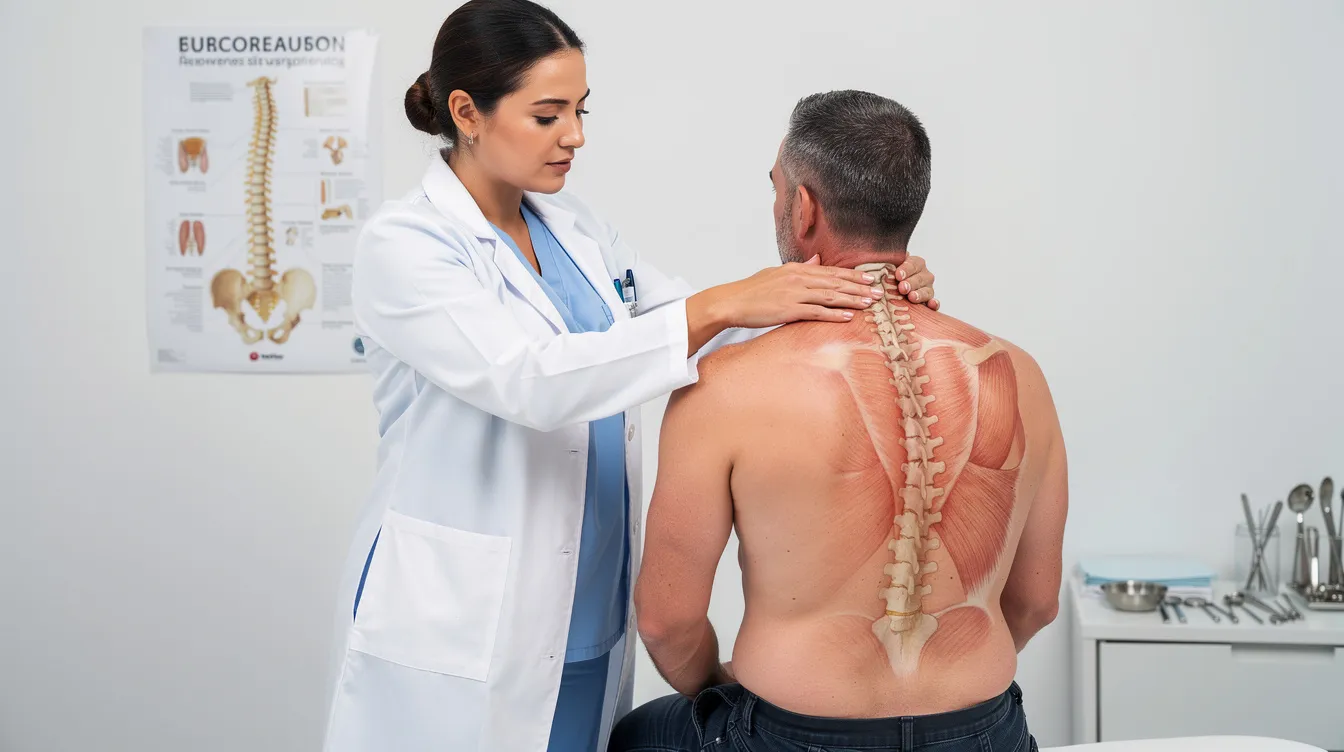
The most common rear end collision injuries include:
Whiplash and neck strains from the rapid back-and-forth head movement
Herniated or bulging discs in the cervical and lumbar spine causing radiating pain and numbness
Mid-back and lower-back sprains and soft tissue injuries
Concussions and mild traumatic brain injuries from head movement or contact with the steering wheel
Shoulder injuries from seatbelts and bracing for impact
Knee and leg injuries from contact with the dashboard
Facial injuries and dental trauma from airbag deployment, steering wheel contact, or broken glass
Emotional distress, anxiety, and sleep disturbances after the crash
Older adults, workers with physical jobs, and people with pre-existing spine conditions are particularly vulnerable to lasting harm from rear end crashes. Internal injuries may not present symptoms for days, making prompt medical attention essential for both health and legal documentation.
These injuries have real-life consequences for workers in Pueblo and surrounding counties. Construction workers, nurses, warehouse employees, and refinery workers who suffer injuries from rear end accidents may face difficulty returning to their jobs or suffer permanent reductions in future earning capacity. Even moderate injuries can significantly impact individuals with physically demanding jobs, affecting their ability to work long-term and resulting in lost wages or diminished earning capacity. A herniated disc or chronic pain condition can end a career that requires physical capability.
Seek care from an emergency room, urgent care center, or your primary physician immediately after any rear end collision. Follow through with recommended imaging (X-rays, MRIs) and physical therapy as directed by your medical providers. After a rear-end accident, it is important to get a medical evaluation even if you feel okay.
Steps to Take After a Rear-End Crash in Pueblo or Anywhere in Colorado
After a rear end crash, confusion and stress can make it hard to think clearly about protecting yourself legally. Here’s a practical checklist tailored to Colorado law that can help preserve your rights and strengthen your personal injury claim.
Your immediate priorities should focus on safety, documentation, and medical care. The actions you take in the hours and days following the accident occurred can significantly impact your ability to recover damages later.

Follow these steps after a rear end collision:
Ensure safety and move vehicles out of traffic on I-25 or Highway 50 if possible and if vehicles are drivable
Call 911 so law enforcement (Pueblo PD, Colorado State Patrol, or county sheriffs) can document the crash; obtain the incident number from police reports
Exchange information with the other driver including license, insurance, and plate number, and get names and contact information for witnesses
Take photos and short videos of the accident scene, vehicle damage, skid marks, road conditions, traffic signals, and visible injuries
Seek medical attention immediately, even if you feel “fine”; mention any neck or back pain, headaches, dizziness, or confusion to healthcare providers
Notify your own insurance company promptly but do not admit fault and keep your statement factual and brief
Politely refuse recorded statements to the at fault driver’s insurer until you speak with a car accident attorney
Keep all medical bills, vehicle repair estimates, towing receipts, and documentation of lost work time and out of pocket expenses
Contacting a lawyer early allows preservation of critical evidence that insurance companies may otherwise delete or fail to produce. Traffic camera footage on I-25 near Pueblo, 911 recordings, and vehicle event data recorders (“black boxes”) that record speed and braking data can be crucial in disputed rear end collision cases. Without a preservation letter from an attorney, this evidence may disappear within 30-90 days.
Call Johnston Law Firm at (719) 309-9484 as soon as you can after the crash or send a message through our online contact form so the firm can start protecting your rear end collision claim immediately.
Compensation and Settlement Values in Colorado Rear-End Cases
There is no single “average settlement” for a Colorado rear end collision. Every rear end accident settlement depends on the specific injuries sustained, the medical treatment required, the recovery timeline, and how the crash affects the victim’s work and daily life. Anyone promising a specific dollar figure without reviewing your case is not being honest with you.
The main categories of damages you may claim in a rear end collision in Colorado include:
Damage Category |
Examples |
|---|---|
Medical expenses |
ER visits at Parkview Medical Center, follow-up appointments, MRIs, injections, physical therapy, surgery, future medical needs |
Lost wages |
Time missed from work at steel mills, construction sites, schools, or service jobs, plus loss of future earning capacity |
Property damage |
Vehicle repair or replacement, rental car costs, towing, personal items damaged in the crash |
Out of pocket expenses |
Medications, medical equipment, travel to medical appointments, home help |
Non economic damages |
Physical pain, limitations, emotional distress, and loss of enjoyment of life |
Compensation can include reimbursement for current and future medical costs, lost wages, property damage, and pain and suffering. |
Several factors influence the settlement process and final value of rear end collision cases. How clearly the other driver’s fault can be proven matters significantly—cases with obvious rear-end impacts and clear liability tend to settle for higher amounts. Whether you followed medical advice, attended all physical therapy sessions, and completed prescribed treatment affects how insurance adjusters view your claim. The amount of available insurance coverage, including UM/UIM if applicable, sets practical limits on recovery. Documentation of permanent impairment by your doctors substantially increases settlement value.
A significant portion of personal injury claim settlements may compensate for non-economic damages like pain and suffering, especially in cases involving serious injuries.
Consider the difference between two hypothetical cases: A minor whiplash case with quick recovery—weeks of neck pain, minimal medical treatment, full return to work—might settle for a modest amount covering medical costs, brief lost wages, and some pain and suffering. A serious herniated disc case requiring MRI, epidural injections, physical therapy, and potential surgery, with months of lost wages and ongoing limitations, could settle for substantially more, particularly if the victim cannot return to their previous physically demanding occupation.
Thorough documentation is essential. Gather medical records from all providers, employer verification of missed work, and detailed notes on how your injuries affect daily activities. This evidence supports the full value of your claim and counters lowball settlement offers from insurance companies.
Steve Johnston evaluates both current and future losses to avoid quick settlements that leave clients paying later medical bills out of pocket. If you’ve suffered injuries in a rear end crash, call (719) 309-9484 for a free, no-obligation review of the potential value of your claim or contact Johnston Law Firm online for a prompt response.
Settlement Negotiations in Colorado Rear-End Collision Claims
After a rear end collision in Colorado, most car accident claims are resolved through settlement negotiations with insurance companies rather than going to court. The settlement process typically begins once you’ve completed your medical treatment or reached maximum medical improvement, and your attorney has gathered all necessary documentation, including medical records, bills, proof of lost wages, and evidence of vehicle damage.
Insurance adjusters will review your claim and may offer a settlement that is often lower than what you truly deserve. They may argue about the severity of your injuries, question the necessity of certain medical treatments, or try to assign a greater percentage of fault to you under Colorado’s comparative negligence law. This is where having an experienced rear end accident lawyer on your side can make a significant difference. Your attorney will negotiate aggressively on your behalf, using detailed evidence to support your claim for medical expenses, lost income, future earning capacity, and non economic damages like pain and suffering.
It’s important not to accept the first offer from the insurance company, as it may not fully cover your ongoing treatment, future medical needs, or the emotional distress caused by the accident. Your lawyer can help you understand what a fair settlement looks like in your specific case and will work to ensure you receive maximum compensation for your injuries and losses. If negotiations stall or the insurer refuses to offer a fair outcome, your attorney can prepare to take your rear end collision claim to court.
Court Proceedings After a Rear-End Collision in Colorado
If settlement negotiations fail to produce a fair resolution after a rear end collision, your case may proceed to court. Filing a personal injury lawsuit in Colorado involves several steps, starting with the preparation and filing of a formal complaint against the at fault party. During the litigation process, both sides exchange evidence through discovery, which may include depositions, requests for documents, and expert testimony regarding the accident scene, vehicle damage, and the extent of your injuries.
Court proceedings can be complex and time-consuming, but they are sometimes necessary to secure fair compensation for serious injuries, lost wages, and other damages. Your car accident attorney will present your case before a judge or jury, using medical records, police reports, witness statements, and expert analysis to prove the other driver’s fault and the impact of the rear end accident on your life. The court will then determine liability and the amount of damages you are entitled to recover.
Having skilled legal representation is crucial during this stage, as insurance companies often have teams of lawyers working to minimize payouts. Your attorney will ensure your rights are protected, advocate for your best interests, and strive for a fair outcome—whether through a negotiated settlement during the litigation process or a verdict at trial. If you’re facing court proceedings after a rear end collision in Colorado, don’t go it alone—seek the guidance of an experienced rear end accident lawyer to help you recover the compensation you deserve.
How Johnston Law Firm, LLC Helps After a Rear-End Collision
Steve Johnston is a Pueblo-based attorney whose practice spans automobile accidents, personal injury, workers’ compensation, estate planning, criminal defense, and Social Security cases. This diverse background gives him unique insight into how injuries from rear end collisions affect every aspect of a client’s life—not just immediate medical bills, but long-term earning capacity, family stability, and future planning.

For rear end collision cases, Johnston Law Firm typically provides:
A free initial consultation to review the crash, injuries, and insurance issues
Investigation of the collision using police reports, scene photos, witness interviews, and crash reconstruction experts when fault is disputed
Collection and organization of medical records and bills to prove the full extent of injuries
Calculation of lost wages and future earning losses, considering the client’s specific job in Pueblo and surrounding counties
All communication and negotiation with insurance adjusters so clients can focus on medical recovery
Filing of a personal injury lawsuit in Colorado courts if insurers refuse to offer fair compensation, and preparation for mediation or trial
The firm’s local presence matters. Familiarity with judges and juries in Pueblo and nearby counties like Fremont, Custer, Huerfano, Las Animas, Crowley, and Otero provides advantages in both settlement negotiations and court proceedings. Clients receive small-firm personal attention, responsive communication, and an understanding of how rear end injuries affect workers in the region’s key industries.
Most cases resolve without trial through the settlement process, but being fully prepared for trial often leads to better offers from insurance companies. Insurers recognize when a law firm has the expertise and resources to try a case, and this knowledge increases their willingness to reach a fair outcome.
Johnston Law Firm works on a contingency fee basis in personal injury and automobile accident matters. This means no attorney’s fee is owed unless there is a recovery. Costs and fees are explained in writing during the initial consultation, ensuring complete transparency before any legal representation begins.
If you’ve been hurt in a rear end collision anywhere in Colorado, you deserve experienced legal representation that fights for maximum compensation on your behalf. Call Johnston Law Firm, LLC at (719) 309-9484 today to talk directly with an attorney about your rear end collision claim. You can also message us online any time, day or night, to schedule a free consultation and have your questions answered promptly.