Colorado Uninsured Motorist Claims – How To Recover When The Other Driver Has No Coverage
Getting hit by an uninsured driver in Colorado can leave you wondering how you’ll pay for medical treatment, vehicle repairs, and lost time at work. The reality is that many drivers on Colorado roads—especially in Pueblo and surrounding counties—carry no insurance at all or far too little to cover serious injuries. Understanding your options for pursuing compensation through uninsured motorist claims can make the difference between financial hardship and full recovery.
This guide walks you through exactly what to do after an accident with an uninsured or underinsured driver, explains your insurance coverage options under Colorado law, and shows how Johnston Law Firm, LLC helps clients throughout Southern Colorado recover fair compensation even when the other driver has nothing to offer.
Introduction to Uninsured Motorist Claims
Uninsured motorist claims are a crucial safety net for Colorado drivers who find themselves in a car accident with someone who lacks adequate insurance coverage. Despite state laws requiring all drivers to carry liability insurance, many drivers on Colorado roads either have no insurance or carry only the bare minimum, which often falls short when serious injuries or property damage occur.
Uninsured motorist coverage (UM) and underinsured motorist coverage (UIM) are designed to protect you in these situations. UM coverage steps in to pay for your medical expenses, lost wages, and property damage when the at fault driver has no insurance at all. UIM coverage, on the other hand, helps when the at fault driver’s liability coverage isn’t enough to cover the full extent of your losses. These coverages ensure that you’re not left paying out of pocket for injuries or repairs caused by someone else’s lack of adequate insurance.
For Colorado drivers, understanding how uninsured motorist claims work is essential. If you’re involved in an accident with an uninsured or underinsured driver, your own insurance policy’s UM/UIM coverage pays for your damages up to your policy limits. This can include compensation for medical expenses, lost wages, and property damage—helping you recover fair compensation even when the other driver cannot pay. Reviewing your insurance coverage regularly and making sure you carry sufficient UM/UIM limits is one of the best ways to protect yourself and your family from the financial fallout of an accident with an uninsured motorist.
Immediate Steps After Being Hit by an Uninsured Driver in Colorado
What do you do right now if you’ve just been hit by someone without insurance? The actions you take in the first hours after a motor vehicle accident directly affect your ability to file successful uninsured motorist claims later.
Take these steps immediately:
Call 911 if anyone is injured or if the other driver flees the accident scene
Move vehicles to safety if possible without disturbing evidence
Get medical help, even for seemingly minor injuries—adrenaline masks pain from whiplash, concussions, and internal injuries
Wait for law enforcement to arrive and generate an official police report
Why the police report matters: Under Colorado law, accidents involving injury, death, or property damage over $1,000 must be reported to law enforcement. The police report serves as critical proof that the at fault driver was uninsured or fled the scene—evidence your own insurance company will demand when you file a claim.
Document everything at the scene:
Photograph all vehicle damage, the road conditions, traffic signs, and your injuries
Get license plate numbers from all vehicles involved
Collect names and phone numbers from witnesses
Note the location (I-25 near Pueblo, Highway 50, rural county roads in Fremont or Otero Counties)
Avoid these mistakes:
Do not accept cash promises from the uninsured driver in exchange for not calling police
Do not agree to settle anything informally—this can jeopardize your UM coverage
Do not wait to report the crash to your own insurance company
Report the accident to your own insurer within 24–48 hours, even if the other driver appeared to have no insurance or fled. Delays can result in denied claims for late notice.
Need help right now? If you suspect the other driver was uninsured or you were involved in a hit-and-run in Pueblo or Southern Colorado, call Johnston Law Firm, LLC at (719) 309-9484 or message us online immediately for guidance on protecting your claim.
Colorado’s Uninsured Driver Problem and Why It Matters
A significant percentage of Colorado drivers have no insurance or carry coverage far below what’s needed to pay for serious injuries. In Pueblo and surrounding counties, this problem is even more pronounced.
Current estimates suggest roughly 13–20% of Colorado drivers may be uninsured, with rates climbing to 15–18% in areas like Pueblo, Otero, Fremont, Custer, Huerfano, Las Animas, and Crowley Counties. These numbers represent real risk every time you drive on local roads.
Why so many drivers lack coverage:
Rising auto insurance premiums (20–30% increases in recent years)
Economic pressures and inflation forcing families to choose between insurance and essentials
Job losses in agriculture, manufacturing, and other local industries
Policy lapses when drivers miss payments during financial hardship
What happens to victims when the at fault driver has no coverage:
Unpaid medical bills averaging $20,000 or more for moderate injuries
Lost wages reaching $30,000–$50,000 for workers unable to return to manual labor jobs
Out-of-pocket vehicle repairs costing $5,000–$15,000
Collection notices and damaged credit when bills go unpaid
Even when the at fault driver carries Colorado’s minimum liability coverage, serious injuries often exceed those limits. A rear-end collision on I-25 that results in spinal surgery can easily generate $100,000 or more in medical expenses—far beyond the $25,000 per-person bodily injury limit many drivers carry.
Steve Johnston has seen these patterns repeatedly in Pueblo-area automobile accident cases. Families are left struggling while the uninsured or underinsured driver walks away with nothing to contribute.
Understanding your own UM/UIM protection is essential. If you have questions about your policy limits or want to know what coverage you actually have, call (719) 309-9484 to speak with our team.
Minimum Auto Insurance Requirements in Colorado
Colorado is a fault-based state, meaning the driver who causes an accident is responsible for the resulting damages. State law requires all drivers to carry minimum liability insurance, but these amounts are often inadequate for serious crashes.
Current Colorado minimum liability coverage requirements:
Coverage Type |
Minimum Required |
|---|---|
Bodily injury per person |
$25,000 |
Bodily injury per accident |
$50,000 |
Property damage |
$15,000 |
This is commonly written as “25/50/15” coverage.
Uninsured motorist coverage is considered optional coverage in Colorado. However, it is automatically included in your auto policy unless you reject it in writing.
What these minimums actually cover:
Damages you cause to other people and their property
NOT your own medical bills or car repairs
NOT injuries to your passengers beyond what the at-fault driver’s policy provides
Penalties for driving without insurance in Colorado:
Fines ranging from $500 to $1,000 or more
Driver’s license suspension for 3–12 months
Four points on your driving record
Potential SR-22 filing requirement for three years
Despite these penalties, enforcement is imperfect. Colorado State Patrol data indicates 10–15% of crashes involve uninsured drivers, with rates even higher in economically challenged areas of Pueblo and rural Southern Colorado.
Why minimum limits fail victims: When an accident results in hospitalization, surgery, or long-term therapy, bills quickly exceed $50,000. The at fault driver’s 25/50/15 policy runs out fast, leaving you to cover the difference. This is precisely why uninsured motorist coverage and underinsured motorist coverage are so critical for Colorado drivers.
Insurance Coverage You Can Use When the Other Driver Has No Coverage
Recovery after a collision with an uninsured driver often depends on your own auto insurance policy and sometimes your health insurance. Uninsured motorist insurance and uninsured underinsured motorist coverage are designed to protect you when the at fault driver has no or insufficient insurance. Understanding these coverage options can mean the difference between full recovery and financial disaster.
Four main sources of coverage after an uninsured motorist accident:
Uninsured Motorist Coverage (UM): Steps into the shoes of the at fault driver’s missing insurance
Underinsured Motorist Coverage (UIM): Supplements when the at fault driver’s policy limits are exhausted
Uninsured Underinsured Motorist Coverage: Provides financial protection for injuries and damages when the at fault driver is uninsured or underinsured. This coverage is especially important in Colorado, where uninsured drivers are common, and helps cover costs not paid by other insurance policies.
Medical Payments Coverage (MedPay): Pays your medical bills regardless of fault
Collision Coverage: Repairs or replaces your vehicle regardless of the other driver’s insurance status
Colorado insurers must offer UM/UIM coverage, but drivers can waive it in writing. Colorado law requires insurance companies to offer uninsured and underinsured motorist coverage as part of each auto insurance policy. Many Pueblo residents don’t realize they have this coverage until an accident occurs—or worse, they discover they waived it years ago without understanding the consequences.
MedPay in Colorado often defaults to $5,000 unless specifically rejected. This coverage pays reasonable medical expenses regardless of who caused the crash, helping you handle early bills before any settlement.
Collision coverage can repair or replace your own vehicle after a crash with an uninsured motorist, minus your deductible. Your health insurance may also cover medical treatment but typically has deductibles and may pursue subrogation (reimbursement) from your settlement.
Don’t guess about your coverage. Have Johnston Law Firm, LLC review your insurance policy to identify all potential benefits. It’s important to understand the scope and limitations of your own insurance policy, including whether family members or employees are covered if they have their own insurance policies. Call (719) 309-9484 or message us online for a free policy review.
Uninsured and Underinsured Motorist (UM/UIM) Coverage in Colorado
UM/UIM coverage essentially “steps into the shoes” of the at fault driver’s insurance when that driver has no coverage or not enough coverage to pay for your losses. In Colorado, your UM/UIM coverage may be reduced by the amount paid by the at fault driver's insurance due to set-off rules, which can affect your total compensation.
Understanding the difference:
Uninsured Motorist (UM): Applies when the at fault driver has no insurance policy at all, or when hit and run drivers cannot be identified
Underinsured Motorist (UIM): Applies when the at fault driver’s liability limits are exhausted before your damages are fully paid
Colorado’s UM/UIM offer requirement: Under Colorado law, insurance companies must offer UM/UIM coverage equal to your liability limits. You can only reject this coverage in writing. If an insurer cannot prove you signed a written rejection, courts have ruled the coverage applies—potentially providing $100,000 or more in benefits.
Common situations where UM/UIM applies:
At fault driver has no auto insurance policy
Hit-and-run driver who cannot be identified
At fault driver carries only minimum 25/50 liability that exhausts quickly on serious injuries
Driver’s policy was cancelled for non-payment before the crash
Damages UM/UIM typically covers:
Past and future medical expenses
Rehabilitation and therapy costs
Lost wages during recovery
Loss of earning capacity for permanent injuries
Pain and suffering
Emotional distress
Wrongful death damages for surviving family members
These damages are similar to those recoverable in personal injury claims, making legal representation important to ensure you receive full compensation.
Example: A Pueblo resident is rear-ended on I-25 by a driver carrying only $50,000 in bodily injury liability coverage. Hospital bills for spinal surgery reach $120,000. The at fault driver’s insurance pays its $50,000 limit, and the victim’s UIM coverage pays the remaining $70,000 up to policy limits.
Be aware that UM/UIM disputes often become adversarial. You’re now making a claim against your own carrier, and insurance adjusters may minimize your injuries or shift blame to reduce what they pay.
The insurance process typically involves submitting your claim, negotiating with insurance companies, and working to secure fair compensation, which can be complex—especially in cases involving uninsured or underinsured drivers.
Medical Payments Coverage (MedPay) in Colorado
MedPay provides fast, no-fault medical coverage built into many Colorado auto policies. It can be a lifeline when you need immediate care after an uninsured motorist accident.
Key facts about MedPay in Colorado:
Colorado law requires auto insurers to include at least $5,000 in MedPay coverage by default
You can only waive MedPay by signing a written rejection
Higher limits are available for additional premium
What MedPay covers:
Emergency room visits ($2,000–$10,000 typical)
Ambulance transport ($1,500 average)
X-rays and diagnostic imaging
Physical therapy sessions ($500+ per visit)
Chiropractic care
Follow-up medical appointments
Advantages of MedPay:
Pays regardless of who caused the crash
No waiting for fault determination or settlement
Usually does not need to be repaid from an uninsured motorist settlement (unlike health insurance with subrogation rights)
Helps Pueblo and Southern Colorado families handle early medical bills and avoid collections
Check your declarations page to see if you have MedPay and how much. If you’re unsure how to interpret your policy language, contact Johnston Law Firm for clarification.
Collision and Other Property Damage Coverage
While liability insurance and UM/UIM primarily handle bodily injury claims, collision coverage is essential for repairing your own vehicle after a crash with an uninsured driver.
How collision coverage works:
Pays for repairs or replacement of your car, minus your deductible (typically $500–$1,000)
Applies regardless of whether the other driver has insurance
You file with your own insurance company for vehicle damage
Uninsured Motorist Property Damage (UMPD): Some Colorado drivers purchase optional UMPD coverage, which can provide up to $15,000 for property damage in hit-and-run situations or when the at fault driver is confirmed uninsured. This may be an alternative if you don’t carry collision coverage.
Comprehensive coverage protects against non-collision losses like theft, fire, vandalism, or hail damage. If an uninsured driver damages your parked car and flees, comprehensive coverage may help with repairs.
Review your declarations page or send it to Johnston Law Firm for a free coverage review. Many Pueblo drivers miss property damage benefits simply because they don’t know what their auto insurance policy includes.
Can You Sue an Uninsured Driver in Colorado?
Yes, you can technically sue an uninsured driver in Colorado. But the real question is: can you actually collect anything?
The collection problem: Many uninsured drivers have limited assets or income. Even if you win a court judgment, collecting money from someone with nothing to take is extremely difficult in practice.
Collection tools under Colorado law:
Wage garnishment (limited to 25% of disposable income)
Bank account levies
Liens on real property
However, these tools only work if the uninsured driver has wages, bank accounts, or property to attach. Approximately 80% of uninsured drivers lack sufficient assets to make collection worthwhile.
When suing an uninsured driver may make sense:
The driver has identifiable assets (home equity, savings, valuable property)
Multiple defendants may be liable (employer, vehicle owner, bar that overserved an intoxicated driver)
The driver is likely to have future income or assets
Preserving your legal rights while pursuing other coverage
Contrasting scenarios:
Collectible judgment: An uninsured driver with $20,000 in home equity causes a crash. A personal injury lawsuit results in a judgment that can be satisfied through a lien on the property.
Uncollectible judgment: An uninsured driver who rents an apartment, has no savings, and works sporadically causes a crash. Even a $100,000 judgment produces nothing because there’s nothing to collect.
Your stronger path to recovery is usually through your own UM coverage rather than chasing a bare judgment against an uninsured individual who has nothing.
Want to know if pursuing the uninsured driver is worthwhile in your case? Call (719) 309-9484 or send a message through our online form for Steve Johnston’s evaluation of your options.
How Colorado’s Modified Comparative Negligence Rule Affects Uninsured Claims
In Colorado, your own share of fault can reduce or eliminate your recovery—even under your own UM/UIM coverage.
Colorado’s 50% rule:
If you are 50% or more at fault, you cannot recover damages from the other driver or under your UM/UIM bodily injury coverage
If you are less than 50% at fault, your total damages are reduced by your percentage of fault
Example calculation:
Total damages |
Your fault percentage |
Recovery |
|---|---|---|
$100,000 |
0% |
$100,000 |
$100,000 |
20% |
$80,000 |
$100,000 |
30% |
$70,000 |
$100,000 |
50% |
$0 |
How insurance companies use this against you: Insurance adjusters—including those at your own insurance company—often try to shift blame to injured drivers. They may argue you were speeding on Highway 50, failed to brake in time, or contributed to the crash in some way. Even 10% additional fault assigned to you means 10% less money in your pocket.
Tactics insurance companies use to assign fault:
Pointing to skid mark evidence suggesting speed
Claiming you were distracted or on your phone
Arguing you failed to take evasive action
Using your own statements against you
Having a Pueblo-based automobile accident lawyer like Steve Johnston can be crucial in gathering evidence, working with accident reconstruction experts, and obtaining witness statements to contest unfair fault assignments that reduce your recovery.
Working with Your Own Insurance Company on an Uninsured Motorist Claim
Once you file a UM/UIM claim, your own insurance company becomes your legal “opponent” in many ways. The adjuster’s job is to pay as little as possible—even though you’ve been paying premiums for years. Insurance companies often use tactics to minimize payouts for uninsured motorist claims, making legal representation important.
Common insurer tactics in UM/UIM claims:
Delaying decisions for months (3–6 months average, 1–2 years if litigation is required)
Requesting excessive documentation
Offering lowball settlements (often 50% or less of claim value)
Minimizing the severity of your injuries
Arguing injuries were pre-existing conditions
Claiming your medical treatment was excessive or unnecessary
Suggesting you were partly at fault for the Pueblo-area crash
Insurance companies often respond to claims involving uninsured drivers by disputing injuries, questioning fault, or delaying payment.
Protect yourself during the claims process:
Document all communication with adjusters (dates, times, content of calls, letters, emails)
Do not give recorded statements without first speaking to counsel
Do not sign broad medical releases that give insurers access to your entire medical history
Keep copies of everything you send and receive
The insurance process can be complex, involving submitting claims, negotiating with insurance companies, and ensuring you receive fair compensation after an accident with an uninsured driver.
Bad faith claims: Colorado law (C.R.S. § 10-3-1115/1116) recognizes claims against insurance companies that unreasonably deny or delay legitimate claims. Insurers who fail to act fairly may face additional damages, including potential treble damages in egregious cases.
Letting Johnston Law Firm, LLC handle direct communication with insurers reduces your stress and protects your claim’s value. We know the tactics insurance companies use and how to counter them effectively. An experienced attorney can help you gather evidence and negotiate with insurance companies to maximize your compensation after an accident with an uninsured driver.
Get help dealing with your own insurer. Call (719) 309-9484 or contact us online for a free uninsured motorist case review.
Medical Issues, Delayed Symptoms, and Proving Your Injuries
Many serious injuries from uninsured motorist crashes in Colorado do not fully appear on the day of the accident. Understanding this reality is essential for both your health and your legal claim.
Common delayed injuries after car accidents:
Whiplash and soft tissue injuries: Often take 24–72 hours to develop full symptoms
Concussions and mild traumatic brain injuries: Symptoms may emerge days after impact
Back and spinal disc injuries: Can worsen over weeks as inflammation develops
Internal bleeding: May not be apparent until symptoms become severe
Psychological trauma (PTSD, anxiety): Often manifests weeks or months later
Why prompt medical evaluation matters:
Protects your health by identifying hidden injuries early
Creates medical records linking injuries to the accident
Prevents insurers from arguing your injuries were caused by something else
Establishes a treatment timeline that supports your damages claim
Seek care at Parkview Medical Center, local urgent care facilities, or your primary care physician in Pueblo as soon as possible after any accident.
Strengthening your medical proof:
Follow all medical advice and attend every appointment
Complete prescribed physical therapy and rehabilitation
Keep a daily pain or symptom journal documenting limitations
Don’t leave gaps in treatment that insurers can exploit
Save all bills, receipts, and medical records
Gaps in treatment, missed appointments, or long delays before seeing a doctor are ammunition for insurance adjusters to argue your injuries are minor, unrelated to the crash, or exaggerated.
What Damages Can You Recover in a Colorado Uninsured Motorist Claim?
UM/UIM coverage is designed to put you in a similar position as if the at fault driver had carried adequate insurance. The categories of damages mirror what you could recover in a personal injury lawsuit.
Compensable damages in uninsured motorist claims:
Damage Category |
Examples |
|---|---|
Past medical expenses |
ER visits, surgery, hospitalization, imaging |
Future medical expenses |
Ongoing therapy, future surgeries, medication |
Rehabilitation costs |
Physical therapy, occupational therapy |
Lost wages |
Income lost during recovery period |
Reduced earning capacity |
Permanent inability to earn at pre-injury levels |
Pain and suffering |
Physical pain, discomfort, limitations |
Emotional distress |
Anxiety, depression, PTSD |
Loss of enjoyment of life |
Inability to participate in hobbies, activities |
Wrongful death damages |
Family members’ losses when crash is fatal |
Important considerations:
Serious injuries often require waiting until maximum medical improvement (MMI) before fairly evaluating settlement value
Policy limits place a ceiling on what your UM/UIM carrier must pay
Your total damages may exceed available coverage
Example where damages exceed limits: A Pueblo resident suffers a traumatic brain injury after being hit by an uninsured driver. Medical costs reach $150,000, lost income totals $80,000, and pain and suffering is valued at $200,000. Even with $100,000 in UM coverage, the victim can only recover up to that policy limit—highlighting why careful policy review and maximum coverage purchases are essential.
Steve Johnston’s experience in personal injury and automobile accident law helps clients fully identify and document all recoverable losses, ensuring nothing is left on the table.
Special Situations: Hit-and-Run, Passengers, and Pedestrians
Many Colorado uninsured motorist claims involve circumstances beyond a straightforward two-car collision. For example, if an uninsured driver hits you, Colorado’s legal framework and insurance options like uninsured motorist (UM) coverage become crucial. Hit and run drivers, injured passengers, and pedestrians all have unique coverage considerations.
Hit-and-run accidents:
Colorado law treats hit-and-run crashes where the at fault driver cannot be identified as uninsured motorist situations
Immediate reporting to Pueblo or county law enforcement is essential
Obtain a police report documenting the hit-and-run within 24 hours
UM coverage typically applies if proper reporting requirements are met
Passengers injured in uninsured motorist accidents:
May seek UM/UIM benefits from the vehicle they were riding in
May have coverage under their own auto insurance policy
May access a resident family member’s policy in some situations
Multiple policies may apply, depending on household arrangements
Pedestrians and bicyclists:
Pedestrians struck by uninsured or hit and run drivers can often tap UM/UIM coverage from their own household auto policies
Bicyclists may have similar coverage options through their own or family members’ car insurance
Coverage questions can be complex—specific legal advice is essential
Hypothetical example: A pedestrian is crossing Northern Avenue in Pueblo when struck by a driver who flees the scene. The pedestrian doesn’t own a car but lives with a spouse who has an auto insurance policy with UM coverage. That policy may provide benefits for the pedestrian’s injuries, even though they weren’t in a vehicle when injured.
These situations require careful analysis of all available policies. Johnston Law Firm can help identify every potential source of coverage.
Deadlines and Time Limits for Colorado Uninsured Motorist Claims
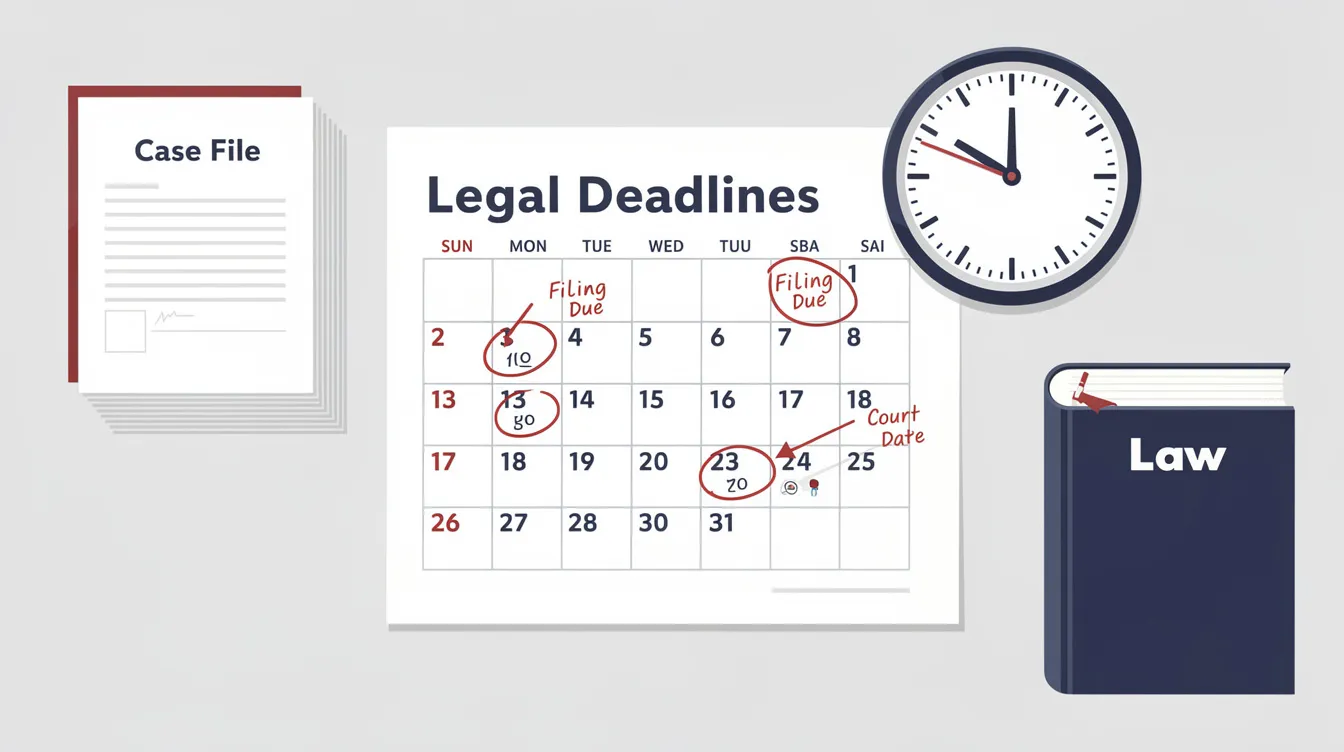
Missing legal deadlines can completely bar your recovery, even if you have strong evidence and significant injuries.
Key time limits to know:
Deadline Type |
Typical Timeframe |
|---|---|
Colorado bodily injury lawsuit |
3 years from accident date |
Property damage claims |
2 years from accident date |
Policy notice requirements |
30–60 days (varies by policy) |
Contractual limitation clauses |
2 years common in policies |
Why waiting is risky:
Evidence disappears (witnesses forget, surveillance footage is deleted)
Medical records become harder to connect to the accident
Insurance policies may have shorter contractual deadlines than the statute of limitations
Identifying all responsible policies (multiple vehicles, multiple households) takes time, especially in rural counties around Pueblo
Don’t wait until the deadline approaches. Contact Johnston Law Firm, LLC as soon as possible after any uninsured or hit-and-run crash to preserve evidence and protect your claim.
Do not risk missing critical deadlines. Call (719) 309-9484 or reach out to us online today for a free review of your timing and filing requirements.
Preventing Future Claim Issues
Taking proactive steps now can save you from major headaches if you’re ever involved in an accident with an uninsured or underinsured motorist. The first and most important action is to review your auto insurance policy to ensure you have adequate uninsured motorist and underinsured motorist coverage. Many Colorado drivers are surprised to learn they either waived this coverage or have limits that are too low to cover serious injuries or property damage.
After any accident, keep detailed records of all medical expenses, lost wages, and property damage. Accurate documentation is essential when filing uninsured motorist claims, as insurance companies often look for reasons to minimize or deny payouts. Be aware of the tactics insurance companies use, such as disputing who was at fault, questioning the necessity of your medical treatment, or delaying the claims process in hopes you’ll accept a lower settlement.
To further protect yourself, consider consulting with a personal injury attorney experienced in uninsured motorist claims. An attorney can guide you through the claims process, advocate for your rights, and help you counter the strategies insurance companies use to reduce your compensation. By staying informed, keeping thorough records, and seeking professional advice when needed, Colorado drivers can prevent future claim issues and ensure they receive the compensation they deserve after an accident with an uninsured or underinsured motorist.
How Johnston Law Firm, LLC Helps with Colorado Uninsured Motorist Claims
Steve Johnston is a Pueblo-based attorney representing people across Colorado, including Otero, Fremont, Custer, Huerfano, Las Animas, and Crowley Counties. His practice focuses on helping individuals navigate complex insurance claims and personal injury cases.
Specific services for uninsured and underinsured motorist cases:
Reviewing all applicable auto and health insurance policies
Identifying UM/UIM, MedPay, and collision coverage you may not know you have
Spotting coverage issues and potential bad faith claims
Gathering and organizing medical records, wage documentation, and repair estimates
Building a comprehensive damages presentation
Handling all communications and negotiations with your own insurance company
Pushing back against low offers and unreasonable delays
Litigating claims when insurers refuse to pay fair value
Broader experience that benefits UM/UIM clients:
Johnston Law Firm’s work in personal injury, automobile accidents, workers’ compensation, and social security law helps clients dealing with overlapping issues. If your crash happened while working, or if your injuries have resulted in disability, we understand how these areas intersect.
What sets us apart:
Individualized attention for Pueblo and Southern Colorado residents
Not a high-volume, assembly-line approach
Personal relationship with Steve Johnston, not just a case number
Contingency fee structure—no attorney fees unless there is a recovery
Take the Next Step: Talk to a Pueblo, Colorado Uninsured Motorist Lawyer Today
Being hit by an uninsured or hit-and-run driver in Colorado does not mean you have no options. The situation feels overwhelming, but proper coverage and legal strategy can help you recover.
Remember:
UM/UIM coverage can step into the shoes of the uninsured driver’s missing insurance
MedPay can cover immediate medical costs without waiting for fault determination
Collision coverage can repair your vehicle regardless of the other driver’s status
An experienced attorney can identify coverage you didn’t know you had and fight for fair value
Do not negotiate alone with insurance companies or assume an initial offer is fair. Insurance adjusters are trained to minimize what they pay—especially when you’re dealing with serious injuries and mounting medical bills.
Schedule a free consultation with Johnston Law Firm, LLC by calling (719) 309-9484 or sending us a confidential message online.
Steve Johnston can meet clients in Pueblo and consult by phone or virtually with individuals throughout Colorado. Let an experienced personal injury attorney handle the legal burdens while you focus on what matters most—your recovery.