Wrongful Death Car Accident Colorado – What Families Can Recover After A Fatal Crash
Key Takeaways
-
Colorado families may recover damages under the Colorado Wrongful Death Act after a fatal car accident caused by someone else’s negligence.
-
The deadline to file a wrongful death lawsuit in Colorado is generally 2 years from the date of death.
-
Only certain family members (spouse, children, parents, or designated beneficiaries) can file a wrongful death claim, with specific rules based on timing and relationship.
-
Only one wrongful death lawsuit is allowed per fatal incident in Colorado.
-
Highways in Pueblo and Southern Colorado, such as I-25, US-50, and Highway 96, have elevated crash risks.
-
Steve Johnston at Johnston Law Firm, LLC helps families pursue wrongful death claims after fatal auto accidents in Pueblo and surrounding counties.
-
Consulting a car accident lawyer is crucial for legal representation in wrongful death cases.
-
Contact Johnston Law Firm at (719) 309-9484 or message online for a free, confidential consultation.
Introduction: Fatal Car Accidents and Wrongful Death Claims in Colorado
Losing a loved one in a Colorado car crash delivers profound emotional and financial shock. For families in Pueblo and surrounding communities, the impact can feel overwhelming—especially when the fatal accident occurs on high-traffic corridors like I-25, which sees over 30,000 vehicles daily, or on rural stretches of US-50 and Highway 96 where fatality rates run significantly higher than state averages.
This guide is for Colorado families who have lost a loved one in a car accident and want to understand their legal rights and options for wrongful death claims. Understanding your rights under Colorado wrongful death law is crucial for securing financial support and accountability after a tragic loss.
A wrongful death car accident occurs when a fatal crash results from a driver's negligence or someone else's negligence—such as drunk driving, speeding, texting behind the wheel, or other reckless conduct that takes an innocent life. In Colorado, a wrongful death claim is a civil case, completely separate from any criminal charges the at-fault party may face. The primary focus is to obtain financial compensation for surviving family members, providing accountability and support as they cope with the aftermath.
Johnston Law Firm, LLC, based in Pueblo, represents families throughout Colorado after fatal auto collisions, including those in Otero, Fremont, Custer, Huerfano, Las Animas, and Crowley Counties. If someone you love was killed in a car accident anywhere in Colorado, contact Steve Johnston at (719) 309-9484 or message us online for immediate guidance.

What Is a Wrongful Death Car Accident Under Colorado Law?
In Colorado, only certain individuals can file a wrongful death claim, primarily based on their relationship to the deceased and the timing of the claim after the death. A wrongful death claim can be filed when a loved one's death is caused by someone else's negligence or wrongful act, such as a fatal car accident.
Under Colorado law, a wrongful death occurs when a person dies due to another’s negligent, reckless, or intentional act. These claims are governed by the Colorado Wrongful Death Act, which provides the legal framework for seeking compensation after a fatal incident. In the context of motor vehicle accidents, this means a fatal crash where the at fault party’s driving behavior directly caused the death.
Common scenarios leading to wrongful death car accident claims include:
-
Alcohol or drug-impaired driving (DUI caused 28% of Colorado’s 2024 traffic fatalities)
-
Excessive speeding on I-25, US-50, or rural highways
-
Distracted driving, including texting while operating a vehicle
-
Running red lights at Pueblo intersections or Colorado Springs corridors
-
Unsafe lane changes involving commercial trucks violating federal regulations
Had the victim survived, they would have had a personal injury claim against the negligent driver. Because they passed away, Colorado law transfers that right to certain eligible surviving family members through a wrongful death action, which is a part of personal injury law.
Criminal DUI or reckless driving charges against the driver do not replace civil compensation. A wrongful death case can proceed even without a criminal conviction because civil court uses a different standard of proof—a preponderance of evidence rather than beyond a reasonable doubt.
Who Can File a Wrongful Death Car Accident Claim in Colorado?
Colorado strictly limits which relatives can bring a wrongful death case and when they can file, as governed by the Colorado Wrongful Death Act. This law determines who is eligible to file a claim after a family member's death and under what circumstances. Understanding these rules is essential for protecting your family’s rights.
Summary of Key Rules for Colorado Wrongful Death Claims:
-
Who Can File and When:
-
First year after death: Only the surviving spouse may file (may allow children or designated beneficiary to join).
-
Second year after death: Spouse, children, or parents (if no spouse or children exist) may file.
-
If unmarried with no children: Parents may file throughout the 2-year period.
-
-
Statute of Limitations: Generally, a wrongful death lawsuit must be filed within 2 years from the date of death.
-
Cap on Non-Economic Damages: Non-economic damages are capped (approximately $598,350, subject to inflation adjustments).
-
Exception for Felonious Killings: If the death resulted from a felonious killing (e.g., murder, manslaughter), the cap on non-economic damages does not apply, and the statute of limitations may extend to 4 years.
-
Only One Lawsuit Allowed: Colorado law allows only one wrongful death lawsuit per fatal incident; a settlement by one authorized party is binding on all others.
Year-by-year eligibility under C.R.S. § 13-21-201:
|
Timeframe |
Who May File |
|---|---|
|
First year after death |
Only the surviving spouse (may allow children or designated beneficiary to join) |
|
Second year after death |
Spouse, children, or parents (if no spouse or children exist) |
|
Unmarried deceased with no children |
Parents may file throughout the 2-year period |
Colorado law allows only certain family members to file a wrongful death claim, with the surviving spouse having exclusive rights to file within the first year after the family member's death. The first year following the death is typically reserved for the surviving spouse, who has exclusive rights to file the wrongful death claim. If the spouse has not filed a claim within the first year, surviving children or designated beneficiaries may file a wrongful death claim in the second year.
Only one wrongful death lawsuit is permitted per decedent. Family members must coordinate who files a wrongful death claim and how any recovery will be divided.
If you’re unsure whether you’re eligible to file a wrongful death claim in Colorado, call (719) 309-9484 or reach out online. Johnston Law Firm, LLC can review your relationship to the deceased and explain your rights under Colorado law.
What Families Can Recover After a Fatal Car Crash in Colorado
Colorado wrongful death law allows families to recover both economic and non-economic damages after a fatal incident caused by someone else’s negligence. In most wrongful death claims, families can seek compensation for funeral expenses, burial costs, and lost income, though statutory caps may limit certain damages.
Economic Damages (Uncapped):
-
Funeral expenses and burial costs
-
Lost income the deceased would have provided to their family
-
Final medical bills related to the crash (ER treatment, ICU care, surgeries)
-
Lost wages and benefits the deceased would have provided (health insurance, retirement contributions, Social Security)
-
Loss of household services such as childcare, home maintenance, and transportation
Non-Economic Damages:
-
Grief, emotional pain, and mental anguish experienced by surviving family members
-
Loss of love, comfort, companionship, and guidance
-
Loss of consortium for a surviving spouse
-
Emotional distress from the traumatic loss
Colorado allows families to pursue either “traditional” non-economic wrongful death damages (subject to caps) or elect a fixed “solatium” amount instead of proving emotional suffering in detail.
Punitive damages may apply in egregious cases—fatal DUI crashes, hit-and-run collisions, or street racing—where the driver’s negligence showed reckless disregard for human life. These damages punish the wrongful act and deter similar conduct.
Colorado Damage Caps and Solatium in Wrongful Death Car Accident Cases
Colorado places limits on certain non-economic wrongful death damages under the Colorado Wrongful Death Act, which sets the statutory caps for these damages. However, economic damages like funeral costs, medical expenses related to the crash, and lost income remain uncapped.
Current non-economic damage caps:
For wrongful death claims filed in 2025 and beyond, House Bill 24-1472 increases caps significantly:
|
Filing Year |
Non-Economic Cap |
|---|---|
|
2025 |
Approximately $650,000 |
|
2026 |
Approximately $850,000 |
|
2030 (projected) |
$1 million |
These caps, established by the Colorado Wrongful Death Act, adjust for inflation and reflect Colorado’s recognition that prior limits failed to compensate surviving family members fairly. The caps directly affect the financial compensation available to families for non-economic losses.
Solatium option:
Families may elect a fixed statutory solatium amount—approximately $135,990 in recent years—instead of proving specific emotional losses. This simplifies proof but often undercompensates compared to traditional non-economic awards averaging $300,000–$500,000.
Felonious killings:
When the fatal car accident results from a felonious killing (certain DUI or vehicular homicide convictions), Colorado may lift the usual caps entirely. This allows families to seek maximum compensation including full non-economic damages and punitive awards.
Statute of Limitations for Wrongful Death Car Accident Claims in Colorado
Most Colorado wrongful death car accident claims must be filed within 2 years of the date of death—not necessarily the crash date if the victim survived initially before passing.
Missing this deadline typically means permanently losing the right to recover compensation, regardless of how strong your evidence may be. Courts enforce this limit strictly under C.R.S. § 13-21-204.
Cases involving felonious killing may have an extended window up to 4 years, but families should never rely on exceptions without legal advice from an experienced wrongful death attorney.
Contacting a lawyer early protects critical evidence:
-
Vehicle “black box” data may overwrite within 30 days
-
Witness memories fade over time
-
Crash scenes degrade from weather and traffic
-
Medical records become harder to obtain
Don’t wait to protect your family’s rights. Call (719) 309-9484 or message Johnston Law Firm, LLC online as soon as possible after a fatal car accident in Pueblo or anywhere in Colorado.
Wrongful Death vs. Survival Action After a Fatal Auto Collision
A wrongful death claim is a legal action that compensates surviving family members for losses sustained due to the wrongful death of their loved one, while a personal injury claim is filed by the victim themselves if they survive the incident.
Colorado often allows two related civil claims after a deadly car wreck: a wrongful death action and a survival action. Understanding the difference helps families maximize their recovery.
Wrongful death action: This claim is brought by eligible surviving family members for their own financial and emotional losses after the loved one’s death. Damages compensate the family for what they lost—income support, companionship, guidance.
Survival action: This claim is brought by the personal representative of the deceased person’s estate to recover damages the victim could have pursued if they had lived:
-
Medical expenses from crash to death
-
Lost wages between injury and death
-
The deceased’s pain and suffering during that period
Survival action recoveries flow into the deceased person's estate and are distributed under the will or Colorado intestacy law, which may differ from how wrongful death damages are shared among family members.
An experienced Pueblo wrongful death attorney like Steve Johnston can determine which claims apply, file both when appropriate, and coordinate strategy against the at fault party and their insurance coverage.
Proving Negligence in a Colorado Wrongful Death Car Accident Case
To recover compensation in a Colorado wrongful death case, the family must prove four elements of negligence:
1. Duty Every Colorado driver owes a legal obligation to operate their vehicle safely and follow traffic laws on highways, city streets, and rural roads.
2. Breach The at-fault party violated that duty through actions such as:
-
Drunk or impaired driving
-
Texting while driving
-
Speeding through a school zone
-
Running red lights
-
Failing to yield to pedestrians
Wrongful death claims in Colorado often arise from a driver's negligence or someone else's negligence, where the responsible party fails to uphold their duty of care.
3. Causation The driver’s negligence or someone else's negligence directly led to the fatal injuries. This rules out independent causes like unforeseeable medical events or truly unavoidable weather conditions.
4. Damages The family and estate suffered measurable financial and emotional losses—documented through bills, records, and expert testimony when needed.
Colorado follows a modified comparative negligence system. If the deceased shared some fault (but less than 50%), the family can still seek compensation, though the award reduces proportionally.
Evidence Used in Fatal Car Crash Wrongful Death Claims
Strong evidence is essential to prove liability and seek fair compensation in a wrongful death case. Building a solid evidentiary foundation starts immediately after the fatal crash.
Key evidence types include:
-
Police crash reports from Pueblo Police Department, Colorado State Patrol, or county sheriff’s offices
-
Photographs and videos of the crash scene, vehicle damage, skid marks, and road conditions
-
Event data recorder (“black box”) information from vehicles, especially commercial trucks
-
Medical records, autopsy reports, and death certificates linking collision to cause of death
-
Witness statements from drivers, passengers, or bystanders
-
Cell phone records, blood alcohol tests, or surveillance footage showing misconduct
In complex wrongful death cases, accident reconstruction experts, economists, and medical specialists may testify about how the crash occurred and the long-term financial impact on the family.
A local attorney familiar with Pueblo and Southern Colorado courts can quickly send preservation letters preventing destruction of critical electronic data and company records. Contact Johnston Law Firm, LLC so the firm can begin investigating while memories and evidence remain fresh.
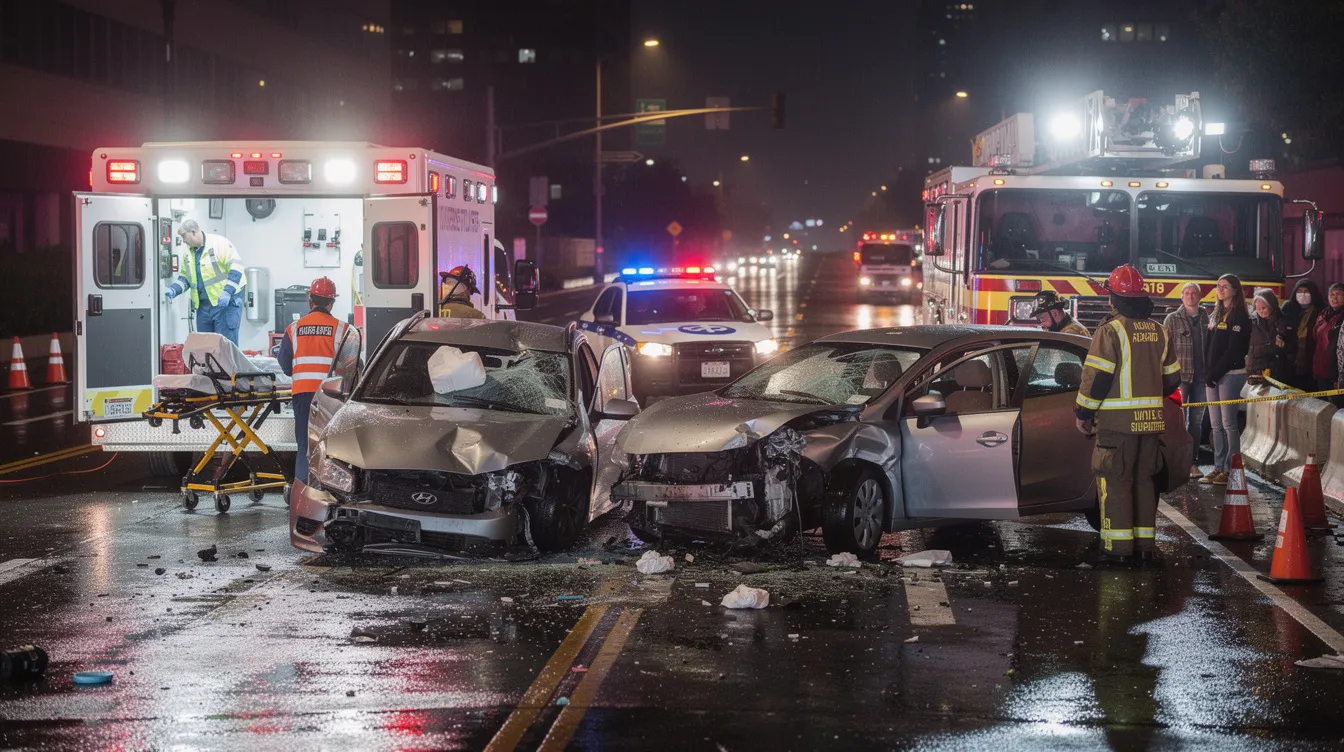
Common Causes of Fatal Car Accidents in Pueblo and Across Colorado
Colorado recorded 677 traffic fatalities in 2024 according to the Colorado Department of Transportation. Pueblo County alone saw 12 fatal crashes that year, up from 9 in 2023.
Frequent causes of deadly crashes include:
-
Alcohol or drug-impaired driving (28% of 2024 fatalities)
-
Excessive speeding (25% of fatal crashes)
-
Distracted driving, including texting (18%)
-
Fatigued commercial truck drivers violating federal hours-of-service rules
-
Failure to yield at intersections and unsafe left turns
-
Dangerous winter weather driving without appropriate caution
In addition to car accidents, medical malpractice is another leading cause of wrongful death claims in Colorado.
High-risk areas in Southern Colorado include I-25 corridors, rural US-50 stretches through Otero and Las Animas Counties, and Highway 96’s curves with limited visibility.
Even when police initially attribute a fatal accident to weather or road conditions, deeper investigation may reveal driver’s negligence, poor vehicle maintenance, or trucking regulation violations. Identifying true causes is essential for holding all responsible parties accountable—from individual drivers to employers or vehicle owners.
What to Do After a Loved One Is Killed in a Colorado Car Accident
Legal decisions may feel overwhelming during grief, but early steps protect your family’s ability to recover compensation.
Practical actions to take:
-
Obtain the official crash report from the investigating police agency.
-
Gather photos, videos, or messages related to the crash or the negligent driver’s conduct.
-
Preserve insurance paperwork.
-
Keep medical bills.
-
Save funeral invoices.
-
Document lost income.
-
Avoid posting crash details or opinions on social media.
-
Decline recorded statements or signing releases for the at fault party’s insurance company before consulting a lawyer.
Consulting a car accident lawyer or a Colorado wrongful death attorney can help guide your family through the legal process, ensuring your rights are protected and maximizing your chances of securing compensation. A wrongful death attorney handles communications with insurance companies and reduces the administrative burden during an already difficult time.
Call Steve Johnston at (719) 309-9484 or send a secure message online for immediate guidance on protecting your family member’s death claim.

How Johnston Law Firm, LLC Helps Families After a Fatal Car Accident
Johnston Law Firm, LLC is a Pueblo-based practice focused on representing individuals and families in workers’ compensation, personal injury, automobile accidents, estate planning, criminal law, and social security matters. As a dedicated Colorado wrongful death attorney, Steve Johnston brings skilled legal representation to wrongful death car accident cases throughout the state, including Denver fatal car accident claims and cases across Southern and Central Colorado.
Services for wrongful death cases include:
-
Thorough crash investigation and identification of all at fault parties and insurance coverages
-
Calculation of full economic and non-economic damages, including long-term financial support the deceased would have provided
-
Negotiation with auto insurers, trucking companies, and other defendants to seek fair compensation
-
Preparation for trial in Pueblo County or other Colorado courts when insurers refuse to pay just compensation
Steve Johnston represents families across Pueblo and throughout Colorado, including Otero, Fremont, Custer, Huerfano, Las Animas, and Crowley Counties.
The firm’s commitment to personal attention, clear communication, and compassionate representation makes a difference during one of the most difficult periods in a family’s life.
For a free consultation about your colorado wrongful death case, call (719) 309-9484 or contact the firm through the online contact form.
Frequently Asked Questions About Colorado Wrongful Death Car Accident Claims
How is a wrongful death settlement divided among family members in Colorado?
Colorado statutes control how wrongful death proceeds are allocated. The surviving spouse typically receives a significant share, with children receiving defined portions depending on who files and family structure. Division becomes more complicated when multiple heirs are involved, and courts may need to approve distributions when minor children are affected.
Families should speak with a wrongful death attorney to understand exactly how any settlement or verdict would be divided in their specific situation before proceeding with legal action.
Can we bring a wrongful death claim if the deceased was partially at fault for the crash?
Colorado follows a modified comparative negligence system. If the deceased shared some fault but their percentage was less than 50%, the family can typically still recover compensation. However, any award reduces by the percentage of fault assigned to the deceased—for example, 20% fault means damages reduce by 20%.
Having an experienced wrongful death attorney challenge unfair attempts by insurers to overstate the deceased’s responsibility is critical for maximizing recovery.
Will my wrongful death car accident case have to go to trial?
Many wrongful death claims filed in Colorado settle through negotiations or mediation once evidence is developed and damages are documented. However, some cases proceed to trial when the insurance company disputes liability or refuses a fair settlement.
A trial lawyer like Steve Johnston prepares every case for court while working to resolve matters as efficiently as possible for grieving families.
How long does a wrongful death car accident case usually take in Colorado?
Straightforward cases may resolve in several months, while complex cases involving serious disputes or multiple defendants can take a year or longer. Investigation, financial and medical analysis, expert review, and court scheduling all affect timelines.
Every wrongful death suit is unique. Ask about expected timelines during your free consultation with Johnston Law Firm.
What does it cost to hire Johnston Law Firm, LLC for a wrongful death car accident case?
Wrongful death cases are typically handled on a contingency fee basis—families pay no attorney’s fees upfront and only owe fees if there is a financial recovery. Initial consultations are free, and the firm explains the fee agreement and any case expenses in writing before representation begins.
Call (719) 309-9484 or contact Johnston Law Firm, LLC online to discuss fees and how the contingency arrangement works for your case.