Workers Comp Neck Injury Colorado – Cervical Disc Claims, Treatment, and Disability Benefits
Introduction
If you are a Colorado worker who has suffered a neck injury on the job, understanding your rights and the workers compensation process is crucial. This guide covers a wide range of work-related neck injuries—including strains, herniated cervical discs, spinal stenosis, and spinal cord injuries—and explains the types of benefits available, such as medical treatment, lost wages, and disability compensation. The article is specifically designed for Colorado workers dealing with neck injuries, whether from a single accident or repetitive strain, and for their families seeking clarity on the workers comp system. Knowing how Colorado workers compensation works for neck injuries is important because insurance companies often dispute these claims, and the outcome can significantly impact your health, finances, and ability to return to work. By understanding the process, eligibility requirements, and potential benefits, you can better protect your rights and secure the support you need during recovery.
Key Takeaways
-
Colorado workers with work-related neck injuries, including herniated cervical discs, may receive workers compensation benefits for medical treatment, lost wages, and disability benefits, but insurance companies often dispute these claims.
-
Johnston Law Firm, LLC in Pueblo represents injured workers with neck and back injuries across Colorado, including Otero, Fremont, Custer, Huerfano, Las Animas, and Crowley Counties, and offers a free consultation.
-
Maximum medical improvement, impairment ratings, and whether you can return to regular work or only temporary partial disability/light duty are major drivers of claim value.
-
Early reporting, the authorized treating physician, and documenting arm, finger, shoulder-blade, headache, and grip symptoms are critical to a strong neck injury claim.
-
If you searched for workers comp neck injury colorado after a workplace accident, call Johnston Law Firm at (719) 309-9484 or message us online as soon as possible.
Colorado Workers’ Comp for Neck Injuries: How Johnston Law Firm Helps
Work-related neck injuries can come from one accident, repeated strain, heavy lifting, prolonged sitting, poor posture, or repetitive motion. A “simple” strain can become chronic pain, bulging discs, herniated discs, spinal stenosis, spinal cord injuries, or a permanent injury that affects driving, sleeping, lifting, and job duties.
In Colorado, the workers compensation system is a no-fault system, meaning benefits are provided regardless of who caused the workplace injury. Colorado workers comp is often the exclusive remedy against the employer, replacing a traditional personal injury lawsuit against the employer, although third-party claims may still exist.
Johnston Law Firm, LLC, led by Pueblo trial lawyer Stephen M. Johnston, helps injured workers statewide with a workers compensation claim involving whiplash, cervical strain, cervical radiculopathy, fractured vertebrae, spinal cord damage, fusion surgery, and combined back or neck injuries. For a free, no-obligation review, call (719) 309-9484 or reach us through our online contact form .

Common Work-Related Neck Injuries and Symptoms in Colorado
Neck injuries can arise from falls, vehicle crashes, dropped loads, equipment failures, tractor-trailer accidents involving truck drivers, or repetitive strain from overhead work. Workers in physically demanding jobs, such as nursing assistants and warehouse workers, are at a higher risk for back and neck injuries due to factors like heavy lifting, repetitive motion, and sustained postures.
Common types of back and neck injuries in the workplace include mild muscle strains, herniated discs, and spinal stenosis, which can vary significantly in severity and recovery time. Musculoskeletal disorders are among the most common and costly workplace injuries, with approximately 38.5% of work-related musculoskeletal disorders being neck and back injuries, totaling nearly 200,000 cases in the U.S. from 2021 to 2022.
Common symptoms to document at every doctor visit include:
-
Neck stiffness
-
Headaches at the base of the skull
-
Burning between the shoulder blades
-
Numbness or tingling into the fingers
-
Grip weakness
-
Loss of range of motion
-
Sleep problems
-
Difficulty turning your head
If a workplace incident aggravates a prior neck condition, the injured worker may still be eligible for workers’ compensation benefits.
Workers Compensation Benefits for Cervical Disc and Neck Injury Claims
Types of Benefits
In Colorado, if your workers’ compensation claim for a back or neck injury is approved, you may be eligible for benefits such as medical care, temporary disability benefits, and permanent disability benefits. These workers comp benefits generally fall into four categories: medical benefits, temporary disability, permanent disability, and death benefits.
Eligibility Requirements
All benefits depend on proving the injury was a work related injury and that the workers comp claim is accepted or ordered compensable. If a fatal workplace accident occurs, surviving family members may seek death benefits, including certain funeral expenses. If a negligent property owner, subcontractor, driver, or product manufacturer caused the injury, a separate claim may help pursue full compensation beyond workers comp limits.
Insurance companies often minimize a neck injury claim by calling it degenerative, pre-existing, or “not serious enough.” Before agreeing to any settlement, especially with migraines, arm numbness, or surgery discussions, call Johnston Law Firm at (719) 309-9484 or send us a message online .
Medical Treatment for Neck Injuries Under Colorado Workers Comp
Colorado law requires the employer or insurance carrier to pay reasonable and necessary medical treatment for an approved injury, including:
-
Doctor visits
-
Medical expenses
-
Physical therapy
-
Prescriptions
-
Injections
-
Diagnostic testing
-
Surgery when medically supported
The Colorado Division of Workers’ Compensation explains injured-worker benefits here .
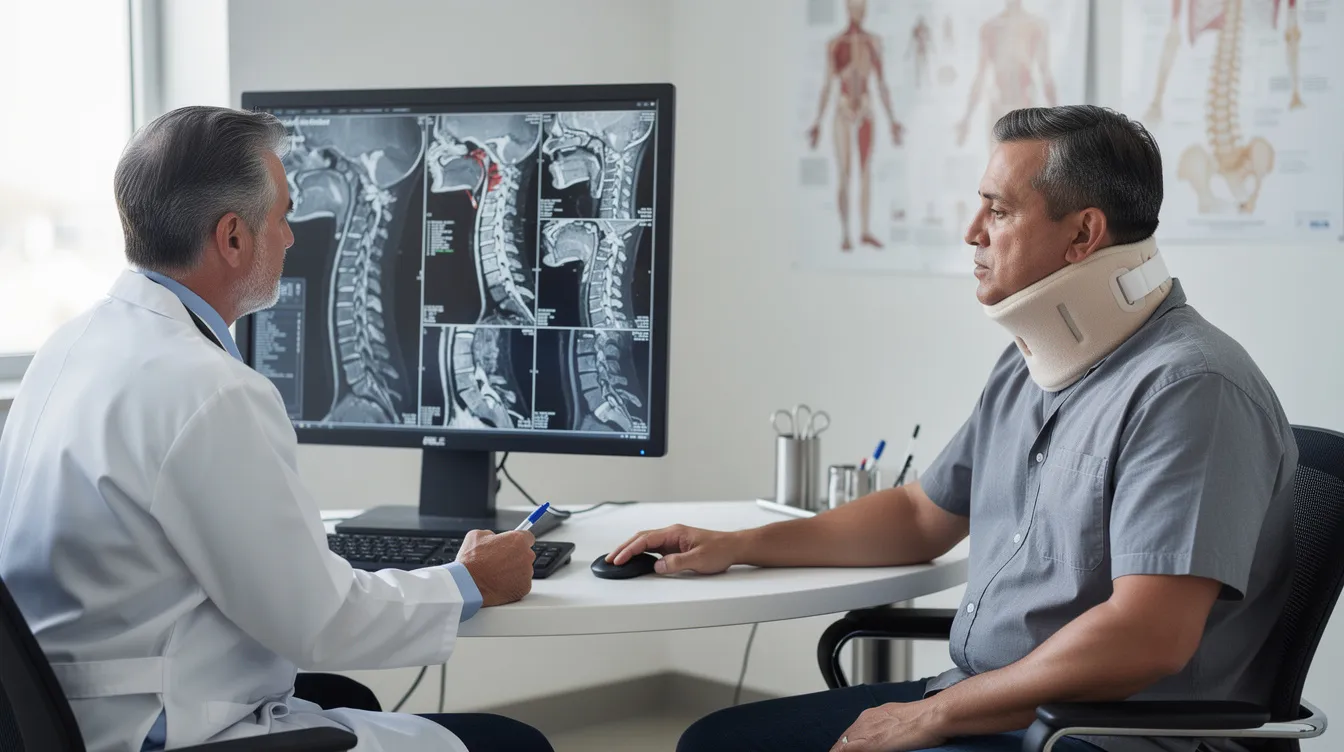
Common testing includes X-rays, MRI, CT scans, nerve conduction studies, and EMG testing for radiculopathy or myelopathy. Under Colorado’s Medical Treatment Guidelines, advanced diagnostic imaging is not authorized for the first six weeks after a neck injury unless certain exceptions apply.
Treatment may include:
-
Medications
-
Muscle relaxants
-
Chiropractic care when authorized
-
Epidural steroid injections
-
Medial branch blocks
-
Pain management
-
Anterior cervical discectomy and fusion
-
Posterior fusion
-
Disc replacement
-
Decompression
Most workers must treat with an authorized treating physician, but disputes may support a physician change, second opinion, IME challenge, or DIME.
Temporary Disability: TTD and Temporary Partial Disability for Neck Injuries
Temporary total disability benefits in Colorado are paid at two-thirds of your average weekly wage every two weeks, and are available if a doctor takes you completely off work due to your injury. Temporary total disability may also apply if your employer has no work within your restrictions.
Temporary partial disability benefits apply when you return to modified work but earn less than pre injury wages. Temporary partial disability often matters when neck restrictions prevent overhead work, commercial driving, lifting, prolonged sitting, or other essential job duties. Lost wage benefits usually begin after three missed work shifts, and the waiting period may be reimbursed if disability lasts more than two weeks.
Do not simply take yourself off work. Tell the authorized treating physician immediately if light duty worsens symptoms so restrictions and lost wages are documented correctly. Legislative limits exist in Colorado on the combined financial recovery for Temporary Total Disability (TTD) and Permanent Partial Disability (PPD), making accurate wage calculations important.
Permanent Disability Benefits: PPD and PTD for Cervical Spine Injuries
The maximum medical improvement date is assigned by the doctor when the worker’s condition stabilizes and no further improvement is expected. Once you have reached maximum medical improvement, the doctor may decide whether you have permanent disability.
The American Medical Association (AMA) Guides are utilized to assign a Permanent Partial Disability (PPD) percentage rating for neck injuries in Colorado. Permanent Partial Disability (PPD) benefits compensate for permanent loss of function or impairment to a body part, and the amount is calculated based on the percentage of loss determined by a doctor and Colorado state statute.
Permanent partial disability may be significant after cervical fusion, nerve damage, or permanent restrictions. Permanent total disability and permanent total disability benefits may apply when back and neck injuries prevent any suitable employment. Disputes over MMI, ratings, and apportionment are common; an experienced workers compensation attorney can request a DIME when appropriate.
Factors That Drive the Value of a Colorado Neck Injury Claim
Settlement Considerations
No two claims are identical, but value often turns on objective imaging, nerve compression, surgery, permanent work restrictions, the impairment rating, age, education, occupation, and whether both back or neck areas are involved. A single-level strain may resolve with modest benefits, while a multi-level cervical fusion with permanent restrictions can produce a much larger claim.
Colorado has caps and statutory limits on some disability payments, but reasonable and necessary medical care may remain available depending on the claim and settlement terms. That is why early settlement before MMI or before a final impairment rating can be risky.
Insurers often push low offers while the future is uncertain. If you are being asked to sign a final release, speak with a workers compensation attorney first so you understand medical benefits, wage loss, and the long-term value of your workers comp claim process.
Practical Steps After a Work-Related Neck Injury in Colorado
Early action can determine whether a workers compensation process is strong or disputed. In Colorado, workers must provide written notice of their injury to their employer within four days to ensure eligibility for workers’ compensation benefits. Keep a copy.
A worker must formally file a Worker’s Claim for Compensation (Form WC15) with the Colorado Division of Workers’ Compensation within two years of the injury. The insurance provider has 20 days to respond after receiving a workers’ compensation claim in Colorado. Report symptoms, see a doctor immediately, follow restrictions, and avoid “toughing it out” through tasks that worsen a back injury, neck injury results, or nerve symptoms.
Dealing with Insurance Company Tactics in Neck Injury Claims
Common reasons for denial of workers’ compensation claims for back and neck injuries include claims that the injury was caused by a pre-existing condition, missing a reporting deadline, or the insurer deeming the pain not “serious enough.” Insurance companies often deny claims by arguing that the injury was not work-related or was pre-existing, which can lead to disputes over the legitimacy of the claim.
If an accident is not witnessed, insurers may question whether the injury occurred at all, which can lead to claim denials. Insurers may also delay MRI authorization, dispute surgery, use broad medical releases, monitor social media, or send the worker to a defense-friendly IME.
If a claim is contested, the injured worker has the right to appeal and request a hearing before an Administrative Law Judge. Facing denied claims, late checks, or delayed treatment? Call Johnston Law Firm at (719) 309-9484 or send us a secure message .
Neck Injury Workers Comp Claims vs. Personal Injury and Social Security Cases
Serious neck and back injuries may involve workers compensation, personal injury, automobile accidents, and Social Security disability. Workers comp usually prevents suing your employer for pain and suffering, but a negligent third party may still be responsible.
For example, a cervical disc herniation from a work-related car crash may involve both colorado workers compensation and an auto liability claim. SSDI may also matter when chronic limitations prevent substantial work for 12 months or longer.
Johnston Law Firm handles workers’ compensation, personal injury, automobile accidents, estate planning, criminal law, and social security law, allowing the firm to coordinate liens, offsets, disability benefits, and settlement language so one case does not harm another.
Why Work with Johnston Law Firm, LLC on Your Colorado Neck Injury Claim?
Stephen M. Johnston has represented Colorado workers and injury victims for decades, combining trial experience with small-firm access and practical guidance. The firm represents clients in Pueblo, the Colorado Springs corridor, Otero, Fremont, Custer, Huerfano, Las Animas, Crowley Counties, and throughout Colorado.
Hiring an attorney who specializes in workers’ compensation cases significantly increases the likelihood of receiving benefits for back and neck injuries in Colorado. Consulting a workers’ compensation attorney can help navigate the complexities of the claims process, especially when dealing with insurance companies and potential claim denials.
If a workers’ compensation claim is denied, it is important to consult with a local attorney who can assist in appealing the decision and ensuring that the worker’s rights are protected. For help with the colorado workers compensation system, call Johnston Law Firm at (719) 309-9484 or contact us online for a free consultation.
Frequently Asked Questions About Colorado Workers Comp Neck Injury Claims
These answers are general information, not formal legal advice. For advice about your workers comp neck injury colorado situation, contact Johnston Law Firm directly.
How long do Colorado workers compensation neck injury cases usually take?
Minor neck strains may reach MMI in a few months. Herniated disc, injection, and fusion cases often take 12–24 months or longer, especially if hearings, DIMEs, or appeals are involved.
Can I change doctors or get a second opinion for my neck injury in Colorado workers comp?
Often, yes, but timing and authorization matter. Employers and insurers usually start with the authorized doctor, but a one-time change, second opinion, surgeon referral, or DIME may be available depending on the facts.
What if I am on light duty but my neck still hurts too much to work?
Do not quit showing up without medical support. Tell the authorized treating physician exactly which tasks cause pain, numbness, weakness, or headaches so restrictions can be updated and temporary disability benefits can be evaluated.
Will my Colorado workers comp neck injury affect a future Social Security disability claim?
It can. Workers comp benefits and SSDI can interact through offsets, so settlement language should be drafted carefully if the injury may prevent substantial gainful employment.
When should I call a workers compensation attorney about my neck injury in Colorado?
Call when you have MRI-confirmed disc damage, arm or hand numbness, surgery recommendations, permanent restrictions, denied treatment, incorrect wage checks, or an early MMI with a low rating. Call (719) 309-9484 or send a message through our website today.