Workers Comp Knee Injury Colorado – Meniscus Tears, Surgery, and Settlement Value
A workplace knee injury can take a Pueblo construction worker, warehouse employee, nurse, farmhand, or driver out of work fast. This guide explains workers comp knee injury colorado rules, meniscus tears, surgery, disability benefits, and settlement value-plus when to call Johnston Law Firm, LLC for help.
Key Takeaways
-
Colorado work-related knee injuries, including meniscus, ACL, MCL, and repetitive trauma injuries, may qualify for workers compensation benefits, medical treatment, lost wages, and disability benefits.
-
Torn meniscus and ligament injuries may require MRI testing, physical therapy, arthroscopic surgery, and permanent restrictions that can change workers compensation settlements.
-
TTD, temporary partial disability benefits, permanent partial disability benefits, and permanent total disability benefits depend on average weekly wage, impairment rating, and maximum medical improvement mmi.
-
Do not sign a quick low offer from an insurance company before speaking with an experienced workers compensation attorney.
-
For a free consultation, call Johnston Law Firm, LLC at (719) 309-9484 or message us online .
Colorado Work-Related Knee Injuries: Immediate Steps to Protect Your Claim
Many Southern Colorado workers hurt their knees on construction sites, in warehouses, hospitals, oil and gas fields, farms, and retail jobs. If you suffer a workplace injury, give written notice to your employer quickly; in Colorado, workers must report their injury in writing to their employer within four days to ensure eligibility for workers’ compensation benefits. Colorado law also has strict claim deadlines, including a two-year statute of limitations for filing a workers compensation claim in Colorado from the date of injury.
Ask for the designated provider list, get prompt medical care, and document symptoms, missed shifts, restrictions, witnesses, photos, and pay records. To defend a knee injury claim, gather medical documentation, incident evidence, witness corroboration, and financial records related to missed work. You generally cannot bring a personal injury lawsuit against your employer, but you may file a workers comp claim for medical benefits and workers comp benefits. Need help now? Call (719) 309-9484 or reach out online .
Common Work-Related Knee Injuries in Colorado
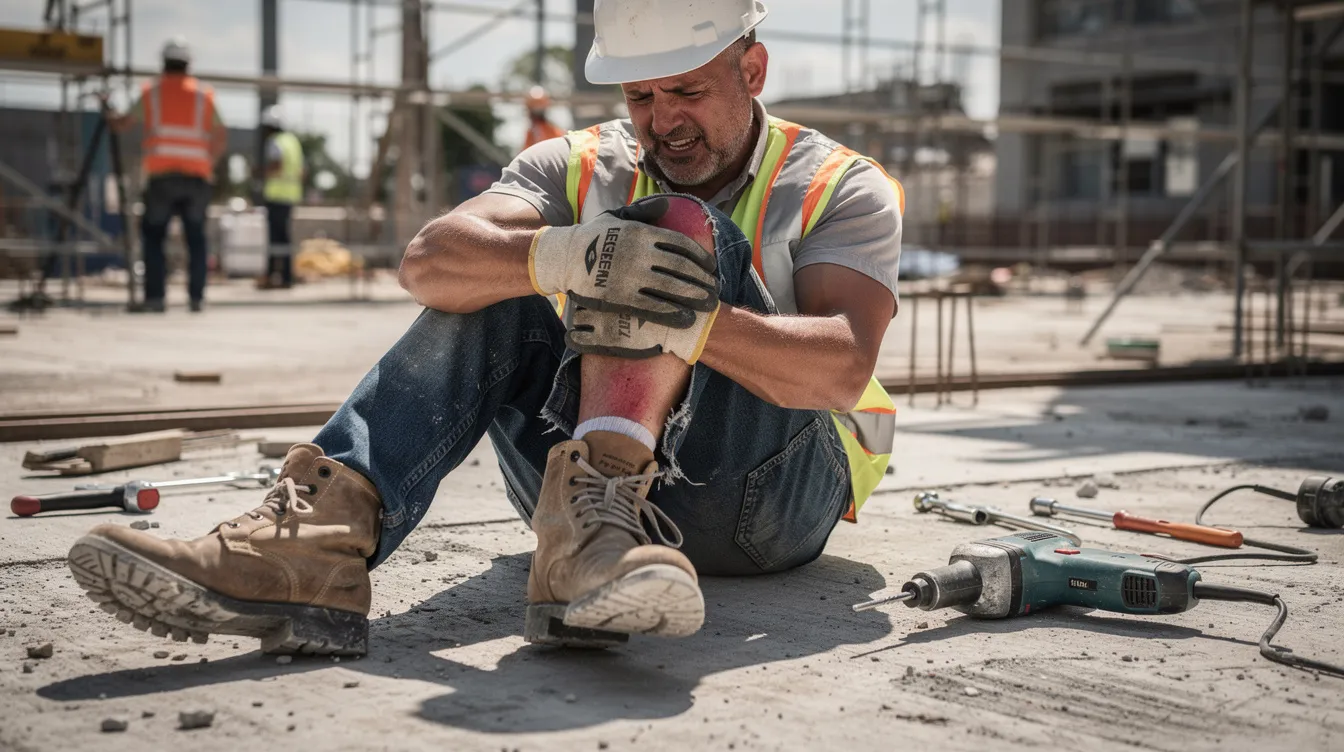
Attorney Steve Johnston regularly sees knee injury cases in Pueblo, Colorado Springs, Canon City, La Junta, and Otero, Fremont, Custer, Huerfano, Las Animas, and Crowley Counties.
Common injuries include:
-
Sprains
-
Strains
-
ACL/PCL/MCL/LCL tears
-
Torn meniscus
-
Patella fractures
-
Tibia or femur fractures near the knee
-
Bursitis
-
Tendonitis
-
Dislocations
These injuries happen from slip and falls, twisting while lifting, ladder falls, repetitive kneeling, heavy squatting, vehicle impacts, and uneven ground. Colorado workers compensation covers sudden accidents and cumulative trauma. Do not ignore locking, catching, swelling, popping, instability, or inability to bear weight.
Why Meniscus Tears Are So Common – And Often Missed at First
Meniscus cartilage can tear during a sharp twist while carrying weight, pivoting on a planted foot, stepping into a hole, or changing direction suddenly. Small tears may begin as mild soreness, clicking, or swelling, then worsen after days of heavy work.
Treatment may include rest, bracing, anti-inflammatory medication, injections, and physical therapy. Larger unstable tears may require arthroscopic surgery. Even without a “pop,” you can still have a compensable work related injury. Knee injuries, such as ACL tears and meniscus tears, are subject to scrutiny by insurance adjusters who may claim pre-existing conditions, so medical records and causation opinions matter.
Who Is Most at Risk for Workplace Knee Injuries?
Any injured employee can have a knee claim, but higher-risk groups include construction and roofing workers, warehouse employees along I‑25, nurses and CNAs, utility workers, agricultural workers, and food service employees. Tasks like unloading trucks in Pueblo, climbing grain bins in Otero County, kneeling on concrete, and working overtime on uneven ground increase stress on the knee joint.
Age, prior injuries, obesity, arthritis, and demanding schedules can make serious injuries more likely and give the insurance carrier arguments about degeneration.
Reporting and Getting Medical Treatment for a Knee Injury in Colorado Workers’ Comp
Colorado has strict rules for reporting and choosing an authorized treating physician. Employees in Colorado have the right to choose their medical provider from a list of designated medical providers provided by their employer after a workplace injury. After reporting an injury, the employer must notify the workers’ compensation insurance carrier as soon as possible, and if the injury results in more than three days off work, the insurer has up to 10 days to submit a First Report of Injury.
Employers in Colorado are required to carry workers’ compensation insurance regardless of their number of employees. For non-emergency care, choose from the list so workers compensation insurance covers treatment. The usual path includes urgent care, X-rays, MRI, conservative care, specialist referral, surgery if needed, and follow-up medical appointments. Tell every provider the injury happened at work.
Workers’ Compensation Benefits for Knee Injuries in Colorado
Colorado operates under a no-fault workers’ compensation system, meaning that employees can receive benefits regardless of who was at fault for the injury. Under Colorado workers’ compensation law, employees are entitled to receive medical treatment and partial wage replacement if they are injured on the job.
Workers’ compensation benefits in Colorado are designed to provide financial assistance to employees injured on the job, covering medical expenses and lost wages during recovery. In Colorado, workers’ compensation benefits for knee injuries can include medical benefits, temporary disability benefits, and permanent disability benefits. Medical care can include surgery, imaging, braces, medication, mileage, and medical costs with no ordinary co-pays for authorized care. Death benefits may apply for a deceased worker in fatal cases, though that is uncommon in knee-only claims.
Disability Benefits: TTD, Temporary Partial Disability, PPD, and PTD
In Colorado, workers’ compensation benefits include temporary disability benefits, which are provided to workers who are temporarily unable to work due to a work-related injury or illness, and permanent disability benefits for those with lasting impairments. Temporary Total Disability (TTD) benefits in Colorado are paid at two-thirds of the worker’s average weekly wage and continue until the worker reaches Maximum Medical Improvement (MMI) or returns to work. Temporary Total Disability (TTD) benefits are available if a worker is completely unable to work due to a knee injury, providing two-thirds of their average weekly wage.
Temporary total disability may also apply when restrictions cannot be accommodated. Temporary partial disability, also called temporary partial disability tpd, applies when pre injury wages drop because light duty pays less. Temporary partial disability benefits usually replace up to two thirds of the wage difference between previous wages and current earnings.
Permanent Partial Disability (PPD) benefits in Colorado compensate workers for permanent loss of function or impairment to a body part, calculated based on the impairment rating assigned by a doctor and the Colorado State statute. Permanent Partial Disability (PPD) benefits compensate workers for lasting impairment from knee injuries, calculated based on the percentage of impairment determined by a doctor. Permanent Total Disability (PTD) benefits are awarded to workers who are unable to earn any wages for the rest of their lives due to a work-related injury, and these benefits are paid at the same rate as Temporary Total Disability (TTD). permanent total disability ptd generally requires proof the worker cannot maintain gainful employment.
Maximum Medical Improvement (MMI), Impairment Ratings, and How They Affect Knee Injury Settlements
Maximum Medical Improvement (MMI) is reached when a knee injury has stabilized, which may result in a permanent impairment rating and additional compensation. Once a worker reaches Maximum Medical Improvement (MMI), their impairment rating is assessed, which is crucial for determining eligibility for permanent disability benefits in Colorado. If you have reached maximum medical improvement, the doctor evaluates range of motion, stability, pain, and function.
For knee claims, permanent partial disability ppd is often scheduled to the leg. Permanent partial disability benefits in Colorado are calculated using the percentage of impairment determined by a doctor, multiplied by the number of weeks of compensation assigned to the specific body part affected by the injury. A worker’s impairment rating can be disputed through procedures involving the colorado division, division of workers compensation, administrative courts, an IME, or DIME. Learn more from Colorado’s Division of Workers’ Compensation impairment rating resources .
Typical Settlement Factors for Meniscus and Other Knee Injuries in Colorado
There is no one chart for every colorado workers comp knee case. In Colorado, workers’ compensation settlements are typically calculated based on the employee’s average weekly wage, the impairment rating assigned by a doctor, and statutory caps on benefits. Settlement amounts for workers’ compensation claims in Colorado can range from $20,000 to $60,000, with severe cases potentially exceeding $600,000, depending on the injury and its impact on the worker’s ability to earn.
Key value drivers include surgery, future medical expenses, unpaid lost wage benefits, the worker’s average weekly wage, the employee’s average weekly wage, permanent impairment, future restrictions, education, age, and whether the injury prevents heavy labor. In Colorado, the maximum temporary disability benefit rate is updated annually; for the July 1, 2025 – June 30, 2026 period, it is set at $1,396.85 per week. Do not rely on generic averages. Call (719) 309-9484 or contact us online .

Insurance Company Tactics in Colorado Knee Injury Claims
Insurers fight knee claims because surgery, TTD, and PPD can be expensive. Common tactics include blaming arthritis, calling the tear degenerative, delaying MRI approval, minimizing restrictions, pushing early MMI, or offering a settlement before future medical expenses are understood.
Company doctors may issue low ratings, and unrepresented injured workers may give recorded statements that damage causation. A knowledgeable colorado workers compensation lawyer can handle adjusters, protect deadlines, and improve the presentation of medical expenses, disability benefits, and settlement value.
How Johnston Law Firm, LLC Helps With Colorado Knee Injury Claims
Johnston Law Firm, LLC is a Pueblo-based law firm handling workers compensation, personal injury, automobile accidents, estate planning, criminal law, and social security law. Stephen M. Johnston has practiced since 2002 and represents injured workers across Colorado, including Pueblo, Otero, Fremont, Custer, Huerfano, Las Animas, and Crowley Counties.
The firm helps with filing and managing a workers compensation claim, coordinating authorized medical treatment, preparing for IMEs and DIMEs, fighting denials, and negotiating settlements. In Colorado, the process of filing a workers’ compensation claim can be complex, and it is often recommended that injured workers seek the assistance of an experienced attorney to navigate the system and ensure they receive the benefits they are entitled to. For helping injured workers, call (719) 309-9484 or message Johnston Law Firm online .
What To Do – and What Not To Do – After a Work-Related Knee Injury
Do:
-
Report the injury in writing
-
Ask for the provider list
-
Photograph the scene
-
Name witnesses
-
Keep a pain journal
-
Track medical appointments
-
Follow all restrictions
-
Keep pay stubs so your average weekly wage is calculated correctly
Do not:
-
Hide symptoms
-
Skip appointments
-
Work beyond restrictions
-
Sign settlement papers
-
Assume unemployment benefits replace colorado disability benefits
Contact a Colorado workers compensation attorney if benefits stop, the employer pressures you, or the insurer refuses care. A short call to (719) 309-9484 or a message through our online form can prevent costly mistakes.
When Knee Injuries Overlap With Other Legal Issues (Car Accidents, Social Security, and More)
Some knee injuries involve a car or truck crash while driving for work. Johnston Law Firm can evaluate whether a third party liability claim exists beyond workers compensation, which may increase total recovery.
If knee damage and other conditions prevent substantial gainful employment, Social Security Disability may also matter. Severe injuries can also raise estate planning issues, including medical decision-makers and long-term care planning.
FAQ: Colorado Workers’ Comp Knee Injuries
How long do I have to file a workers compensation claim for a knee injury in Colorado?
The statute of limitations for filing a workers’ compensation claim in Colorado is two years from the date of injury. Report the injury in writing immediately, even if you are worried you reported late.
Can I choose my own knee surgeon in a Colorado workers’ comp case?
Usually, non-emergency treatment must begin with a doctor from the employer’s designated provider list. A surgeon may become authorized through referral, but do not switch doctors without understanding Colorado rules.
What if I had knee problems before my work accident?
Prior arthritis or knee pain does not automatically defeat a claim. Work can aggravate or accelerate a condition, but insurers often dispute causation, making medical documentation critical.
Will I owe taxes on my Colorado workers comp knee injury benefits or settlement?
Workers’ compensation disability payments are generally not taxable as income, but other income sources or offsets may have separate rules. Speak with a tax professional for tax advice.
How much does it cost to hire Johnston Law Firm for a knee injury workers comp case?
Initial consultations are free. In most workers’ compensation matters, fees are contingency-based and depend on benefits or settlement obtained. Call (719) 309-9484 or use our contact form to discuss your case.