Workers' Comp Hearing Loss in Colorado: How Johnston Law Firm Helps Protect Your Benefits
If you've spent years working around loud equipment, engines, or industrial chemicals in Colorado, and you're now struggling to hear conversations, dealing with ringing in your ears, or turning up the TV louder than you used to-your hearing loss may be covered under workers compensation. But getting fair benefits for a "gradual" injury that built up over time is rarely straightforward. Insurance companies fight these claims aggressively, and too many Colorado workers settle for far less than they deserve.
This guide explains how hearing loss claims work in Colorado's workers compensation system, what benefits you may be entitled to, and how Johnston Law Firm helps injured workers across the state fight for every dollar they've earned.
Key Takeaways
-
Colorado workers compensation can cover occupational hearing loss caused by hazardous noise or ototoxic chemicals if the job significantly contributed to the damage-even if age also plays a role.
-
Hearing loss claims are frequently undervalued because insurers dispute impairment ratings, blame age-related hearing changes, and exploit poor documentation of workplace noise exposure.
-
Colorado law treats most work-related hearing loss as an occupational disease with a two-year statute of limitations that generally runs from when the injured worker knew or should have known the condition was work-related.
-
Johnston Law Firm, LLC in Pueblo represents workers statewide-including Colorado Springs and the Front Range-in disputed hearing loss claims, DIMEs, settlement negotiations, and hearings before Colorado's Office of Administrative Courts.
-
A free consultation with Steve Johnston can help you understand your potential benefits, critical deadlines, and practical next steps before you deal further with the insurance company.
Colorado Workers' Comp and Hearing Loss: Quick Answers for Injured Workers
Many Colorado workers in construction, manufacturing, trucking, mining, and oil and gas quietly lose hearing over years on the job. The damage happens so gradually that most people don't realize how bad it's gotten until a routine hearing test catches it-or a spouse starts complaining about the volume on the television. About 12% of U.S. workers have difficulty hearing, and a significant portion of that loss traces back to the workplace.
The good news: yes, occupational hearing loss is covered under colorado workers compensation if medical evidence shows that workplace noise or chemical exposure caused or significantly worsened your hearing problems. You don't need to prove your hearing was perfect before the job. You need to prove the job materially contributed to the loss.
Colorado's workers compensation system doesn't pay for "pain and suffering," but it does cover:
-
Authorized medical care, including audiology evaluations, hearing aids, and sometimes surgery
-
A permanent impairment award based on your impairment rating
-
Temporary disability benefits or permanent disability benefits if you miss work or can't return to your previous job
-
In rare, extreme cases, permanent total disability benefits or death benefits for dependents
Even if you live in a smaller community-Pueblo, Otero County, Fremont County, Huerfano County, Las Animas County, or Crowley County-Johnston Law Firm can coordinate your workers comp claim and hearings that are often held in Denver, Colorado Springs, or remotely via Webex.
Talk With a Colorado Workers' Comp Lawyer About Hearing Loss
The biggest mistake many workers make is waiting until after the insurance company has locked in a low impairment rating or flatly denied the claim before calling an attorney. By then, critical evidence may be lost and deadlines may be tight.
Call Steve Johnston at (719) 309-9484 for a free consultation. He'll review your hearing tests, job history, and any insurance paperwork before you sign or accept anything. If you'd prefer to start the conversation in writing, Message Johnston Law Firm Online and briefly describe your job, symptoms, and what the insurer has told you so far.
Most workers compensation cases at Johnston Law Firm are handled on a contingency-fee basis, meaning you generally don't pay attorney fees unless the firm recovers benefits or a settlement for you.
Common Work-Related Hearing Problems Colorado Workers Face
Not all hearing loss looks the same. Some workers notice persistent ringing. Others struggle to follow conversations in a crowded room. Some only realize there's a problem when family members start pointing it out. Here are the conditions that commonly arise in Colorado workers comp hearing loss claims:
-
Noise-induced sensorineural hearing loss from years around loud machinery, compressors, jackhammers, engines, or mining equipment
-
Sudden hearing loss from an explosion, gunshot, or blast at a construction or mining site
-
Tinnitus-ringing, buzzing, or roaring in the ears that disrupts sleep, concentration, and daily life
-
Mixed hearing loss connected to head injuries from falls, vehicle crashes, or being struck by objects on a job site
-
Hearing damage worsened by ototoxic chemicals, including certain industrial solvents, fuels, and heavy metals like lead and mercury, which can damage the inner ear and hearing nerves
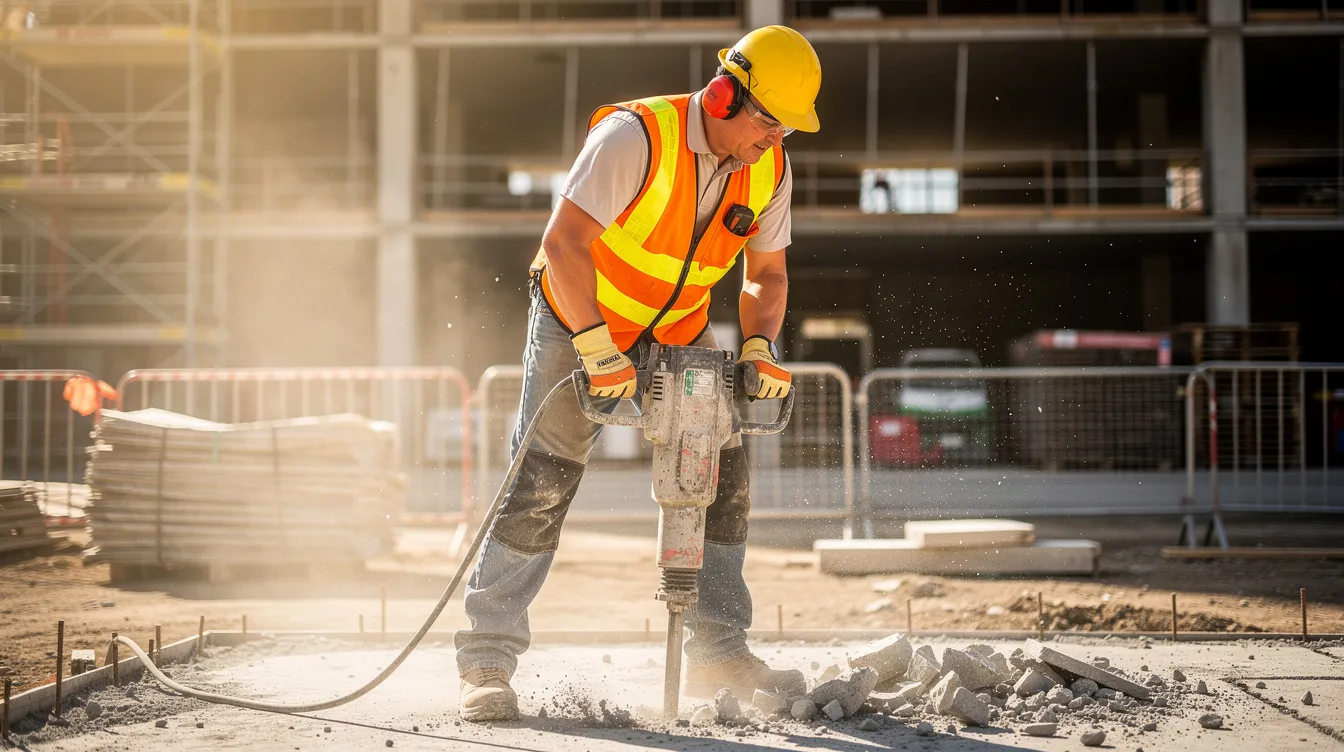
Consider a worker who spent 18 years running heavy equipment at a Pueblo construction firm. He never thought much about noise because "everyone dealt with it." It wasn't until a routine medical appointment that an audiologist flagged significant bilateral hearing loss and asked about his work environment. By then, the damage was permanent.
How Colorado Workers Develop Occupational Hearing Loss
Colorado law recognizes occupational hearing loss as an "occupational disease" when it develops gradually from job conditions-specifically, repeated exposure to loud noise or chemical exposure over months or years.
Typical exposure sources include:
-
Power tools, saws, and grinders on construction sites
-
Mining equipment, drills, and blasting operations
-
Manufacturing lines, stamping presses, and metal fabrication shops
-
Long-term work around diesel engines, trucks, or aircraft
-
Oil and gas operations, pump stations, and compressor sites
-
Shooting ranges and law enforcement training grounds
Even if an employer offered hearing protection, a claim may still be valid if that protection was ineffective, inconsistently used, or not realistically enforced in the actual work environment.
Certain ototoxic chemicals-including industrial solvents like toluene and xylene, fuels, and certain heavy metals-can independently damage the inner ear or auditory nerve. When combined with noise exposure, the risk of permanent damage multiplies. Certain chemicals can damage the inner ear and hearing nerves even at noise levels that might otherwise be considered borderline.
How Loud Is Too Loud? Noise Levels and Risk in Colorado Workplaces
Workers often underestimate how harmful "normal" job noise can be over a long shift, especially the 10- to 12-hour days common in Colorado construction, energy, and transportation work.
Here's a rough breakdown of common noise levels:
|
Noise Level |
Examples |
Risk |
|---|---|---|
|
85–90 dB |
Busy factory floor, heavy traffic, riding mowers |
Hearing loss can begin at 90 decibels over 8 hours of continuous exposure |
|
100–110 dB |
Chainsaws, jackhammers, some mining and fracking operations |
Accelerated damage even in shorter shifts |
|
120+ dB (impact noise) |
Blasts, hammering, gunfire |
Can cause instant, permanent damage to hearing |
OSHA typically uses an 8-hour time-weighted average to set limits, but prolonged shifts push real-world exposure well beyond those thresholds. Permanent damage can occur from prolonged exposure to loud noise even if the noise level is only slightly above the danger threshold-it just takes more time.
You don't need exact decibel readings to file a claim. Workers and their attorneys can build credible cases using testimony, equipment descriptions, job-site photos, and expert comparisons to known noise levels for similar tools and environments.

When Is Hearing Loss Covered Under Colorado's Workers' Compensation System?
Colorado workers compensation can cover hearing loss when:
-
The employment exposed the worker to hazardous noise or ototoxic substances, and
-
That exposure caused or significantly worsened the worker's hearing problems
You must prove that your hearing loss was caused or significantly contributed to by workplace noise. Colorado law treats most work-related hearing loss as an occupational disease, which means:
-
It can develop over months or years-not just from a single incident
-
The injured employee does not have to pinpoint the exact day the damage started
-
The insurance carrier may still argue that age, hunting, military service, or loud music is the real cause
Workers do not have to prove their hearing was "perfect" before the job. They must show that the job materially contributed to the loss. That's a medical question-and strong medical opinion from a qualified audiologist or ENT is essential.
Hearing loss from a specific workplace accident-an explosion, a fall causing a head injury, or an equipment malfunction-is generally handled like any other traumatic work related injury under Colorado workers compensation.
Colorado Deadlines and Notice Rules for Hearing Loss Claims
Time limits in Colorado workers comp are confusing under normal circumstances. For a slow-developing condition like hearing loss, they're even trickier. Don't wait for certainty before getting advice.
Here's what you need to know:
-
You must notify your employer in writing within 30 days of discovering work-related hearing loss, according to colorado law. Some guidance also references a 10-day standard-notify your employer in writing within 10 days of realizing your hearing loss may be work-related whenever possible to protect your rights.
-
Your employer must file a report with their workers compensation insurance carrier within 10 days of your notice.
-
Claims must be filed within two years of the injury or discovery in Colorado. You must file a claim within two years of discovering the hearing loss or injury. In some circumstances, a three-year window may apply-but relying on exceptions is risky.
-
The insurer must accept or deny liability within 20 days of your filing.
Delays create real problems. Old noise measurements disappear. Audiograms get harder to track down. Witnesses forget details. And the longer you wait, the more room insurers have to blame age or hobbies instead of the job.
A quick phone call with a lawyer can often clarify whether a deadline is still open-and what to do next.
Proving Your Hearing Loss Is Work-Related in Colorado
Insurance companies routinely argue that hearing loss is "just aging." Strong, well-organized evidence is the key to winning these disputes. Proving work-related hearing loss requires medical support, and a clear work-exposure history is critical for claims.
Types of evidence that matter:
-
Detailed job history showing years around specific noisy equipment or work areas
-
Audiograms and ENT or audiologist reports documenting patterns typical of noise-induced hearing loss (you will need to submit objective proof including audiometric testing showing measurable loss)
-
Written descriptions or photos of equipment and workspaces, including whether hearing protection was actually used
-
Co-worker statements about how loud the workplace was and whether protective gear was provided or practical
-
Medical records ruling out non-work causes, or explaining how work aggravated an existing condition
-
Gather records of exposure to loud equipment or chemicals as evidence of hearing loss
Colorado judges and administrative law judges often look at the pattern of hearing loss on audiograms. A characteristic "noise notch"-a dip in hearing at certain frequencies-strongly suggests noise-induced damage rather than age-related decline. But insurers will counter by pointing to hunting habits, concerts, motorcycles, or prior military service. An experienced medical expert can still demonstrate that the job made the biggest difference, especially when exposure was sustained and intense over many years.
How Impairment Ratings Work for Hearing Loss in Colorado Workers' Comp
In colorado workers compensation, permanent disability benefits are typically based on an impairment rating assigned by a doctor, usually following the AMA Guides. Here's what that means in practice:
-
An impairment rating is a percentage representing how much hearing function you've permanently lost
-
Higher percentages generally translate to larger permanent disability benefits
-
Hearing loss usually qualifies as a "scheduled injury" under C.R.S. § 8-42-107, with specific weeks of benefits tied to the percentage of loss
The rating happens after the injured worker reaches maximum medical improvement-the point where further medical treatment isn't expected to significantly improve the condition. The treating doctor assigns the rating, and Colorado's impairment rating worksheets include forms specifically designed for hearing and vision.
Common problems with hearing loss ratings include:
-
Treating doctors who understate the impact of tinnitus or communication difficulties
-
Failure to properly rate both ears
-
Disputes over how much loss is noise-related versus age-related (apportionment)
-
Ratings that don't reflect the real-world limitations the worker faces every day
An experienced workers compensation attorney can identify when a rating doesn't match what the worker is actually dealing with-and take steps to challenge it.
Disagreeing With a Hearing Loss Impairment Rating: DIME and Disputes
If the injured worker, employer, or insurer disagrees with the treating doctor's impairment rating, Colorado law allows a Division Independent Medical Examination (DIME) with a separate physician.
Key points about the DIME process:
-
A Division Independent Medical Examination is often used to resolve disputes regarding hearing loss severity
-
The DIME physician's opinion on permanent impairment carries "presumptive weight" at any later hearing-meaning a judge will generally defer to it unless it's shown to be flawed or incompetent
-
In hearing loss cases, the DIME doctor will carefully review audiograms, noise exposure history, and non-work risk factors like age and recreational noise
-
Workers must follow specific timelines and procedures to request or challenge a DIME
A well-prepared DIME includes:
-
Organized audiometric records spanning the worker's employment history
-
Clear descriptions of noise exposure levels and protective equipment use
-
Detailed letters or reports from the worker's own medical providers explaining causation and functional limitations
Johnston Law Firm helps clients prepare for DIMEs by assembling complete medical records packets, reviewing DIME reports for errors or omissions, and advising whether to challenge the result or negotiate based on it.
Unsure About Your Impairment Rating or DIME? Get Legal Guidance
If you've received an impairment rating or DIME report that doesn't seem right-or if you've gotten a Final Admission of Liability from the insurance company-get advice before accepting anything.
Call (719) 309-9484 and Steve Johnston will review your rating paperwork, DIME notice, or Final Admission during a free consultation. You can also Request a Free Case Review Online if you'd rather upload documents or write out your questions.
Early review can prevent permanent underpayment of scheduled hearing loss benefits or loss of your appeal rights.
Benefits Available for Work-Related Hearing Loss in Colorado
Colorado workers compensation provides four main categories of benefits for hearing loss claims. Benefits may include coverage for medical treatment and permanent disability benefits. The amount a worker will receive depends on the severity of the loss, the worker's wages, and the medical evidence. Here's how each applies:
Medical Benefits Workers' comp covers reasonable medical care for work-related injuries. This includes evaluation by authorized treating physicians and audiologists, hearing aids, batteries and maintenance, tinnitus treatment, and related medical appointments. Your employer or its insurer typically designates the authorized treating medical provider, though employers must provide a list of at least four doctors for treatment. Colorado requires workers' compensation insurance for businesses with employees, so this coverage should be available.
Temporary Disability Benefits If a doctor takes you off work or limits your hours and your employer can't accommodate the restrictions, you may qualify for temporary total disability or temporary partial disability benefits. Temporary Total Disability benefits are two-thirds of average weekly wage-paid while you're completely unable to work due to the injury.
Permanent Disability Benefits After you reach maximum medical improvement MMI, permanent partial disability compensates for permanent loss of function. Hearing loss benefits depend on severity and average weekly wage. Benefits for total loss of hearing in both ears are 139 weeks under Colorado's schedule. Total loss in one ear receives benefits for 35 weeks. Partial loss is calculated as a percentage of those totals. Compensation for occupational hearing loss is calculated based on a statutory weekly benefit rate.
Permanent total disability benefits for hearing loss alone are rare, but they may apply when combined with other severe injuries. Permanent total disability benefits are equal to temporary total disability in amount. Death benefits support dependents of workers who die from work injuries.
Vocational Impact In some cases, an inability to return to noisy or safety-sensitive work may support stronger permanent disability arguments-especially if the worker must accept lower-paying employment.
For a broader explanation of benefit types, visit Johnston Law Firm's Workers' Compensation page.
How Much Is My Colorado Hearing Loss Claim Worth?
No honest attorney can quote a dollar figure without reviewing your specific situation. But here's what drives the value:
-
Degree of hearing loss in each ear (your impairment rating)
-
Whether the loss is treated as a scheduled injury or whole-person impairment
-
The worker's average weekly wage before the injury
-
Whether the worker can keep their job or must change to lower-paying work
-
Presence of other injuries such as head trauma, tinnitus, or balance problems
-
What an injured worker will receive depends on all of these factors combined
Colorado generally pays permanent partial disability benefits at about two thirds of the worker's average weekly wage, up to state maximums, for a number of weeks assigned to the body part or percentage of impairment.
How insurers try to reduce your claim:
-
Pushing for artificially low ratings
-
Overlooking tinnitus and speech discrimination issues
-
Arguing for scheduled-only benefits when a whole-person rating might be more appropriate
Quick comparison: A worker with mild one-ear loss who stays in the same job might receive a modest scheduled benefit based on 35 weeks. A different worker with severe bilateral loss who can no longer safely operate equipment-forcing a career change to lower wages-may have a substantially larger claim based on 139 weeks and additional lost wages. Same type of injury. Very different outcomes.
Protect the Value of Your Hearing Loss Claim
Once a settlement is signed or a Final Admission of Liability becomes final, it is extremely difficult-often impossible-to reopen the claim just because you later realize the amount was too low.
If you've received a settlement offer or Final Admission, call (719) 309-9484 for a no-cost review of whether the proposal reflects your true level of hearing loss and wage loss. You can also Contact Johnston Law Firm Online to upload your offer letter, impairment rating report, and any DIME paperwork.
Getting an attorney involved early typically leads to stronger medical opinions, better documentation, and significantly improved settlement outcomes.
Head Injuries, Tinnitus, and Combined Conditions in Colorado Claims
Many Colorado workers with hearing loss also suffer from head injuries, balance problems, or severe tinnitus-especially after falls, vehicle crashes, or being struck by equipment. These combined conditions can dramatically change the shape of a claim.
Issues that arise with combined conditions:
-
Concussion or traumatic brain injury alongside hearing loss and dizziness
-
Tinnitus severe enough to interfere with sleep, concentration, or emotional health
-
Neck injuries causing headaches or limited motion
-
Psychological effects such as anxiety or depression from constant ringing or communication struggles
These additional problems can shift the impairment rating toward a whole-person assessment, impact the worker's ability to return to any employment, and-in severe combinations-raise permanent total disability as a realistic issue.
Workers who have separate personal injury claims (such as a car accident or third-party negligence) in addition to their workers comp claim may want to explore Johnston Law Firm's Personal Injury page.
What to Do If You Suspect Work-Related Hearing Loss
Many workers delay getting help because they don't want to "rock the boat" or worry about job security. But early action protects both your health and your legal rights.
Here's a practical step-by-step:
-
Get a hearing exam from an audiologist or medical specialist. Schedule the appointment and clearly mention your job noise exposure.
-
Notify your employer in writing as soon as a medical provider suggests the condition might be work-related. Don't rely on verbal conversations.
-
Request treatment through workers compensation-not your regular health insurance-and keep copies of all paperwork and forms.
-
Be completely honest at medical appointments about how hearing loss affects your work and daily life. Don't downplay symptoms.
-
Consult a Colorado workers compensation attorney before agreeing to a DIME, settlement, or signing any Final Admission of Liability.
You have the right to seek legal advice even if your employer or the insurance company suggests you don't "need a lawyer."

How Workers' Comp Hearings for Hearing Loss Work in Colorado
If the insurance company denies liability, disputes the impairment rating, or refuses fair benefits, the injured worker can request a hearing before an Administrative Law Judge at Colorado's Office of Administrative Courts. A workers' compensation hearing involves a formal process before an Administrative Law Judge.
Here's what that process typically involves:
-
Filing an Application for Hearing identifying the specific issues in dispute-compensability, average weekly wage, impairment rating, medical benefits, or other contested matters
-
If a claim is denied, you may request a hearing to present evidence supporting your claim. If your claim is denied, you have 45 days to request a hearing to appeal the decision.
-
Pre-hearing discovery, including exchanging medical records, expert reports, and witness lists. Disputes often arise regarding the work-relatedness of the hearing loss and the extent of the injury.
-
The hearing is a formal legal proceeding where evidence and testimony are presented-from the injured worker, medical experts, and sometimes vocational experts about noise exposure, functional limits, and ability to work
-
The judge typically issues a written decision within 15 business days following the hearing
Hearings may be held in Denver, Colorado Springs, Grand Junction, or other locations, or conducted remotely by Webex-allowing workers in Pueblo and rural areas to participate without excessive travel.
Many cases settle before the hearing date. But strong preparation and a genuine willingness to go to hearing often produce better settlement offers.
Why Hearing Loss Claims Are Often Undervalued or Denied
Insurers treat hearing loss as a "quiet" injury and frequently test the limits of denial or underpayment, counting on the fact that many workers won't fight back.
Common defense strategies include:
-
Blaming hearing loss entirely on age (presbycusis) rather than workplace noise-insurance companies may argue hearing loss is age-related
-
Pointing to hobbies like hunting, motorcycling, or attending concerts as "alternative causes"
-
Claiming hearing protection was always available and consistently used, even when it wasn't realistic in the actual work environment
-
Minimizing tinnitus or speech discrimination problems that don't show up on simple pure-tone tests
-
Focusing on a single employer instead of acknowledging decades of cumulative noise across multiple Colorado jobs
An experienced workers compensation attorney can work with medical experts to separate age-related change from noise-damage patterns, gather co-worker statements and safety records, and push back against one-sided employer documentation of hearing conservation programs.
How Johnston Law Firm Builds Strong Colorado Hearing Loss Cases
Steve Johnston's practice is focused on representing injured workers-not insurance companies-across Colorado in complex workers compensation claims, including hearing problems and head injuries.

Key steps the firm typically takes:
-
Carefully reviewing job history, noise exposure, and prior hearing tests to build a complete picture
-
Coordinating with qualified audiologists, ENTs, and other specialists who understand Colorado's workers comp system
-
Analyzing impairment ratings and advising whether a DIME challenge is worthwhile
-
Preparing clients thoroughly for depositions, DIMEs, and hearings-including what questions to expect and how to present their limitations clearly
-
Negotiating settlements that account for long-term needs like hearing aid replacement, future medical care, and wage impact
Johnston Law Firm routinely appears in workers compensation matters in Pueblo, Colorado Springs, and throughout the state. That gives the firm practical insight into how colorado judges, administrative courts, and insurers approach hearing loss claims.
The firm's approach is client-centered: plain-language explanations, regular updates, and genuine respect for the injured worker's schedule and stress level.
Your Situation Is Unique: Get Advice Tailored to Your Job and Hearing Loss
No two hearing loss cases are the same. Mining, construction, trucking, and factory work each create different patterns of exposure-and different legal issues. What matters is your specific job duties, your medical findings, and the noise level you faced.
Call (719) 309-9484 to discuss your situation directly with a Colorado workers compensation attorney during a free consultation. Or Speak With Johnston Law Firm Online if you prefer to start the conversation by email-especially if you work irregular shifts or have difficulty hearing by phone.
The consultation is free and confidential. Early guidance can prevent costly mistakes with deadlines, DIMEs, and settlement offers.
Frequently Asked Questions About Colorado Workers' Comp Hearing Loss Claims
Can I file a Colorado workers' comp claim if I already had some hearing loss before this job?
Pre-existing hearing loss doesn't automatically bar a workers compensation claim. Colorado law can still cover the additional loss or aggravation caused by the current employment. Medical experts often compare old and new audiograms to determine how much worsening came from the current job versus prior conditions.
Expect the insurance carrier to seize on any pre-existing condition to minimize your benefits. That's why clear medical opinion about "aggravation" and "acceleration" is essential. If your doctor can document that your current employment made the hearing measurably worse, you may have a valid claim for the difference.
Do I have to pay for my own hearing aids in a Colorado work-related hearing loss case?
If the hearing loss is accepted as work-related, Colorado workers compensation generally must pay for reasonable and necessary medical treatment-which typically includes hearing aids, professional fitting, batteries, and related supplies.
Disputes sometimes arise over brand, technology level, or replacement intervals. Insurers may push for the cheapest option. Having a supportive treating doctor and legal counsel helps when that happens. Long-term planning matters, too: hearing aids wear out and technology improves, so settlements should account for future replacement costs when appropriate.
What if my employer never did noise testing or had a formal Hearing Conservation Program?
Lack of formal noise testing doesn't prevent a hearing loss claim. In fact, it may actually support your argument that safety practices were weak. Workers and their attorneys can still build persuasive cases using:
-
Testimony from the worker and co-workers about workplace noise
-
Descriptions and photos of equipment used on the job
-
Comparisons to known decibel levels for similar tools and machinery
-
Expert testimony from industrial hygienists when needed
OSHA or MSHA rules may come into play in certain industries, but workers compensation benefits don't depend on first proving a safety violation.
Can I bring a separate lawsuit for my hearing loss, or is workers' comp my only remedy?
For most Colorado employees, workers compensation is the exclusive remedy against their employer for a work injury like hearing loss. That means you typically cannot sue the employer in civil court for pain and suffering.
However, limited situations exist where a third-party claim might apply-for example, against a negligent equipment manufacturer or another company at a shared job site. These cases require a careful, fact-specific review. Johnston Law Firm handles both workers compensation and personal injury matters, giving the firm the ability to evaluate whether additional claims might exist in your case.
Will filing a hearing loss claim get me fired or punished at work?
Colorado law prohibits employers from retaliating against employees for filing legitimate workers compensation claims. While no attorney can guarantee an employer's behavior, documenting any negative treatment after filing a claim is important. Legal options may exist if retaliation occurs.
Many employers carry workers compensation insurance precisely so that injuries-including hearing loss-are handled through the insurance system rather than through personal conflict. Filing a legitimate claim is your legal right.
Why Choose Johnston Law Firm for a Colorado Workers' Comp Hearing Loss Claim?
Johnston Law Firm is a Pueblo-based practice representing injured workers across Colorado in workers compensation, personal injury, and related matters-with particular experience in medically complex cases like hearing loss and head injuries.
What sets the firm apart:
-
Decades of combined legal experience with Colorado workers compensation, including hearings, appeals, and DIMEs before the colorado division and colorado department administrative bodies
-
A client-first approach that prioritizes clear explanations and practical guidance over legal jargon
-
Familiarity with local judges, medical providers, and insurers in Pueblo, Colorado Springs, Denver, and surrounding counties
-
Willingness to take on denied or undervalued claims-not just straightforward cases
Visit Johnston Law Firm's Client Testimonials and Case Results pages to see how the firm has helped other colorado workers. No specific outcome is promised, but the track record speaks for itself.
Get the Help You Need With a Colorado Hearing Loss Claim
Work-related hearing loss can affect your safety on the job, your earning capacity, and your quality of life at home. You don't have to face the workers compensation process alone, and you shouldn't accept an insurance company's first offer without understanding what your claim is actually worth.
Call Steve Johnston directly at (719) 309-9484 to schedule a free, no-pressure consultation about your hearing loss, tinnitus, or related work injury. If you prefer online contact, Request Your Free Consultation Online and briefly describe your job, symptoms, and any deadlines or hearing dates you're facing.
Johnston Law Firm will review your situation, explain your options in plain language, and-if you choose to move forward-handle the legal and insurance battles so you can focus on your health and your family.