Workers Comp Hearing Colorado – How To Prepare For A Contested Claim
Key Takeaways
-
A Colorado workers compensation hearing is a formal trial before an administrative law judge at the Office of Administrative Courts, not a casual meeting with an insurance adjuster.
-
Contested issues typically include whether the injury is work-related, medical treatment disputes, maximum medical improvement timing, impairment rating accuracy, and lost wages calculations.
-
Preparation centers on gathering strong evidence: medical records, witness testimony, wage documents, and consistent reporting—not emotional appeals.
-
Hearings occur in Pueblo, Colorado Springs, Denver, Grand Junction, or via Google Meet video, making them accessible for workers across Southern Colorado.
-
Injured workers in Pueblo, Otero, Fremont, Custer, Huerfano, Las Animas, and Crowley Counties should call Johnston Law Firm, LLC at (719) 309-9484 or message us online for help preparing a contested claim.
Introduction
A Colorado workers compensation hearing is a formal trial before an administrative law judge at the Office of Administrative Courts, not a casual meeting with an insurance adjuster.
This guide is for injured workers in Colorado preparing for a contested workers' compensation hearing. Understanding the hearing process is crucial to protecting your rights and maximizing your benefits.
What Is a Contested Workers’ Comp Hearing in Colorado?
A Colorado workers' compensation hearing is a formal proceeding before an Administrative Law Judge (ALJ) to resolve disputed claims.
A contested workers compensation claim arises when the employer’s insurance company denies or limits your benefits, issuing a Notice of Contest rather than accepting liability. The Colorado Division of Workers' Compensation oversees the claims process, hearings, and dispute resolution, ensuring compliance with state laws and regulations. When a dispute arises, it must be resolved at a formal hearing before an administrative law judge within the Colorado Office of Administrative Courts.
Colorado’s workers’ compensation system is no-fault, meaning benefits are paid regardless of who was at fault for the injury, as long as it was work-related. These hearings are not simple phone calls or informal meetings. They function like bench trials involving sworn testimony, medical exhibits, wage records, and legal arguments from both the parties involved. The judge decides contested issues based on evidence and Colorado workers compensation law.
In non-emergency situations, injured workers must select medical care from a list of designated providers approved by the employer. Hearings typically take place at OAC locations in Pueblo, Colorado Springs, Denver, or Grand Junction. Workers from smaller Southern Colorado communities—La Junta, Cañon City, Walsenburg, Trinidad—often appear at these venues or participate via Google Meet video platforms.
Johnston Law Firm, LLC in Pueblo represents injured workers throughout Colorado in these hearings, including those from Otero, Fremont, Custer, Huerfano, Las Animas, and Crowley Counties.
Have you received a Notice of Contest or unfavorable admission? Call (719) 309-9484 or request a consultation online for a case review.
How Your Colorado Workers’ Comp Case Reaches a Hearing
The journey from work injury to formal hearing follows a predictable path: injury occurs, you report it to your employer, the employer's insurance company responds, and disputes escalate when the insurer refuses to pay what you’re owed.
Here’s the typical timeline:
-
Injury reporting: Written notice to your employer within ten days (late reports may be excused with reasonable explanation). You also have two years to file a claim with the Division of Workers' Compensation.
-
Insurer response: The employer's insurance company has 20 days to either accept the claim by filing a General Admission or contest it by filing a Notice of Contest.
-
Hearing request: If the claim is denied or disputes remain after the insurer contests it, you can file a formal request for a hearing with the Division of Workers' Compensation. Standard hearings are typically scheduled within 120 days, while expedited hearings must occur within 60 days from the date of the application.
Common reasons claims become contested include outright compensability denial, disputes over whether the injury is truly work-related, ignored medical restrictions, terminated medical care after an IME, premature MMI declaration, or low impairment rating on the final admission.
Many Pueblo and Southern Colorado workers end up in hearings after receiving Final Admissions that close medical treatment prematurely or underpay permanent disability benefits. Strict filing deadlines apply—objections to Final Admissions must be filed within 20 days. An experienced workers compensation lawyer ensures all papers are timely and properly drafted.
Key Legal Questions at a Colorado Workers’ Comp Hearing
At hearing, the administrative law judge must resolve specific legal questions that determine your workers compensation benefits. The injured worker typically bears the burden of proof, meaning you must persuade the judge by a preponderance of evidence. Judges in Colorado workers' compensation hearings must determine whether a compensable injury occurred in the course and scope of employment, and whether there is a causal connection between the work incident and the current medical condition.
Core Issues Judges Decide
Core issues the judge decides:
|
Issue |
What Must Be Proven |
|---|---|
|
Compensability |
Injury occurred in course and scope of employment |
|
Medical causation |
Work event was the prevailing factor causing your condition |
|
Medical treatment |
Proposed care is reasonable, necessary, and related |
|
MMI status |
Whether you’ve reached maximum medical improvement |
|
Impairment rating |
Correct percentage using AMA Guides |
|
Permanent disability |
PPD benefits, PTD eligibility, or disfigurement benefits |
Judges also evaluate whether the requested medical treatment is reasonable and necessary in relation to the work injury, and disputes often arise over surgeries or referrals to specialists. After the hearing, judges must decide if the worker has reached Maximum Medical Improvement (MMI), and this determination can affect when permanent disability benefits begin. Judges also assess whether penalties or attorney fees are warranted for unreasonable conduct by the insurance company, which involves reviewing timelines and the nature of the insurer's actions.
Example Case
Example: A Pueblo warehouse worker lifting freight disputes a denied back injury claim. At hearing, the judge weighs the worker’s first report consistency, MRI findings linking the injury to the lifting incident, and co-worker testimony against insurer surveillance footage. The case relies on documents like medical reports, unpaid bills, and employment records. The judge’s decision turns on whether the evidence preponderates in the worker’s favor.
Evidence Judges Rely On – And How to Prepare It
Hearings are won with organized, credible evidence—not simply telling the judge “I’m hurt.” Medical records, employment documents, and consistent testimony form the foundation of successful workers compensation claims.
Parties must exchange evidence with the other party at least 20 days before the hearing, including medical records, doctor's reports, and employer records. Only witnesses listed on the response may testify unless added by agreement or approval.
Medical Records and Expert Opinions
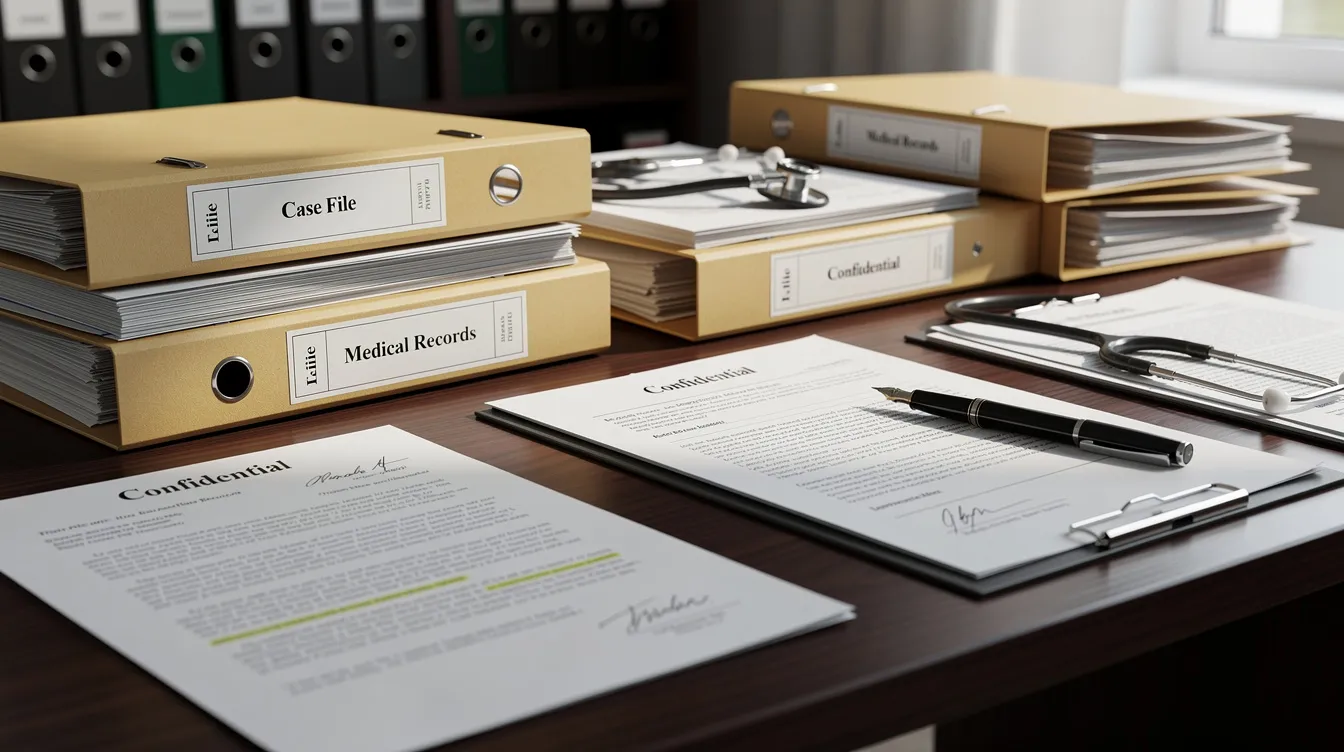
In close cases, medical evidence is often decisive. The judge evaluates competing medical opinions based on the physician’s specialty, time spent with the patient, consistency with objective tests like MRIs or nerve studies, and thoroughness of examination.
Key distinctions matter:
-
Authorized treating physicians typically know your case history and job duties well
-
Insurer IME doctors examine you once and may have bias toward minimizing injuries
-
DIME physicians (Division Independent Medical Examination) carry special weight—their opinions on MMI and impairment rating are presumed correct and can only be overcome by clear and convincing evidence
Data from 2020-2024 shows approximately 80% of DIME disputes upheld the DIME physician’s rating. Overcoming a DIME requires strong contrary medical testimony and objective testing.
Preparation includes:
-
Reviewing all treatment notes for gaps
-
Ensuring your doctor understands your full job duties and mechanism of injury
-
Potentially scheduling a pre-hearing conference with counsel
Employer Records, Wage Evidence, and Job Duties
Non-medical documents significantly affect both credibility and benefit amounts. Your average weekly wage—calculated from the highest 13-week period before injury—directly impacts temporary disability and PPD benefits. Injuries are typically covered by workers' compensation only if they occur while performing work duties for your employer.
Documents that matter:
-
Pay stubs showing overtime, bonuses, tips, per diem
-
Tax returns (especially for self-employed workers)
-
Job descriptions with lifting limits and physical requirements
-
Written incident reports and safety protocols
-
Recorded statements to the insurer
Discrepancies between your initial injury report, recorded statements, and hearing testimony can severely weaken your case. Workers from smaller employers in rural Southern Colorado should gather several months of wage records and detailed job duty descriptions before the hearing.
Witness Testimony and Your Own Story
Live testimony—especially yours—is often the judge’s best window into what happened. You will testify under oath, answer questions from both attorneys, and face cross examination.
Preparation tips:
-
Review your timeline with your attorney beforehand
-
Focus on accuracy, clarity, and consistency over drama
-
Avoid guessing—say “I don’t know” when appropriate
-
Stay calm under cross examination
-
Let your attorney handle objections
Co-worker and supervisor testimony about the accident, your condition before and after, and any reports made on the injury date can corroborate your account. A local Pueblo workers comp attorney who regularly appears before Colorado ALJs knows how to conduct direct and cross examination effectively.
What Actually Happens on Hearing Day in Colorado
A typical hearing day begins with arriving at the Office of Administrative Courts—whether in Pueblo, Colorado Springs, or another location—at least 30-45 minutes early. After check-in, you wait for your case to be called.
The hearing structure:
-
Preliminary matters (stipulations, motions)
-
Opening statements from both sides
-
Claimant’s evidence and witnesses
-
Respondent’s evidence and witnesses
-
Rebuttal testimony if allowed
-
Closing arguments
Hearings occur in a courtroom-style setting without a jury. Present are the administrative law judge, court reporter or audio recording system, attorneys, the injured worker, insurance company representatives, and any witnesses.
Duration varies: narrow disputes like average weekly wage may take one hour, while complex cases involving MMI, permanent disability, or multiple injuries can last several hours or more.
The judge does not decide immediately. Instead, a written decision with findings of fact and conclusions of law typically issues within 15 working days and is mailed to all parties involved.
Practical Day-of-Hearing Tips
Practical preparation reduces stress and helps you present well:
-
Arrive 30-45 minutes early
-
Dress neatly but comfortably
-
Bring eyeglasses, hearing aids, medications, and any braces you use daily
-
Avoid discussing your case in hallways where the opposing party might overhear
-
Keep answers short and focused on the question asked
-
Address the judge as “Your Honor”
-
Never argue with the other party’s attorney
Johnston Law Firm prepares clients through mock questions and review of problem areas before the hearing. Call (719) 309-9484 or send us a message online to schedule this preparation.
Common Contested Issues – And How to Prepare for Each
Most contested hearings fall into several recurring categories, each requiring different evidence and preparation strategies.
Compensability: Proving the Injury Is Work-Related
If the insurer denies the claim entirely, the hearing is the formal process used to resolve disputes over whether a compensable work related injury actually occurred under Colorado law. Consistent reporting is critical: same date, time, mechanism of injury, and body parts across all documents.
Evidence that helps:
-
Co-worker and supervisor testimony confirming the accident
-
Surveillance footage supporting your account
-
Early medical notes linking symptoms to the work event
-
Consistent injury report details throughout the claim
Examples: A Pueblo construction worker falling from scaffolding, a corrections officer in Fremont County injured in an altercation, or a grocery clerk in La Junta developing back pain from stocking heavy items.
Under Colorado law, you must prove by preponderance of evidence that the incident occurred in course and scope of employment and directly caused or aggravated your condition.
Medical Treatment, MMI, and Impairment Rating Disputes
Even accepted claims often reach hearing when the insurance company denies treatment or declares maximum medical improvement mmi too soon.
Preparation involves obtaining clear medical opinions that proposed surgeries, injections, therapy, or pain management are reasonable, necessary, and related to the work injury.
DIME disputes arise when either party disagrees with the treating doctor’s MMI date or impairment rating. The DIME physician’s report carries a rebuttable presumption—overcoming it requires clear and convincing evidence including:
-
Objective testing (MRIs, EMGs)
-
Functional capacity evaluations
-
Detailed documentation of medical restrictions
-
Expert testimony questioning range-of-motion measurements or AMA Guides application
Wage, Temporary Disability, and Permanent Disability Issues
Miscalculated wages and disability benefits can cost injured workers thousands of dollars. Disputes commonly involve whether overtime, tips, second jobs, or seasonal fluctuations were properly included in the average weekly wage calculation.
Types of disability benefits at issue:
|
Benefit Type |
Description |
|---|---|
|
Temporary Total Disability (TTD) |
Full wage replacement when unable to work |
|
Temporary Partial Disability (TPD) |
Partial wages when working with restrictions |
|
Permanent Partial Disability (PPD) |
Compensation for permanent impairment |
|
Permanent Total Disability (PTD) |
Benefits for workers permanently disabled from any employment |
PTD cases require showing you cannot earn wages in any job with any employer due to the work injury, often using vocational experts and documented failed job searches.
Bring at least 13 weeks of pay records, tax returns if self-employed, and job search documentation to help your attorney present the full financial impact.
How Judges Evaluate Credibility – And How You Can Protect Yours
Credibility often decides cases when medical opinions or witnesses conflict, especially in chronic pain or soft-tissue injury cases. Colorado ALJs compare your testimony with earlier written statements, medical records, employer records, and any surveillance footage.

What Hurts Credibility
-
Changing the accident story between reports, statements, and testimony
-
Overstating physical limitations (“I can never lift anything”)
-
Denying prior injuries documented in older medical records
-
Treatment gaps with no good explanation
-
Surveillance video showing activities far beyond claimed restrictions
-
Social media posts depicting vacations or strenuous activities inconsistent with reported pain
-
Coaching or pressuring family members to exaggerate testimony
What Helps Credibility
-
Reporting the injury promptly
-
Describing the mechanism consistently every time
-
Seeking reasonable, consistent medical care
-
Acknowledging pre-existing conditions while explaining how symptoms worsened after the work injury
-
Giving nuanced answers: “I can sometimes do that for a few minutes, but then the pain increases”
-
Speaking at a normal pace and making eye contact with the judge
-
Avoiding arguments with opposing counsel
Careful preparation with an experienced Colorado workers compensation attorney can dramatically affect how clearly and confidently you explain your limitations.
How Johnston Law Firm, LLC Helps You Prepare for a Colorado Workers’ Comp Hearing
Johnston Law Firm, LLC is a Pueblo-based firm where Steve Johnston focuses on workers compensation, personal injury, automobile accidents, estate planning, criminal law, and social security law. The firm has extensive experience in Colorado’s workers compensation system and regularly handles contested hearings.
Hearing preparation services include:
-
Gathering and organizing medical records and wage records
-
Identifying and subpoenaing key witnesses
-
Preparing targeted direct and cross examination questions
-
Developing clear legal theories tied to Colorado statutes
-
Rehearsing testimony and addressing problem areas
-
Reducing anxiety about testifying before an administrative law judge
The firm regularly appears for workers from Pueblo, Pueblo West, Otero County, Fremont County, Custer County, Huerfano County, Las Animas County, Crowley County, and throughout Colorado—both in-person at the administrative courts and via video.
Ready to prepare for your hearing? Call (719) 309-9484 or message Johnston Law Firm online to schedule a free consultation.
Early Strategy, Settlement, and Appeals
Thorough hearing preparation often leads to better settlement offers. Settlement discussions can occur at any time, and if the parties agree, a settlement can be reached before or during the hearing process. Sometimes a fair settlement agreement reached during settlement conferences is preferable to risking an all-or-nothing decision.
The firm evaluates settlement numbers considering likely hearing outcomes, impairment rating ranges, future medical costs, and your job prospects.
If the judge’s written decision is unfavorable, you generally have only 20 days to file a Petition to Review with the Industrial Claim Appeals Office. In rare cases, appeals proceed to the Colorado Court of Appeals. Appeals focus on legal errors or lack of supporting evidence—not simply re-arguing facts—so building a strong hearing record from the start is critical.
Received a troubling order or lost at hearing? Contact Johnston Law Firm immediately at (719) 309-9484 or send a message online so appeal deadlines aren’t missed.
FAQ: Colorado Workers’ Comp Hearings and Contested Claims
Do I really need an attorney for a Colorado workers’ comp hearing?
While Colorado law doesn’t require a lawyer, contested hearings involve complex rules of evidence, strict deadlines, and sophisticated defenses from insurance company attorneys. An experienced workers compensation lawyer identifies missing evidence, questions medical and vocational experts, challenges improper exhibits, and presents a clear legal theory. Johnston Law Firm typically offers free consultation and handles many workers comp cases on contingency—no fee unless benefits are obtained or improved. Call (719) 309-9484 or contact us online before your hearing date is set.
What does it cost to take my workers’ comp case to hearing?
Attorney fees in Colorado workers compensation cases are regulated and often based on a percentage of benefits obtained rather than hourly billing paid upfront. Additional case expenses may include fees for medical records, expert testimony, or deposition transcripts, which are typically discussed in advance. The financial risk of going to hearing should be weighed against what’s at stake—ongoing medical care, wage replacement, permanent disability. Schedule a consultation with Johnston Law Firm to review potential fees in your particular case.
Can my hearing be held by video instead of in person?
Yes. The Colorado Office of Administrative Courts frequently uses video platforms like Google Meet for workers compensation hearings, especially when the parties involved or witnesses are spread across the state. Video hearings follow the same rules and procedures—witnesses are sworn in, exhibits must be pre-exchanged, and the judge issues a written decision afterward. Video hearings help colorado workers in smaller Southern Colorado communities avoid long travel to Pueblo, Colorado Springs, or Denver. Ensure you have a quiet space, reliable internet, and test equipment in advance with your attorney’s help.
What if I cannot attend the hearing date the court sets?
Hearing dates are court orders. Missing a hearing without good cause can damage or end your claim. If a conflict or emergency arises, you or your attorney must promptly request a continuance, explaining reasons and providing documentation. Judges may deny last-minute requests without strong justification. If you’re facing scheduling issues, contact Johnston Law Firm immediately so any necessary motions can be filed early.
How long will it take to get a decision after my hearing?
In most Colorado workers compensation cases, the judge's decision is required to be issued in writing within 15 working days after the record is closed, not simply after the hearing process concludes. This written decision details the findings of fact and conclusions of law, and includes a ruling granting or denying specific benefits. Short deadlines apply for appeals—typically a Petition to Review must be filed within 20 days of the mailing date. Review the judge’s decision with counsel immediately so appeal rights or settlement opportunities aren’t lost.