Understanding Workers Comp Claim Denied Medical Treatment Colorado
Key Takeaways
-
A denied workers comp claim, workers comp denial, or treatment denial is common in Colorado, but it is not always final.
-
A Notice of Contest, denial letter, or claim denial may start strict filing deadlines, so act in a timely manner.
-
Insufficient medical evidence, disputed causation, maximum medical improvement, and pre existing condition arguments are leading reasons care is denied.
-
Injured workers in Pueblo, Otero, Fremont, Custer, Huerfano, Las Animas, and Crowley Counties can call Johnston Law Firm, LLC at (719) 309-9484 or message us online for a free consultation.
-
This guide explains what your denial means, how Colorado law handles disputed medical treatment, and how a workers compensation attorney can help.
If your workers comp claim denied medical treatment Colorado search brought you here, you may be in pain, out of work, and unsure whether the insurance company can simply cut off your care. Colorado workers compensation has a structured appeals process, and Johnston Law Firm, LLC helps injured workers fight for medical benefits, wage replacement, and fair treatment.
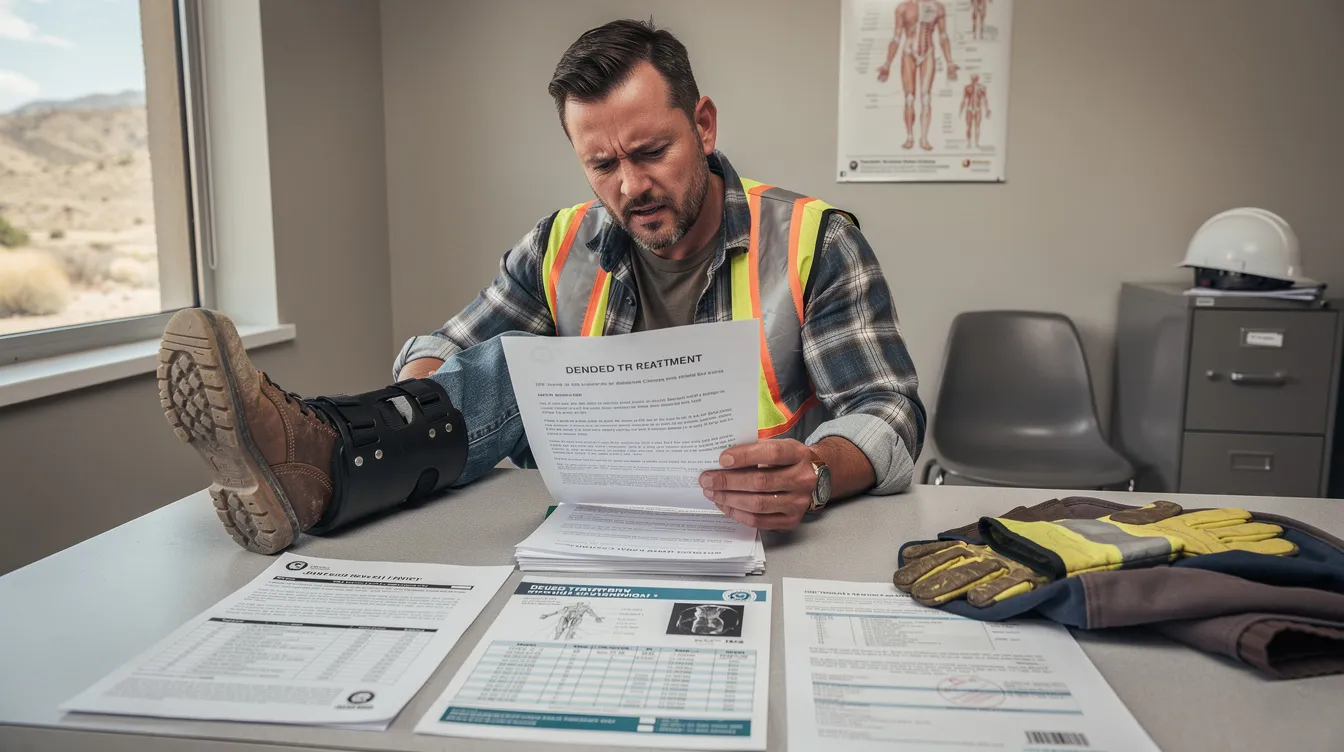
Your Colorado Workers’ Comp Claim Was Denied Medical Treatment – What Now?
Denied medical treatment can happen even when the overall workers compensation claim is accepted. A workers compensation carrier may pay basic medical bills, then deny an MRI, surgery, injections, physical therapy, specialist referral, lost wages, or ongoing medical treatment.
Colorado law allows you to challenge a full denied claim or any portion of a denial, not just a full rejection. Insurers may hope workers in Pueblo, La Junta, Canon City, or Walsenburg give up instead of filing a workers compensation appeal process. Do not. Call Johnston Law Firm at (719) 309-9484 or send us a message online for immediate help.
Understanding Your Colorado Denial Letter
Every significant workers compensation claim denied issue should come with written notice, often a Notice of Contest, General Admission of Liability and Final Denial, or utilization review decision. The insurer must provide specific reasons for the denial, such as missing documents, insufficient medical evidence, “not reasonably necessary,” “not related to the industrial injury,” or a degenerative condition.
Read the denial letter carefully. Note the date, mailing date, claim number, insurer, and deadlines. Colorado deadlines can be short; certain disputes may require action within 30 days or less, and if a claim is denied, Colorado law gives employees 20 days to file a petition to review the denial after receiving notice. Missing strict filing deadlines at any stage of the appeals process can result in the denial becoming permanent.
Johnston Law Firm routinely reviews denial letters for Colorado workers. Call (719) 309-9484 or contact us online for a no-charge review.
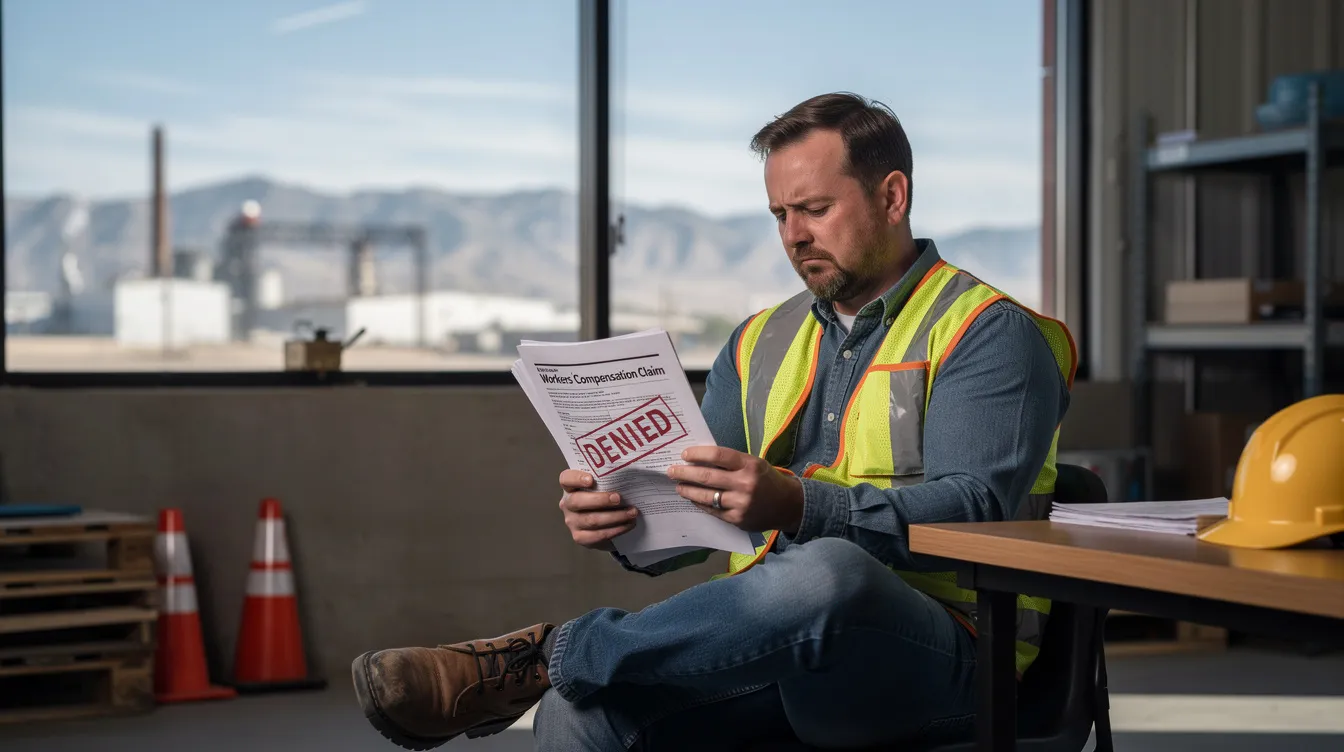
Common Reasons for Denial
Insurance companies often repeat the same arguments under Colorado workers compensation law. Workers' compensation claims can be denied for various reasons, including missed reporting deadlines, insufficient medical evidence, and disputes over whether the injury was work-related.
Common Reasons Colorado Insurers Deny Workers Comp Medical Treatment
Common reasons include:
-
Disputes over whether the injury occurred at work or arose from job duties.
-
Insufficient medical evidence or weak medical documentation.
-
Pre existing condition arguments.
-
Maximum medical improvement disputes.
-
Utilization review denials saying treatment is not reasonable or necessary.
These tactics affect construction workers, healthcare staff, warehouse workers, oil and gas workers, agricultural employees, and other Colorado workers. A denied workers comp reason is not always correct; supporting evidence and legal support can overturn it.
Disputes About Causation
Insurers often argue the injury happened outside work or was not proximately caused by work. This is common in back, neck, shoulder, and repetitive-use cases.
For example, an insurer may say a Pueblo warehouse worker’s herniated disc came from aging, not lifting cases in March 2025. Or it may say a nurse’s carpal tunnel came from hobbies, not charting and lifting patients. Claims can be denied if the insurer argues that the injury was not work-related, which often requires strong evidence such as witness statements and medical opinions linking the injury to work activities.
Colorado’s no-fault workers comp system does not require proving employer negligence. It requires proof that work activities significantly contributed to the workplace injury or workplace exposure.
Insufficient Medical Evidence
Insufficient medical evidence is one of the most common reasons for workers' compensation claim denials, highlighting the importance of thorough documentation linking the injury to the workplace. Insufficient medical evidence is also a common reason for denial, where the insurer claims that medical records do not adequately link the injury to the workplace accident.
Colorado workers comp heavily relies on what the authorized treating physician writes about diagnosis, medical restrictions, causation, and need for care. Missed medical appointments, gaps between medical visits, or vague notes can hurt a Colorado workers comp claim.
Updated medical reports, MRIs, and specialist opinions are key types of evidence that can help overturn a denied workers' compensation claim by clearly documenting the injury and its connection to work activities.
Pre Existing Conditions
Insurance companies may deny claims based on pre-existing conditions, arguing that the current injury is merely an aggravation of a prior issue rather than a new work-related injury. That argument is often incomplete.
Colorado law recognizes that work can aggravate or accelerate a pre existing condition. A truck driver with mild prior knee arthritis may still need covered surgery after a 2024 fall on a Fremont County loading dock. Treating doctors and specialists can compare old records, new imaging, and symptoms to show new damage.
Johnston Law Firm reviews prior medical records and helps physicians explain why the work injury made the condition worse.
Utilization Review
Utilization review is a process insurers use to argue proposed care is not reasonable or necessary under Colorado medical guidelines. Sometimes a doctor who never examined the worker rejects surgery, injections, testing, or therapy.
You should gather clear medical evidence with your physician to prove that the treatment is directly related to your work injury and medically necessary. Treating physician reports and independent medical opinions can rebut a utilization review denial.
An administrative law judge will evaluate whether the denied treatment is reasonably necessary to cure or relieve the effects of your work injury and will issue a binding written decision. If surgery or testing was denied, call (719) 309-9484 .
Maximum Medical Improvement
Maximum medical improvement means the authorized treating physician believes no further substantial improvement is expected. After MMI, the insurance company often stops active medical treatment and shifts to impairment, permanent disability, or settlement.
If MMI was premature, Colorado provides specific pathways to resolve medical treatment disputes before a complete claim closure occurs. A Division Independent Medical Examination can challenge MMI and impairment ratings. This process has complex legal nuances, strict filing deadlines, and technical rules.
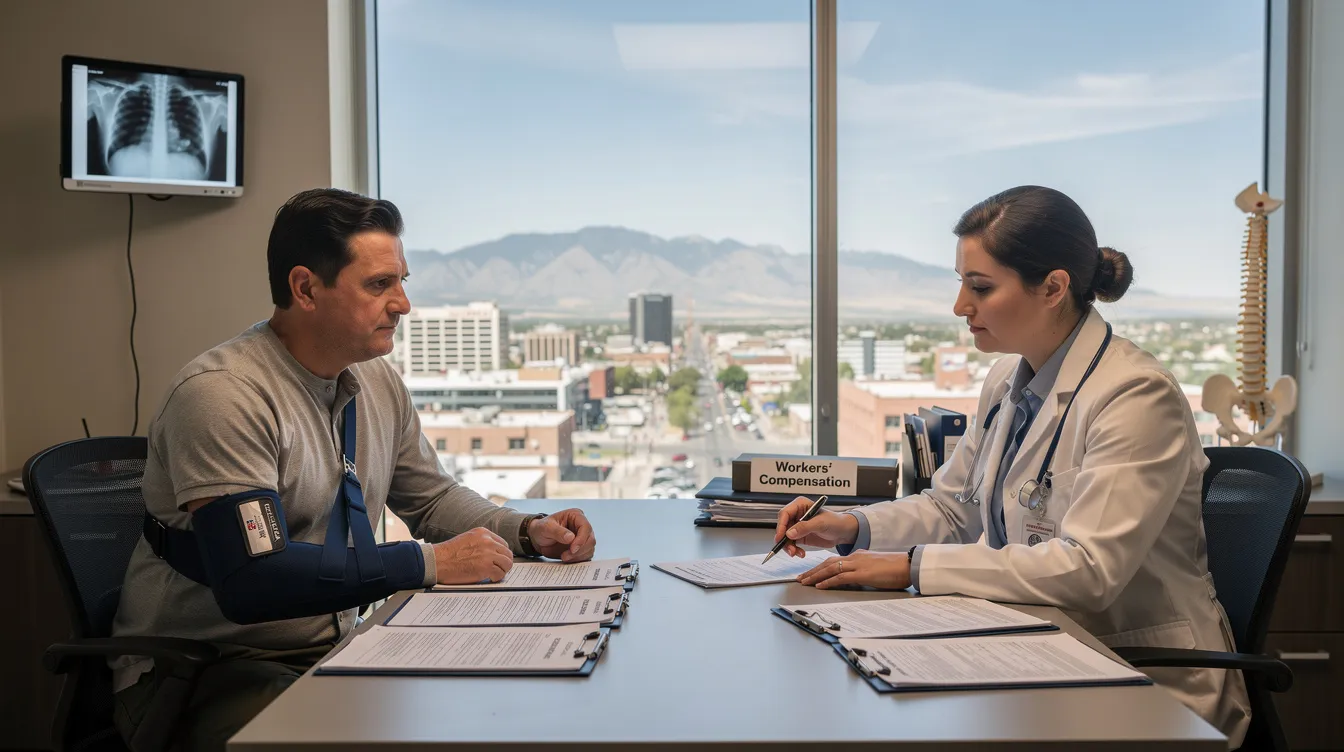
How Colorado Law Handles Disputes
Colorado workers compensation benefits include reasonable and necessary medical care for accepted work injuries. Disputes move through the Colorado Division, the Division of Workers Compensation, and the Office of Administrative Courts. See the state’s Division of Workers’ Compensation for general system information.
In Colorado, if the workers' compensation insurance carrier denies your medical treatment, you can challenge the decision through a structured, multi-step appeals process with the Colorado Division of Workers' Compensation. The Colorado Division of Workers' Compensation reviews all evidence submitted by both the injured worker and the insurance company to determine eligibility for benefits after a claim is denied.
Authorized Treating Physician (ATP) and Your Right To Care
The treating physician, often called the authorized treating physician, matters because that doctor’s medical records guide treatment, work restrictions, and causation. Employers usually provide a designated provider list after written notice of injury.
Switching doctors without following workers compensation law can make treatment “unauthorized” and unpaid. Strong ATP opinions are often key to winning medical benefits. Johnston Law Firm helps clients explain symptoms clearly so medical documentation addresses work-relatedness, necessity, and functional limits.
In Colorado, workers must report workplace injuries to their employer in writing within 10 days of the accident, or risk automatic denial of their claim. In Colorado, workers must report workplace injuries in writing within 10 days, and failing to do so can lead to automatic denial of the claim.
Independent Medical Exams (IMEs) and DIMEs in Treatment Disputes
An insurance-requested IME often tries to cut off care or support MMI. A DIME is the formal tool for challenging MMI and impairment. DIME deadlines can be short, often 30 days from a Final Admission.
Preparation matters. Do not exaggerate or minimize symptoms. An experienced workers comp attorney can prepare you, review reports, and challenge flawed defense medical opinions.
Steps To Take After Denial
Act quickly. Delays can make it harder to prove your need for care and easier to miss Colorado deadlines.
Step 1: Carefully Review The Denial
Look for phrases like “insufficient medical evidence,” “maximum medical improvement reached,” “not reasonably necessary,” or “not related to industrial injury.” Save the denial letter, envelope, and emails.
Do not call the adjuster just to argue. Organize documents and get advice from an experienced workers compensation lawyer.
Step 2: Keep Getting Appropriate Medical Care
Do not abruptly stop care. Continue appropriate treatment with the authorized doctor, follow restrictions, and report worsening symptoms.
You can use your personal health insurance while waiting for an appeal, which can later file a lien to be reimbursed from your workers' comp settlement if you win your case. Check policy language and never misrepresent how the injury occurred.
Step 3: Gather Evidence To Support The Denied Treatment
Strong medical evidence is crucial in workers' compensation claims, as it can significantly influence the outcome of a denied claim by proving the injury's work-related nature and severity.
Useful evidence includes:
-
Updated medical records
-
MRIs, CT or EMG testing
-
Physical therapy notes
-
Accident photos
-
Employer incident reports
-
Witness statements
-
Pain diaries
-
Specialist opinions
Strong evidence, such as updated medical reports, witness statements, and accident photos, can significantly improve the chances of overturning a denied workers' compensation claim during the appeals process.
Step 4: File For A Hearing Or Other Relief Under Colorado Procedure
After a workers' compensation claim is denied in Colorado, the first step in the appeal process is to file an Application for Hearing with the Office of Administrative Courts. After a workers' compensation claim is denied, you have the right to challenge the decision through a structured appeals process, which includes filing an Application for Hearing with the Office of Administrative Courts.
Hearings involve discovery, exchanging evidence, witness testimony, and legal arguments before an Administrative Law Judge (ALJ). The ALJ will issue a binding written decision on whether the insurer must pay for the denied medical treatment.
You can also request a Prehearing or Settlement Conference to try to resolve disputes informally before the hearing.
The appeals process has strict filing deadlines. You typically have 20 days after receiving a denial letter to file your appeal. Missing deadlines can result in losing your right to challenge the denial.
Step 5: Consult An Experienced Workers Compensation Lawyer
Navigating Colorado workers compensation law and the appeals process involves complex legal nuances and strict deadlines. An experienced workers compensation lawyer can help you:
-
Understand the denial reasons and your rights
-
Gather and organize supporting evidence and medical documentation
-
Prepare and file appeals and legal briefs
-
Represent you at hearings and settlement conferences
-
Negotiate with insurers for fair medical care and benefits
Steve Johnston at Johnston Law Firm, LLC has extensive experience representing injured Colorado workers in denied workers compensation claims. Call [(719) 309-9484](tel: (719) 309-9484) or message us online for a free consultation and immediate assistance.
Step 6: Continue Following Medical Restrictions And Appointments
While your appeal is pending, continue to follow your treating doctors’ medical restrictions and attend all medical visits. Missing appointments or failing to comply with treatment plans can be used against you in the workers comp denial appeal process.
Step 7: Prepare For The Hearing
If your case proceeds to an ALJ hearing, you should be ready to testify about your injury, treatment, and how the injury affects your ability to work. Your attorney can prepare you and your witnesses for testimony and cross-examination.
If your workers comp claim denied medical treatment in Colorado, Johnston Law Firm, LLC is ready to stand by your side. Based in Pueblo, Steve Johnston represents injured workers throughout Colorado, including Otero, Fremont, Custer, Huerfano, Las Animas, and Crowley Counties. His six key practice areas include workers’ compensation, personal injury, automobile accidents, estate planning, criminal law, and social security law.
As an experienced Colorado workers compensation attorney, Steve Johnston helps clients understand their rights, meet strict filing deadlines, gather crucial medical evidence, and develop effective appeals strategies. The firm offers a free consultation, direct attorney access, and regular updates. Call (719) 309-9484 or message us online today.
How Johnston Law Firm Helps Fight Denied Medical Treatment
We assist by:
-
Analyzing denial letters to identify insurer reasons and errors
-
Collecting updated medical records, imaging, and specialist opinions to prove work-relatedness and necessity
-
Coordinating with authorized treating physicians to strengthen documentation
-
Preparing and filing Applications for Hearing with the Colorado Office of Administrative Courts
-
Representing clients at Administrative Law Judge (ALJ) hearings, including cross-examining insurance medical experts
-
Navigating appeals through the Industrial Claim Appeals Panel and Colorado Court of Appeals when needed
These challenges affect workers in construction, healthcare, manufacturing, agriculture, and more across Southern Colorado.
Coordinating Your Workers Comp Claim with Related Legal Matters
Serious workplace injuries may involve third-party personal injury claims, automobile accidents, Social Security Disability benefits, or estate planning. Experience in criminal law is valuable if insurers allege fraud or misconduct. Bring all denial letters, medical records, and correspondence to your consultation.
When to Contact a Colorado Workers Compensation Attorney
If your medical treatment is delayed, limited, or denied—especially with utilization review denials, premature maximum medical improvement (MMI) declarations, or specialist referral issues—contact an attorney promptly. Early intervention preserves rights and improves chances of obtaining the care and benefits you deserve.
Call (719) 309-9484 or send a secure message online for a free case evaluation.
Documents to Gather Before Your Consultation
-
Denial letters, Notice of Contest, insurer correspondence
-
Medical records including physician notes, imaging, test results
-
Work injury reports, witness statements, accident photos
-
Authorization forms, work restrictions, prior related medical history
Strong medical evidence linking your injury to work duties is essential to overturning denials.
FAQ: Workers Comp Claim Denied Medical Treatment Colorado
How long does it take to overturn a denied medical treatment claim?
Resolution varies; some cases settle quickly with strong evidence, while contested hearings may take months. Acting swiftly is crucial to meet Colorado’s strict deadlines.
Can I get medical bills paid if my care was initially denied?
Yes. If your appeal succeeds, the insurer must pay for all reasonable and necessary treatment related to your work injury, including costs incurred during the appeal.
What if surgery or specialist care is denied?
You have the right to challenge utilization review denials before an Administrative Law Judge who will decide if the treatment is reasonable and necessary under Colorado law.
What if my claim is denied after reaching maximum medical improvement?
You can dispute premature MMI findings through a Division Independent Medical Examination (DIME) and pursue further treatment if justified.
Can I handle a denied medical treatment claim without a lawyer?
While possible, Colorado’s appeals process is complex and strict. An experienced attorney helps gather evidence, meet deadlines, and effectively challenge denials.
If your workers comp claim denied medical treatment in Colorado, don’t face it alone. Call Johnston Law Firm, LLC at (719) 309-9484 or message us online for a free consultation today.