Understanding Workers Comp Back Injury Colorado: Your Essential Guide
Introduction
This page provides a comprehensive guide for Colorado workers who have suffered back injuries on the job, including herniated discs, spinal stenosis, and injuries requiring surgery. If you are a Colorado employee dealing with a workplace back injury, understanding your rights and the workers compensation process is crucial. This resource explains what benefits you may be entitled to, how claims are valued, and the steps you should take to protect your health and financial future.
Key Takeaways
Colorado workers with a back injury, herniated disc, spinal stenosis, or surgery-related spine condition may qualify for workers compensation benefits if the condition arose from a workplace injury, repetitive strain, or another work related injury.
-
Colorado workers comp can cover reasonable medical care, medical expenses, lost wages, wage benefits, and disability benefits, but not pain and suffering against the employer.
-
Claim value often depends on severity, surgery or fusion, impairment rating, maximum medical improvement, pre injury wages, and permanent restrictions.
-
Insurance companies often undervalue serious back injury cases before MMI.
-
For a free consultation, call Johnston Law Firm, LLC at (719) 309-9484 or message us online .
Understanding Colorado Workers’ Comp for Back Injuries
Johnston Law Firm, LLC helps injured workers from Pueblo and across Colorado pursue colorado workers compensation benefits after back and neck injuries. Under colorado law, the workers compensation system is usually the exclusive remedy against an employer, replacing a personal injury lawsuit for pain and suffering with defined workers comp benefits.
Colorado workers compensation covers back injuries from a specific accident or repetitive strain. Common causes include construction in Pueblo and Otero County, warehouse work in Fremont County, nursing work in Custer and Crowley Counties, and trucking in Huerfano and Las Animas Counties. Musculoskeletal disorders like back and neck injuries are among the most common and costly workplace injuries; about 38.5% of work-related MSDs are neck and back injuries, totaling nearly 200,000 U.S. cases from 2021 to 2022.
Johnston Law Firm also reviews possible third-party personal injury claims involving auto accidents, unsafe property, or defective equipment.

Common Work-Related Back Injuries: Strains, Herniated Discs, and Spinal Surgery
Not every back injury claim is valued the same. Mild strains may involve pain, spasms, physical therapy, and short recovery. Common types of back injuries in the workplace include:
-
Mild muscle strains
-
Herniated discs
-
Spinal stenosis
These injuries vary significantly in severity and recovery time.
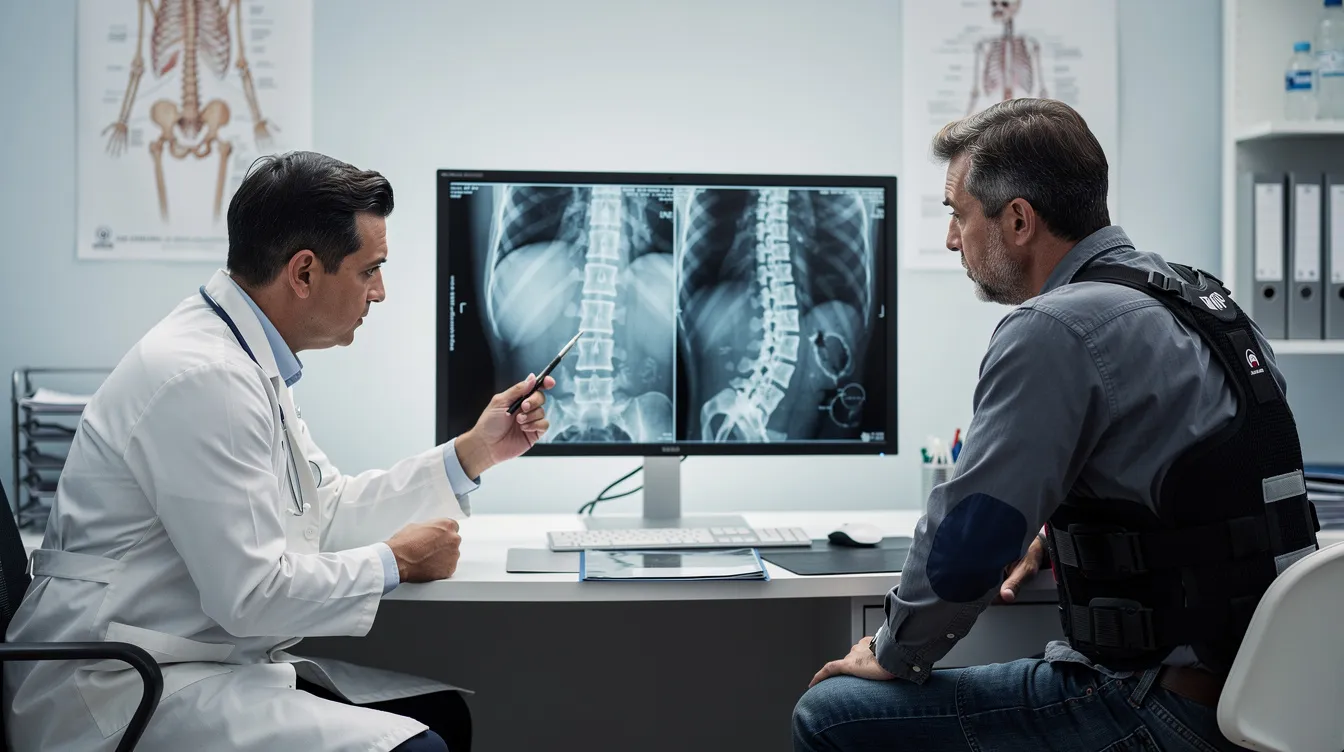
Herniated discs, bulging discs, nerve root compression, and radiculopathy can affect walking, lifting, sleep, and physically demanding jobs. Workers such as nursing assistants, warehouse workers, and truck drivers face higher risk because of heavy lifting, repetitive motion, and prolonged sitting.
Surgery may include discectomy, laminectomy, or fusion. Documented nerve damage, foot drop, spinal cord injuries, serious injuries, or permanent restrictions can support permanent partial disability or permanent total disability.
Colorado Workers Compensation Benefits for Back Injuries
Workers’ compensation benefits in Colorado include medical benefits, temporary disability benefits, permanent partial disability benefits, and permanent total disability benefits. Colorado workers compensation benefits are designed to provide financial assistance and financial support after employees injured at work lose income or need medical treatment.
Medical Benefits
In Colorado, workers’ compensation benefits cover all reasonable and necessary medical care for work-related injuries, including doctor visits and therapy. In Colorado, workers’ compensation benefits cover all reasonable and necessary medical care for work-related injuries, including doctor’s appointments, hospitalizations, medications, and therapy. Medical expenses that may also be covered include:
-
MRIs
-
Injections
-
Surgery
-
Prescriptions
-
Durable medical equipment
-
Pain management
-
Mileage
-
Parking
See the Colorado Division of Workers’ Compensation’s overview of potential benefits .
Temporary Disability Benefits
Temporary total disability is typically two-thirds of the worker's average weekly wage, up to maximum benefits set by the state for the injury date. Temporary disability benefits in Colorado are typically paid at two-thirds of the worker’s average weekly wage, up to a maximum set by the state. Temporary partial disability benefits, also called temporary partial disability tpd, may pay two-thirds of the difference between pre-injury earnings and reduced wages. Temporary partial disability helps when injured employees return to light duty but earn less.
Permanent Disability Benefits
Permanent partial disability benefits are awarded to employees who have a permanent impairment but can still work in some capacity, while permanent total disability benefits are for those unable to return to any gainful employment due to a work-related injury. Spine claims are generally whole-person claims, not scheduled limb claims, so permanent partial disability ppd depends heavily on the impairment rating, age, and employee's average weekly wage in calculating benefit value. Permanent total disability ptd may pay lifetime lost wage benefits. Colorado workers’ compensation can also provide death benefits in fatal workplace cases.
Maximum Medical Improvement (MMI), Impairment Ratings, and Claim Value
Maximum medical improvement means the authorized treating physician believes the condition is stable and unlikely to improve significantly. Serious back injuries may take 6–24 months to reach MMI, especially after surgery.
Settlement amounts for workers’ compensation claims in Colorado are often determined after the injured worker reaches maximum medical improvement (MMI), which indicates that their condition has stabilized. At MMI, the physician assigns permanent impairment under Colorado’s AMA Guides rules. A change from 8% to 12% can substantially increase permanent disability benefits.
If a worker disagrees with the doctor’s final MMI conclusion or impairment rating, a Division Independent Medical Examination (DIME) can be requested within 30 days. An experienced workers compensation attorney can protect the DIME deadline.
How Colorado Workers’ Comp Values Back Injury Claims (Including Surgery and Fusion)
There is no single average back injury settlement. The settlement amount for a workers’ compensation claim can be influenced by factors such as the type and severity of the injury, the employee’s pre-injury wages, and the extent of the employee’s disability.
In Colorado, the average workers’ compensation settlement amounts typically range from $20,000 to $60,000, with severe cases potentially exceeding $600,000. In Colorado, back and neck injuries often settle for higher amounts due to their complexity and the potential for long-term disability, with settlements for serious cases ranging from $100,000 to $250,000 or more. A minor strain may resolve under $10,000, while fusion, nerve damage, or permanent injury may reach six figures.
Colorado law caps some combined temporary and permanent disability benefits by impairment percentage and injury date, but caps do not eliminate necessary medical treatment. Do not rely on a friend’s injury settlement story. Call (719) 309-9484 or message Johnston Law Firm online .
Lump-Sum Settlements vs. Ongoing Workers Comp Benefits
Workers compensation settlements may close some or all future rights. A full and final settlement can close wage-loss and medical care for a lump sum, but that is risky if future fusion, injections, or ongoing medical care is likely.
Some agreements resolve only disputed lost wage benefits or PPD while leaving medical benefits open. Once approved by Colorado administrative courts or an administrative law judge, reopening is difficult.
Practical Steps After a Workplace Back Injury in Colorado
Early action matters. In Colorado, workers must provide written notice of their injury to their employer within four days to ensure eligibility for workers’ compensation benefits. In Colorado, it is mandatory to notify your employer about a back injury in writing within 10 working days of the incident to avoid financial penalties. In Colorado, failure to report a back injury within 10 days may result in a financial penalty impacting lost wage benefits.
Reporting and Filing Requirements
A worker must formally file a Worker’s Claim for Compensation (Form WC15) with the Colorado Division of Workers’ Compensation within two years of the injury. The insurance provider has 20 days to respond after receiving a workers’ compensation claim. For non-emergency care, under Colorado law, employers are required to provide a designated provider list featuring at least four accredited medical professionals for injured workers.
At every visit, describe back pain, leg pain, numbness, tingling, weakness, and bladder or bowel symptoms. Keep a journal of missed work, limitations, and restrictions.
Common Insurance Company Tactics in Back Injury Claims
The insurance company may blame degenerative disc disease, claim symptoms are exaggerated, or argue MRI findings do not match complaints. Company doctors may issue low ratings, push early return to work, or deny surgery.
If the insurer denies a claim, the worker has 45 days to apply for a hearing to dispute the decision. If a workers’ compensation claim is denied, the injured worker can appeal the decision to the Colorado Office of Administrative Courts. Speak with counsel before recorded statements, releases, or early settlement offers.
How Johnston Law Firm, LLC Helps with Workers Comp Back Injury Cases
Steve Johnston and Johnston Law Firm, LLC are based in Pueblo and represent Colorado workers in workers compensation, personal injury, automobile accidents, estate planning, criminal law, and social security law.
The firm helps with the workers comp claim process, authorized treating physician disputes, MMI, DIME, hearings, and settlement negotiations involving construction workers, truck drivers, warehouse employees, and health care workers. Johnston Law Firm also coordinates colorado disability benefits, Social Security Disability, automobile accident cases, and personal injury settlement issues when needed.
We serve Pueblo, Otero, Fremont, Custer, Huerfano, Las Animas, Crowley Counties, and statewide. Call (719) 309-9484 or send a message through our online contact form .
When Does a Work-Related Back Injury Become Permanent Total Disability (PTD)?
Permanent total disability is reserved for workers who cannot earn wages in any reasonable job because of the serious back injury and other limitations. Multiple surgeries, failed back surgery syndrome, nerve damage, strong medication, and inability to sit or stand may support PTD.
Vocational factors matter: age, education, language skills, and a heavy-labor history. Insurers often argue the worker can do sedentary work, so legal advocacy is critical.
Back Injury Workers Comp Claims vs. Personal Injury Cases in Colorado
Workers comp covers medical costs, wage loss, and disability benefits without proving employer fault. A personal injury case generally requires proving negligence but may include pain and suffering.
If another driver, subcontractor, property owner, or manufacturer caused the injury, you may seek compensation through both colorado workers compensation and a personal injury lawsuit. Johnston Law Firm helps manage liens and offsets.
Scams and Red Flags for Colorado Workers Seeking Benefits
Be cautious of callers claiming to be workers comp officials, judges, or attorneys demanding payment to “release” benefits in colorado. Legitimate workers compensation insurance benefits do not require gift cards, wire transfers, or cash up front.
If you are unsure whether a communication is real, hang up and verify through official channels, or call Johnston Law Firm at (719) 309-9484 or reach out through our secure online form .

Call Johnston Law Firm Today About Your Colorado Back Injury Claim
If you have herniated discs, surgery, chronic pain, or permanent restrictions from a Colorado workplace injury, do not handle the injury claim alone. Johnston Law Firm, LLC offers a free, no-obligation review of workers compensation claims, likely benefits, and options after maximum medical improvement.
From Pueblo, we help injured workers statewide, including rural communities where travel for care is difficult. Call (719) 309-9484 now or message us online to protect your rights.
Frequently Asked Questions About Colorado Workers Comp Back Injury Claims
How long do I have to report a work-related back injury in Colorado?
Provide written notice as soon as possible, ideally within four days. Late notice may not always destroy the case, but it can reduce or delay lost wage benefits. Form WC15 is generally due within two years.
Can I choose my own doctor for my Colorado workers comp back injury?
Usually, for non-emergencies, you must choose from the employer’s designated provider list of at least four providers. You may have options to change doctors, but ask an injury lawyer before risking coverage.
Will I have to pay taxes on my Colorado workers comp back injury benefits?
Most workers compensation wage-loss and permanent disability benefits are not taxable like regular wages. Social Security offsets and personal injury recoveries can be more complex, so speak with a tax professional.
What if my employer says my back problem is “degenerative” and not from work?
Many adults have degeneration on imaging. A work aggravation can still be compensable if job duties significantly worsened symptoms or created a need for new treatment. Johnston Law Firm can review the medical evidence.
Can I be fired for filing a workers comp claim for a back injury?
Employers cannot legally retaliate solely because you filed a legitimate workers compensation claim. If a workplace accident is fatal, certain benefits may be available to surviving family members. Termination can affect wage benefits, but it does not automatically end medical benefits or the back injury claim.