Rollover Car Accident – Liability and Serious Injury Claims in Colorado
A rollover car accident is one of the most violent types of motor vehicle accident on Colorado roads. When a vehicle tips onto its side or roof, the occupants face forces that other car crashes rarely produce: roof crush, ejection, and repeated impacts against the interior. If you or a family member was hurt in a rollover, the information below covers who may be liable, what damages you can pursue, and how Johnston Law Firm, LLC can help protect your claim.
Key Takeaways
-
Rollover accidents represent a small percentage of highway collisions but account for roughly one-third of all passenger vehicle deaths. In Colorado, 150 out of 364 passenger-vehicle occupant fatalities in 2024 involved rollovers.
-
Call Johnston Law Firm, LLC at (719) 309-9484 or message us online as soon as possible after a rollover crash anywhere in Colorado. Free consultations are available, and most injury cases are handled on a contingency fee basis.
-
Seek medical attention immediately after any rollover, even if injuries seem minor. Internal bleeding, traumatic brain injuries, and spinal cord injuries can develop hours or days after impact.
-
Multiple parties may share liability in rollover car accident cases: the other driver, a vehicle or tire manufacturer, or a government entity responsible for a dangerous road. An experienced rollover accident lawyer can investigate all of them.
-
Most Colorado rollover personal injury claims must be filed within three years of the crash. Wrongful death claims carry a two-year deadline, and claims against government entities often require written notice within 182 days.
Injured in a Colorado Rollover Car Accident? Start Here
Picture driving south on I-25 near Pueblo when a tire blows and your SUV begins to slide. In an instant the vehicle leaves the pavement, catches a soft shoulder, and rolls. Glass shatters. The roof buckles. You hang upside-down by a seat belt while fuel drips onto hot metal. Similar scenes play out on U.S. 50 in Otero County, on icy stretches through Fremont County, and on gravel roads in Custer County every year.
Rollover crashes are among the most dangerous types of car accident. Nationally, they make up a relatively small share of all collisions, yet they produce a disproportionate share of fatalities and spinal cord injuries. Car accident victims who survive a rollover often face months or years of medical treatment, lost wages, and lasting physical injuries.
You may have a valid car accident lawsuit if another driver, a defective vehicle, or a dangerous roadway contributed to the rollover, even if you are not sure exactly what happened. You can file a personal injury claim against the at-fault party, and Colorado law allows recovery even if you share some responsibility.
Call Johnston Law Firm, LLC at (719) 309-9484 or contact us online for a free consultation. The firm handles automobile accident and personal injury claims on a contingency fee basis; there is no attorney fee if there is no recovery. Clients may remain responsible for certain court costs or expenses, which are explained before representation begins.
About Johnston Law Firm, LLC and Attorney Stephen M. Johnston
Johnston Law Firm, LLC is a Pueblo-based law firm representing rollover and other car accident victims throughout Colorado, including Huerfano, Las Animas, Crowley, Otero, Fremont, and Custer Counties. Attorney Stephen M. Johnston brings more than two decades of trial experience across six practice areas: workers' compensation, personal injury, automobile accidents, estate planning, criminal law, and social security law.
That breadth matters when a rollover victim faces overlapping problems. A construction worker who rolls a company truck may need both a personal injury claim and a workers' compensation claim. A family that loses a breadwinner in a fatal rollover may need wrongful death representation alongside estate planning and probate guidance. Steve's background across these fields lets him address the full picture.
The firm's philosophy is direct communication with Steve, realistic advice, and a collaborative plan for each rollover car accident case. Clients speak with their attorney, not a call center.
Call (719) 309-9484 or message us online to speak with a Colorado car accident attorney about your rollover situation.
What Makes Rollover Car Accidents So Dangerous?
A rollover car accident is a type of crash where a vehicle tips onto its side or roof, often flipping multiple times before coming to rest. Each rotation multiplies the angular forces acting on occupants. Unlike a front-end or rear-end collision (a single directional impact), a rollover subjects the cabin to force from above, below, and the sides in rapid succession.
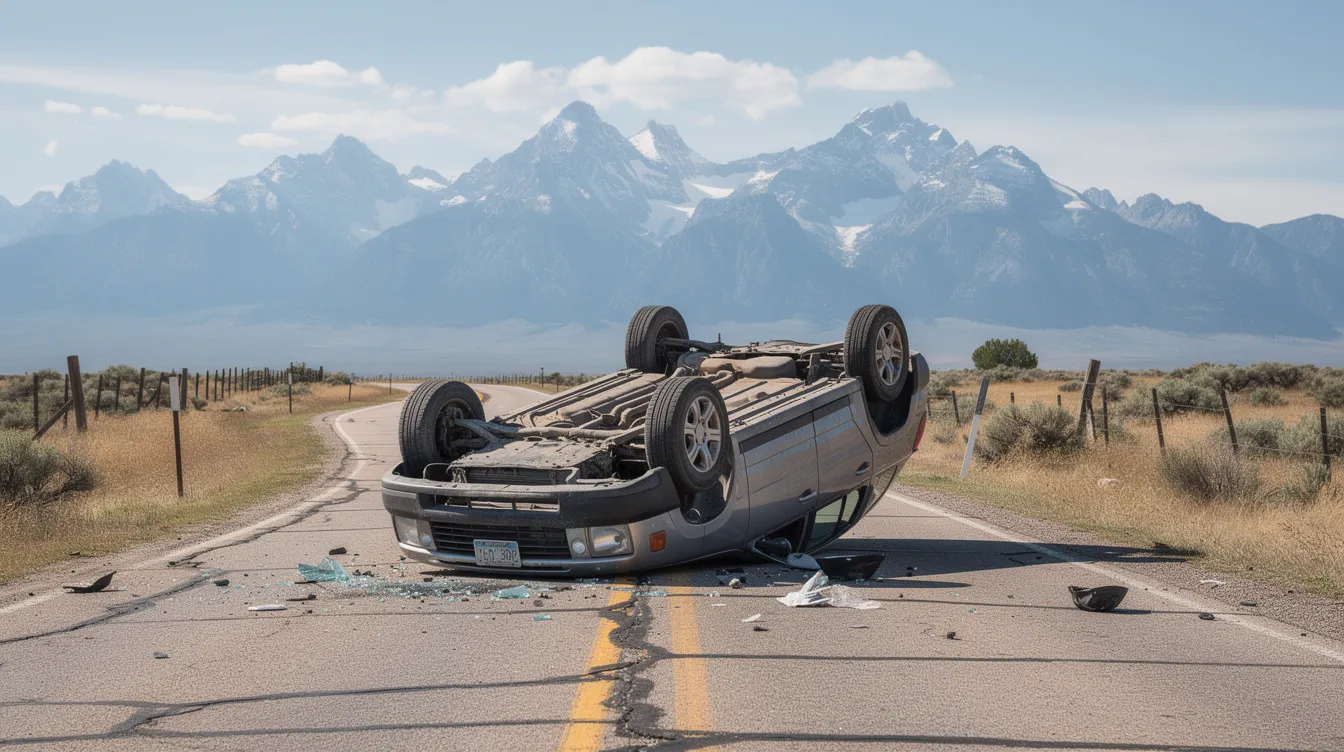
High center of gravity vehicles are more prone to rollover accidents. SUVs, pickup trucks, vans, and lifted vehicles commonly seen in Colorado's rural counties and mountain corridors carry elevated rollover risk. These are among the most popular passenger vehicles on Colorado roads.
The specific dangers of a rollover include:
-
Roof crush. When a vehicle lands on its roof, structural failure can collapse the occupant compartment. Rollover accidents can result in crush injuries due to roof collapse, causing head, neck, and spinal trauma.
-
Ejection. Ejection from a vehicle during a rollover dramatically increases the risk of fatalities. A majority of fatal rollover victims were unbelted and ejected from the vehicle. Seatbelt compliance reduces the risk of ejection during a rollover.
-
Glass and debris. Window and windshield failure exposes occupants to road contact and shrapnel.
According to FARS data for Colorado in 2024, 150 out of 364 passenger-vehicle occupant fatalities (approximately 41.2%) occurred in vehicles involved in a rollover. Rollovers represent a small percentage of highway collisions but account for roughly one-third of all passenger vehicle deaths nationally.
Common Causes of Rollover Crashes in Colorado
Most rollovers involve a "tripping" event: the vehicle slides sideways and strikes a curb, soft shoulder, guardrail, or another vehicle, causing it to flip. Tripped rollovers account for about 95% of cases. Untripped rollovers occur without an external object causing the vehicle to roll; these are less common and often linked to vehicle design or extreme maneuvers.
Specific driver-related causes include:
-
Excessive speed. Excessive speed is a primary factor in many rollover accidents. Drivers should slow down before entering curves to prevent rollovers.
-
Distracted driving. Texting, adjusting a GPS, or looking at a phone diverts attention during the moments when correction is needed most. Impaired or distracted driving increases the risk of rollover accidents.
-
Drunk or drug-impaired driving. Reckless driving while impaired slows reaction time and distorts spatial judgment.
-
Fatigue and overcorrection. Driver errors include overcorrecting steering and drifting onto soft shoulders, which can lead to rollovers. Abrupt steering maneuvers can destabilize a vehicle and lead to rollovers.
-
Wildlife avoidance. Sudden swerves to avoid deer or elk on rural highways. Even reasonable speeds can result in rollovers under certain conditions, such as driver impairment or obstacles.

Colorado-specific conditions amplify the risk:
-
Winter ice and snow across mountain passes and I-25 corridors. Rollover crashes often occur in winter conditions. Slick and hazardous road conditions increase rollover risk.
-
Gravel and unpaved county roads in Otero, Huerfano, and Las Animas Counties. Hazardous road and weather conditions compromise vehicle stability.
-
High winds on open plains that push high-profile vehicles sideways.
-
Vehicles leaving the road on narrow shoulders can result in rollovers. High-energy collisions from multi-vehicle crashes can also trigger a rollover.
Vehicle-related factors also contribute. Mechanical failures like tire blowouts can contribute to a rollover accident. Tire failure or blowouts can trigger rollover accidents, and regular tire maintenance can prevent blowouts that lead to rollovers. Overloaded cargo, lift kits, and mismatched tires raise a vehicle's center of gravity. Proper vehicle selection can focus on models with high rollover resistance ratings, and Electronic Stability Control (ESC) helps prevent rollovers by applying brakes to individual wheels.
Identifying the cause is the first step in determining who is legally responsible for the rollover car accident.
Who May Be Liable in a Colorado Rollover Car Accident?
Rollover liability often involves more than one person or entity. A skilled accident lawyer investigates beyond just the other driver.
Another negligent driver. A negligent driver who was speeding, texting, or impaired may have caused or contributed to the rollover. In chain-reaction collisions, more than one person may share fault. Hit and run accidents complicate recovery but do not eliminate it.
Vehicle or component manufacturer. Manufacturers must comply with Federal Motor Vehicle Safety Standard 216 (49 CFR § 571.216), which sets minimum roof crush resistance for passenger cars and light trucks. If vehicle defects, unstable design, defective tires, seat belts, airbags, or roofs fail in a foreseeable rollover, the manufacturer may bear liability under product liability law. In one documented case, a Ford Explorer rolled on black ice in Colorado; a product liability lawsuit was settled after the passenger suffered a spinal cord injury from roof crush.
Road owner or government entity. Under Colorado statute C.R.S. § 24-10-106, public entities can be held liable for dangerous conditions of highways, including missing guardrails, severe drop-offs, and hazardous surface conditions, provided they had actual notice and a reasonable time to remedy the problem. Rural roads in Las Animas or Crowley Counties with unaddressed gravel accumulation or soft shoulders could qualify.
Comparative fault. Colorado law allows an injured person to recover compensation even if they are partially responsible. Under C.R.S. § 13-21-111, your compensation is reduced by your percentage of fault. If found 10% at fault, you recover 90% of awarded damages. In Colorado, if you're 50% or more at fault, you recover nothing.
Tripped vs. Untripped Rollovers: Why It Matters for Liability
Tripped rollovers are the most common type. The vehicle slides sideways, then strikes a curb, guardrail, soft shoulder, or another object and flips. On U.S. 50 near La Junta, a side impact from a truck could send a sedan off the shoulder and into a roll. The "trip" source may point liability at road conditions, another driver, or both.
Untripped rollovers occur without an external object causing the vehicle to roll. An SUV taking a sharp turn on a dry road at moderate speed may roll if the vehicle's design creates inherent instability. These cases often implicate design defects or component failure. Most passenger vehicles manufactured after the mid-2000s include ESC, but older models or vehicles with modified suspensions may lack this protection.
Understanding whether a rollover was tripped or untripped helps a rollover accident lawyer decide whether to focus on road conditions, driver error, or automotive product liability. Steve Johnston works with qualified experts; accident reconstructionists and engineers can analyze skid marks, vehicle dynamics data, and structural damage to determine how and why the rollover occurred.
Serious Injuries Common in Rollover Car Accidents
Rollovers are associated with catastrophic and permanent injuries that drive higher medical expenses, lost income, and long-term care needs. Rollover accidents can lead to catastrophic injuries requiring lifetime care.
Head and brain injuries. Rollover accidents can cause traumatic brain injuries, concussions, skull fractures, facial fractures, and eye injuries from shattered glass or ejection. These injuries can affect cognition, memory, and daily function permanently.
Spinal cord injuries. Spinal injuries are common in rollover accidents. Herniated discs, vertebral fractures, and partial or complete paralysis result from roof crush, violent roll motions, or ejection. The injured person may require lifetime medical support, home modifications, and assistive devices.
Musculoskeletal trauma. Rollover crashes can lead to multiple fractures and broken bones. Broken bones in the arms, legs, pelvis, and ribs are frequently documented.

Internal injuries. Internal injuries may occur due to blunt-force trauma in rollovers. Organ damage from compression against the steering column, door, or roof can be life-threatening and may not be apparent at the accident scene.
Burns and lacerations. Rolled vehicles may catch fire, and shattered glass causes severe lacerations.
Psychological injuries. Psychological trauma is a common effect after rollover accidents. Anxiety, depression, and post traumatic stress disorder can follow a violent crash and are compensable in many car accident injury cases under Colorado law.
The Importance of Seeking Medical Attention After a Rollover
Some serious injuries, including internal bleeding, brain injuries, and certain spinal cord injuries, are not immediately obvious at the accident scene. Adrenaline can mask pain for hours.
Seek medical attention even for minor injuries. Accept emergency transport when recommended, or visit an emergency department the same day. Parkview Medical Center in Pueblo, UCHealth Memorial in Colorado Springs, or Mt. San Rafael Hospital in Trinidad can provide initial evaluation.
Prompt medical documentation protects both health and the eventual claim. Gaps in treatment records are frequently used by insurance companies to argue that injuries are unrelated to the crash or less severe than claimed. Follow through on all follow-up appointments, physical therapy, and specialist referrals. Keep a symptom journal tracking pain levels, mobility limits, sleep disruption, and emotional impacts.
Once you have received initial medical care, call (719) 309-9484 or message Johnston Law Firm online so legal protection can begin while treatment continues.
What to Do Immediately After a Rollover Crash in Colorado
Safety and medical care come first. Evidence collection follows as soon as it is safe.
Step 1: Call 911. Call 911 to report the accident immediately. Request ambulance and police response. Provide the location and number of vehicles involved.
Step 2: Check for injuries. Assess yourself and passengers. Assist others if you can do so safely. Move to a safe location away from traffic if the vehicle is in a travel lane or at risk of fire.
Step 3: Collect information at the scene.
-
Document the accident scene with photos if possible: vehicle positions, skid marks, debris, road conditions (ice, gravel, potholes), and visible injuries.
-
Exchange contact and insurance information with other drivers, including names, phone numbers, insurance details, license plate numbers, and driver's license numbers.
-
Get contact information for witnesses.
Step 4: Request the official police report. Verify that your description of the rollover and any suspected hit and run behavior is provided to the responding officer. An accident report documents the scene before conditions change.
Step 5: Notify your insurance provider. Notify your insurance provider within a reasonable timeframe. Report the accident happened, but do not give a recorded statement to any insurance company before speaking with an experienced accident lawyer.
What NOT to do: Do not admit fault. Do not speculate about how the crash happened. Do not agree to a quick settlement at the scene.
Colorado Insurance Rules and Options After a Rollover Car Accident
Colorado is a "fault" state, not a no-fault state. The at-fault driver's liability insurance is generally responsible for your injuries and property damage after a rollover accident.
Colorado's minimum required liability coverages include at least $25,000 per person and $50,000 per accident in bodily injury liability, plus $15,000 in property damage coverage. Confirm current numbers with an attorney, as these minimums have been subject to legislative review.
Additional coverage types that may apply:
|
Coverage Type |
What It Does |
|---|---|
|
MedPay (medical payments) |
Pays initial medical bills regardless of fault |
|
Uninsured motorist coverage |
Covers you when the at-fault driver has no insurance |
|
Underinsured motorist coverage |
Covers the gap when the at-fault driver's limits are too low |
|
Collision |
Pays for your vehicle damage |
Uninsured motorist coverage and underinsured motorist coverage are especially relevant in hit and run accidents or crashes involving a negligent driver with minimal insurance coverage. Insurance companies may initially offer low settlements for rollover claims, particularly when medical bills and future medical expenses are still accumulating. Insurance adjusters are not on your side.
Have Johnston Law Firm review your policy language and benefit options before agreeing to any settlement or signing any release.
Damages You May Recover After a Rollover Accident
Colorado law allows injured people to pursue both economic and non-economic damages in personal injury cases, and in some instances exemplary (punitive) damages.
Economic damages:
-
Emergency transport, hospitalization, surgery, rehabilitation
-
Assistive devices and home modifications
-
Future medical expenses and ongoing care
-
Medical bills already incurred
-
Lost wages and lost future earning capacity
-
Vehicle and property damage
Non-economic damages:
-
Pain and suffering (Colorado allows recovery for pain and suffering after rollover accidents)
-
Emotional distress
-
Loss of enjoyment of life
-
Permanent scarring or disfigurement
-
Loss of consortium for a spouse
Compensation may cover lost wages and future medical expenses. In one rollover case, a $1.5 million settlement was secured for a rollover accident case involving severe injuries. Families who lose a loved one may pursue wrongful death damages: funeral and burial costs, loss of financial support, and loss of care, comfort, and companionship.
Steve Johnston documents all categories of harm with medical records, employment information, expert opinions, and client testimony to support a demand for fair compensation in every car accident claim.
Wrongful Death Claims After a Fatal Rollover Crash
Some rollover car accidents are fatal. Families in Pueblo and throughout Colorado may be dealing with grief, mounting bills, and legal uncertainty at the same time.
In Colorado, wrongful death claims are generally subject to a two-year statute of limitations measured from the date of death. Colorado law designates specific family members (typically the surviving spouse, then children, then parents) who may bring wrongful death claims.
Wrongful death damages in rollover cases typically include:
-
Loss of financial support the deceased would have provided
-
Final medical bills incurred between the crash and death
-
Funeral and burial expenses
-
Noneconomic losses: loss of companionship, guidance, and comfort
A related survival action may be brought on behalf of the estate to recover damages the person suffered between the injury and death, including medical costs and lost income during that period.
Johnston Law Firm handles wrongful death matters with discretion and compassion. Call (719) 309-9484 or reach out online for a confidential consultation.
How Johnston Law Firm Investigates Rollover Car Accident Cases
The legal team at Johnston Law Firm gathers and analyzes all available evidence: police reports, crash-scene photos, dashcam or surveillance video, vehicle data recorders ("black boxes"), and witness statements.
In serious rollover cases, Steve may work with:
-
Accident reconstruction experts who model the crash sequence to determine speed, angles, and points of impact
-
Biomechanical engineers who connect specific forces to specific injuries
-
Automotive defect specialists who evaluate whether vehicle design or component failure contributed to the rollover or worsened injury severity
The firm also evaluates roadway design, maintenance records, and weather records when a dangerous road condition or inadequate signage may have played a role.
Acting quickly matters. Vehicles are repaired, sold, or scrapped. Road conditions change with the next storm or maintenance cycle. Skid marks fade. Johnston Law Firm's investigation targets every potential source of recovery; not just the other driver's auto insurer.
The Legal Process: From Insurance Claim to Car Accident Lawsuit
A typical Colorado rollover case follows this general path:
-
Initial consultation. Review the facts, injuries, and potential claims.
-
Investigation. Gather evidence, preserve the vehicle, interview witnesses.
-
Medical treatment and documentation. Track all treatment, a medical evaluation, prognosis, and future care needs.
-
Damage calculation. Quantify economic and non-economic losses.
-
Insurance claim. Submit a demand to the relevant insurance provider with supporting documentation.
-
Negotiation. Most rollover accident cases begin with settlement discussions.
-
Litigation (if needed). If the insurance company refuses to offer a fair settlement, Steve Johnston files a car accident lawsuit in the appropriate Colorado court. Litigation stages include the complaint, discovery, depositions, potential mediation, pre-trial motions, and trial. Most cases resolve before trial.
Deadlines matter. In Colorado, you have three years to file a lawsuit for most motor vehicle personal injury cases. Wrongful death cases carry a two-year deadline. Claims involving government entities may require written notice within 182 days under the Colorado Governmental Immunity Act. You have the right to hire an attorney for representation at any point, but the sooner you act, the better your evidence preservation and compliance with deadlines.
Comparative Negligence and Seat Belt Use in Colorado Rollover Cases
Colorado follows a comparative negligence rule for car accidents. An injured person can recover compensation so long as their share of fault is less than 50% of the total. Comparative fault laws apply even if you are partially responsible. You can seek compensation even if partially at fault.
Here is how the math works:
|
Your Fault |
Recovery |
|---|---|
|
0% |
100% of awarded damages |
|
10% |
90% of awarded damages |
|
25% |
75% of awarded damages |
|
49% |
51% of awarded damages |
|
50% or more |
Nothing |
Insurance adjusters frequently argue that a rollover victim was speeding, distracted, or failed to adjust for weather. An accident lawyer can use physical evidence, witness testimony, and expert analysis to push back against unfair fault assignments.
Seat belt use: Failing to wear a seat belt does not automatically bar recovery under Colorado law. However, seat belt non-use can be weighed as part of the comparative negligence analysis and may reduce certain categories of damages. Steve Johnston analyzes police reports and expert testimony to ensure that comparative fault is applied fairly in each rollover case.
Do not assume you have no case because you believe you made a mistake. Speak with Johnston Law Firm to evaluate how Colorado law applies to your specific facts.
Rollover Crashes Involving Commercial Vehicles and Multi-Vehicle Pileups
Some of the most destructive rollover car accident cases in Colorado involve semi-trucks, commercial vehicles, or chain-reaction crashes on I-25, I-70, and U.S. 50. A fully loaded tractor-trailer that jackknifes on icy I-25 south of Colorado Springs can clip multiple passenger cars, pushing them off the road and triggering rollovers with multiple impacts.
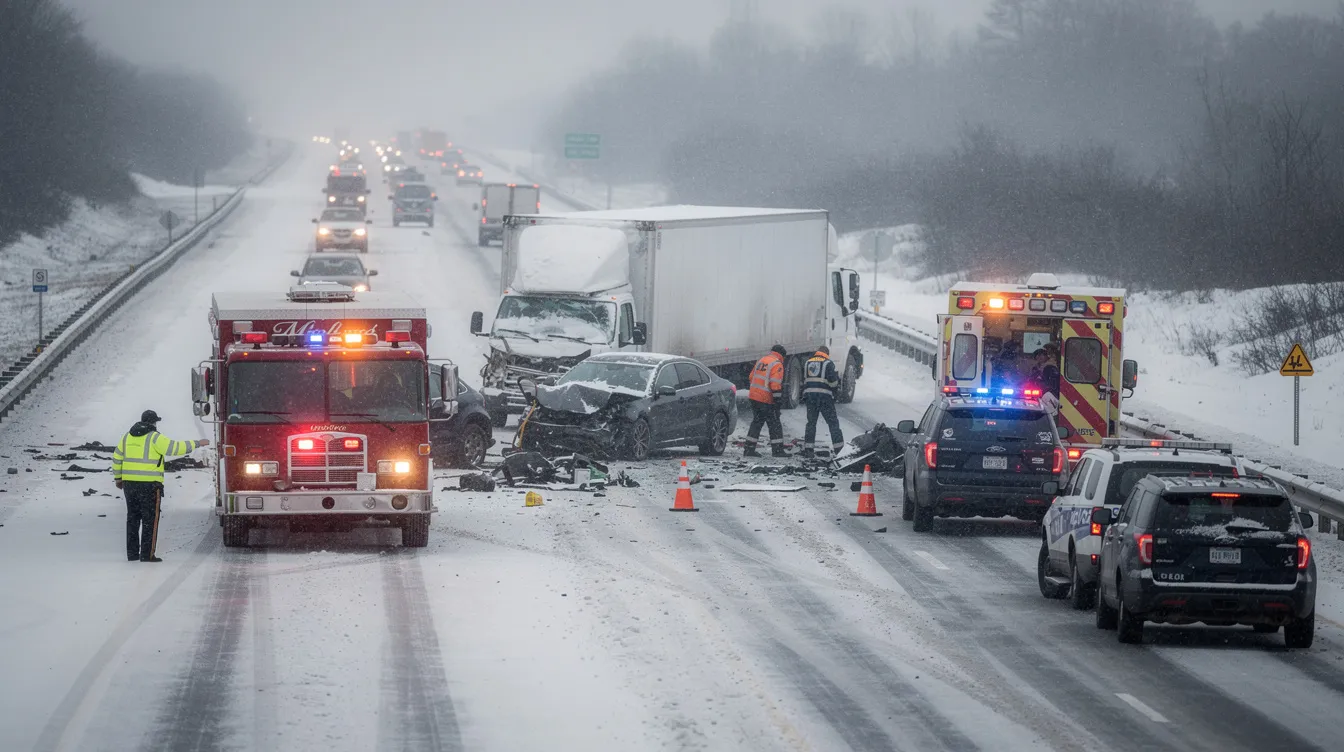
These cases involve layers that single-vehicle crashes do not:
-
Federal safety regulations (hours-of-service rules, maintenance requirements, weight limits) may have been violated
-
Multiple insurance policies from the trucking company, driver, and cargo broker may all be sources of recovery
-
More than one person may share liability across several drivers and companies
Complex multi-vehicle rollovers require careful reconstruction to sort out the sequence of impacts and each party's share of responsibility. The car accident attorneys at Johnston Law Firm have experience dissecting these cases.
How Johnston Law Firm Supports You During Recovery
Johnston Law Firm provides practical support for rollover car accident victims beyond the courtroom:
-
Medical coordination. The firm helps coordinate with medical providers, tracks medical bills, and gathers medical records so that documentation is complete and organized.
-
Wage-loss documentation. Lost income records from employers and tax filings are collected to support economic damage calculations.
-
Regular communication. Steve communicates by phone, email, or in-person meetings in Pueblo, and consults with clients recovering in other Colorado communities.
-
Cross-practice expertise. The firm's experience in workers' compensation and Social Security disability is particularly valuable if the rollover happened while driving for work or if car accident injuries lead to long-term disability.
Johnston Law Firm keeps clients informed about settlement negotiations, litigation steps, and realistic timelines. The goal is to help injured victims stabilize their finances, access needed care, and move forward after a traumatic rollover.
Why Choose Johnston Law Firm for a Colorado Rollover Accident Case?
-
Decades of experience. Steve Johnston has more than 20 years of trial and negotiation experience across personal injury cases, automobile accidents, and wrongful death claims.
-
Local roots. Based in Pueblo, the firm serves Colorado's front range, southern, and rural communities, not just Denver or Colorado Springs. Steve knows the roads, the courts, and the insurance landscape in Otero, Huerfano, Las Animas, Crowley, Fremont, and Custer Counties.
-
Broad practice. Experience across six practice areas (workers' compensation, personal injury, automobile accidents, estate planning, criminal law, and social security law) lets the firm address the full impact of a rollover on a client's life.
-
No upfront cost. Free initial consultations. Injury and wrongful death cases are handled on a contingency fee basis. The firm's proven track record speaks for itself.
-
Honest assessments. Realistic advice without pressure. If your case has merit, the firm will tell you. If it does not, you will hear that too.
Call (719) 309-9484 or send a secure message online to learn how Johnston Law Firm can help with your rollover car accident claim.
Frequently Asked Questions About Colorado Rollover Car Accidents
How long do I have to file a lawsuit after a rollover car accident in Colorado?
For most Colorado motor vehicle personal injury cases, you generally have three years from the date of the crash to file a lawsuit. Wrongful death cases usually carry a two-year deadline measured from the date of death, with a special four-year period if the defendant committed vehicular homicide and fled the scene. Claims involving government entities (such as crashes linked to dangerous state or local roads) may require written notice within 182 days under the Colorado Governmental Immunity Act. Because deadlines can be complicated and exceptions may apply, injured people should speak with an accident lawyer promptly rather than relying on general rules.
Can I bring a claim if my rollover was a single-vehicle crash?
A "single-vehicle" rollover does not always mean the driver is solely at fault. Defective tires, unstable vehicle design, a sudden evasive maneuver to avoid another driver who left the scene, or dangerous road conditions may all be contributing factors. An attorney can investigate whether a manufacturer, construction contractor, or government agency shares responsibility. Colorado car accident victims should not assume they have no options until a rollover accident lawyer has reviewed the facts and available evidence.
What if the other driver in my rollover crash was a hit and run?
Victims of hit and run accidents may still recover compensation through their own uninsured motorist coverage, MedPay, or other applicable policies. Report the hit and run promptly to law enforcement and your insurer. Document as much as possible about the fleeing vehicle: location, direction of travel, color, partial plate number. Johnston Law Firm can help work through UM claims and investigate other potential sources of recovery when a hit and run driver cannot be identified.
Do I need a rollover accident lawyer if the insurance company already offered me a settlement?
Early settlement offers in serious rollover cases frequently do not account for future medical care, permanent disability, or long-term lost earning capacity, especially with severe injuries like spinal cord injuries or traumatic brain injuries. Insurance companies may initially offer low settlements for rollover claims. Do not sign any release or accept any settlement before you understand your medical prognosis. Johnston Law Firm can review existing offers, evaluate the full value of the car accident case, and negotiate for fair compensation if the initial proposal falls short.
How much does it cost to hire Johnston Law Firm for a rollover car accident case?
Johnston Law Firm, LLC offers free initial consultations for rollover and other serious car accident cases. Injury and wrongful death cases are handled on a contingency fee basis, meaning attorney fees are collected only if the law firm obtains a financial recovery through settlement or verdict. The representation agreement clearly explains how fees and case costs work so clients can make an informed decision before moving forward. There is no financial risk in calling to discuss your colorado car accident case.