Passenger in Car Accident – Rights, Compensation, and Injury Claims in Colorado
If you were a passenger in a car accident in Colorado, you likely have questions about who pays your medical bills, whether you can seek compensation without damaging a relationship, and what steps to take next. This guide covers everything injured passengers in Pueblo and throughout Colorado need to know about their legal rights, available insurance coverage, and how to pursue a claim.
Key Takeaways
-
A passenger in a car accident in Colorado is almost never at fault for the crash. Passengers are rarely found at fault for causing accidents, which means you can typically file a claim against the at fault driver's insurance, your own driver's insurance policy, or both.
-
Colorado uses a fault-based auto insurance system. The negligent driver (or drivers) bear responsibility for your injuries. Passengers can pursue claims even if the negligent driver is a friend or family member, because the claim is directed at the insurance policy, not the person's bank account.
-
Multiple sources of compensation may be available: the at fault party's liability insurance, your driver's insurance, MedPay coverage, uninsured/underinsured motorist coverage on your own auto insurance policy, and your health insurance.
-
Deadlines matter. Federal and state laws govern the time limits for filing injury claims. In Colorado, you generally have three years from the date of the car accident to file a personal injury claim, and shorter deadlines may apply for wrongful death or government entity claims.
-
Steve Johnston at Johnston Law Firm, LLC has over two decades of trial experience representing injured passengers and drivers in Pueblo and throughout Colorado, including Otero, Fremont, Custer, Huerfano, Las Animas, and Crowley Counties. Call (719) 309-9484 or message Johnston Law Firm online for a free consultation with a car accident attorney.
Most passenger injury claims are resolved through insurance and settlement negotiations, not by "going after" a friend or family member personally. The purpose of auto insurance is to cover exactly these situations.

Understanding Your Rights as a Passenger in a Colorado Car Accident
The most common question passengers ask after a serious crash is simple: Do I even have a claim?
The answer in Colorado is almost always yes. Passengers in car accidents typically do not share legal blame for the crash because they are not operating the vehicle. Passengers have the same legal rights as drivers when it comes to recovering compensation for their injuries. You do not need to prove fault to seek compensation - you only need to show that at least one driver acted negligently and that the negligence caused your injuries.
Rare exceptions exist. A passenger might share limited responsibility if they:
-
Knowingly rode with an obviously intoxicated driver
-
Physically grabbed the steering wheel or aggressively distracted the driver
-
Refused to wear a seat belt (though this affects only certain damage categories under Colorado law C.R.S. § 42-4-237)
But for the vast majority of passengers, these scenarios do not apply. A passenger injured in a car accident can file a claim against the at fault driver's insurance, whether that driver was behind the wheel of the vehicle the passenger was riding in or operating the other vehicle.
If you were a passenger in a car accident in Pueblo, Colorado Springs, Denver, or any surrounding community, call (719) 309-9484 or contact Johnston Law Firm online for individualized legal advice.
Who Can Be Liable for Passenger Injuries in a Colorado Car Accident?
Liability in a Colorado car accident comes down to negligence. Fault is determined by investigating driver actions during the crash - who was speeding, who ran the red light, who was texting, who failed to yield.
Any negligent driver can be the at fault driver:
-
Your driver - the person behind the wheel of the car you were riding in
-
The other driver - the operator of the other vehicle involved in the collision
-
A third vehicle - in chain-reaction or multi-car crashes, one or more drivers from additional vehicles may bear responsibility
-
A commercial trucking company - if a truck caused the car crash, the driver's employer may be vicariously liable
Colorado uses a modified comparative negligence system under C.R.S. § 13-21-111, which means fault can be divided among multiple parties. In Michigan, multiple drivers can share liability for an accident, and Illinois law allows passengers to pursue claims against multiple drivers as well. Colorado follows a similar principle: passengers can claim damages from both drivers if fault is shared in a car accident.
Colorado-specific example: Imagine a two-car collision at an intersection on Northern Avenue in Pueblo. Driver A runs a red light while Driver B is speeding through the intersection. Both drivers share blame. As a passenger in either vehicle, you can file claims against both drivers' insurance policies. Your compensation is not limited to just one liable driver.
As long as the passenger's own fault is less than 50% of the combined fault - which is extremely uncommon - the injured passenger can recover damages.
Filing a Claim Against Your Driver vs. the Other Driver
One of the most common concerns passengers have is whether they need to "sue" the person who gave them a ride. Here is how it actually works.
If your driver caused the car accident, you typically file a claim against that driver's insurance policy. The claim goes to the insurance company, not to your friend's or family member's personal bank account. Insurance claims should be filed with the driver at fault's insurance policy, and the insurer handles payment up to its policy limits.
If the other driver is at fault, the passenger can file a claim with that other driver's insurance company for bodily injury liability coverage. You are dealing with the other driver's insurance, not with the individual directly.
If both drivers share fault, passengers may have the right to file claims against both drivers' insurers. A car accident attorney can coordinate claims and handle the apportionment of responsibility so the passenger receives fair compensation from all available sources.
Passengers can file claims against at-fault drivers' insurance regardless of their personal relationship with the driver. The emotional concern about damaging a friendship or family relationship is understandable, but remember: this is exactly what car insurance exists to do. The claim is between you and the auto insurance company, and your friend or family member is not paying out of pocket.
Additional Insurance Coverages That May Help Injured Passengers
Beyond the at fault driver's liability coverage, several other insurance sources can help an injured passenger cover medical expenses and lost income.
Medical Payments Coverage (MedPay): Under C.R.S. § 10-4-635, Colorado auto insurers must include at least $5,000 in MedPay coverage unless the policyholder specifically rejects it in writing. MedPay covers medical bills regardless of who caused the accident and applies to passengers. This coverage can help pay for emergency room visits, ambulance transport, and initial treatment while fault is still being sorted out.
Uninsured/Underinsured Motorist Coverage (UM/UIM): If the at fault driver has no insurance or does not carry enough insurance to cover your injuries, UM/UIM on your own auto insurance policy - or on the policy covering the vehicle you were riding in - may fill the gap. Colorado insurers must offer UM/UIM coverage equal to the policyholder's liability limits unless it is rejected in writing.
Health Insurance: Your health insurance can help with extensive medical treatment, but the insurer may seek reimbursement (subrogation) from any settlement or verdict. A lawyer can negotiate these subrogation claims to protect more of your recovery.
Passengers may receive compensation from multiple insurance policies. It is worth noting that some states handle this differently. In Florida, personal injury protection (PIP) covers passengers' medical expenses, with PIP covering up to $2,500 for non-emergency medical conditions in that state. In Michigan, PIP benefits cover medical expenses and lost wages for passengers. Colorado is not a no fault state - it operates on a fault-based system - so the process here centers on liability insurance and the supplemental coverages described above.
Johnston Law Firm reviews all potentially applicable policies, including the passenger's own auto insurance policy, the at-fault driver's insurance, and any household policies, to maximize available insurance coverage.
Can a Passenger Ever Be Partly at Fault in a Colorado Car Accident?
In rare circumstances, yes. Under Colorado's comparative negligence rules, a passenger's compensation can be reduced if their own conduct contributed to their injuries.
Situations where an auto insurance company might argue partial fault include:
-
A passenger who refused to wear a seat belt in violation of Colorado law
-
A passenger who knowingly rode with an intoxicated or obviously impaired driver
-
A passenger who aggressively distracted the driver or physically interfered with vehicle operation
A passenger has a duty to avoid distracting the driver in the vehicle, but simply accepting a ride, talking casually, or adjusting the radio does not create legal liability.
Importantly, even if some fault is assigned to a passenger, they may still recover damages as long as their share of fault is less than 50%. This is much more protective than certain other states. In Alabama, for example, passengers must prove gross negligence to sue drivers, which is a higher bar.
Regarding seat belt use, Colorado law is specific: failure to wear a seat belt is admissible to reduce non-economic damages like pain and suffering, but it cannot be used to reduce economic damages such as medical bills or lost wages. Insurance adjusters sometimes try to shift blame onto the passenger using this argument beyond its legal scope. An experienced attorney like Steve Johnston can push back against this tactic with medical and accident reconstruction evidence.
What to Do Immediately After You Are Hurt as a Passenger
Taking the right steps after a car crash protects both your health and your future claim. Passengers have the right to request immediate medical care after a car accident.
At the scene:
-
Call 911 so a police report is created. Colorado law enforcement will document the crash, which becomes critical evidence.
-
Stay at the scene if it is safe to do so. Cooperate with officers.
-
Passengers must exchange contact and insurance information at the accident scene. Collect names, driver's license numbers, car insurance details, license plates, and contact information for witnesses.
-
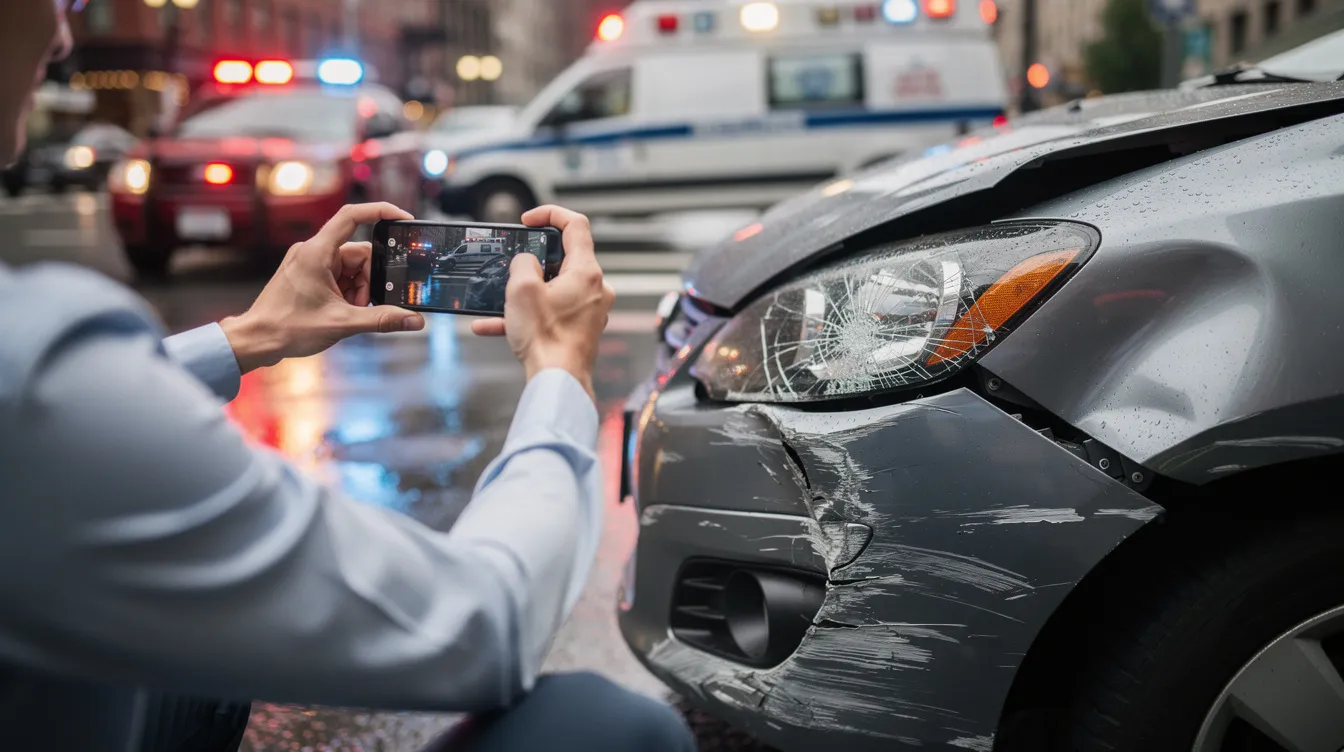
Take photos of vehicle damage, road conditions, traffic signals, and any visible injuries.
-
Write down or voice-record your account of what happened while details are fresh.
After the scene:
-
Seek prompt medical attention. Visit a local ER or urgent care in Pueblo, Colorado Springs, or a nearby community, even if injuries seem minor. Prompt medical attention is important to document injuries for claims and to establish a clear link between the accident and your symptoms.
-
Avoid arguing about fault at the scene or making recorded statements to an auto insurance company. Insurance companies often seek recorded statements from accident victims, and anything you say can be used to minimize your claim. Speak with a car accident attorney first.
How Passenger Injury Claims Work in Colorado
Here is a step-by-step overview of how the process typically unfolds:
-
Report the crash. You must report the accident to the appropriate insurer promptly. Notify the at fault driver's insurance company and, if applicable, the insurer covering the vehicle you were in.
-
File a claim. File an insurance claim with the driver at fault's insurance policy. If multiple parties share fault, file claims with each relevant insurer. A car accident lawyer can help identify every available policy.
-
Document everything. Gather medical records and bills, imaging reports, prescriptions, and receipts. Collect pay stubs and employer letters documenting lost wages or time missed from work.
-
Insurance investigation. The auto insurance company will investigate liability, request medical records, and often look for ways to minimize payouts, delay resolution, or deny parts of the claim. Insurance adjusters are trained to protect the company's bottom line.
-
Demand package. For more serious injuries, the car accident attorney prepares a formal demand package summarizing liability evidence, medical treatment details, future care needs, lost income, and pain and suffering damages.
-
Negotiation or litigation. If a fair settlement cannot be reached, Steve Johnston can file a personal injury lawsuit in Colorado state court - for example, in Pueblo County District Court - conduct discovery, take depositions, and prepare for settlement or trial.
Witness statements, the police report, and thorough medical records are the foundation of a strong claim at every stage.
Types of Compensation Available to Injured Passengers in Colorado
Colorado law allows injured passengers to recover both economic and non-economic damages. Passengers may recover compensation for medical expenses and lost wages due to injuries from the crash.
Economic damages include:
-
Emergency room visits, hospital stays, and surgery costs
-
Physical therapy and rehabilitation
-
Prescription medications and assistive devices
-
Mileage for medical appointments
-
Lost wages if injuries prevent work, plus lost earning capacity if the injury limits future employment
-
Replacement costs for personal belongings damaged in the crash
Non-economic damages include:
-
Physical pain and suffering
-
Emotional distress and anxiety
-
Loss of enjoyment of life
-
Inconvenience and disruption of family and social activities
-
Loss of consortium (impact on spousal relationship)
In severe cases, passengers may receive compensation for permanent disability or disfigurement, scarring, and long-term medical care or home modifications. Passengers can sue for pain and suffering if injuries meet the applicable legal thresholds under Colorado law.
Colorado has certain statutory caps on non-economic damages that are subject to periodic adjustment. A knowledgeable Pueblo car accident attorney can advise how those limits might affect your specific case and calculate the full value of your additional compensation.

Passenger Wrongful Death Claims After a Fatal Car Crash
When a passenger is tragically killed in a Colorado car accident, surviving family members may have the right to bring a wrongful death claim against the at fault party. In some cases, additional responsible parties - such as an employer of a negligent commercial driver - may also be liable.
Recoverable losses in a wrongful death case typically include:
-
Funeral and burial expenses
-
Medical bills incurred before death
-
Lost financial support the deceased would have provided
-
Loss of companionship and guidance
-
Emotional grief suffered by eligible family members
Under Colorado law, wrongful death actions are typically filed by a surviving spouse, children, or parents, subject to specific statutory rules. The deadline for wrongful death claims is generally two years from the date of death under C.R.S. § 13-80-102.
If your family member was killed in a car crash in Pueblo or a surrounding county, contact Johnston Law Firm at (719) 309-9484 or reach out online for a confidential review of your case.
Colorado Deadlines and Statutes of Limitations for Passenger Claims
Missing a filing deadline can permanently bar your right to recover compensation. Here are the key time limits:
|
Claim Type |
Deadline |
Authority |
|---|---|---|
|
Motor vehicle bodily injury (personal injury claim) |
3 years from date of accident |
C.R.S. § 13-80-101(1)(n)(I) |
|
Wrongful death |
2 years from date of death |
C.R.S. § 13-80-102(1)(d) |
|
Government entity claims (notice requirement) |
182 days from incident |
Colorado Governmental Immunity Act |
|
Property damage |
2 years |
Colorado statute |
Different states impose different deadlines. In Michigan, you must file a claim within one year of the crash for certain benefits. In Illinois, you have two years to file a personal injury lawsuit. Colorado's three-year window for personal injuries is comparatively generous, but waiting is still risky because evidence degrades, witnesses move, and medical records become harder to connect to the crash.
Exceptions or special rules may apply for minors or individuals who are mentally incapacitated. Contact a Pueblo car accident lawyer as soon as possible to protect your rights and prevent missing critical deadlines.
Why Injured Passengers Need a Colorado Car Accident Attorney
Insurance adjusters are trained to limit payouts. They may try to shift blame to the other driver, minimize the severity of your personal injuries, or pressure you into accepting an early, low settlement before the full extent of your injuries is known. Their goal is to close your file cheaply.
An experienced personal injury attorney can:
-
Handle all communications with insurers so you do not inadvertently say something that hurts your claim
-
Gather and organize medical evidence, obtain the police report, and hire accident reconstruction or medical experts if needed
-
Accurately calculate both current and future damages, including lost income, future medical care, and pain and suffering
-
File a personal injury lawsuit if the insurance company refuses to offer a fair settlement
-
Prove fault through evidence, witness statements, and expert testimony
Steve Johnston brings over twenty years of trial and hearing experience in Colorado and Wyoming. His background in related practice areas like workers' compensation and social security disability is particularly valuable when a passenger injured in a car accident cannot return to work and needs to coordinate multiple benefit streams.
Schedule a free legal consultation by calling (719) 309-9484 or using the firm's secure online contact form.
How Johnston Law Firm, LLC Helps Passengers Injured Across Colorado
From the first phone call through resolution, Johnston Law Firm follows a clear process:
-
Free initial case evaluation. Steve Johnston provides an honest assessment of whether the firm can help and explains the passenger's legal options.
-
Roadmap for the claim. The legal team creates a step-by-step plan covering evidence gathering, medical documentation, insurance communications, and timeline projections.
-
Aggressive but focused representation. The firm handles negotiations with every involved insurance company and is prepared to file a personal injury lawsuit and take the case to trial if insurers refuse to be reasonable.
Johnston Law Firm is based in Pueblo but represents clients statewide, including in Otero, Fremont, Custer, Huerfano, Las Animas, and Crowley Counties, as well as Front Range cities and rural communities across Colorado.
Many personal injury and automobile accident cases are handled on a contingency fee basis, so clients typically do not pay legal fees unless compensation is recovered. You get direct access to Steve Johnston, clear communication, and regular updates on your claim or lawsuit throughout the process.
Special Issues for Passengers in Rideshare, Work, and Multi-Claim Situations
Modern passenger claims are not always straightforward two-car collisions.
Rideshare accidents (Uber/Lyft): If you were a passenger in a rideshare vehicle involved in a Colorado car crash, you may have access to the rideshare company's commercial liability coverage, the driver's personal auto insurance policy, and sometimes your own UM/UIM coverage. Navigating these overlapping policies requires careful legal representation.
Work-related rides: If you were riding in a vehicle for work - for example, traveling between job sites in a company truck - both a workers' compensation claim and a personal injury claim against an at fault driver may be possible. Johnston Law Firm's experience in both workers' compensation and automobile accidents allows the firm to coordinate overlapping claims so clients do not unintentionally jeopardize one benefit while pursuing another.
Multiple passengers or multiple vehicles: When multiple parties are involved, insurance coverage and settlement negotiations become more complicated. Each vehicle involved may carry different policy limits. A car accident attorney can help ensure the passenger's claim is not unfairly diluted across multiple claimants.
Protecting Your Claim: Documentation, Treatment, and Settlement Decisions
Passengers can strengthen their own cases through consistent medical treatment and thorough recordkeeping.
What to keep:
-
Copies of all medical records, imaging reports (X-ray, MRI), prescriptions, and receipts
-
Pay stubs and employer letters showing time missed from work
-
Receipts for out-of-pocket expenses like mileage to appointments, medications, and assistive devices
What to track:
-
A simple journal describing daily pain levels, limitations (difficulty climbing stairs, caring for children, sleeping), and emotional changes like anxiety when riding in a car
-
Photos of injuries as they heal over time
What to avoid:
-
Signing early settlement releases from an auto insurance company before finishing treatment or receiving a long-term prognosis. Passengers must be cautious about signing settlement releases without understanding them, because doing so usually means giving up the right to any additional compensation - even if symptoms worsen later.
-
Gaps in medical treatment, which give insurers room to argue your injuries were not serious or were caused by something other than the car accident.
Johnston Law Firm can review proposed settlements at no cost during a free consultation to help injured passengers understand whether an offer represents fair compensation in light of current and future needs.
When and How to Contact Johnston Law Firm, LLC After a Passenger Accident
If you were a passenger injured in a car accident in Pueblo or anywhere in Colorado, reach out as soon as possible - ideally before giving recorded statements to any auto insurance company.
Your options:
-
Call (719) 309-9484 to speak directly with Johnston Law Firm
-
Submit a message through the firm's secure online contact form any time of day or night
Initial consultations are free. Many passenger injury cases are handled on a contingency fee basis, meaning you pay no legal fees unless compensation is recovered. Contacting the firm does not obligate you to hire the attorney if you decide not to proceed.
You do not have to navigate Colorado's insurance system alone. Whether you suffered minor injuries or are facing extensive medical treatment, lost wages, and long-term uncertainty, Steve Johnston is prepared to help you pursue the compensation you need to move forward.

Frequently Asked Questions About Being a Passenger in a Colorado Car Accident
Will my passenger claim raise my friend or family member's insurance rates?
Car insurance premiums are based primarily on fault and claims paid by the insurer, not on personal feelings between the driver and the passenger. If your driver was at fault, their auto insurance company may adjust premiums, but that adjustment typically occurs whether or not you, as the injured passenger, formally pursue your claim. Avoiding a claim does not protect the driver's rates - it only leaves you with heavy out-of-pocket medical bills and lost income. The purpose of car insurance is to pay for injuries from accidents, including a passenger's medical care and lost wages. Discuss these concerns with Steve Johnston during a free consultation by calling (719) 309-9484 or messaging the firm online.
Can I make a claim if I was a passenger and do not own a car or have auto insurance?
Yes. In Colorado, you do not need to own a vehicle or have your own auto insurance policy to pursue a personal injury claim as a passenger in a car accident. Claims can typically be made against the at fault driver's liability coverage and, in some cases, the driver's insurance policy covering the vehicle you were riding in, along with any available MedPay coverage. A lawyer will review all involved policies and any household policies that might cover the passenger, especially in situations where limits are low and injuries are serious. Because insurance coverage rules are complex, consulting a Pueblo-based car accident attorney is the best way to confirm which coverages apply.
What if my injuries seem minor right after the crash?
Some injuries common in car accidents - such as whiplash, concussions, or back injuries - may not fully reveal themselves for hours or even days after the collision. You should get checked by a medical professional as soon as possible, both for your health and to preserve a clear link between the accident and any later symptoms. Delaying medical care gives insurance adjusters more room to argue that your injuries were not caused by the car crash or were less serious than claimed. If symptoms worsen or new ones appear, update your doctors and inform your attorney so the change is reflected in your medical records and your claim.
How long do passenger injury cases usually take to resolve in Colorado?
Timelines vary widely depending on injury severity, how long medical treatment lasts, whether liability is disputed, and how cooperative the auto insurance company is. Relatively straightforward soft-tissue injury cases may resolve within several months after treatment ends, while serious injury or disputed liability cases can take a year or more and sometimes require filing a personal injury lawsuit. Rushing to settle before understanding long-term medical needs can leave passengers undercompensated, especially for future medical care or reduced earning capacity. Johnston Law Firm keeps clients informed about expected timelines and works to move cases efficiently while still aiming for full and fair settlement.
Do I have to go to court if I hire a Pueblo car accident lawyer for a passenger claim?
Many Colorado passenger injury claims are resolved through settlement negotiations with the driver's insurance company and never require a trial. Sometimes filing a lawsuit is necessary to force the insurer to take the claim seriously, but most cases still settle before reaching a jury verdict. If court becomes necessary, having an experienced trial lawyer like Steve Johnston - who regularly appears in Colorado courts and administrative hearings - helps level the playing field against well-funded insurance companies. If you are anxious about going to court, discuss those concerns during a free consultation where the attorney can outline the likely scenarios for your particular case.