Multi Vehicle Accident Colorado – Liability And Injury Claims In Chain Reaction Crashes
Introduction
This page provides a comprehensive overview of multi vehicle accidents in Colorado, focusing on issues of liability and injury claims that arise in chain reaction crashes. It is designed for drivers, accident victims, and anyone seeking legal assistance after being involved in a multi vehicle accident. Understanding the complexities of these accidents is crucial, as determining fault and pursuing compensation can be challenging due to the involvement of multiple parties, disputed crash sequences, and overlapping insurance policies. Knowing your rights and the claims process can make a significant difference in the outcome of your case.
Key Takeaways
-
A multi vehicle accident in Colorado often involves three or more vehicles, disputed crash sequencing, and complex fault arguments under the modified comparative negligence rule.
-
Determining liability in a chain reaction crash requires careful review of the initial collision, each driver’s conduct, traffic laws, road conditions, and multiple insurance policies.
-
Injured people in Pueblo, colorado springs, northern colorado, and throughout Colorado may still recover compensation if they are less than 50% at fault.
-
For a free consultation and multi vehicle accident case review, call Johnston Law Firm, LLC at (719) 309-9484 or message us online .
What Is a Multi Vehicle Accident Under Colorado Law?
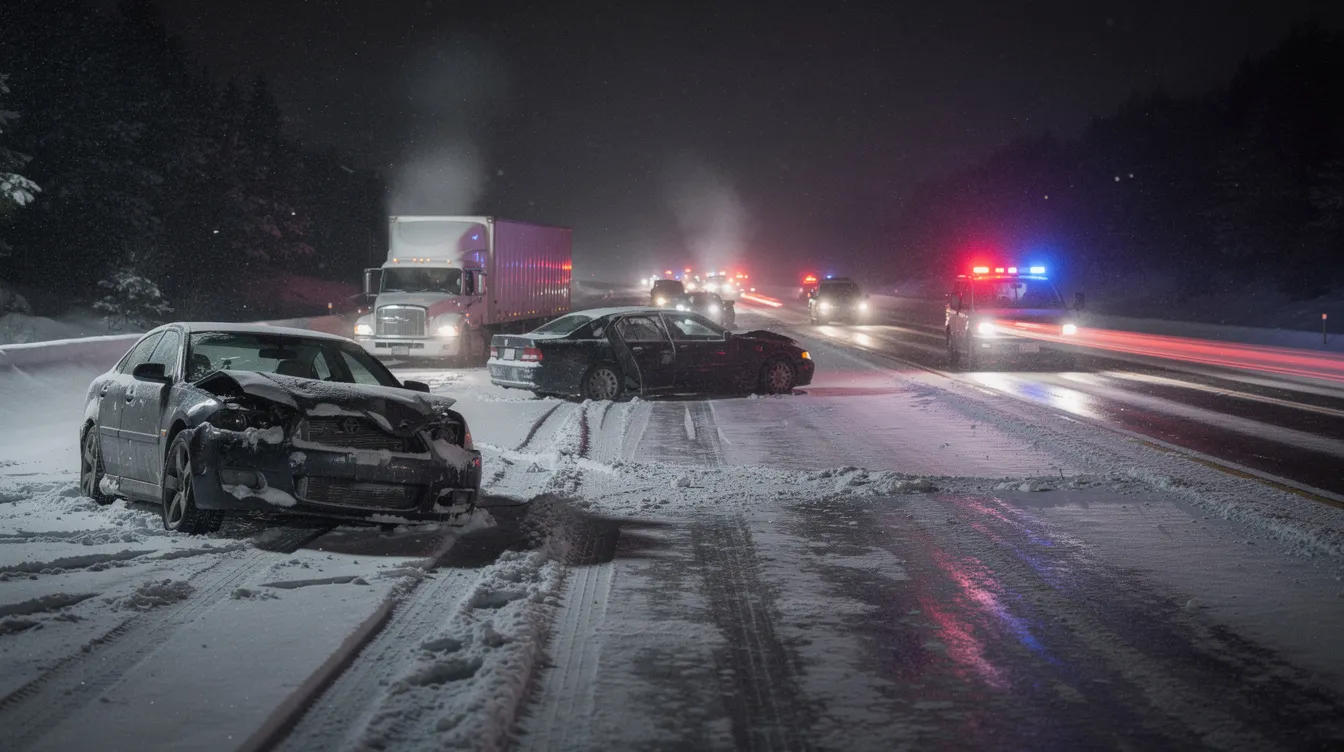
A multi vehicle accident is a crash involving three or more cars or three or more vehicles in one connected sequence. These crashes may happen as pileups on I-25, I-70, U.S. 50, or local roads near Pueblo and Colorado Springs.
Terms like multi car accident, multi car crash, multi-vehicle pileup, multi car, and chain reaction crash are generally treated similarly under colorado law. The accident involves multiple vehicles, but the legal question is still whether one or more drivers breached a duty of care.
Common Colorado scenarios include icy-bridge pileups, rear-end chains in stop-and-go traffic, and intersection crashes where the first impact pushes vehicles into crossing traffic. These crashes can involve cars, pickups, commercial trucks, motorcycles, and SUVs, often causing serious injuries, vehicle damage, medical bills, and property damage greater than a two-car auto accident.
Johnston Law Firm, LLC is based in Pueblo and represent clients injured in Pueblo, Otero, Fremont, Custer, Huerfano, Las Animas, and Crowley Counties in multi vehicle accident cases.
Colorado Fault Law in Multi Vehicle Accidents
Colorado is an at-fault state. In car accident and personal injury cases, liability is determined through comparative fault and proportionate responsibility, not automatic payment by one insurer.
Under C.R.S. § 13-21-111 , Colorado uses a modified comparative negligence rule. Colorado law allows recovery of damages even if the injured party is partially at fault, as long as their fault is less than 50%. If the injured person is 50% or more at fault, they cannot recover compensation.
Under C.R.S. § 13-21-111.5 , each at fault drivers may be responsible only for their percentage of fault. Because multi-car accidents often involve numerous vehicles, liability is usually shared among several drivers.
Example: in a chain reaction crash on I-25 near Colorado Springs, driver a is 60% at fault for speeding, driver b is 25% at fault for tailgating, and driver c is 15% at fault for distracted driving. If an injured person has $200,000 in damages and is 20% at fault, the net recovery may be reduced to $160,000.
Insurance companies fight hard over percentages because small changes can determine whether injured people receive fair compensation, full and fair compensation, or nothing.
How Liability Is Determined in a Chain Reaction Crash
Determining liability in multi vehicle accidents requires reconstructing the crash sequence from the initial impact through each later collision. Determining liability in multi-vehicle accidents requires a complex investigation into which drivers breached their duty of care.
Investigators look for the initial negligent act, such as a first rear-end collision, unsafe lane change, or red-light violation. In multi-vehicle accidents, the driver who commits the initial negligent act is often held primarily responsible for the resulting damages, even if other drivers contributed to the crash.
In chain-reaction crashes, the law generally presumes that the driver who rear-ends another vehicle is at fault, though this can be disputed. Liability may be shared if other drivers were speeding, following too closely, distracted, or failed to adjust for weather.
When determining liability in multi-vehicle accidents, factors such as traffic laws, road conditions, and driver behavior are critical in assessing fault and establishing responsibility for damages. If the driver who initiated a pileup is found to be engaging in reckless behavior or driving under the influence, they may face criminal charges. Punitive damages may be awarded in cases of gross negligence, such as drunk driving or extreme speeding, in addition to compensatory damages.
Unsure who caused your crash? Call Johnston Law Firm at (719) 309-9484 before speaking in detail with any driver’s insurance company or insurance adjusters.
Key Evidence Used to Prove Fault in Multi Vehicle Accidents
Establishing liability in a multi-vehicle accident often requires a thorough investigation, including police reports, witness statements, and accident reconstruction to determine the sequence of events and who initiated the crash.
-
A police report from Colorado State Patrol, Pueblo PD, or Colorado Springs PD may document citations, positions of vehicles involved, officer observations, and the driver involved in each impact.
-
Photos, videos, skid marks, debris patterns, lane closures, weather conditions, and traffic camera footage can show what happened at the accident scene.
-
Witness statements from passengers, nearby drivers, and bystanders matter when multiple drivers give conflicting versions of events.
-
Event data recorder or “black box” data may show speed, braking, seat belt use, and throttle input.
-
Accident reconstruction experts are typically engineers with specialized training in vehicle dynamics, crash analysis, and forensic investigation.
-
These experts analyze evidence such as vehicle damage, road conditions, and witness statements to recreate the accident and determine how it occurred.
-
Their testimony can establish liability when driver statements conflict and physical evidence is ambiguous, making them crucial in multi-vehicle accident cases.
Common Complications in Multi Vehicle Liability Disputes
Multi vehicle accidents tend to create more liability disputes than a standard rear-end crash because one vehicle may be hit multiple times. That makes it difficult to connect specific injuries and damage to specific impacts.
Ice, snow, fog, heavy rain, and high winds common in Southern Colorado can blur the line between unavoidable danger and negligence. Colorado law requires drivers to adjust their speed for hazardous conditions, and driving at the posted speed limit on an icy road can be deemed negligent.
Commercial trucks or work vehicles add questions about employer liability, federal safety rules, and higher insurance limits. Multiple insurance companies often blame each other or try to push a greater percentage of fault onto the injured person. An insurance defense attorney may also argue that your own actions caused the crash.
Insurance Coverage and Claims Process in Multi Vehicle Crashes
Multi vehicle accident claims often involve multiple insurance companies, multiple insurance policies, and sometimes underinsured motorist coverage. Injured parties in multi-car accidents may need to file claims with multiple insurance providers.
In Colorado, all drivers must carry third-party liability insurance coverage, with minimum requirements of $25,000 for bodily injury per person and $50,000 per accident, and $15,000 for property damage per accident. These limits are often too low when a car accident in colorado causes traumatic brain injuries, surgery, or several injured claimants.
In a multi-vehicle accident, multiple at-fault drivers mean multiple insurance policies can be accessed for compensation, which can be crucial if damages exceed one driver’s policy limits. Injured victims may also use MedPay, UM/UIM, household policies, umbrella coverage, or employer coverage when the crash happened during work.
Do not sign broad releases or accept quick settlement offers until a Colorado auto accident attorney reviews all coverage sources. Call (719) 309-9484 or message us online for help with the claims process.
Working With Multiple Insurers After a Multi Vehicle Accident
-
One injured person may deal with their own insurer, several liability insurers for other drivers, and a commercial trucking insurer.
-
Multi vehicle accident claims can involve multiple insurance companies that each conduct a separate investigation.
-
Insurance companies often attempt to deflect blame onto other drivers to minimize payouts in multi-vehicle accidents.
-
Adjusters may request recorded statements quickly, downplay injuries, or imply partial fault eliminates your insurance claim.
-
Provide basic facts only, and route detailed communications, medical records, settlement discussions, and requests for medical authorization through your legal team.
-
Johnston Law Firm can coordinate car insurance companies, track limits, and pursue a global settlement that seeks maximum compensation.
What Happens If a Driver Is Uninsured or Underinsured?
In pileups, at least one at-fault driver may have no insurance or only minimum coverage. Colorado law requires drivers to have uninsured/underinsured motorist coverage, which compensates policyholders if they are injured in an accident caused by a driver who has insufficient or no insurance.
In practice, Colorado UM/UIM law can help when negligent drivers cannot fully cover medical expenses, lost wages, and pain and suffering. For example, after a Pueblo-area chain reaction crash, several low-limit policies may be exhausted, making UM/UIM benefits essential.
UM/UIM claims still require proving fault and damages. Your own insurer may resist paying full value, so reviewing all household, umbrella, employer, and auto policies is a key early step.
Common Causes of Multi Vehicle Accidents in Colorado
Multi-vehicle accidents in Colorado are primarily caused by driver negligence and hazardous weather conditions. Chain-reaction pileups typically stem from a single triggering event that spreads due to tight traffic spacing and delayed driver reactions.
Distracted driving is the leading cause of multi-vehicle pileups, as drivers who are texting or adjusting controls may not notice traffic slowing ahead, leading to collisions. Following too closely is a common cause of multi-vehicle accidents; when the vehicle ahead brakes suddenly, a tailgating driver may not have enough time to stop, resulting in a chain reaction of collisions.
Excessive speed increases the severity of crashes and the likelihood of pileups, as higher speeds reduce reaction time and increase the force of impact in collisions. Poor weather conditions, such as ice, snow, and heavy rain, can significantly contribute to multi-vehicle pileups by reducing visibility and traction, leading to accidents when drivers fail to adjust their speed accordingly.
Aggressive driving, unsafe lane changes, work zones, and commercial trucks can also turn one mistake into a multi vehicle collision across multiple lanes.
Examples of Colorado Multi Vehicle Crash Scenarios
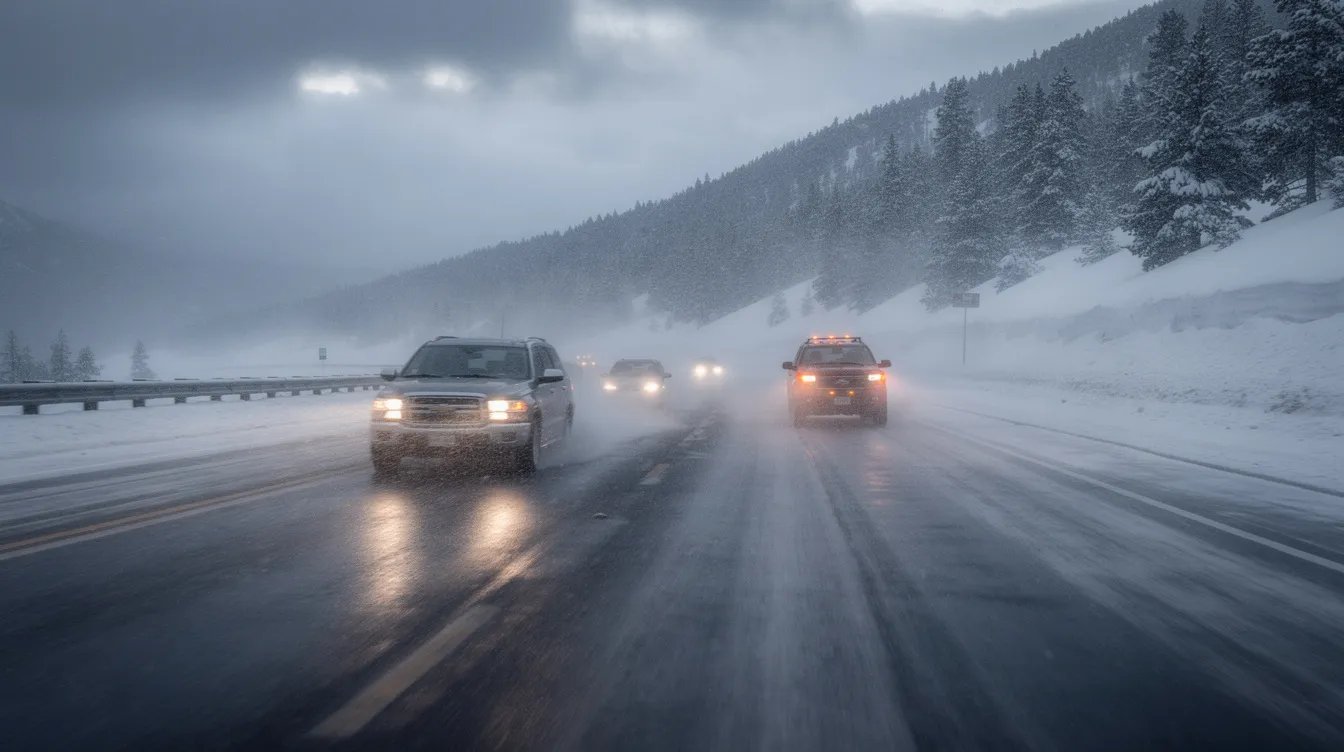
On U.S. 50 west of Pueblo, a driver speeds into stopped traffic during snow and causes an initial collision. A second driver following too closely cannot stop, and a third vehicle is pushed into another lane.
Near colorado springs, a construction-zone slowdown causes a texting driver to strike the rear of a pickup. Several vehicles behind are then forced into emergency braking, creating a multi car accident claims dispute.
In Otero County, fog on a rural highway reduces visibility. A driver without headlights slows suddenly, another driver rear-ends that vehicle, and multiple vehicles collide. Fault may be assigned to multiple drivers based on speed, visibility, headlights, and following distance.
Injuries and Damages in Multi Vehicle Accidents
A multi vehicle crash can cause serious injuries because vehicles may be struck multiple times from different angles. Common injuries include traumatic brain injuries, concussions, spinal cord and back injuries, fractures, internal organ damage, and severe whiplash.
In a multi-vehicle pileup, damages can include medical expenses, lost wages, pain and suffering, and property damage. Emergency care may occur at Parkview Medical Center in Pueblo, UCHealth in Colorado Springs, or another local facility.
Maximum medical improvement matters because settling before your condition stabilizes can undervalue future treatment, permanent impairment, and diminished earning capacity. When the auto accident happened while someone was driving for work, there may be both a workers’ compensation claim and a third-party personal injury lawsuit.
How Fault Percentage Affects Your Compensation
Under Colorado’s modified comparative negligence law, your damages are reduced by your percentage of fault. If total damages are $200,000 and you are 20% at fault, your recovery may be $160,000.
Being partially at fault does not automatically prevent recovery. But insurance companies may overstate your share of fault, making strong evidence and legal advocacy critical to recover fair compensation.
What to Do After a Multi Vehicle Accident in Colorado
-
Call 911 immediately, request police and medical help, and stay at the scene as required by Colorado law unless safety requires moving.
-
Get medical attention immediately after a multi-vehicle accident, even if you feel fine, as injuries may not show symptoms right away.
-
Report the crash to the police, cooperate with officers, and provide your account of what happened without speculating or guessing.
-
Photograph everything at the accident scene, including vehicle damage, positions of vehicles, skid marks, and any visible injuries.
-
Exchange information with every driver involved, including names, phone numbers, insurance information, and driver’s license numbers.
-
Do not admit fault or apologize at the scene, as even a polite “I’m sorry” can be interpreted as an admission of liability.
-
Avoid social media posts about the crash.
-
Notify your insurer in a timely way, but decline recorded statements and settlement offers until you speak with a lawyer.
-
Call Johnston Law Firm, LLC at (719) 309-9484 or message us online so evidence can be preserved quickly.
How Johnston Law Firm Handles Multi Vehicle Accident Cases
Johnston Law Firm, LLC is a Pueblo-based firm helping injured people across Colorado, including Colorado Springs and surrounding counties. Steve Johnston’s practice groups include workers’ compensation, personal injury, automobile accidents, estate planning, criminal law, and Social Security law.
Our approach includes detailed intake, early evidence preservation, insurer contact, and investigators or reconstruction experts when needed. We identify liable parties, commercial policies, UM/UIM coverage, employer coverage, and other potential sources of recovery.
The firm manages communications with insurers, negotiates settlements, and is prepared to litigate in Colorado courts if a fair offer is not made. Injury cases are typically handled on a contingency fee basis, meaning no attorney fee unless the firm helps recover compensation.
Discuss your chain reaction crash with Steve Johnston by calling (719) 309-9484 or using the firm’s online contact form .
Serving Pueblo, Colorado Springs, and Communities Across Southern Colorado
Johnston Law Firm is based in Pueblo and assists clients throughout Colorado. The firm serves Pueblo and Pueblo West, Colorado Springs and the I-25 corridor, Otero, Fremont, Custer, Huerfano, Las Animas, and Crowley Counties.
The firm understands local roads such as I-25, U.S. 50, mountain passes, rural highways, and urban corridors where a serious vehicle accident can happen quickly. Initial consultations can often be handled by phone or video for clients who are hospitalized or unable to travel.
When to Call a Colorado Multi Vehicle Accident Attorney
Early legal representation can significantly affect the outcome of complex multi car accident claims. Contact an attorney promptly if there are multiple injured parties, disputed fault, a commercial truck, a work vehicle, or conflicting information from insurers.
Red flags include pressure to settle quickly, requests for broad medical authorizations, or statements that you do not need a lawyer. Deadlines also apply, including Colorado’s general three-year statute of limitations for most motor vehicle injury claims and shorter notice rules for some government-related claims.
If you were hurt in a multi vehicle accident anywhere in Colorado, call Johnston Law Firm, LLC at (719) 309-9484 or message us online for a free, no-obligation case evaluation.
Frequently Asked Questions About Multi Vehicle Accidents in Colorado
Do I have a case if I was rear-ended but then pushed into another car?
Yes, you may. Middle vehicles are often hit from behind and shoved forward. Fault analysis focuses on who started the sequence and whether each driver maintained safe distance, attention, and speed for the conditions.
What if I was partly at fault in the multi vehicle accident?
You may still recover compensation if your fault is less than 50%. Your recovery is reduced by your fault percentage, so do not accept an insurer’s fault assessment without legal review.
How long will my multi vehicle accident claim take to resolve?
Timelines depend on medical recovery, the number of insurers, liability disputes, and whether litigation is needed. Serious cases often should not settle until you are near maximum medical improvement.
Can Johnston Law Firm help if I was hurt while driving for work in a multi vehicle accident?
Yes. Johnston Law Firm handles workers’ compensation and third-party personal injury claims when someone is injured while driving for work. Coordinating these claims helps avoid lien and benefit problems.
How much does it cost to hire Johnston Law Firm for a multi vehicle accident case?
Multi vehicle accident and personal injury cases are usually handled on a contingency fee basis. That means no attorney fees unless compensation is recovered. Call (719) 309-9484 or contact Johnston Law Firm online to discuss your case.