Leased Car Accident – What Happens When You Crash a Leased Vehicle
A leased car accident creates a tangle of financial obligations, insurance claims, and lease contract requirements that most Colorado drivers never expected to face. Whether you were rear-ended on I-25 south of Denver or hit by a distracted driver on Highway 50 near Pueblo, the aftermath of a car crash in a leased vehicle raises questions that go far beyond a simple fender bender. This guide walks you through everything you need to know-Colorado law, insurance coverage, gap insurance, fault rules, and how Johnston Law Firm, LLC can help protect your rights and your wallet.
Key Takeaways
If you're short on time, here are the most important things to understand after a leased vehicle accident in Colorado:
-
You usually still owe the lease balance. Even when a leased car is totaled, you must continue lease payments until the lease is formally settled. Insurance payouts may not cover remaining lease balances after a total loss, leaving you personally responsible for the difference unless you carry gap insurance.
-
Colorado is an at-fault state. The at fault driver's insurance company generally pays for property damage and bodily injury in a crash involving a leased car. However, insurance gaps, low policy limits, and lease contract terms can still leave you financially exposed-even when you did nothing wrong.
-
Gap insurance can save you thousands. Gap insurance covers the difference between the lease balance and vehicle value after a total loss. Without it, you could owe thousands in remaining lease payments on a car you can no longer drive. Over 132,000 Coloradans have received more than $23.5 million in GAP refunds since 2019, showing just how common these situations are.
-
Never admit fault at the accident scene. Under Colorado's modified comparative negligence system, fault should be determined through investigation-police reports, witness statements, and accident reconstruction. Admitting fault too early can permanently damage your ability to seek compensation.
-
Get legal help right away. Consulting a lawyer can protect your rights after an accident and ensure you don't leave money on the table with insurers or the leasing company. Call Johnston Law Firm, LLC at (719) 309-9484 or message us online for a free consultation after an accident with a leased vehicle anywhere in Colorado.

Colorado Driving Risks and Leased Vehicles
Colorado's roads present serious hazards year-round. Heavy traffic along I-25 between Pueblo, Colorado Springs, and Denver creates daily collision risk, while winter weather on Highway 50 through Otero and Fremont Counties turns routine commutes into white-knuckle drives. In 2020, over 5 million collisions occurred in the US, and Colorado contributes more than its share thanks to a combination of altitude, weather, and rapid population growth.
Pueblo, El Paso, Fremont, Huerfano, Las Animas, Crowley, and Otero Counties see serious car accident numbers each year. Even careful drivers can be hit by negligent or distracted motorists on rural stretches where emergency services may be further away.
When you're driving a leased car, the stakes are higher. Leased vehicles are typically newer and more expensive, often equipped with advanced safety technology and costly structural components. Even a "moderate" collision can push repair costs high enough that the insurance company declares a total loss. That financial risk lands squarely on you if your coverage isn't airtight.
If you've already been in a crash involving a leased vehicle in Colorado, don't wait to get legal guidance. Call (719) 309-9484 for immediate help.
What Is a Leased Car and Who Actually Owns It?
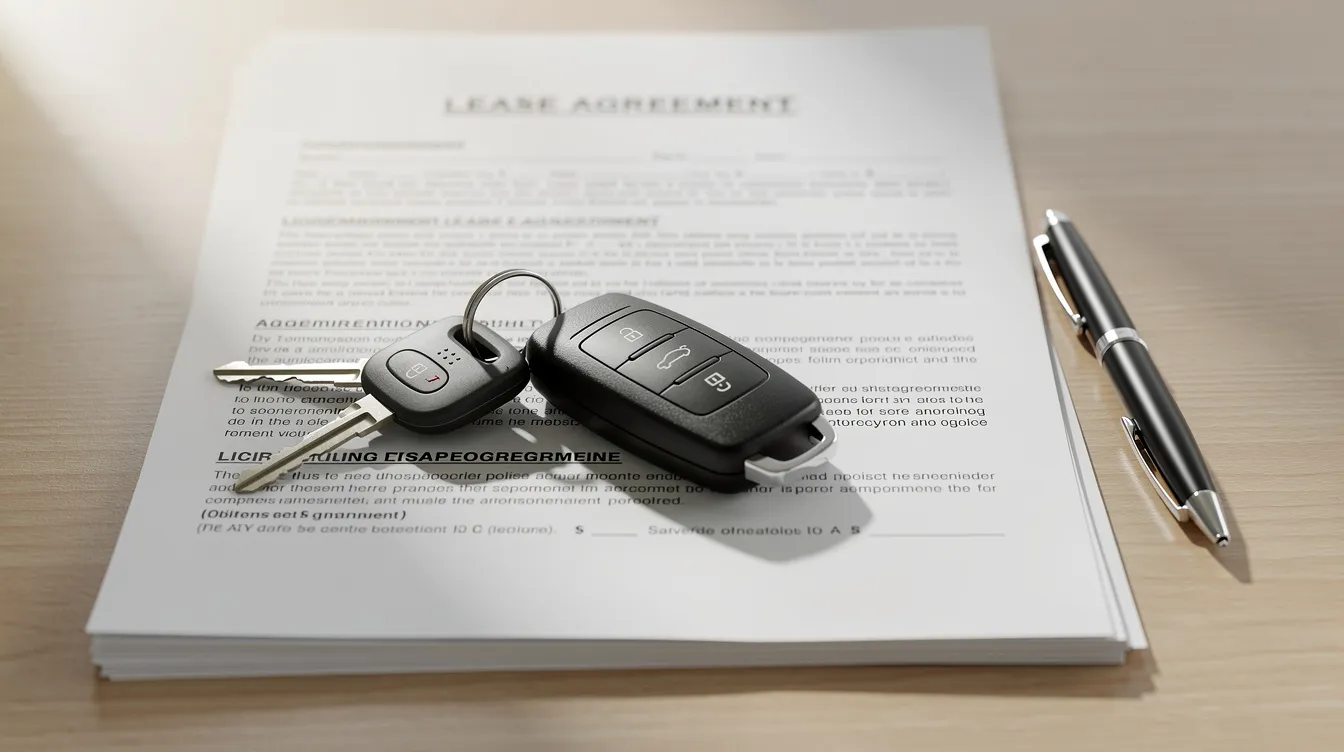
A leased car is essentially a long-term rental. The leasing company-often the finance arm of a manufacturer or a third-party leasing institution-retains legal title to the new vehicle. You, the lessee, pay monthly to use the car under specific terms laid out in the lease agreement.
Typical Colorado leases run 24 to 48 months with mileage limits of 10,000 to 15,000 miles per year. At the end of the lease term, you return the vehicle, and it goes through an inspection to assess condition. Damage beyond "normal wear and tear" or excess mileage triggers additional charges.
Because the leasing company owns the car, all accident repairs and insurance payouts are structured to protect the lessor's financial interest first. The insurance company pays the leasing company-not you-when there's a covered loss. This ownership structure is exactly why your lease contract and insurance requirements are typically stricter than what you'd see when financing a vehicle you own outright.
Insurance Requirements for Driving a Leased Car in Colorado
Colorado law sets minimum liability insurance limits at $25,000 per injured person, $50,000 per accident for bodily injury, and $15,000 for property damage. But those minimums rarely satisfy what a leasing company demands.
Leasing companies often require comprehensive and collision coverage on top of higher liability limits. Typical lease-mandated coverages include:
-
Bodily injury liability well above state minimums
-
Property damage coverage at higher limits
-
Collision coverage with low deductibles (often $500 or less)
-
Comprehensive coverage for theft, weather, and non-collision events
-
Sometimes medical payments or uninsured/underinsured motorist coverage
The lease agreement outlines these insurance requirements clearly, and the leasing company is usually listed as a "loss payee" on your insurance policy. This means any insurance payout for vehicle damage goes directly to them.
Requirements vary by state. In Nevada, leased vehicles must have three specific insurance coverages mandated by state law, while Colorado's requirements are primarily driven by the lease contract itself. Regardless of jurisdiction, failure to maintain the required insurance coverage can breach your lease, trigger penalties, and leave you personally liable for all costs if a car accident occurs.
What Is Gap Insurance and Why It Matters for a Leased Car Accident
Gap insurance-short for Guaranteed Asset Protection-covers the difference between the owed amount and vehicle value when a leased car is declared a total loss. It bridges the gap between what your auto insurance company determines the car is worth (actual cash value) and what you still owe under your lease.
Here's a concrete example: Suppose you lease an SUV in Pueblo and still owe $28,000 on the lease. A car crash totals the vehicle, and your insurance company determines the actual cash value is $22,000. Without gap insurance, you would owe the $6,000 difference out of pocket. With gap insurance, that deficiency is covered.
Many Colorado lease agreements either include gap insurance in the monthly payment, require you to purchase it separately, or strongly recommend it. Gap insurance is optional in Illinois for leased vehicles, and the same is true in several other states-but regardless of legal requirements, skipping it is a gamble. Without gap insurance, you pay the remaining lease balance if the car is totaled, and that balance can be substantial.
Colorado strengthened consumer protections for GAP agreements through HB 23-1181, effective January 1, 2024. Under this law, GAP agreements must pay or waive the full deficiency balance and properly refund unearned fees when leases are prepaid or vehicles are repossessed before the end of the term.
Steve Johnston can review your lease and insurance policy to confirm whether gap insurance applies after an accident with a leased car and whether your GAP agreement meets current Colorado requirements.
Immediate Steps After a Car Accident in a Leased Vehicle
The minutes and hours after a leased vehicle accident matter enormously. Here's a practical checklist for Colorado drivers:
Safety and emergency response:
-
Move to a safe location if possible and turn on hazard lights
-
Call 911 and request emergency services if anyone has visible injuries or needs medical assistance
-
Assess injuries for yourself and all passengers-seek medical attention even for symptoms that seem minor
-
Comply with Colorado crash-reporting requirements (mandatory when there is injury, death, or significant property damage)
Documentation and information gathering:
-
Exchange contact and insurance details with the other driver, including driver's license numbers and license plates
-
Record the vehicles involved, including make, model, year, and VIN
-
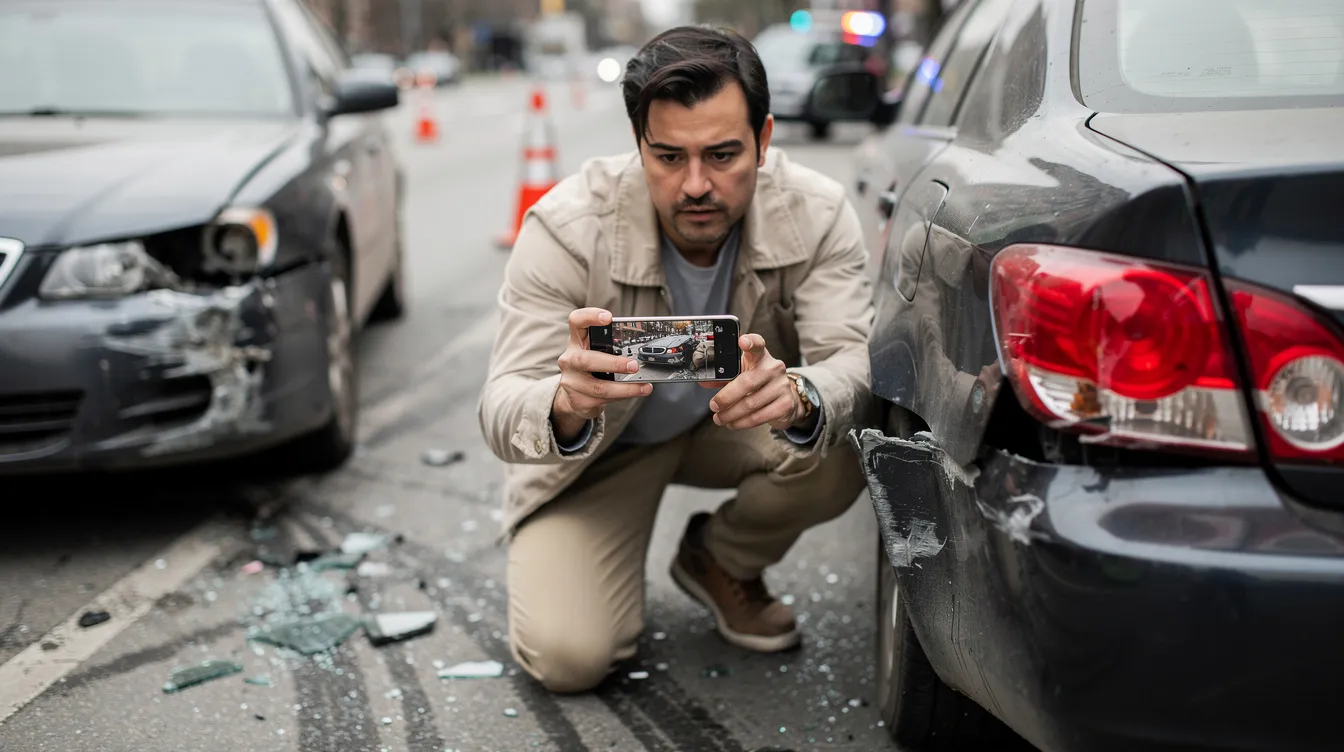
Document the accident scene with photos and witness information-take pictures from multiple angles, including vehicle damage, road conditions, traffic signals, and the interior of your car
-
Note any nearby surveillance cameras (businesses, traffic cams) that may have captured the crash
-
Identify and collect contact details for any witnesses
Reporting and claims:
-
Request that police respond and file a police report; do not leave the scene without one
-
File a claim with your auto insurance provider promptly
-
Notify your leasing company about the accident immediately-notification of an accident to the leasing company is often required within a specific timeframe stated in the lease contract
What NOT to do:
-
Do not admit fault to the other driver, police, or any insurance adjuster
-
Do not speculate about what caused the accident
-
Do not agree to resolve the matter privately without involving insurance
If you sustained injuries in a leased car accident, call (719) 309-9484 or message Johnston Law Firm online for a free consultation before speaking further with any insurance company.
Do Not Admit Fault: How Colorado's At-Fault Rules Affect Your Claim
Colorado uses a fault-based (tort) system for car accidents, combined with a modified comparative negligence rule. This means proving fault directly affects how much compensation accident victims can recover after a crash involving a leased vehicle.
Under Colorado's rule, if you are found less than 50% at fault, your recovery is reduced by your percentage of fault. If you are found 50% or more at fault, you recover nothing for your injury claims. That makes every statement you make at the accident scene or to an insurance adjuster critically important.
Drivers should never admit fault or speculate about what happened. Liability should be determined after a full investigation-police report analysis, accident reconstruction, witness statements, and expert opinion. Even if the other driver clearly ran a red light, there may be contributing factors that shift fault percentages in ways you can't predict at the scene.
One crucial point: even if you are partially at fault, you remain fully bound to all financial obligations under your lease. The lease doesn't care about fault percentages. Steve Johnston has litigated many Colorado auto accident cases and routinely challenges unfair fault determinations by insurance companies that would harm his clients' ability to seek compensation.
Who Pays for Repairs or Total Loss on a Leased Car in Colorado?
In Colorado, the at fault driver's insurance company is generally responsible for property damage to your leased vehicle. But the lease and your own insurance policy terms heavily influence how payments actually flow.
When the other driver is at fault:
-
Their liability insurance pays for repair costs or actual cash value if the vehicle is totaled
-
The insurance payout goes to the leasing company or lienholder, since they own the vehicle
-
You are responsible for repair costs exceeding your insurance coverage limits or the at-fault driver's policy limits
When your own insurer pays first (collision coverage):
-
Your collision coverage pays for repairs or ACV, minus your deductible
-
Your insurer then seeks reimbursement (subrogation) from the at fault driver's insurance company
-
You still owe your deductible until subrogation is successful
Lawyers can assist in understanding financial responsibilities post-accident, particularly when hidden damage drives repair estimates higher than expected. Late-model leased vehicles often contain expensive sensors, structural components, and body panels that push repair costs to levels where the insurance company declares a total loss. Colorado insurers must follow written, consistent valuation procedures under Regulation 3 CCR 702-5-2-15-5 when determining whether a vehicle is repairable or totaled.
What Happens if the Leased Car Is Totaled?
An insurance company will declare a leased car a total loss when repair costs reach a certain percentage of its actual cash value under Colorado standards and the insurer's internal guidelines. Once that determination is made, a specific sequence follows:
-
The insurer calculates the vehicle's actual cash value immediately before the loss
-
The insurer issues a payment-usually directly to the leasing company
-
The lease balance is paid down by the insurance payout
-
Any gap between the ACV and the remaining balance becomes the lessee's responsibility
You must continue lease payments even if the car is totaled-at least until the leasing company confirms the payoff is complete. Insurance payouts may not cover remaining lease payments if the vehicle is totaled, which is precisely why gap insurance exists. You may still owe lease payments, early termination fees, past-due balances, and disposition fees even after the insurance company pays out.
Even after a total loss, the lease contract remains in effect until the lessor confirms full settlement. Under Colorado's updated GAP rules, deductibles up to $500 in property damage insurance must be refunded or credited under qualifying GAP agreements. The Colorado Attorney General's office has been active in enforcing GAP refund requirements statewide.
Johnston Law Firm can help clients understand their total loss paperwork, challenge unfair valuations, and coordinate with the leasing company and insurer to minimize out-of-pocket exposure.
What If You Were the At-Fault Driver in a Leased Car Crash?
Many clients call after they believe they caused the accident, anxious about both injury claims from the other driver and their own lease obligations. Understanding the claims process when you are at fault is essential.
If you are the at fault driver, your own auto insurance company typically pays for repairs or ACV on your leased vehicle under collision coverage, minus your deductible. Personal injury claims from other parties involved-bodily injury, medical bills, lost wages-are paid from your liability insurance, which is why lease-required limits are usually higher than Colorado's state minimums.
Even when at fault, gap insurance can protect you from owing thousands on a remaining balance if the vehicle is totaled. Without it, you could face a significant financial burden on top of any increased premiums or liability exposure.
Steve Johnston can defend against exaggerated or unfair injury and property damage claims filed by the other driver while also helping manage the financial impact on your lease obligations. A car accident lawyer can help with insurance negotiations to ensure certain costs don't spiral beyond what's reasonable.
What If the Other Driver Was At Fault for the Accident Involving a Leased Vehicle?
When another driver is at fault, their driver's insurance company should pay for the leased vehicle's property damage plus your medical bills, lost wages, pain and suffering, and other losses. You open a claim with the at fault driver's insurer, provide documentation (repair estimates, lease documents, the police report), and negotiate a fair settlement.
Having an experienced car accident lawyer can make a significant difference if the insurer disputes liability or undervalues the leased car. Insurance adjusters are trained to minimize payouts, and they know that accident victims dealing with a leased vehicle may be confused about who owes what.
If the at fault driver's property damage coverage limits are too low to fully cover your losses-or if their bodily injury limits don't cover your medical treatment-a personal injury lawsuit may be necessary. For example, if the other driver only carries Colorado's minimum $15,000 in property damage coverage but your leased vehicle's damage exceeds $25,000, you'll need your own collision coverage to fill the shortfall.
Uninsured/underinsured motorist coverage can step in when the at fault driver has inadequate or no insurance at all. If your lease requires UM/UIM coverage (many do), this can be a critical safety net for accidents involving leased vehicles on Colorado roads.
Communicating With Your Insurance Company and Leasing Company
Accidents with a leased car involve at least three major players: your insurance company, the other driver's insurer, and the leasing company. Each has different priorities, and navigating them simultaneously is where many lessees make costly mistakes.
Reporting to your auto insurer:
-
Contact your auto insurance company as soon as possible after the crash
-
Stick to the facts-date, time, location, what happened
-
Avoid giving recorded statements without legal advice
-
Provide insurance information and the police report number
Notifying the leasing company:
-
Most lease agreements require notification within a specific timeframe (often 24-72 hours)
-
Provide claim numbers, the police report, and a summary of what happened
-
Ask about any lease-specific procedures for vehicle repairs or total loss processing
-
Confirm whether the lease requires certain repair shops or OEM parts
Common pitfalls to avoid:
-
Accepting a lowball valuation without challenging it
-
Agreeing to lease-end charges you don't fully understand
-
Making statements to any party that could be used against your insurance claim
-
Signing anything from the leasing company without reading the fine print
Legal assistance is crucial if insurance disputes arise-disagreements about fault, ACV, or repair quality can drag on for months and cost you money. Johnston Law Firm can step in to handle communications with all parties involved so you can focus on medical treatment and recovery.
Special Issues: Repairs, Diminished Value, and Lease-End After an Accident
Even after a leased car is repaired, issues like diminished value and lease-end inspections can create surprise costs that many Colorado drivers never anticipated. These financial responsibilities don't always appear until months later, when you're turning in the vehicle.
Lease-specific repair rules:
-
Leased vehicles require repairs using Original Equipment Manufacturer (OEM) parts in most cases-aftermarket substitutes can trigger disputes
-
Use repair shops recommended by your leasing company or authorized by your lease contract
-
You may incur additional fees for repairs deemed substandard by the leasing company
-
The repair shop must meet quality standards for paint matching, structural integrity, and body alignment
Diminished value:
-
An accident can result in diminished value fees when returning a leased vehicle-even when repairs are done perfectly, a car with an accident history is worth less on the open market
-
Some leasing companies will charge the lessee for this loss at lease end
-
Diminished value claims can sometimes be filed against the at fault driver's insurer
Lease-end concerns:
-
Expect extra inspection scrutiny after a documented accident
-
Cosmetic or structural issues that weren't caught during initial repairs may generate charges
-
In some situations, buying out the leased vehicle (if the residual value is favorable) can avoid steep return penalties
-
An experienced lawyer can review end-of-lease statements and contest unreasonable post-accident fees
Steve Johnston regularly reviews lease-end documentation for clients and negotiates with leasing companies to reduce or eliminate unfair charges stemming from accidents that weren't the lessee's fault.
How a Colorado Car Accident Lawyer Helps After a Crash Involving a Leased Car
A leased car accident often intersects with multiple practice areas. At Johnston Law Firm, Steve Johnston handles automobile accidents, personal injury claims, and related workers' compensation or Social Security disability issues for clients whose injuries are severe enough to keep them out of work. A lawyer can help navigate lease agreement complexities that most drivers have never had to think about before.
Key ways an experienced lawyer helps after a leased vehicle accident:
-
Reviewing the lease agreement, insurance policy, and any gap insurance to pinpoint all available coverage
-
Coordinating with insurance adjusters and the leasing company to ensure fair treatment
-
Protecting you from unfair blame through investigation, evidence gathering, and expert consultation
-
Gathering evidence: photos, police reports, medical records, vehicle data recorders
-
Working with accident reconstruction experts or medical professionals when needed
-
Calculating full damages-including vehicle damage, medical bills, lost wages, pain and suffering, and diminished value
-
Negotiating settlements or filing suit in Colorado courts when the insurance company won't pay what's fair
Steve Johnston has been representing injured Coloradans since 2002 and appears regularly in Pueblo County and surrounding courts throughout southern Colorado. His background across workers' compensation, personal injury, and auto accident law means he can identify every angle of recovery available to his clients.
Ready to talk about your case? Call (719) 309-9484 or contact Johnston Law Firm online for a free, no-obligation case review.

Serving Pueblo and Drivers Across Colorado After Leased Car Accidents
Johnston Law Firm, LLC is based in Pueblo, Colorado but represents clients throughout the state, including Otero, Fremont, Custer, Huerfano, Las Animas, and Crowley Counties. The firm routinely assists people injured on I-25, U.S. 50, Highway 96, and other major corridors where serious automobile accidents occur.
Many leased vehicle accident cases involve overlapping issues. A crash that happened while you were driving for your employer could trigger both a workers' compensation claim and a personal injury claim. Catastrophic injuries from a high-speed collision may ultimately lead to a Social Security disability application. Steve Johnston's practice covers all of these areas, ensuring clients don't have to hire multiple firms to handle interconnected claims.
Whether you're a Pueblo resident or an out-of-area driver injured while passing through southern Colorado, reach out promptly so critical evidence-vehicle data, surveillance footage, witness recollections-can be preserved before it disappears.
Free Consultation and How to Get Started With Johnston Law Firm
Johnston Law Firm offers free consultations for leased car accident cases. For injury claims, the firm typically works on a contingency fee basis, which means you pay no attorney's fees unless there is a recovery on your behalf.
The intake process is straightforward:
-
Initial contact - Call or send an online message describing what happened
-
Case review - Steve Johnston reviews the accident details, including your lease agreement, insurance policy, and any gap insurance documentation
-
Legal options - You receive a clear explanation of your rights, potential claims, and next steps
-
Engagement - If you decide to move forward, you sign an engagement agreement and the firm gets to work immediately
Quick action after a leased car accident matters because Colorado has strict deadlines (statutes of limitations) for filing personal injury claims, and evidence like vehicle data recorders or business surveillance footage can be overwritten or lost within days.
Don't wait. Call Johnston Law Firm, LLC at (719) 309-9484 or message us online today to protect your rights and start getting answers.
Frequently Asked Questions About Leased Car Accidents in Colorado
These FAQs address common concerns that go beyond the main topics covered above. Each question reflects real issues that Pueblo-area drivers and lessees across Colorado face after an accident with a leased vehicle. For advice on your specific situation, call or message the firm directly.
Does an accident in a leased car always raise my insurance rates in Colorado?
Not necessarily. Premium increases depend on several factors, including fault determination, claim size, your driving history, and your insurer's specific policies. A not-at-fault crash may have less impact on your rates, but some insurers still factor any claim into future pricing. The leasing company itself doesn't set your premiums, but your lease may require you to maintain certain coverage levels even after a claim. An experienced lawyer can sometimes help contest unfair fault decisions that would otherwise drive your rates up unnecessarily.
Can I keep driving a damaged leased car until the end of my lease?
Most lease agreements require you to repair significant accident damage promptly and maintain the vehicle in safe, roadworthy condition. Returning a leased car with unrepaired collision damage in Pueblo or anywhere in Colorado almost always results in substantial end-of-lease charges from the car dealership or leasing company. Before deciding how and when to repair, consult both your insurance company and leasing company to understand what's expected and what's covered.
What if I was in a leased car accident while driving for work in Colorado?
If you were driving a leased vehicle for your employer at the time of the crash, you may have both a workers' compensation claim and a separate personal injury claim against the at fault driver. These two claims operate under different legal frameworks and have different deadlines. Johnston Law Firm handles both workers' compensation and personal injury cases and can coordinate strategies so clients don't leave money on the table. Workers who sustained injuries in leased vehicles on the job should seek immediate legal help to preserve both types of claims.
Can I choose my own repair shop after a leased car accident?
Your auto insurance policy and lease may both contain repair-shop provisions. Insurers often have preferred shops, while leasing companies may insist on certified or dealership-approved facilities to ensure proper vehicle repairs. Using an unauthorized or low-quality repair shop can lead to disputes over repair quality, supplemental repairs at your expense, or extra charges at lease end. If an insurer or leasing company is pressuring you into a repair decision that doesn't feel right, call Johnston Law Firm for guidance.
How long will a leased car accident claim take to resolve in Colorado?
Property damage issues-repairs or total loss-are often resolved within a few weeks. Injury claims can take months or longer, depending on the complexity of medical treatment, whether fault is disputed, and whether a lawsuit must be filed. The firm typically recommends waiting until a client's medical condition stabilizes (maximum medical improvement) before settling injury claims to ensure full and fair compensation. Call (719) 309-9484 or contact Johnston Law Firm online to get a time estimate tailored to your specific leased car accident.