How Colorado Workers Comp Judges Decide Cases: Insights From an Attorney Who Tries Them
If you’ve been injured at work in Colorado and your claim is heading toward a hearing, you’re probably wondering what actually happens when a judge decides your case. The answer might surprise you—it’s not about who tells the best story or who seems more sympathetic.
Colorado workers’ compensation cases are decided by administrative law judges (ALJs) working within the Office of Administrative Courts, not by juries. These judges follow specific Colorado statutes and rules, weigh the evidence methodically, and issue written decisions explaining exactly why they ruled the way they did.
This guide breaks down what really matters in that hearing room, based on years of actually trying these cases in Pueblo, Colorado Springs, and courtrooms across the state.
Fast Answer: What Colorado Workers’ Comp Judges Really Look At
Here’s the straightforward truth: Colorado workers’ compensation hearings are won or lost on evidence—not on emotions, not on who “deserves” to win, and definitely not on who seems nicer.
An administrative law judge assigned to your case will analyze medical records, witness testimony, wage documentation, and the applicable law. The judge then applies Colorado’s workers’ compensation statutes to decide specific legal questions about your claim.
The core issues judges almost always decide:
Was there a work related injury?
Did the injury happen in the course and scope of employment?
Are the medical restrictions and treatment reasonable and necessary?
Is the insurance company correctly paying lost wages?
Has the worker reached Maximum Medical Improvement (MMI)?
What is the correct impairment rating?
Are penalties or attorney fees warranted for unreasonable conduct?
Is the worker eligible for workers’ compensation benefits under Colorado law?
Every hearing ultimately comes down to these questions. The party with better evidence on each point usually wins. Colorado’s workers’ compensation system is no-fault, so employees may be eligible for benefits even if their own negligence contributed to the injury.
If you have a workers’ compensation claim in Colorado and need guidance on what a judge will actually look for, call Johnston Law Firm, LLC at (719) 309-9484 or message us online for a free consultation.** Steve Johnston has tried Colorado workers’ compensation cases for years and regularly appears in Pueblo, Colorado Springs, and other Colorado hearing locations—so this guide comes from real hearing room experience.
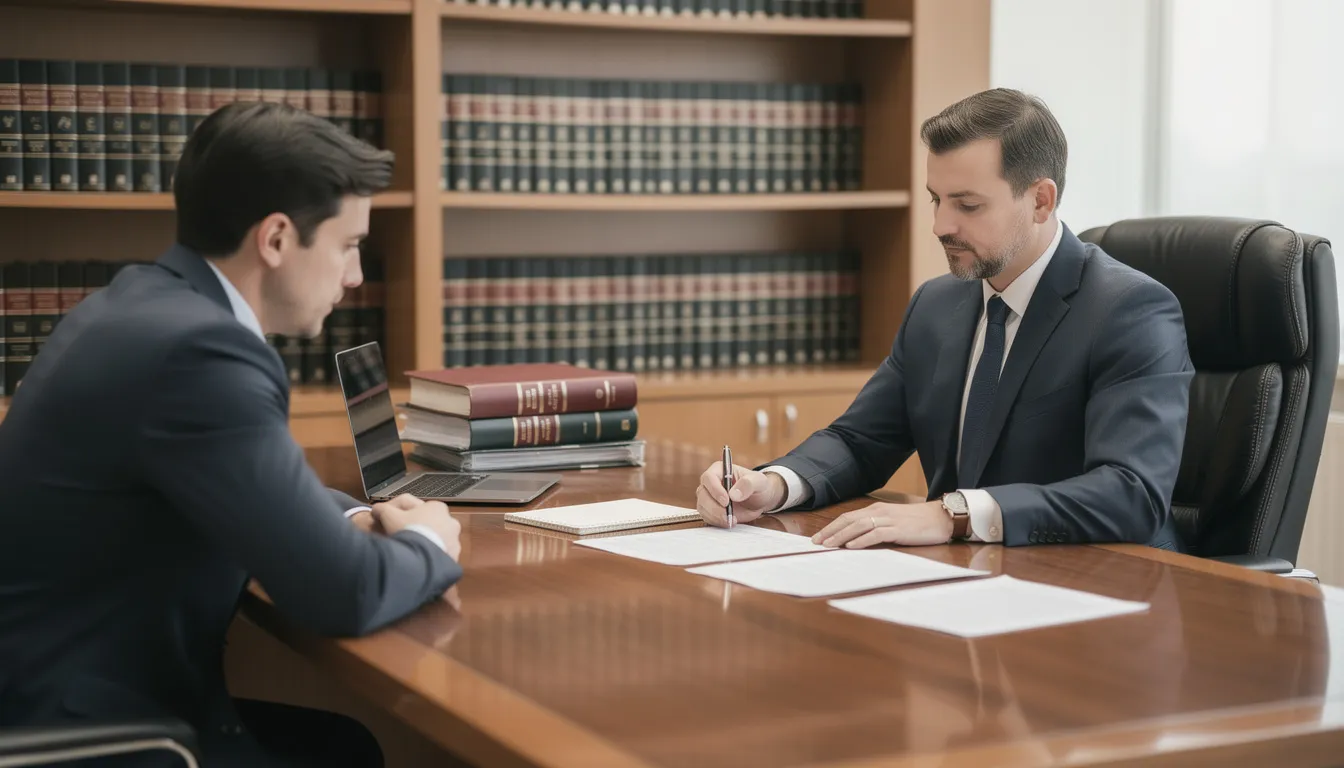
How a Colorado Workers’ Comp Case Gets in Front of a Judge
Most workers’ compensation claims never see the inside of a courtroom. They start with paperwork—a First Report of Injury filed by your employer, followed by either a General Admission of liability (meaning the insurer accepts the claim) or a Notice of Contest (meaning they’re fighting it). The Colorado Division of Workers' Compensation oversees these procedures, including the reporting of injuries, filing of claims, and management of disputes.
A judge only gets involved when there’s a dispute neither side can resolve on their own.
The typical path from injury to hearing:
Injury or illness occurs at work or because of work duties
Written notice to employer – You should notify your employer within ten days of the injury. After reporting, employees must see an employer-approved doctor for diagnosis and treatment.
Insurer decision – The employer’s insurance company has 20 days to review a claim and either accept the claim (Final Admission or General Admission) or contest it after receiving notification from the employer.
Application for Hearing – If disputes remain, you or your attorney file a formal request by filing with the Division of Workers’ Compensation through the Office of Administrative Courts
Prehearing conference – Parties attempt to resolve disputes or narrow the issues
Hearing scheduled – If no resolution, a formal hearing is set, typically within about 4 months
Hearings can be held in Denver, Colorado Springs, Pueblo, Grand Junction, and other locations. Many are now conducted by video, with witnesses appearing remotely through Google Meet or similar platforms.
Here’s something important to understand: even if your claim was accepted initially, disputes about MMI, permanent disability, ongoing medical treatment, or disfigurement can still land you in front of a judge. Acceptance of the initial injury doesn’t mean the insurer won’t fight later issues.
Colorado’s workers’ compensation system operates under C.R.S. Title 8, Articles 40–47. These statutes govern everything from notice deadlines to benefit calculations to the appeals process. Judges apply these laws—not general notions of fairness—to decide your case. All of these steps are part of the formal procedures established by the Colorado Division of Workers' Compensation, including the filing of claims and applications.
If you’re an injured worker in Pueblo, Otero, Fremont, Custer, Huerfano, Las Animas, or Crowley County wondering whether your dispute is something a judge can actually fix, call (719) 309-9484 or message us online to find out.
Key Legal Questions Every Colorado Workers’ Comp Judge Must Answer
Every workers’ compensation hearing is unique, but judges organize their analysis around predictable legal questions. Understanding these questions helps you understand what evidence matters.
Did a compensable injury occur in the course and scope of employment?
Judges ask whether the injury happened while you were doing something for your employer’s benefit. A Pueblo steel-mill worker hurt on the production floor? Clearly in the course of employment. An injury during a purely personal errand on your lunch break? Much harder to prove.
Is there a causal connection between the work incident and the current medical condition?
This is where medical evidence becomes critical. Judges focus on physician opinions, diagnostic imaging like MRIs and X-rays, and whether symptoms appeared in a timeline that makes sense. If you hurt your back lifting boxes on Monday and went to the ER that same day with identical complaints, causation is easier to establish than if you waited six months.
What medical treatment is reasonably necessary and related to the work injury?
Disputes often arise over surgeries, pain management injections, or referrals to specialists. Judges look for treatment recommendations that are supported by medical guidelines and clearly connected to the work injury, not pre-existing conditions.
What are the correct temporary disability benefits?
When calculating workers compensation benefits for lost income, judges examine your average weekly wage, the dates you were off work, and whether you followed valid work restrictions from designated providers. Small calculation errors can significantly change your TTD (temporary total disability) or TPD (temporary partial disability) payments.
Has the worker reached Maximum Medical Improvement?
MMI is the point where further substantial improvement is unlikely. Judges sometimes must decide whether the MMI date chosen by your doctor is correct, especially when that date determines when permanent disability benefits start.
What is the correct impairment rating?
Colorado uses the AMA Guides to the Evaluation of Permanent Impairment (3rd Edition, Revised) to calculate permanent partial disability. Judges may have to choose between competing impairment ratings from different doctors.
Are penalties or attorney fees warranted?
When an insurer unreasonably delays or denies benefits, judges can award penalties under C.R.S. § 8-43-304. These hearings involve reviewing timelines and determining whether the insurance company’s conduct crossed the line from legitimate dispute to bad faith.
How Judges Weigh Evidence: Documents, Medical Records, and Testimony
Colorado workers’ compensation cases are evidence-driven. Parties must present evidence to support their claims, and the judge can only consider evidence allowed by The Workers' Compensation Act and the Colorado Rules of Evidence. The burden of proof usually lies with the injured worker, who presents their evidence first during the hearing. Judges are trained to sift through conflicting medical opinions, employer records, and testimony to find the truth—or at least the version supported by the preponderance of evidence.
Medical Records
Judges usually give significant weight to contemporaneous medical records from your authorized treating physician. Early visit notes carry special importance because they document how the injury happened and your initial complaints before anyone was thinking about a legal dispute.
The timeline matters enormously. If your first emergency room visit in Pueblo describes a lifting injury with low-back pain, and your medical bills from the following weeks show consistent treatment for that same problem, causation becomes much easier to establish.
Employer and Insurer Documents
Judges review the Employer’s First Report of Injury, wage records, job descriptions, written statements, and sometimes surveillance footage. They compare these documents against live testimony to check for consistency.
If you told your supervisor the injury happened one way, then told the adjuster something different in a recorded statement, and then testified to a third version at hearing—that’s a major credibility problem.
Witness Testimony
Co-workers who saw the accident, supervisors who received the injury report, and medical experts all may testify. Each witness is subject to cross-examination by the other party.
Example of a credibility issue: A worker tells the ER nurse in Pueblo on the date of injury that they “felt something pop while lifting a heavy box.” Two months later, they testify at hearing that they slipped on a wet floor and fell. Judges notice these differences and often explain in their written orders exactly why they found the inconsistency damaging.
Expert Medical Testimony
In close cases, expert medical testimony often decides the outcome. Whether by deposition or live testimony, doctors explain their opinions on causation, treatment necessity, MMI, and impairment. Judges explain in their written orders why they found one doctor more persuasive—considering training, reasoning, familiarity with the worker, and thoroughness of record review.
Need help collecting and presenting evidence the way Colorado ALJs expect to see it? Call Johnston Law Firm, LLC at (719) 309-9484 or message us online to discuss your claim.

Common Issues Judges Decide in Colorado Workers’ Comp Hearings
Not every hearing covers the entire claim. Many focus on one or two specific disputes. In most cases, judges decide on issues such as compensability, wage calculation, medical treatment, and the extent of disability.
Issue | What the Judge Decides |
|---|---|
Compensability | Did the injury occur at work and cause the current condition? |
Average Weekly Wage | What were pre-injury earnings, including overtime and bonuses? |
TTD/TPD Benefits | Is the insurer paying correct lost wages during recovery? |
Medical Treatment | Is the requested surgery, therapy, or referral reasonable and necessary? |
MMI Disputes | Has the worker truly reached Maximum Medical Improvement? |
Impairment Rating | What is the correct permanent impairment under the AMA Guides? |
PPD Benefits | How much permanent partial disability is owed? |
Disfigurement | What compensation is owed for visible scarring? |
Penalties | Did the insurer unreasonably delay or deny benefits? |
Workers' compensation in Colorado provides indemnity benefits to partially replace lost wages when an injury prevents a worker from working. Indemnity benefits in Colorado can include temporary total or partial disability, and permanent total or partial disability. Workers may also be reimbursed for mileage and travel costs related to medical care under Colorado's workers' compensation system.
Compensability Hearings
When an insurer issues a Notice of Contest and denies the claim entirely, a compensability hearing determines whether a work related injury actually occurred. The claimant carries the burden of proof under C.R.S. § 8-43-201.
A Pueblo distribution center worker claiming a low-back injury from lifting boxes must show the incident happened at work and that it caused (or aggravated) their current medical condition. A construction worker in Fremont County who fell from a ladder must establish the same connection.
Wage and Benefit Disputes
Small errors in calculating average weekly wage can dramatically affect your workers compensation benefits. Judges rely on pay stubs, tax records, and testimony about overtime, tips, and bonuses to determine the correct figure.
Medical Treatment Disputes
The Colorado workers compensation system uses authorized treating physicians and a process called utilization review to approve or deny treatment requests. When a requested surgery or pain management procedure is denied, judges decide whether the treatment is reasonably necessary and related to the work injury.
MMI and Impairment Ratings
Permanent partial disability (PPD) calculations depend on when you reached MMI and what impairment rating applies. Average PPD awards in Colorado run around $45,000, but disputes over ratings are common. Judges may need to choose between a treating physician’s rating and a Division Independent Medical Examination (DIME) rating.
Disfigurement
Colorado law allows compensation for disfigurement to visible areas like the face, hands, and arms. Judges weigh photographs and doctor descriptions to set a dollar amount within the statutory range for your year of injury.
What Actually Happens at the Hearing: Inside the Colorado OAC Courtroom
Workers’ compensation hearings are formal but less intimidating than criminal trials or major civil litigation. There’s no jury—just you, your attorney, the other party’s attorney, witnesses, and the administrative law judge. The hearing follows formal procedures established by the Office of Administrative Courts.
A typical hearing day:
Check-in – Arrive early at the Administrative Courts OAC location (Pueblo, Colorado Springs, Denver, or by video)
Pre-hearing discussion – Attorneys and the judge discuss procedural matters and potentially narrow the issues
Opening statements – Each side briefly explains what the evidence will show
Testimony – Witnesses testify under oath, subject to direct and cross-examination
Exhibits – Documents, medical records, and photographs are formally admitted into evidence
Closing arguments – Attorneys summarize why the evidence supports their client’s position
Matter under advisement – The judge takes the case to issue a written decision later
The hearing process includes a discovery phase where both parties exchange information and evidence before the hearing. You must provide copies of your evidence to the other side at least 20 days before the hearing.
The Colorado Rules of Evidence apply, but judges have some flexibility. Medical reports can often be admitted as exhibits even when the doctor doesn’t testify, as long as procedural requirements are met.
Practical Tips From Trial Experience
Answer questions directly – Don’t ramble or guess
If you don’t know, say so – Guessing can hurt credibility
Don’t argue with opposing counsel – Just answer the question
Speak to the judge – The judge is your audience, not the insurance adjuster in the room
Dress neatly and arrive early – First impressions matter
Bring medications and devices – Hearings can last several hours
After the hearing, the judge “closes the record” (sometimes allowing time for supplemental briefs) and issues a written order containing Findings of Fact, Conclusions of Law, and the final decision. This typically arrives within 15 working days, mailed to both parties. Strict deadlines then apply for any appeal.
Have a hearing set in Pueblo, Colorado Springs, or anywhere in Colorado? Call Steve Johnston at (719) 309-9484 or message Johnston Law Firm online as soon as you receive your Notice of Hearing.
How Judges Evaluate Credibility and Consistency
“Credibility” isn’t about whether the judge likes you. It’s about whether your story fits the documents, medical records, and objective facts.
Judges look for consistency over time across multiple sources:
Injury reports you made to your employer
Emergency room notes from the day of injury
Follow-up clinic records with your treating physician
Any recorded statements you gave to the adjuster
Your testimony at the hearing
When these accounts align, credibility is strong. When they don’t, problems arise.
What Hurts Credibility
Major changes in how you describe the accident
Large gaps in medical treatment without a good explanation
Obvious exaggeration of symptoms (especially in soft-tissue or chronic pain cases)
Statements that contradict surveillance footage or other objective evidence
Real-world example: A worker in Las Animas County who reported a lifting injury the same day it happened, with consistent accounts throughout treatment, is far more credible than someone who waited months to report and described the accident differently to each provider.
What Helps Credibility
Judges know that people with pre-existing conditions can still be seriously worsened by a new work event. Honest acknowledgment of prior problems, combined with clear testimony about what changed after the work injury, often makes you more credible, not less.
In the Garcia v. State Compensation Insurance Fund case from 2018, the ALJ rejected a claim because exaggerated symptoms were contradicted by surveillance video evidence. Judges apply a “preponderance of evidence” standard—the most credible narrative supported by the evidence prevails.
Medical Experts, DIMEs, and Conflicting Opinions
Medical disputes are common in Colorado workers’ compensation cases, and judges regularly must choose between competing doctors.
What Is a DIME?
A Division Independent Medical Examination (DIME) is an examination by a physician selected through the Division of Workers’ Compensation to resolve disputes about MMI or impairment ratings. Under C.R.S. § 8-42-107(8), DIME opinions carry a rebuttable presumption of correctness—meaning they’re only overturned about 10-15% of the time, according to practitioner experience.
How Judges Choose Between Doctors
When two physicians disagree, judges weigh:
Each doctor’s qualifications and specialty training
How well the doctor knows your case (treated you vs. one-time exam)
The reasoning supporting each opinion
Whether the opinion relies on objective tests (MRIs, range-of-motion measurements)
How well the opinion fits the overall medical record
Typical Conflicts
Treating physician recommends surgery; insurer’s IME says conservative care only
DIME assigns 15% whole-person impairment; treating physician says 8%
Authorized physician says you’re at MMI; you believe you’re still improving
In a 2022 case involving a Pueblo steelworker, an ALJ awarded full TTD and a 12% whole-person impairment based on the DIME opinion, even though the insurer’s independent examiner disputed causation. The judge credited the claimant’s consistent testimony and job hazard logs.
Detailed, well-organized medical exhibits and clear questioning of doctors can strongly influence how a judge resolves these disputes.
If you’ve already been sent to a DIME or insurer IME, call Johnston Law Firm, LLC at (719) 309-9484 or message us online before your hearing is set. Strategy around these exams often decides the case.
How Judges Apply Colorado Workers’ Comp Laws and Rules
Judges don’t decide workers’ compensation cases based on sympathy. They apply Colorado statutes, regulations, and appellate case law to the specific facts.
Key legal sources judges rely on:
Colorado Workers’ Compensation Act (C.R.S. Title 8)
Division of Workers’ Compensation Rules (7 CCR 1101-3)
Office of Administrative Courts procedural rules
Published decisions from the Industrial Claim Appeals Panel
These laws govern notice deadlines (report to your employer within ten days of the injury; file your claim within two years), compensable travel, average weekly wage calculations, MMI standards, and objection deadlines for admissions of liability.
The Written Order
After a hearing, the judge issues a written decision, also known as the judge's decision, with:
Findings of Fact – What the judge believes actually happened, based on the evidence
Conclusions of Law – How the statutes and rules apply to those facts
Order – What benefits are awarded, denied, or modified
If the judge's decision is appealed, a written copy of the Panel's decision will be mailed to all parties involved in the case.
Because Colorado workers’ compensation law is technical and frequently updated, having an attorney who regularly handles these hearings can prevent costly procedural mistakes that might lose your case before you even get to the merits.
Appeals: What Happens If You Disagree With the Judge’s Decision?
Losing at the hearing isn’t always the end. Colorado law allows appeals, but the timelines are strict and the standards of review are limited.
The basic appeal process:
Petition to Review – Filing a Petition to Review is required within 20 days of the judge’s decision. You must file a Petition to Review within 20 days from the date the order is mailed to you after a denial of your workers' compensation claim. If you do not file a Petition to Review on time, you may lose the right to appeal the decision of the Administrative Law Judge.
Written briefs – After filing your Petition to Review, you must submit a brief in support of your petition within 20 days. The other party may file a response to your brief or arguments within the designated timeframe.
Industrial Claim Appeals Panel (ICAO) review – The Industrial Claim Appeals Panel will review your case and the Administrative Law Judge's order and make its decision within 60 days.
Colorado Court of Appeals – If ICAO affirms, you can petition the Colorado Court of Appeals within 21 days
Colorado Supreme Court – In rare cases, further review is possible
Appeals focus on legal errors or lack of substantial evidence, not simply re-arguing the facts. The Industrial Claim Appeals Panel affirms about 80% of ALJ decisions and normally defers to the judge’s credibility findings.
Success rates at the Court of Appeals level run under 5% according to ICAO statistics. But when legal errors occurred at the hearing, an appeal may be your only option.
Missing the 20-day deadline almost always ends your right to appeal. If you recently received an unfavorable order, contact Johnston Law Firm, LLC immediately at (719) 309-9484 or message us online to review your appeal options.
How Working With an Experienced Pueblo Workers’ Comp Attorney Helps Your Case
Judges expect both sides to follow complex rules, meet deadlines, and present evidence in the specific format Colorado workers’ compensation law requires. Showing up unprepared puts you at a serious disadvantage against an insurance company that handles these hearings every week.
Concrete ways an attorney like Steve Johnston can help:
Identifying the real legal issues – Knowing what actually matters to the judge
Gathering and organizing evidence – Medical records, wage documentation, witness statements
Preparing you to testify – Practicing direct examination and anticipating cross-examination
Questioning witnesses effectively – Both medical experts and employer witnesses
Negotiating informed settlements – Based on how judges actually decide similar cases in settlement conferences
Protecting appeal rights – Meeting strict deadlines if the decision goes against you
Johnston Law Firm, LLC focuses on representing injured individuals throughout Colorado in workers’ compensation, personal injury, automobile accidents, estate planning, criminal defense, and Social Security matters. Steve Johnston is based in Pueblo and regularly represents clients in Otero, Fremont, Custer, Huerfano, Las Animas, and Crowley Counties—as well as statewide.
Real Case Themes
A denied back-injury claim that turned on early medical records—consistent documentation from the date of injury made the difference
A disputed MMI case where the DIME opinion was challenged but ultimately upheld because the opinion was thoroughly explained and aligned with objective testing
A wage dispute where detailed pay stub analysis revealed the insurer had significantly undercalculated average weekly wage and shorted the worker on lost wages
Understanding how Colorado workers’ compensation judges actually think can be the difference between winning and losing your claim.
Call Johnston Law Firm, LLC today at (719) 309-9484 or message us online to schedule a free consultation about your Colorado workers’ compensation claim. Don’t face the hearing room alone—get an attorney who knows exactly what these judges are looking for.