Head On Car Accident Attorney – Colorado Liability, Injuries, and Compensation
Head-on collisions rank among the most devastating car accidents on Colorado roads. When two vehicles slam into each other front to front, the combined forces can cause catastrophic injuries or wrongful death in a fraction of a second. If you or a family member has been hurt in a head-on crash, the decisions you make in the coming days can shape your financial future and your ability to recover fair compensation. This guide explains how Colorado liability rules work, what injuries to expect, and how Johnston Law Firm, LLC can help you move forward.
Key Takeaways
Head-on crashes are among the deadliest car accidents on Colorado roads, especially along I-25 and U.S. Highway 50 near Pueblo. Nationally, roughly 62.9% of head-on collision fatalities happen on rural roads, and Southern Colorado's two-lane highways are particularly dangerous. This article walks through what to do next and how Johnston Law Firm, LLC stands ready to help.
-
Seek medical attention immediately after a head-on collision, then contact a Colorado head on car accident attorney at Johnston Law Firm, LLC by calling (719) 309-9484 or message us online for a free consultation.
-
Colorado uses a fault-based system and modified comparative negligence, so proving the other driver's responsibility is critical to recovering compensation for medical bills, lost wages, and pain and suffering.
-
Head-on crashes frequently cause catastrophic injuries like traumatic brain injuries, spinal cord injuries, broken bones, and wrongful death. Head-on collisions are the deadliest crash type per incident in Colorado.
-
Attorney Steve Johnston has more than two decades of trial experience handling serious car accident injury cases across Colorado, from investigation through negotiation, trial, and appeal.
-
Most car accident cases, including head-on collisions, are handled on a contingency fee basis at Johnston Law Firm, meaning clients typically pay no attorney fee unless the firm recovers compensation.

Why Contact a Head-On Car Accident Attorney in Colorado Right Away?
Evidence in head-on crashes can vanish fast. Skid marks, debris patterns, vehicle rest positions, and electronic data from modern vehicles can be altered or destroyed within hours in places like Pueblo, Colorado Springs, and along the I-25 corridor. Evidence preservation is crucial in head-on collision cases because once road crews clear the scene or weather erodes markings, critical proof may be gone for good.
A head on car accident attorney can immediately protect you from aggressive calls by the at fault driver's insurance company. Insurance adjusters may attempt to shift blame onto victims early in the process, sometimes recording statements before you even understand the full extent of your injuries. Having an attorney handle all communications on your behalf eliminates that risk. You have the right to hire an attorney for representation, and exercising that right early makes a measurable difference.
Colorado has strict timelines for car accident lawsuit filings. In some situations-such as crashes involving a government vehicle or a dangerous public road design-shorter notice deadlines apply. Waiting even a few weeks can compromise your accident claim.
Call Johnston Law Firm, LLC at (719) 309-9484 or message us online as soon as possible after a head-on crash for a no-cost, no-pressure case evaluation.
About Johnston Law Firm, LLC and Attorney Steve Johnston
Johnston Law Firm, LLC is a Pueblo-based law firm that represents injured people throughout Colorado, including Otero, Fremont, Custer, Huerfano, Las Animas, and Crowley Counties. The firm brings a community-centered perspective to every case, understanding that injured families in Southern Colorado often face unique challenges-remote roads, limited trauma center access, and long distances to courthouses.
Steve Johnston focuses his practice on six key areas:
-
Workers' compensation
-
Personal injury
-
Automobile accidents (including head-on and hit and run accidents)
-
Estate planning
-
Criminal law
-
Social Security law
With more than 20 years of experience as a Colorado trial lawyer, Steve handles serious car accident cases from initial investigation through negotiation, trial, and appeals when necessary. He is admitted to practice in both Colorado and Wyoming and holds a J.D. from the University of Wyoming.
The firm's approach is client-focused: direct access to Steve, clear communication in plain English, and practical strategies tailored to each client's medical, family, and financial situation. Most personal injury attorneys work on a contingency fee basis, and Johnston Law Firm is no exception-clients typically pay attorney fees only if a recovery is made.
What Makes Head-On Car Accidents So Dangerous in Colorado?
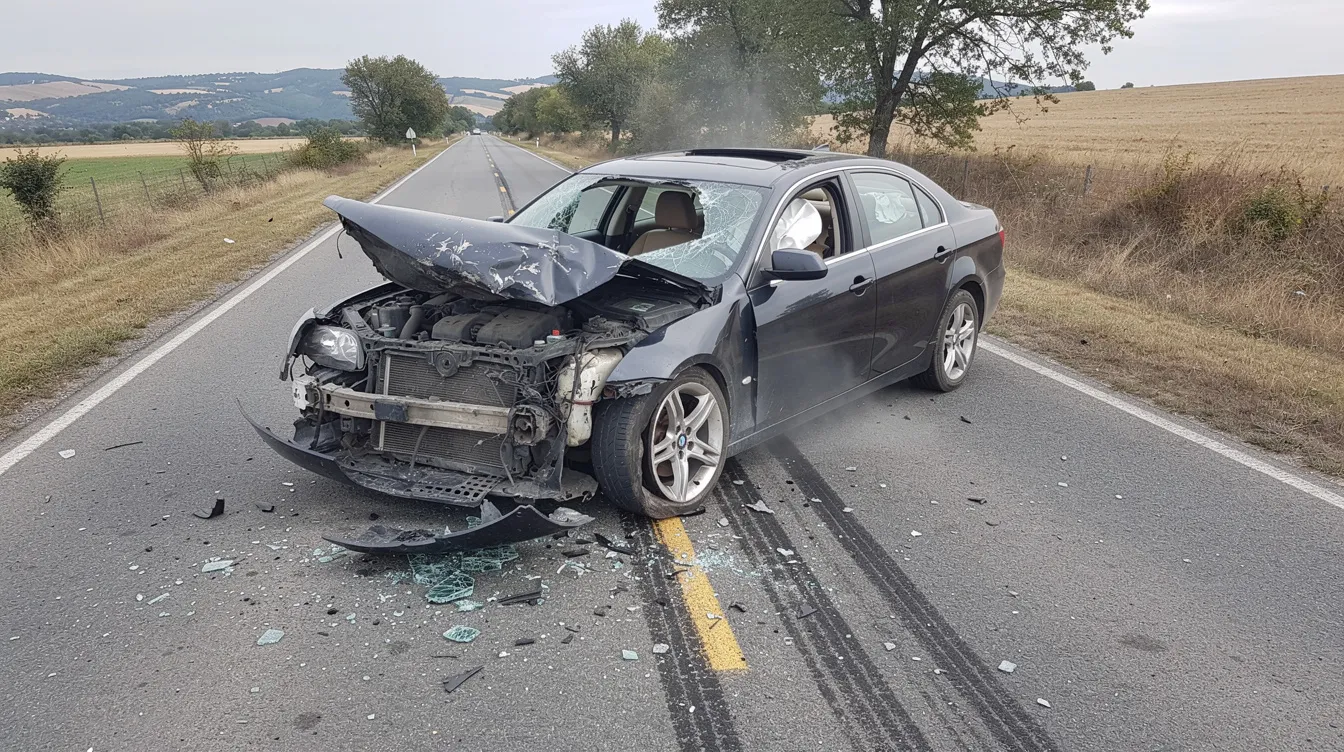
A head on collision occurs when two vehicles traveling in opposite directions strike front to front, multiplying impact forces and overwhelming modern safety features like airbags, crumple zones, and seat belt systems. Head-on collisions generate extreme impact forces that few vehicle structures can fully absorb.
Consider two cars each traveling at 45 mph on U.S. Highway 50. The combined closing speed in head-on collisions can reach 100 mph, creating forces comparable to driving into a concrete wall at extreme velocity. That energy tears through metal, glass, and human tissue, producing injuries that are often life-altering or fatal.
Although head-on crashes represent a relatively small percentage of total car accident cases on Colorado roads, they account for a disproportionate share of serious and fatal injuries. Head-on collisions accounted for 3,953 crashes in 2024, and they remain the deadliest crash type per incident in Colorado. Rural roads are especially dangerous: according to the Governors Highway Safety Association, about 62.9% of head-on collision fatalities nationally occur in rural settings where higher speeds, fewer median barriers, and limited lighting create a perfect storm for disaster.
In Southern Colorado, stretches of two-lane rural roads-where passing errors and drifting across the center line frequently trigger most head on collisions-present constant risk. Because injuries are often severe, insurance companies and defense law firms fight these claims aggressively, making experienced legal representation essential.
Common Causes of Head-On Crashes in Colorado
Every head-on crash starts with one vehicle entering the oncoming lane. Identifying why that happened is central to proving liability. Negligence involves failing to act with reasonable care, and in the context of Colorado head on collisions, that failure can take several forms.
Major causes include:
-
Distracted driving - Texting, adjusting navigation apps, or even eating while driving pulls attention from the road. Distracted driving causes many car accidents in Colorado and is a leading contributor to head-on crashes on two-lane roads.
-
Impaired driving - Alcohol, drugs, and prescription medications slow reaction times and impair judgment. Impaired driving significantly raises the likelihood of accidents, especially at night.
-
Speeding - Speeding increases crash severity and reduces reaction time, making it impossible to correct course on curves or when oncoming traffic appears suddenly.
-
Unsafe passing - Attempting to pass slower vehicles on two-lane roads in no-passing zones is one of the most common triggers for a head on crash.
-
Wrong-way driving - On divided highways like I-25, wrong-way drivers cause devastating collisions. Colorado State Patrol data showed 403 wrong-way driver crashes in recent years.
-
Fatigue - Drowsy drivers drift across the centerline without warning, particularly during late-night or early-morning hours.
-
Reckless driving - Behaviors like tailgating and aggressive lane changes lead to serious accidents when drivers overcorrect and veer into oncoming traffic.
Roadway factors such as poor signage, lack of median barriers, and poor weather conditions contribute to many car crashes in Colorado, though they usually do not excuse driver negligence. In some cases, a defective vehicle component-steering failure, tire blowout-or a commercial truck's lane drift can also trigger a head on collision, potentially opening the door to additional responsible parties.
Steve Johnston carefully reviews police reports and crash data and may work with accident reconstruction experts to identify the true cause of a head-on car accident.
Typical Injuries from Head-On Car Accidents
Survivors of head-on crashes often suffer multiple, overlapping serious injuries that require emergency treatment at facilities such as Parkview Medical Center in Pueblo or larger Colorado trauma centers. Car accidents of this severity push the human body past its limits.
Common injuries include:
-
Traumatic brain injuries - Ranging from concussions to severe TBIs. Traumatic brain injuries can result from car crashes when the head strikes the steering wheel, dashboard, or window, or simply from violent deceleration forces.
-
Spinal cord injuries - Damage to the spinal column can cause partial or complete paralysis. Spinal cord injuries may lead to paralysis after a collision.
-
Internal organ damage - Forces from a head-on crash can rupture the spleen, liver, or kidneys. Internal injuries can be life-threatening after a car accident and may not show symptoms immediately.
-
Broken bones - Car accidents can cause broken bones requiring extensive treatment, particularly fractures to the pelvis, femur, ribs, and arms.
-
Whiplash - Even with airbag deployment, the violent forward-and-back motion of a head-on impact makes whiplash a common injury from car accidents.
-
Facial trauma and dental injuries - Occupants may strike dashboards or steering columns despite restraint systems.
-
Crush injuries - Knees, hips, and shoulders sustain damage when the vehicle cabin collapses inward.
Psychological injuries are also compensable. Post traumatic stress disorder, depression, anxiety, and sleep disturbances frequently follow head-on collisions and are recognized harms under Colorado personal injury law.
Survivors of head-on collisions often face catastrophic injuries with long recovery timelines. Victims should seek medical attention promptly, even if pain seems manageable, because internal bleeding and brain injuries may not show full symptoms right away.
Spinal Cord Injuries and Other Catastrophic Harm
Head-on crashes are a leading cause of catastrophic injuries, especially spinal cord injuries that may result in partial or complete paralysis. The extreme forces involved can fracture vertebrae, herniate discs, and damage spinal nerves, leading to long-term mobility limitations, chronic pain, and the need for ongoing medical care or assistive devices.
Catastrophic injuries often result from head-on collisions. Beyond spinal cord damage, these cases may involve:
-
Severe traumatic brain injuries with permanent cognitive deficits
-
Amputations
-
Major burns
-
Permanent disfigurement
These injuries often justify claims for lifetime future medical expenses, future lost earning capacity, and home modifications. An attorney calculates both current and future damages for victims in these cases, ensuring that a settlement or verdict accounts for decades of care rather than just immediate hospital bills.
Johnston Law Firm is experienced in coordinating expert testimony from treating physicians, life care planners, and vocational experts to fully document the future impact of catastrophic injuries. While not every head on crash leads to catastrophic harm, the firm treats each case seriously and works to understand the full medical and financial consequences before discussing settlement.
Wrongful Death After a Head-On Collision in Colorado
Many head-on crashes in Colorado unfortunately result in wrongful death, leaving families struggling with grief and sudden financial strain. Head-on collisions often result in severe life-altering injuries or wrongful death, and families deserve honest guidance during the most difficult time of their lives.
Under Colorado law, certain family members-typically a surviving spouse, children, and in some cases parents or designated beneficiaries-may bring a wrongful death claim when a loved one dies because of another driver's negligence or reckless conduct.
Recoverable damages in wrongful death cases include:
-
Funeral and burial costs
-
Loss of the decedent's income and benefits
-
Loss of companionship and guidance
-
Grief-related damages as allowed by Colorado statutes
As of January 1, 2025, HB 24-1472 raised the noneconomic damages cap in wrongful death cases to $2.125 million, subject to biennial inflation adjustments. Deadlines for wrongful death claims are usually two years from the date of death, and claims against government entities may have shorter notice requirements.
If your family has lost someone in a head-on collision, please call (719) 309-9484 or contact Johnston Law Firm online to privately discuss your options with Steve Johnston.
Colorado Liability Rules and Comparative Negligence
Colorado follows a fault-based system for car accident cases and uses modified comparative negligence under C.R.S. § 13-21-111 to apportion responsibility between drivers. Colorado follows a comparative negligence rule for fault determination, and understanding how it works is essential to protecting your personal injury claim.
Here is how it breaks down:
|
Injured Party's Fault |
Can They Recover? |
Effect on Award |
|---|---|---|
|
0% |
Yes |
Full award |
|
1%–49% |
Yes |
Reduced by fault percentage |
|
50% or more |
No |
Barred from recovery entirely |
In Colorado, you can recover damages if less than 50% at fault, but your compensation is reduced by your percentage of fault. If found 50% or more at fault, you cannot recover damages. Comparative negligence affects how much compensation you can receive in every Colorado car accident case.
Practical example: Imagine a head on crash where the other driver crossed the center line, but the injured person was driving 10 mph over the speed limit. A jury might assign 80% fault to the negligent driver who crossed the line and 20% to the speeding driver. If total damages are $500,000, the injured person would recover $400,000.
Insurance companies often overstate the injured person's fault to reduce payouts. Insurance adjusters may attempt to shift blame onto victims using selective interpretations of the evidence. Having an experienced attorney challenge unfair fault allocations can mean the difference between a minimal check and fair compensation.
Colorado's comparative negligence rules apply to both bodily injury and property damage claims stemming from a car accident lawsuit. You can seek compensation even if partially at fault-the key is keeping your share below the 50% threshold.
Evidence That Helps Prove Fault in Head-On Car Accident Cases
Strong evidence can shift a car accident case from a disputed "he said, she said" scenario to a clear demonstration of the other driver's negligence. Head-on collision cases may involve disputed liability issues, particularly when both vehicles sustained severe damage and the accident scene was chaotic.
Key evidence types include:
-
Official police report - Colorado State Patrol or local police crash reports document the scene, measurements, and officer observations. However, police reports may not determine fault in civil cases; they are one piece of the puzzle.
-
Photographs and video - Scene photos, dashcam footage, and business surveillance cameras can show lane positions, traffic signals, and debris fields.
-
Skid marks and debris - Physical evidence reveals braking patterns, collision angles, and the point of impact relative to the centerline.
-
Electronic data recorders - Many modern vehicles store pre-crash data including speed, braking, and steering inputs.
-
Medical records - Linking specific physical injuries such as spinal cord injuries or chest trauma to the mechanism of a head-on collision strengthens causation.
-
Phone records - Critical for proving distracted driving.
-
Toxicology reports - Essential when impaired driving is suspected.
Evidence like traffic citations can support your claim for damages by showing the other driver violated traffic laws at or near the time of the crash. Attorneys gather evidence such as police reports and traffic camera footage to build a compelling case.
Johnston Law Firm actively gathers and preserves this evidence early, often working with investigators and, where appropriate, accident reconstruction specialists to lock down the facts before they fade.
Steps to Take After a Head-On Collision in Colorado
The steps you take in the hours and days after a head-on crash can significantly affect a later personal injury claim. Safety comes first-but documentation runs a close second.
Your post-crash checklist:
-
Move to safety if possible - Get out of the roadway if you can do so without worsening injuries.
-
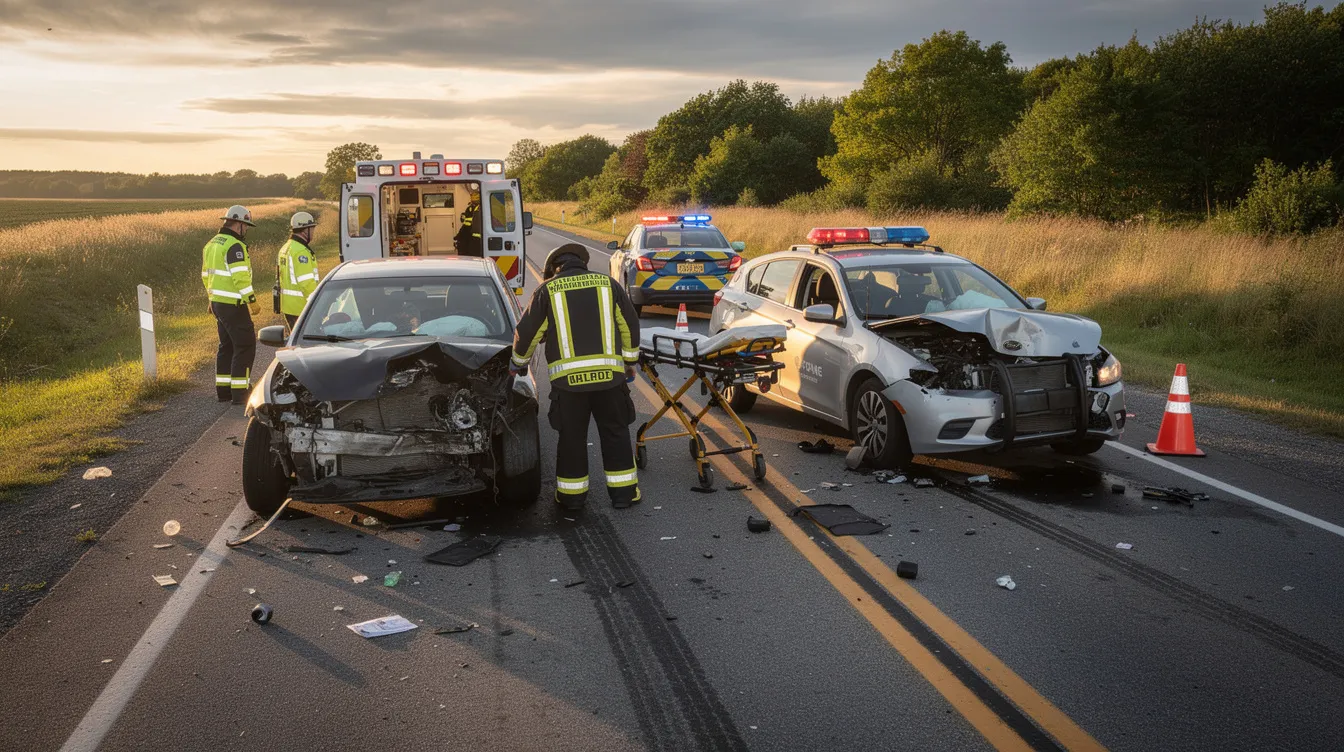
Call 911 - Call 911 to report the accident immediately. This creates an official police report and summons emergency medical help.
-
Seek medical attention - Seek medical attention even for minor injuries after an accident. Some serious conditions-internal bleeding, mild traumatic brain injuries-take hours or days to become apparent.
-
Exchange information - Exchange contact and insurance information with the other driver, but avoid discussing fault or making statements to other parties at the scene.
-
Document the accident scene - Document the accident scene with photos and witness information. Capture vehicle damage, road conditions, traffic signs, skid marks, and the positions of all vehicles.
-
Cooperate with law enforcement - Answer officers' questions honestly, but do not speculate about causes.
-
Do not give recorded statements to insurers - The at fault driver's insurance company may contact you quickly. Politely decline until you have legal guidance.
Contact Johnston Law Firm promptly at (719) 309-9484 or via the firm's online contact form before speaking in detail with any insurance adjuster.
Getting Prompt Medical Care and Documenting Your Injuries
In serious head-on crashes, emergency medical personnel often transport injury victims directly from the accident scene to the nearest hospital or trauma center. But even those who decline an ambulance should see a doctor quickly. A timely medical evaluation can detect hidden injuries such as internal bleeding, mild traumatic brain injuries, or soft tissue damage that may worsen without treatment.
Medical documentation is critical in establishing claims for damages. Follow these practices:
-
Attend every follow-up appointment your doctors schedule
-
Keep copies of discharge papers, imaging reports (CT, MRI, X-rays), and specialist referrals
-
Follow all prescribed treatment plans-gaps in care give insurers ammunition to minimize your car accident claim
-
Track out-of-pocket costs for prescriptions, medical devices, and transportation to appointments
Consistent documentation helps establish the extent, cause, and cost of injuries like spinal cord injuries, fractures, and chronic pain. These records are central to calculating fair compensation for both current and future medical expenses.
Steve Johnston reviews clients' medical records carefully and may consult with treating doctors to understand long-term prognosis before negotiating any settlement.
Types of Compensation Available After a Head-On Car Accident
Colorado law allows injured people to seek both economic and noneconomic damages in personal injury cases, subject to certain statutory limits.
Economic damages (no cap under most circumstances):
-
Past and future medical bills, rehabilitation, and therapy
-
Prescription costs and medical equipment
-
Lost wages and diminished earning capacity
-
Property damage to the vehicle and personal contents
Colorado allows recovery for medical expenses after car accidents, and lost wages can be claimed if unable to work due to injuries. Property damage costs can be included in compensation claims as well.
Noneconomic damages:
-
Pain and suffering
-
Emotional distress
-
Loss of enjoyment of life
-
Impact on relationships and daily activities
Pain and suffering damages are recoverable in Colorado car accident claims. Under HB 24-1472 (effective January 1, 2025), the noneconomic damages cap for non-malpractice tort cases rose to $1.5 million, with biennial inflation adjustments. Economic losses like medical bills and lost income are not capped.
Exemplary (punitive) damages are rare in car accident cases but may be available when the at fault driver engaged in willful and wanton conduct-such as extreme drunk driving or road rage. When allowed, Colorado generally caps punitive damages at three times the compensatory award.
An attorney calculates both current and future damages for car accident victims, factoring in inflation, life expectancy, and projected medical needs.
Special Issues: Uninsured, Underinsured, and Hit and Run Accidents
Some head-on crashes involve drivers with minimal insurance coverage, no insurance, or drivers who flee the scene, complicating the path to fair compensation. Colorado's minimum liability coverage is only $25,000 per person-a figure that barely scratches the surface of catastrophic injury costs. Head-on accidents frequently involve multiple insurance policies that may come into play.
Uninsured/underinsured motorist (UM/UIM) coverage on your own auto policy may provide benefits if the at fault driver's insurance cannot fully cover losses from a head on collision. Johnston Law Firm evaluates all potentially applicable policies, including:
-
The injured person's own auto policy
-
Policies covering household members
-
Umbrella or excess coverage
Hit and run accidents require quick action. Report the crash to law enforcement immediately and notify your insurance company, as some policies have strict notice provisions for uninsured motorist coverage claims.
Steve Johnston helps clients navigate UM/UIM claims and, when necessary, litigate disputes with their own insurers to pursue the insurance benefits they paid for.
The Head-On Car Accident Lawsuit and Insurance Claims Process
A typical head-on collision case follows a general progression:
-
Investigation - Gathering crash reports, medical records, witness statements, and physical evidence
-
Medical stabilization - Allowing the injured person to reach maximum medical improvement so that future damages can be accurately projected
-
Insurance claims - Filing claims against the at fault driver's insurance and any applicable UM/UIM policies
-
Negotiation - Presenting a detailed demand package summarizing liability and damages
-
Litigation - Filing a car accident lawsuit if insurers dispute fault, undervalue serious injuries, or ignore the full impact of catastrophic injuries
Negotiating settlements is a common resolution for personal injury claims, and many Colorado car accident cases resolve without going to trial. But attorneys negotiate aggressively to counter insurer tactics, and Johnston Law Firm prepares each car accident case as if it may go to trial-because that readiness is what drives fair settlement offers.
Litigation involves formal discovery (depositions, written questions, expert reports). Attorneys help clients understand their legal rights and options at every stage. A major role of an attorney is to prove liability in head-on collisions, and Steve Johnston guides clients through each step, explaining options and likely timelines in plain English. You can file a personal injury claim against the at-fault party and pursue the full range of damages Colorado law allows.
Deadlines: How Long Do You Have to File in Colorado?
Strict filing deadlines apply to Colorado car accident cases, including head-on crashes. Missing them can bar recovery entirely.
|
Claim Type |
Deadline |
|---|---|
|
Bodily injury from motor vehicle accident |
|
|
Property damage (general tort) |
2 years |
|
Wrongful death |
2 years from date of death |
|
Wrongful death (hit-and-run/vehicular homicide) |
4 years from date of death |
|
Claims against government entities |
Shorter notice periods may apply |
In Colorado, you have three years to file a lawsuit for most motor vehicle accident bodily injury claims under C.R.S. § 13-80-101(1)(n)(I). Wrongful death claims are usually subject to a two-year statute of limitations running from the date of death, which may differ from the date of the crash.
Claims against government entities-such as crashes involving city vehicles or dangerous public road design-often require written notice within a much shorter period, so early legal advice is essential.
Do not wait until the deadline is near. It takes time to investigate, gather medical records, and build a strong Colorado car accident case before filing.
How Johnston Law Firm Investigates Head-On Car Accident Cases
Serious head-on crashes demand more than filling out claim forms. They require careful, methodical investigation.
Johnston Law Firm starts with the crash report and photographs, then may obtain:
-
911 audio recordings
-
Bodycam video from responding officers
-
Traffic camera or business surveillance footage
In complex liability disputes, Steve Johnston may work with experienced accident reconstruction experts who analyze skid marks, vehicle damage, and event data recorders to determine speeds, impact angles, and lane positions. Experts like accident reconstructionists often assist in head-on collision cases where physical evidence is ambiguous or the at fault driver disputes what happened.
The firm also investigates the negligent driver's background for issues like prior DUIs, repeated speeding tickets, or a history of distracted driving. These findings may support claims of reckless conduct and, in extreme situations, exemplary damages.
This thorough approach is particularly important in head-on car accident cases involving catastrophic injuries or potential wrongful death, where the stakes for injured families are very high.
Serving Pueblo and Head-On Crash Victims Across Colorado
Johnston Law Firm is based in Pueblo but regularly handles automobile accident cases throughout Colorado, including both rural and urban communities.
The firm serves clients in counties such as:
-
Otero
-
Fremont
-
Custer
-
Huerfano
-
Las Animas
-
Crowley
It also represents car accident victims along major corridors like I-25, U.S. 50, and nearby state highways where head-on crashes frequently occur.
While some competitors focus mainly on Denver car accident cases, Johnston Law Firm is deeply familiar with Southern Colorado roads and local courts. That knowledge benefits injured residents who need a legal team that understands the unique risks of rural driving, the distances to trauma centers, and the dynamics of Southern Colorado courtrooms.
The firm meets with clients in person in Pueblo, by phone, or through virtual meetings, making it easier for injured people and families to obtain help even if they cannot travel. Geographic distance rarely prevents the firm from taking a strong Colorado head on collision case.
Why Choose Johnston Law Firm for a Head-On Collision Case?
Not every car accident law firm approaches head-on crashes the same way. Serious personal injury cases demand experience, attention to detail, and genuine care for clients' futures.
Core reasons to choose Johnston Law Firm:
-
Decades of courtroom experience - Steve Johnston has tried cases as a personal injury lawyer for more than 20 years. That trial readiness influences every negotiation.
-
Focus on automobile accidents and personal injury - Head-on collision cases are not a sideline; they are central to the firm's practice.
-
Hands-on involvement - Clients speak directly with Steve, not just staff. He keeps clients informed in clear language about strategic options, likely timelines, and possible settlement ranges.
-
Representation for working families - The firm represents Colorado car accident victims from all walks of life, understanding the financial pressures that follow a devastating crash.
-
Integrated practice - The firm's broader experience in workers' compensation, Social Security disability, and estate planning can be invaluable for head-on crash victims who face long-term disability, lost income, or the need to update wills and trusts after a serious injury or wrongful death.
Steve Johnston is among the best personal injury lawyer options for Colorado families who want a legal professional who will treat their case with the seriousness it deserves-from the first phone call through the final resolution.
Call (719) 309-9484 or send a secure online message to schedule a free, confidential consultation with Steve Johnston today.

Frequently Asked Questions About Colorado Head-On Car Accidents
The following section answers additional common questions that Colorado drivers and families often have after a head-on crash. Each answer provides general information and is not a substitute for case-specific legal advice. Contact Johnston Law Firm for guidance tailored to your situation.
How much does it cost to hire Johnston Law Firm for a head-on collision case?
For most personal injury and car accident cases, including head-on crashes, Johnston Law Firm works on a contingency fee basis. That means clients generally do not pay attorney fees unless the firm recovers money for them. The detailed fee arrangement, including how case costs are handled, is explained in writing at the beginning of the attorney–client relationship so there are no surprises.
If you have questions about fees, call (719) 309-9484 or reach out online for a free discussion.
How long will my Colorado head-on car accident case take?
Timelines vary depending on the severity of injuries, how long it takes to reach maximum medical improvement, and whether the insurance company is willing to negotiate fairly. Some straightforward cases may resolve within several months, while cases involving catastrophic injuries, disputed liability, or a trial can take a year or longer.
Steve Johnston can give a more individualized estimate after reviewing your medical records, the official police report, and insurance information during a consultation.
Can Johnston Law Firm help if I'm also dealing with workers' compensation or Social Security issues?
Yes. Because Steve Johnston also represents clients in workers' compensation and Social Security disability claims, he can coordinate strategies when a head-on car accident overlaps with on-the-job injuries or long-term disability. This integrated approach helps avoid mistakes such as inconsistent statements or settlements that unintentionally affect eligibility for other benefits.
Mention any pending workers' comp or Social Security matters when you first contact the firm so those issues can be evaluated together.
What if I was partially at fault in the head-on collision?
Colorado's modified comparative negligence rule may still allow recovery as long as your share of fault is under 50%, but any award will be reduced in proportion to that percentage. Determining fault in head-on crashes is complex and should not be left solely to the insurance company's initial judgment. You can file a personal injury claim against the at-fault party even when partial fault exists on your side.
If you are worried about partial fault, speak with Steve Johnston before accepting any settlement or making detailed statements to the at fault driver's insurance company or your own insurer.
Do I need a Pueblo-based lawyer if my crash happened elsewhere in Colorado?
Johnston Law Firm routinely represents clients from across the state, not only in Pueblo. Modern communication tools make distance far less important than experience and dedication. The firm is comfortable appearing in courts throughout Colorado and coordinating with local resources when necessary.
Whether you need a Denver car accident attorney, help in Colorado Springs, or legal representation in a rural county, anyone injured in a head-on collision anywhere in Colorado should contact the firm to see if representation is possible, regardless of where the accident happened.