Government Vehicle Accidents in Colorado: Your Rights Under the Colorado Governmental Immunity Act
If a police cruiser, fire truck, county snowplow, or any other government vehicle caused your crash, the legal rules are different from a typical car accident-and the deadlines are dangerously short. Here's what Colorado law actually requires and how to protect your claim.
Key Takeaways
Accidents involving government vehicles in Colorado are governed by the Colorado Governmental Immunity Act, commonly referred to as the immunity act CGIA. This law controls who can sue, when, and for how much when a crash involves a police officer, city bus driver, CDOT employee, or any other public worker behind the wheel.
-
Sovereign immunity normally shields government agencies from lawsuits, but the Colorado Governmental Immunity Act waives that protection for many car accident cases caused by government employees driving official vehicles within the scope of their employment.
-
You generally have only 180 days from the date the car accident occurred (or from discovery of the injury) to serve formal written notice on the correct governmental entity. Missing the 182-day notice deadline can permanently bar a claim regardless of its merits-even if your injuries are catastrophic.
-
Compensation in these cases is capped by statute. Punitive damages are not allowed in governmental immunity cases. That means every dollar of legitimate medical expenses, lost wages, and other monetary damages must be carefully documented.
-
Johnston Law Firm, LLC in Pueblo represents injured people throughout Colorado in government vehicle and other auto accident cases. Steve Johnston offers a free consultation to review deadlines, fault, and available legal options.
Understanding Government Vehicle Accidents in Colorado
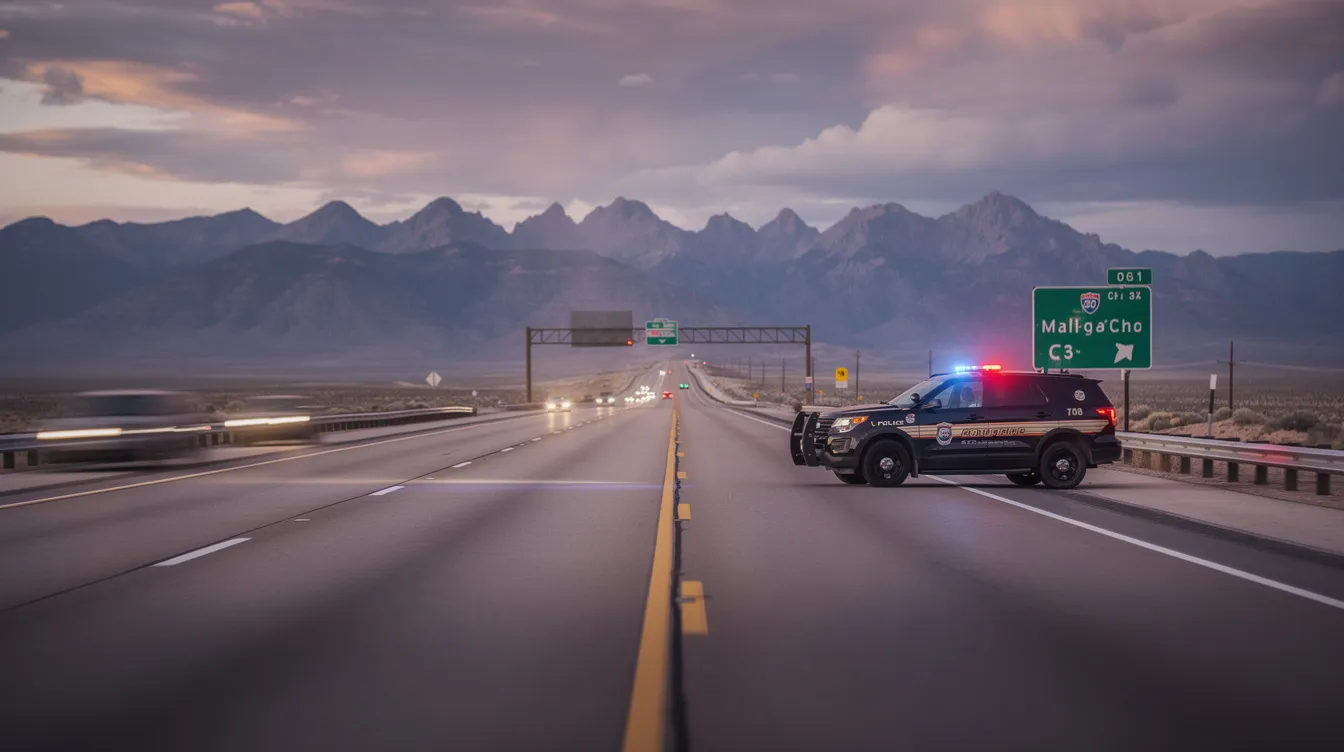
Getting hit by a government vehicle is disorienting. You're dealing with injuries, vehicle damage, and the sudden realization that the other driver works for the same government you'd normally call for help. Whether it was a sheriff's deputy in Pueblo, a city bus in Colorado Springs, or a CDOT pickup on I-25, the process ahead looks nothing like a standard personal injury case.
What makes these crashes different? Three things: sovereign immunity creates a legal shield you have to get past, Colorado imposes much shorter deadlines than ordinary car accident cases, and damage caps limit what you can recover no matter how serious your injuries are.
A few real-world examples help illustrate the range of situations:
-
A speeding patrol car rear-ends a stopped vehicle at a red light in Pueblo
-
A county road grader makes an unsafe turn and collides with a pickup truck in Otero County
-
A CDOT vehicle merges without looking on I-25 near Colorado Springs
These rules apply to state agencies, counties, cities, public school districts, some special districts, and their employees acting within the course of employment. The rest of this article walks through liability, deadlines, evidence, damages, and the critical differences between state, local, and federal government claims.
Immediate Legal Help After a Government Vehicle Crash
You don't have to figure out the Colorado Governmental Immunity Act on your own. Getting advice early-ideally within the first few weeks-often determines whether a claim survives the 180-day notice requirement or dies on a technicality.
Johnston Law Firm, LLC offers a free consultation to review your crash report, photos, medical records, and any letters you've received from the government agency or its insurer. Steve Johnston can quickly identify whether CGIA applies and what deadlines you're facing.
Call Steve Johnston at (719) 309-9484 to speak with an experienced Colorado personal injury attorney who regularly handles complex accident and governmental immunity issues. If you'd prefer not to call right now, you can contact Johnston Law Firm online to schedule a time to discuss your case and outline next legal steps.
For more background while you're considering your options, explore the firm's Colorado car accident lawyer page.
What Is Sovereign Immunity and the Colorado Governmental Immunity Act?
Sovereign immunity is an old legal doctrine with a simple premise: you can't sue the government unless the government says you can. For centuries, citizens had almost no recourse when a government employee's negligence caused harm.
Colorado partially changed this through the Colorado Governmental Immunity Act (CGIA), codified at C.R.S. § 24-10-101 et seq. This statute decides when you can bring personal injury claims against public entities-state agencies, counties, cities, public schools, and special districts-for injury or death caused by their employees.
The Act creates limited waivers of immunity. One of the most important for accident victims is the waiver for "operation of a motor vehicle" by a public employee acting within the course and scope of employment. This covers many types of government vehicles:
-
Colorado State Patrol cruisers
-
Sheriff's office SUVs
-
City police cars
-
County dump trucks and snowplows
-
CDOT maintenance vehicles
-
City buses and school district vans
The waiver isn't automatic. The negligence has to fit within the statute's conditions-proper notice, timely filing, and no special immunity exception that would block the claim. Because the CGIA has been interpreted in dozens of Colorado appellate decisions, how it applies to a specific accident involving a government vehicle should always be evaluated by an attorney who understands Colorado governmental immunity law.
When Can You Sue a Colorado Governmental Entity for a Vehicle Accident?
You generally have a viable claim if a government employee negligently operates a motor vehicle within the scope of employment and that negligence causes your injuries.
Common scenarios include:
-
A police officer rear-ends a stopped car while distracted by a computer terminal
-
A city bus fails to yield to a pedestrian in downtown Pueblo
-
A county snowplow crosses the centerline during a winter storm
-
A fire truck hits a vehicle in an intersection while returning from a call
Standard traffic laws apply to government drivers unless a specific exception is stated in the statute. That means a government employee who runs a red light, speeds, or follows too closely can be held liable just like any other driver on the road.
Emergency vehicles may have additional protections under Colorado law. Under C.R.S. § 42-4-108, authorized emergency vehicles responding to calls with lights and sirens active can exceed speed limits, proceed through red lights after slowing, and disregard certain traffic restrictions. But the law still requires the driver to operate with "due regard for the safety of all persons." If a driver does not comply with emergency vehicle requirements-for example, running a red light without slowing, or driving recklessly-immunity may not apply, and liability can attach.
Claims against the driver personally are often limited. Under the CGIA, claims typically proceed against the governmental entity itself, not just the individual employee.
Who Is Legally Responsible After an Accident Involving a Government Vehicle?
Figuring out who's responsible after a car accident involving a government vehicle involves several layers.
Vicarious liability. When a government employee causes a crash while driving in the course and scope of employment-patrolling, transporting equipment, maintaining roads-the governmental entity (city, county, or state) can be held liable for that negligence. Government employees may be personally immune if acting within the scope of employment, which is why the claim typically runs against the agency.
Multiple parties involved. Sometimes a private vehicle and a government vehicle both contribute to a multi-vehicle crash. Each claim may follow different procedures and deadlines. The parties involved may include a city garbage truck, a private delivery van, and your vehicle-each with separate insurance, separate notice requirements, and separate liability rules.
Special situations. If a government worker was using a personal vehicle on official business, or a contractor (not a direct employee) was driving a state-owned truck, different insurance and liability rules may apply. The distinction between an "employee" and a "contractor" can determine whether the CGIA applies at all.
Government agencies and their insurers will often argue the employee followed policy, obeyed traffic laws, or responded appropriately under emergency guidelines. Careful investigation-including accident reconstruction and expert testimony-is frequently needed to challenge these defenses.
Talk with a Colorado Attorney About Fault and Government Immunity
Determining fault in a crash with a police officer, sheriff's deputy, or city driver is rarely straightforward. Government agencies have legal teams and investigators who begin building their defense immediately. Early legal analysis can preserve important arguments under the CGIA before evidence disappears.
Call Steve Johnston at (719) 309-9484 to walk through how the collision happened, what the police report says, and whether comparative negligence or emergency vehicle defenses may be raised against you.
If you're not ready for a phone call, message Johnston Law Firm online with basic details about the accident-date, location, government agency involved, and your injuries-so the legal team can quickly identify key issues. Different government entities have different notice and claims procedures, so a tailored strategy built around the specific agency (City of Pueblo, Pueblo County, CDOT, a school district) is often necessary.
Critical Deadlines: The 180-Day Notice and Other Time Limits
This is where government vehicle cases diverge most sharply from ordinary car accident cases-and where the most claims die.
Claims against Colorado government must be filed within 180 days. Under the CGIA, a formal written "notice of claim" must be properly served on the correct governmental entity within 180 days of the date of the accident or discovery of the injury. Accident victims must file a notice within 182 days in Colorado. Missing the 182-day notice deadline can permanently bar a claim regardless of its merits-even if the injuries are life-altering.
The notice must include specifics such as the claimant's name and the nature of the injuries. Generally, a proper notice requires:
-
Full names and addresses of claimants
-
Date, time, and location of the crash
-
A brief description of what happened
-
Description of claimed injuries and damages
-
The amount of compensation requested
After notice is given, the state has 90 days to respond to your claim. During that period, the entity may accept, deny, or simply ignore the notice. You must wait 90 days before filing a lawsuit.
Compare this to ordinary Colorado car accidents against private drivers, where the statute of limitations is typically three years. In government cases, you're measuring deadlines in months, not years. The Colorado Court of Appeals reinforced in City & County of Denver v. Crandall that this notice requirement is jurisdictional-courts will dismiss cases for failure to meet it, no matter how serious the injuries.
How to File a Claim Against a Colorado Governmental Entity After a Crash
Before you can file a lawsuit, Colorado law typically requires you to file an administrative notice or claim with the responsible governmental entity. Claims against the government must be in writing-no phone calls or emails will satisfy the statute.
Here's the general process:
-
Identify the correct public entity. Is it the State of Colorado, City of Pueblo, Pueblo County Sheriff's Office, a school district, or a special district? Getting this wrong can be fatal to the claim.
-
Draft a written notice that meets every CGIA content requirement, including detailed information about the crash, your injuries, and the damages you're claiming.
-
Serve the notice on the correct official. Claims against a state employee must be filed in writing with the Colorado Attorney General's office. For local entities, the notice may go to the city attorney, county clerk, or other designated official.
Accuracy matters enormously. Wrong entity, wrong address, or an incomplete completed form gives the government a procedural argument to throw out the case entirely.
During the 90-day response period, the entity may investigate, request your medical records, or contact your insurer. Anything you provide can be used later-which is one reason to have an attorney handle communications from the start.
If the government denies the claim or doesn't respond within the time allowed, you may then be able to file a lawsuit in the appropriate Colorado court, subject to the overall statute of limitations and CGIA restrictions.

What If the Crash Involves a Federal Vehicle? (Postal Trucks, FBI, VA, etc.)
Not every government vehicle crash falls under Colorado state law. If a USPS mail truck, VA transport van, or federal law enforcement vehicle caused the accident, the Federal Tort Claims Act (FTCA) applies-not the CGIA.
Key differences:
|
|
Colorado CGIA |
Federal FTCA |
|---|---|---|
|
Notice deadline |
180 days |
Typically two years |
|
Where to file notice |
State/local entity |
Federal agency (often using Standard Form 95) |
|
Response period |
90 days |
Up to six months |
|
Where lawsuit is filed |
Colorado state court |
Federal district court |
|
Governing law |
Colorado statutes |
Federal statutes |
Under the FTCA, you must file an administrative claim with the appropriate federal agency, stating the facts, injuries, and a specific dollar amount. If the claim is denied or not resolved within six months, you may file a lawsuit in federal court.
Mixing up CGIA and FTCA requirements is a common and costly mistake. If you were hit by a federal vehicle anywhere in Colorado, seek legal advice quickly so the correct procedures are followed from the start.
Evidence and Documentation in Government Vehicle Accident Cases
Strong evidence is essential in CGIA cases. Public entities and their insurers fight liability aggressively, often arguing the employee followed policy, responded to an emergency, or that the other driver caused the crash.
Key evidence to gather or preserve:
-
Official police crash report. An official police report summarizes accident details and opinions. Police reports include date, time, location, and involved parties' information. A police report is crucial for establishing accident facts and circumstances. You can dispute a police report if you provide strong evidence that contradicts its findings.
-
Photographs and video. Document the scene, all vehicles, license plates, nearby traffic signals, road conditions, and weather.
-
Body-cam and dash-cam footage. Government vehicles increasingly carry recording equipment. This footage can confirm or disprove the agency's version of events.
-
911 recordings and dispatch logs. These show whether the driver was responding to a call, what status they were operating under, and what instructions they received.
-
Witness names and contact information. Independent witnesses are often the strongest evidence in disputed liability cases.
Request preservation of video, GPS data, dispatch logs, and vehicle maintenance records from the agency as soon as possible. Many agencies routinely overwrite or delete this data within days or weeks if no preservation request is made.
Medical records, lost-wage documentation, and proof of other losses (mileage, home care costs, property damage) are equally critical-both for proving damages within the CGIA caps and for negotiating with the government's insurance carrier or risk management office.
Injuries, Damages, and Colorado's Governmental Damage Caps
Injured people may recover many of the same categories of damages from a governmental entity as from a private driver: medical expenses, lost wages, reduced earning capacity, pain and suffering, and permanent impairment. But Colorado law limits recoverable damages from government entities through statutory caps.
Common injuries in government vehicle crashes include broken bones, neck and back injuries, traumatic brain injuries, spinal cord damage, complex orthopedic injuries, and wrongful death.
Understanding the damage caps. The CGIA imposes per-person and per-occurrence limits that have changed multiple times over the years:
|
Time Period |
Per-Person Cap |
Per-Occurrence Cap |
|---|---|---|
|
Earlier periods |
$150,000 |
$600,000 |
|
Later adjustment |
$350,000 |
$990,000 |
|
2022–2025 |
$424,000 |
$1,195,000 |
|
January 1, 2026 forward |
$505,000 |
$1,421,000 |
The damage cap was initially $150,000 for one person and $600,000 for multiple injured persons. Over time, the Colorado Governmental Immunity Act limits on damages increased to $350,000 per person and $990,000 for multiple victims. These caps adjust every four years based on the Denver-area Consumer Price Index.
Punitive damages are not allowed in these cases. This makes careful proof of every legitimate compensatory dollar-every medical bill, every day of missed work, every element of pain and diminished quality of life-critically important.
Where multiple people are injured in a single crash (multi-car collisions, bus passengers), all claimants may have to share the per-occurrence cap. Early, thorough claim preparation helps protect each person's share of limited funds.
Why Early Legal Representation Matters in CGIA and FTCA Claims
Insurance adjusters and risk managers for government entities start building their defense the day the crash happens. Unrepresented claimants often unknowingly accept low settlements, provide damaging recorded statements, or miss key proof needed to justify full compensation within the caps.
Johnston Law Firm can step in early to calculate medical losses, lost wages, and long-term care needs, coordinate with treating doctors, and ensure all categories of damages allowed by Colorado law are properly documented before settlement negotiations begin.
Call (719) 309-9484 for a free, no-obligation review of your injuries, medical bills, and how CGIA damage caps might affect your potential settlement value. If you prefer written communication, request a free consultation online and attach any available documents-police report, notice-of-claim paperwork, denial letters-so Steve Johnston's legal team can evaluate your personal injury case more efficiently.
Learn more about the firm's approach to serious Colorado injury cases on its personal injury practice page and case results page.
How Colorado Comparative Negligence Affects Government Vehicle Claims
Colorado uses a modified comparative negligence system. An injured person can still recover monetary damages if they are less than 50% at fault, but their recovery is reduced by their percentage of negligence.
In government vehicle cases, public entities frequently argue that the injured driver or pedestrian was speeding, distracted, failed to yield, or ignored emergency lights and sirens. The goal is to shift blame away from the government employee-and ideally past the 50% threshold where recovery is completely barred.
Example: If a jury values damages at $400,000 but finds the injured person 20% at fault, the award drops to $320,000. The CGIA cap is then applied to that reduced amount.
Careful reconstruction of the collision-including skid-mark analysis, traffic signal data, and expert testimony-can push the fault percentage away from the injured person and strengthen negotiations. Even if you believe you might be partly at fault, don't assume you have no personal injury case. Liability in these circumstances is highly fact-specific and should be evaluated by a personal injury attorney familiar with Colorado traffic and immunity law.
Steps to Take After an Accident Involving a Police Officer or Other Government Driver
Safety first. Call 911, move out of traffic if possible, and get medical attention-even if injuries seem minor. Adrenaline can mask serious problems like internal bleeding or concussions.
At the scene:
-
Exchange insurance and contact information with all involved parties
-
Politely obtain the officer's or government driver's name, badge number (if applicable), and agency
-
Take photos of vehicles, license plates, nearby traffic signals, road conditions, and the overall scene
-
Look for nearby cameras or businesses that might have video footage
-
Get names and phone numbers of any witnesses
If no police officer investigates the crash (common in minor government vehicle collisions), create a thorough unofficial report with the date, time, location, all driver information, and photographs. This becomes valuable evidence later.
What to avoid:
-
Don't argue fault at the scene
-
Don't sign any quick settlement forms
-
Don't give detailed recorded statements to any insurer-including your own-before speaking with counsel
-
Don't post about the accident on social media
-
Be aware that anything you say to the government agency's representative can be used against your claim
Keep all bills, receipts, work-absence records, and written communication from the government agency or insurance company in a dedicated folder. This makes it far easier for an attorney to evaluate your case and respond to the agency's arguments.
How Johnston Law Firm Handles Colorado Government Vehicle Accident Cases
Steve Johnston is a Colorado trial lawyer with decades of experience handling personal injury and auto accident cases in Pueblo, Colorado Springs, Denver, and rural counties throughout the state-including claims against public entities and their insurers.
The firm's typical approach:
-
Detailed initial interview and document review to understand the crash and identify the responsible governmental entity
-
Immediate deadline and CGIA/FTCA analysis to confirm notice requirements haven't been missed
-
Early evidence preservation-requesting video, dispatch logs, GPS, and vehicle maintenance records before they're deleted
-
Thorough damage assessment including current and future medical needs, lost income, and diminished quality of life
-
Aggressive negotiation or litigation when the government's offer doesn't reflect fair value
The firm regularly appears in Colorado courts and administrative tribunals. Steve Johnston provides direct communication, clear explanations in plain English, regular updates, and contingency-fee representation in most injury cases-meaning no attorney fee unless money is recovered.
Explore client testimonials and Steve Johnston's attorney bio to understand how the firm works with injured Coloradans and their families.
Every Government Accident Case Is Different-Get Advice Specific to Yours
CGIA and FTCA rules can turn on small details: which government agency owned the vehicle, whether the driver was on duty, whether lights and sirens were activated, and when the injury was first discovered. A car accident involving a school district van follows different notice procedures than one involving a state patrol cruiser.
Online articles provide helpful background, but they can't replace legal advice based on your exact facts, accident date, injuries, and any paperwork already filed with the government.
Call (719) 309-9484 to schedule a free case review with Johnston Law Firm so deadlines and notice requirements can be confirmed before they expire. Or send a secure online message summarizing the crash, including the government agency involved and any documents you've received.
The consultation is confidential, there's no obligation to hire the firm, and timely guidance can prevent mistakes that can't be fixed later.
Frequently Asked Questions About Colorado Government Vehicle Accidents
Do I still have a case if I missed the 180-day notice deadline?
In most CGIA cases, failing to provide proper written notice to the correct governmental entity within 180 days is fatal to the claim. Colorado courts have consistently enforced this requirement as jurisdictional. However, narrow fact-specific exceptions may exist-for example, disputes about when the injury was actually discovered, whether the CGIA applies at all, or whether the entity qualifies as a "public entity." Sometimes the deadline hasn't actually passed because the discovery date differs from the crash date. Don't assume the case is over without a legal review. If you're near or past the 180-day mark, discuss your situation with a Colorado attorney immediately.
What if the government says the accident was entirely my fault?
It's common for public entities and their insurers to deny liability outright or blame the injured person, especially without independent witnesses or video. An attorney can review the police report, photographs, vehicle damage, and available electronic data to challenge the government's version. If appropriate, an accident-reconstruction expert can be brought in. A denial letter from the government is not the final word-it simply triggers different next steps under the CGIA or FTCA, which may include filing suit in court.
Can I sue both the government employee and the governmental entity?
Under the Colorado Governmental Immunity Act, many claims must be brought against the public entity itself rather than the individual employee. Government employees are often immune from personal liability for negligent conduct performed within the scope of employment. There are limited situations-such as conduct clearly outside the scope of employment or certain intentional acts-where personal claims might be considered, but these are highly fact-dependent. An attorney should review the circumstances to determine the proper defendant.
Will making a claim against a city or county affect my job if I'm a public employee?
This concern comes up more often than you'd expect-particularly when a city or county employee is hit by a vehicle belonging to their own employer. Colorado law prohibits certain forms of retaliation for asserting valid legal rights, but practical and employment law questions should be handled carefully. Public employees injured in government vehicle accidents should discuss both workers' compensation and potential third-party personal injury claims with an attorney. Johnston Law Firm's workers' compensation practice page covers related topics.
How much does it cost to hire Johnston Law Firm for a government vehicle accident case?
Johnston Law Firm typically represents injured people in auto accident and government vehicle car accident cases on a contingency-fee basis. That means you pay no attorney fee unless the firm recovers money by settlement or judgment. Case expenses-expert fees, filing fees, record costs-are usually advanced by the firm and reimbursed from any recovery. All fee terms are explained clearly in writing before representation begins. Ask specific questions about fees and costs during your free consultation so you understand the financial arrangement before moving forward.
Talk to Johnston Law Firm About Your Colorado Government Vehicle Accident
Crashes involving police cars, sheriff's deputies, fire trucks, snowplows, and other government vehicles raise issues most people have never encountered before-sovereign immunity, the Colorado Governmental Immunity Act, strict 180-day notice rules, and damage caps that limit recovery no matter how severe the injuries. These aren't problems to navigate alone.
Johnston Law Firm, LLC in Pueblo represents injured people across Colorado in car accidents, governmental entity claims, and serious personal injury cases. Steve Johnston brings decades of courtroom experience to negotiations and, when needed, trial-protecting your access to every dollar of compensation Colorado law allows.
Call Steve Johnston directly at (719) 309-9484 to discuss how the crash happened, what deadlines apply, and what options you may have under Colorado law. You can also reach out through Johnston Law Firm's secure online contact form so the team can review your situation and schedule a convenient time to talk.
The sooner you get experienced help, the easier it is to protect critical evidence, meet government-imposed deadlines, and move forward toward recovery.