Denver Auto Product Liability Lawyer – Claims Involving Defective Vehicles and Auto Parts
Some car accidents in Colorado are not caused by a distracted driver or bad weather. They are caused by a brake system that fails without warning, an airbag that never deploys, or a steering column that locks at highway speed. When a defective vehicle or auto part causes or worsens a crash, the injured person may have a product liability claim against the manufacturer, the parts supplier, or other responsible parties. Johnston Law Firm, LLC helps injured people across Colorado pursue these claims.
Key Takeaways
-
Auto product liability cases involve injury caused by defective vehicles or auto parts, not just driver error. A manufacturing defect, a flawed design, or a missing warning can each form the basis of a claim.
-
Johnston Law Firm, LLC pursues fair compensation for Colorado clients with serious injuries from vehicle defects, including facial injuries, broken bones, spinal trauma, and burns.
-
Attorney Steve Johnston offers free consultations, works on a contingency fee basis, and represents clients in Denver, Pueblo, Colorado Springs, Fort Collins, and across Colorado's Front Range and southern counties.
-
Call (719) 309-9484 or message us online for immediate legal help after an accident caused by a suspected defect.
-
Colorado has a strict two-year statute of limitations for product liability claims. Waiting too long can permanently bar recovery, so contact a lawyer as soon as possible.
Injured in a Denver Car Accident Caused by a Vehicle Defect?
Not every crash along I-25 or on Denver city streets is caused by a reckless driver. Some collisions happen because a brake line ruptured, a tire's tread separated at speed, or an airbag deployed with enough force to fracture the driver's face. In those situations, the defect caused or worsened the accident, and a different set of legal rules applies.

Johnston Law Firm, LLC represents injured people in Denver auto product liability and personal injury cases. The firm does not represent insurance companies or manufacturers. If you were hurt in a car accident and suspect a mechanical failure played a role, proving that a defective vehicle or auto part was involved requires fast action. Evidence disappears. Vehicles get towed, repaired, or scrapped. Witnesses forget details.
Typical serious injuries in these claims include facial injuries from airbag failures, broken bones from seatbelt malfunctions, and spinal trauma in SUV rollovers where the roof collapsed. These are not abstract possibilities; they are the injuries Steve Johnston's clients bring to his office.
Proving that a defect caused or worsened your crash requires skilled legal representation and prompt investigation. Call (719) 309-9484 or contact us online for a free Denver auto defect case review.
Why Choose Johnston Law Firm, LLC for Denver Auto Product Liability Cases?
Steve Johnston is a Pueblo-based trial lawyer who has practiced law for over two decades. He routinely represents automobile accident and product liability clients throughout Colorado, including Denver, Fort Collins, Colorado Springs, and the southern counties where his office is located.
His six key practice areas, or practice focuses, are workers' compensation, personal injury, automobile accidents, estate planning, criminal law, and social security law. That breadth matters in defective vehicle cases because a single crash can create overlapping problems: lost wages, a workers' compensation claim if the accident happened on the job, potential Social Security disability if injuries are permanent, and long-term estate planning concerns for families facing catastrophic losses.
Not all lawyers in personal injury law have experience in automotive product liability cases. Johnston Law Firm brings specific advantages:
-
Decades of combined legal experience handling complex cases involving automobile accident and product liability claims across Colorado courts.
-
Thorough investigations with accident reconstructionists, engineers, and medical experts when the case demands it. Attorneys should have a network of automotive and engineering experts for product cases, and Johnston Law Firm maintains those relationships.
-
Willingness to negotiate aggressively with manufacturers and insurers, and to take cases to trial if they refuse to offer fair compensation. Negotiations with manufacturers often require legal expertise that goes beyond standard car accident claims.
Clients get direct access to an attorney, prompt case updates, and a clear roadmap of the legal process. Direct communication with your attorney is essential in product liability cases because the facts are technical and the stakes are high.
Schedule a free consultation by calling (719) 309-9484 or using the secure form at our online contact page.
What Is an Auto Product Liability Case?
Auto product liability cases are personal injury claims arising from defective vehicles or auto parts causing injury. They are different from crashes caused purely by careless or drunk driving. Product liability attorneys focus on mechanical or structural failures rather than driver negligence.
Under Colorado product liability law, a vehicle or part can be considered "defective" if:
-
It was poorly designed, making it inherently unsafe for its intended use.
-
It was improperly manufactured, meaning a flaw crept into a particular vehicle or batch during the production process.
-
It lacked adequate warnings or instructions about known potential risks.
Manufacturers must design and manufacture safe vehicles. Manufacturers must conduct necessary tests to ensure safety before putting a product on the market. When they fail to do so and someone is hurt, manufacturers are liable for damages from defective vehicles.
A defect may either cause the accident itself (such as sudden brake failure at an intersection) or make the injuries far worse than they should have been (such as an airbag that does not deploy or a roof that collapses in a rollover). These claims may proceed under theories of strict liability, negligence, or breach of warranty. Johnston Law Firm's injury lawyers can determine which legal theories fit your situation and pursue the best strategy for compensation.
Types of Auto Defects We See in Colorado Cases
Modern vehicles contain thousands of components. A failure in any one of them can trigger or worsen a crash. Here are the defective products and systems Johnston Law Firm sees most often in Colorado cases:
-
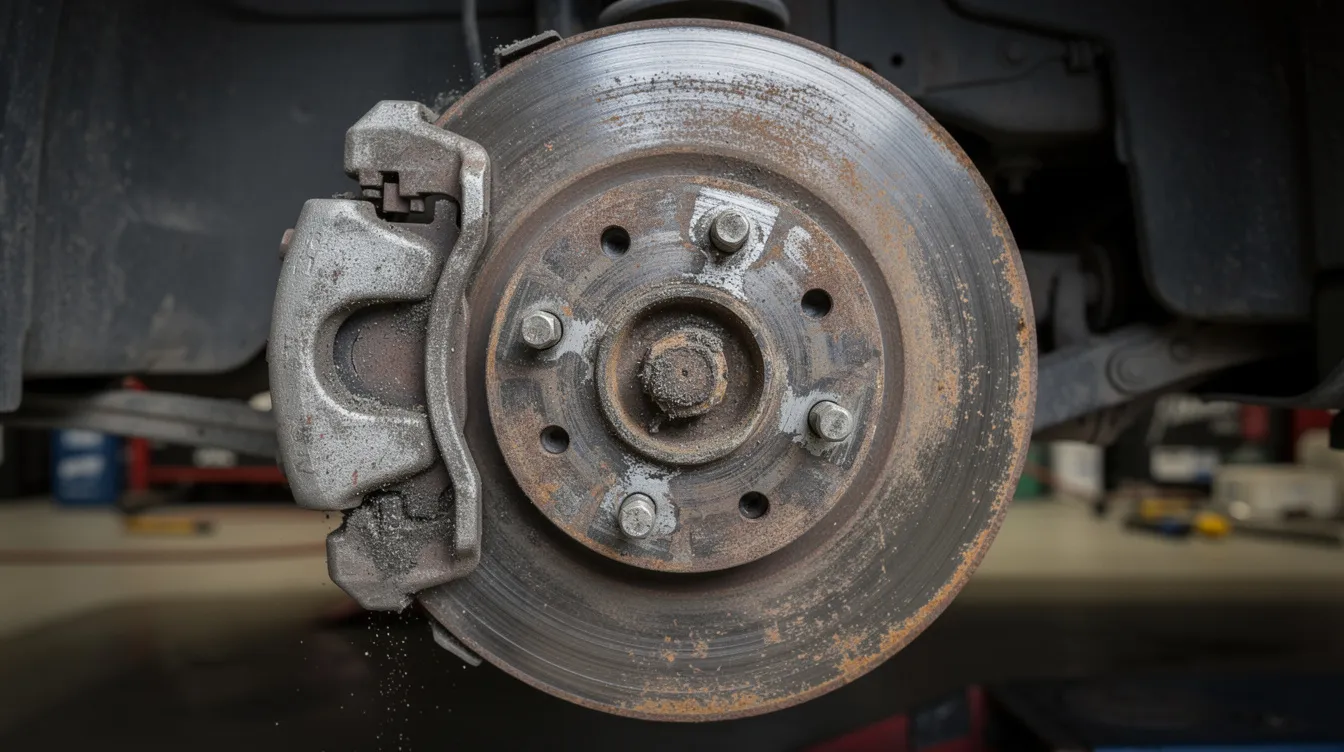
Brake system failures. Faulty brakes are a common automobile defect leading to accidents. Leaking brake lines, defective master cylinders, or poorly designed heat dissipation systems can cause total brake loss on I-25, I-70, or Denver city streets.
-
Airbag defects. Airbag failures can increase injury severity in crashes. Non-deployment, late deployment, or overly forceful deployment causes facial injuries, eye damage, and chest trauma. The nationwide Takata airbag recall affected tens of millions of vehicles.
-
Seatbelt and restraint failures. Seat belt malfunctions can lead to serious injuries during accidents. Defective buckles, retractors that fail under load, or webbing that tears allow occupants to be thrown around the cabin or ejected.
-
Tire blowouts. Tread separation or sidewall failures at highway speeds near Denver, Colorado Springs, or Fort Collins can send a vehicle into oncoming traffic or a rollover.
-
Fuel system and electrical defects. Unsafe fuel systems increase fire risk in otherwise survivable collisions. Ford recalled approximately 565,691 Bronco and Bronco Sport vehicles (2021-2026 models) due to wiring harness defects that can cause engine fires.
-
Steering, accelerator, and transmission components. Ford also recalled over 1.4 million F-150 and Maverick trucks for gearshift calibration issues that could cause the vehicle to move in an unintended direction.
Less obvious problems also give rise to claims: faulty child car seats, defective aftermarket parts installed at a dealership or repair shop, and software glitches in electronic control systems.
Even if driver error or drunk driving played a role, a defect can still be a separate cause of harm and may support a claim against a manufacturer or seller.
Design, Manufacturing, and Marketing Defects in Vehicle Cases
Auto product liability cases usually fall into three categories, and the category determines who may be responsible and what must be proven.
A design defect exists when the blueprint for a model or part makes it unreasonably dangerous according to safety standards. Design defects make vehicles unreasonably dangerous even before a single unit rolls off the assembly line. An SUV that is too top-heavy and prone to rollovers on Colorado mountain roads is an example. Every vehicle of that model shares the same flaw because the flaw is in the plan, not the execution.
A manufacturing defect occurs during the vehicle production process when an otherwise safe design is built incorrectly. Manufacturing defects occur when vehicles are not made to specifications. A braking system assembled with the wrong bolt material, or a batch of wiring harnesses soldered improperly, creates a danger that the designer never intended. The defect may affect a single vehicle or an entire production run.
A marketing or warning defect arises when the manufacturer or seller fails to warn drivers about special risks or proper use. Failing to explain airbag dangers for small children, or not disclosing that a particular tire performs poorly on icy Front Range roads, can form the basis of a claim even if the product's design and build are otherwise sound. Colorado's Supreme Court recognized warning-defect claims under strict liability in Hiigel v. General Motors Corp., 544 P.2d 983 (Colo. 1975).
Who Can Be Liable for a Defective Vehicle or Auto Part?
More than one party may share legal responsibility when a defective vehicle or part contributes to a collision or makes injuries worse. Auto defect cases often involve multiple liable parties, and identifying each one early is part of building a strong claim.
The vehicle manufacturer bears liability for system-wide design or manufacturing defects that affect an entire model line. The part or component manufacturer is separately liable if its defective brakes, tires, airbags, or steering parts reached the consumer without substantial change. Colorado courts confirmed component part manufacturer liability in Union Supply Co. v. Pust (1978).
Distributors, wholesalers, or dealerships that sold a dangerous vehicle or failed to address known recalls may also be held liable. Liability in product defect cases may involve manufacturers, suppliers, or distributors at various points in the chain of commerce. Repair shops that improperly installed parts or made unsafe modifications to the vehicle are another category of responsible parties.
Colorado law sometimes allows injured people to pursue various parties so that a single insurance policy limit does not cap a seriously injured person's recovery. Identifying every responsible party early in the investigation is one way Johnston Law Firm works to maximize the chances of fair compensation and maximum compensation for its clients.
Common Injuries in Auto Defect Cases
Defective vehicles often turn what might have been a moderate crash into a catastrophic event. The defect magnifies harm that proper vehicle safety systems should have prevented or reduced.
Injuries Johnston Law Firm sees in these catastrophic injury cases include:
-
Facial injuries and scarring from airbag failures, shattered glass, or roof crush.
-
Broken bones in the arms, legs, ribs, or pelvis when seatbelts or crumple zones do not function properly.
-
Traumatic brain injuries and concussions from hard impacts with the vehicle interior.
-
Spinal cord injuries and paralysis associated with SUV rollovers or roof collapses.
-
Internal organ damage and burns from fuel system or electrical defects that spark vehicle fires.

These severe injuries often overlap with workers' compensation or Social Security disability issues when the victim cannot return to work. Steve Johnston's broader practice uniquely positions him to advise clients about these related concerns, including lost wages, lost income, and long-term disability planning.
If you or a family member is dealing with serious injuries or one of our wrongful death cases after a crash involving a suspected defect, call (719) 309-9484 or send us a message online to discuss long-term consequences and potential claims.
How Johnston Law Firm Investigates Defective Vehicle Claims
A successful Denver auto product liability case depends on prompt, thorough investigation and preservation of the vehicle and parts. Investigations uncover vehicle design or manufacturing defects that would otherwise go undetected. Evidence gathering is critical in building a strong claim.
The investigation process at Johnston Law Firm follows a structured sequence:
-
Securing the vehicle. The firm moves quickly to inspect the car, truck, or SUV before it is repaired, salvaged, or destroyed. Evidence preservation is critical in auto product liability claims to secure the vehicle and its components.
-
Expert analysis. Accident reconstructionists and automotive engineers analyze skid marks, crash data recorders, and damaged components. Expert witnesses are often required in product liability cases to establish mechanical failures.
-
Recall and bulletin review. Investigations in product liability cases may include crash data and safety recalls. The legal team reviews NHTSA recall information, technical service bulletins, and prior similar incidents involving the same make and model.
-
Medical and witness documentation. Collecting medical records, photographs, and witness statements shows how the defect caused or worsened the injuries.
The firm handles communications with manufacturers, insurers, and opposing attorneys so clients can focus on medical treatment and recovery. Johnston Law Firm's experience with automobile accidents generally helps the legal team distinguish between pure driver negligence and failures of the vehicle itself.
Your Role After an Accident Involving a Suspected Defect
Injured drivers and passengers can strengthen their legal case by taking a few steps right after the crash, if physically able:
-
Preserve the vehicle. Do not authorize repairs or disposal before speaking with an attorney. Evidence preservation is critical.
-
Photograph everything. Take photos of the vehicle, the scene, and any visible injuries as soon as possible.
-
Keep all paperwork. Retain repair orders, recall letters, purchase documents, and correspondence from the dealership or manufacturer.
-
Follow through with medical attention. Document pain levels, limitations, and impact on daily life and work. Consistent medical records strengthen the connection between the defect and the injury.
Do not give recorded statements to the manufacturer or its insurer before consulting a lawyer. These companies may try to shift blame away from defective products and onto the driver. Contact Johnston Law Firm quickly so the firm can issue preservation letters and start gathering evidence before it disappears.
Damages and Fair Compensation in Colorado Auto Defect Cases
Denver personal injury lawyers seek fair compensation designed to make clients as whole as possible under Colorado law after an accident caused by a defect. Victims can pursue financial compensation in personal injury claims covering several categories of damages:
|
Damage Category |
Examples |
|---|---|
|
Medical expenses |
Past and future surgeries, rehabilitation, assistive devices, prescriptions |
|
Lost wages / earning capacity |
Time missed from work, diminished future income if injuries limit or end a career |
|
Pain and suffering |
Physical pain, emotional distress, loss of enjoyment of life, scarring |
|
Property damage |
Repair or replacement of the vehicle and personal items destroyed in the crash |
|
Wrongful death |
Funeral costs, loss of support and companionship for surviving family members |
Lawyers help clients navigate interactions with insurance companies that often try to minimize payouts. Steve Johnston evaluates all potential sources of recovery, which may include auto insurance policies, insurance coverage under underinsured motorist provisions, and claims against liable manufacturers or retailers.
No attorney can guarantee a favorable outcome, but working with experienced attorneys improves the chances of obtaining a settlement or verdict that fully reflects the harm suffered.
Strict Liability and Other Legal Theories in Colorado Vehicle Defect Claims
Product liability operates under strict liability in most jurisdictions, including Colorado. Under the doctrine established in Hiigel v. General Motors, the focus is on whether the product was defective and unreasonably dangerous when it left the manufacturer, and whether that defect caused the injury. The injured person does not need to prove traditional negligence by the manufacturer.
Other claims may still involve negligence (poor testing, ignoring known problems) or breach of warranty (promises about vehicle safety that were not kept). The legal action chosen depends on the facts of each case.
Timelines matter. Colorado has a strict two-year statute of limitations for product liability claims under C.R.S. § 13-80-106(1). Colorado's law also includes a 10-year rebuttable presumption regarding product defects: if a product was first sold more than ten years before the injury, a rebuttable presumption arises that the product was not defective. Experienced attorneys understand Colorado's specific product liability laws and requirements and can evaluate whether these presumptions apply.
You do not need to know which legal theory applies before calling. Johnston Law Firm can analyze the facts and explain your options in terms you can understand.
Serving Denver, the Front Range, and Communities Across Colorado
Although Steve Johnston is based in Pueblo, he represents clients injured by defective vehicles throughout Colorado, including Denver, Fort Collins, Boulder, Colorado Springs, and rural counties along the Front Range.
The firm's footprint includes Otero, Fremont, Custer, Huerfano, Las Animas, and Crowley Counties, and the team regularly handles cases along major corridors from Denver south to Pueblo and beyond. Many aspects of auto product liability cases, including document review, expert analysis, and negotiations, can be handled remotely. Denver and northern Colorado clients work with the firm through phone calls, video conferences, and in-person meetings when appropriate.
Johnston Law Firm represents injured individuals, not corporations or insurers. Injured people across Colorado receive dedicated, one-on-one legal support and attention throughout their case.

Cost, Fees, and How We Start Your Case
Johnston Law Firm handles most Denver personal injury and auto product liability claims on a contingency fee basis. Auto product liability lawyers often work on a contingency fee basis with clients. Contingency fees mean you pay only if you win your case.
Defective product cases can be costly, requiring substantial financial resources for expert witnesses, engineering analysis, and court costs. The contingency model removes the upfront financial barrier for injured individuals.
The typical process includes:
-
A free initial consultation to review facts, injuries, and potential product defects.
-
A written engagement letter outlining the contingency fee and responsibilities.
-
A joint plan for investigation, medical treatment coordination, and settlement or litigation strategy.
The firm discusses costs such as expert fees and court expenses upfront and answers questions honestly before you commit.
Call (719) 309-9484 or send us a secure online message to find out if you have a viable defective vehicle claim.
When to Call a Denver Auto Product Liability Lawyer
Anyone seriously injured in a crash where a mechanical problem, sudden failure, or missing safety feature is suspected should talk to a lawyer as soon as possible. Legal representation is crucial for navigating complex auto defect cases.
Contact Johnston Law Firm promptly if:
-
A newer vehicle suffers a major failure without warning.
-
An airbag fails to deploy, deploys too late, or deploys with excessive force.
-
A rollover or roof crush occurs at a speed where the vehicle should have remained stable.
-
The same defect is mentioned in news reports, recalls, or online forums for that vehicle model.
-
You discover a construction defect or aftermarket modification that contributed to the crash.
Early legal representation helps preserve evidence, meet legal deadlines, and avoid mistakes in dealing with manufacturers and insurers. Whether you are in a challenging situation involving motorcycle accidents, pedestrian accidents, or a standard car crash complicated by vehicle defects, the analysis starts with the same question: did the vehicle perform as it should have?
Schedule a no-obligation consultation by calling (719) 309-9484 or reaching out through our online contact form.
Frequently Asked Questions About Denver Auto Product Liability Claims
Do I have to join a class action if my vehicle was recalled?
No. You can opt out of class action lawsuits to sue separately. Most injured drivers do not have to join a class action lawsuit; they may bring an individual claim tailored to their specific injuries and losses. Class actions can be efficient for minor economic losses, but personal injury cases involving severe injuries often justify separate product liability lawsuits that better reflect the client's unique damages caused by the defect.
If you received recall notices before or after your accident, consult Johnston Law Firm to evaluate the pros and cons of class participation versus an individual Denver personal injury claim.
What if the driver was partly at fault for the crash?
Colorado follows a modified comparative negligence system in product liability cases. Under C.R.S. § 13-21-406, a driver can recover damages even if they were partly at fault, with their recovery reduced proportionally. In auto product liability cases, a defect may still be responsible for part of the harm. A seatbelt that unlatched during a crash caused by another driver's negligence, for example, creates liability for the seatbelt manufacturer separate from the other driver's fault.
Do not assume you have no claim just because you or another driver made a mistake. Let an attorney analyze how much of the injury was due to the defective product.
How long do I have to file a defective vehicle claim in Colorado?
Colorado product liability and personal injury claims are subject to a two-year statute of limitations under C.R.S. § 13-80-106(1), generally measured from the date of the accident or the date the injury was discovered. Exceptions may apply for minors or hidden defects, but waiting too long can permanently bar recovery. Contact Johnston Law Firm promptly so the legal team can calculate the applicable deadlines for your specific situation.
Can Johnston Law Firm help if I live outside Pueblo but was injured in Denver or Fort Collins?
Yes. Johnston Law Firm represents clients across Colorado, including Denver, Fort Collins, Boulder, Colorado Springs, and many rural counties. Consultations can be handled by phone, video conference, or in person when appropriate. Distance does not prevent effective legal representation. The firm routinely handles cases in courts outside Pueblo and is familiar with auto accident and defective product issues statewide.
What information should I bring to my first meeting with an auto product liability lawyer?
Gather the following before your consultation if possible:
-
Police reports, crash photographs, and any witness contact information.
-
Vehicle purchase or lease documents, maintenance records, and recall letters.
-
Health insurance and auto insurance information, along with medical bills or records.
-
Notes about how the accident happened and why you suspect a defect (for example, sudden brake loss or a seatbelt that came unlatched).
During the first meeting, you can also ask about the attorney's background, including law school, professional associations such as the Colorado Bar Association, and recognitions such as Super Lawyers.
Even if you do not have every document yet, Johnston Law Firm can start the conversation and help you track down missing records. Schedule your free consultation by calling (719) 309-9484 or by messaging us online.