Colorado Construction Zone Accidents: Legal Options for Injured Drivers and Workers
Colorado's roads are under constant construction. From I-25 widening projects to I-70 mountain corridor work, millions of drivers pass through active work zones every year - and the consequences of a crash in one of these zones can be devastating. Whether you're a motorist rear-ended in stop-and-go traffic or a construction worker struck by a vehicle while flagging, you have legal rights that deserve protection. This article breaks down exactly how construction zone accidents happen in Colorado, who can be held responsible, and what injured people can do to pursue compensation.
Key Takeaways
Colorado construction zones are producing more serious crashes and more fatalities than at any point in recent history. Here's what every injured motorist and construction worker needs to know.
-
Colorado is an at-fault state. The driver, contractor, or government entity whose negligence caused the construction zone accident can be held financially responsible for your injuries and losses.
-
Multiple parties may share fault. A single work zone crash can involve negligent drivers, construction companies, traffic-control contractors, equipment manufacturers, and government agencies - all at the same time.
-
Workers' comp plus third-party claims. Injured construction workers usually qualify for workers compensation benefits and may also have a separate personal injury lawsuit against a negligent driver or outside contractor.
-
Deadlines come fast in Colorado. Most personal injury claims must be filed within two years. Claims against government entities require written notice under the Colorado Governmental Immunity Act within just 182 days.
-
Early legal help protects evidence. Work zones change quickly - cones get moved, signs come down, and conditions shift overnight. Contacting a lawyer promptly helps preserve the photos, traffic control plans, and witness information needed to prove what went wrong.
How Construction Zone Accidents Happen in Colorado Today
Colorado saw a 75% increase in construction zone fatalities in 2024. That's not a typo. CDOT data shows the state recorded 27 work zone fatalities across 21 fatal crashes, with 8 of those crashes involving commercial trucks. Statewide, there were over 1,366 reported wrecks in work zones during the same period. Hazardous road conditions elevate collision risks in construction zones, and the sheer volume of active projects along the Front Range makes this a year-round problem.
Construction zone accidents include both car accidents in marked work areas and injuries to construction workers or flaggers struck by vehicles or heavy equipment. The term covers everything from a fender-bender in slow-moving traffic to a fatal struck-by incident involving a dump truck.
Common crash types in Colorado construction zones include:
-
Rear-end collisions in stop-and-go traffic near lane closures
-
Side-swipes at lane shifts where narrow lanes force vehicles close together
-
T-bone crashes at temporary intersections with confusing detours
-
Struck-by incidents involving construction vehicles, rollers, or pickups merging into live traffic
The risks are especially high on I-25, I-70, Highway 50, and in high-growth areas like Pueblo, Colorado Springs, and the Denver–Fort Collins corridor, where long-term projects create complex traffic patterns that change week to week.
Victims of work zone crashes can include drivers, passengers, construction workers, pedestrians, bicyclists, and sometimes nearby property owners affected by debris or runaway equipment.
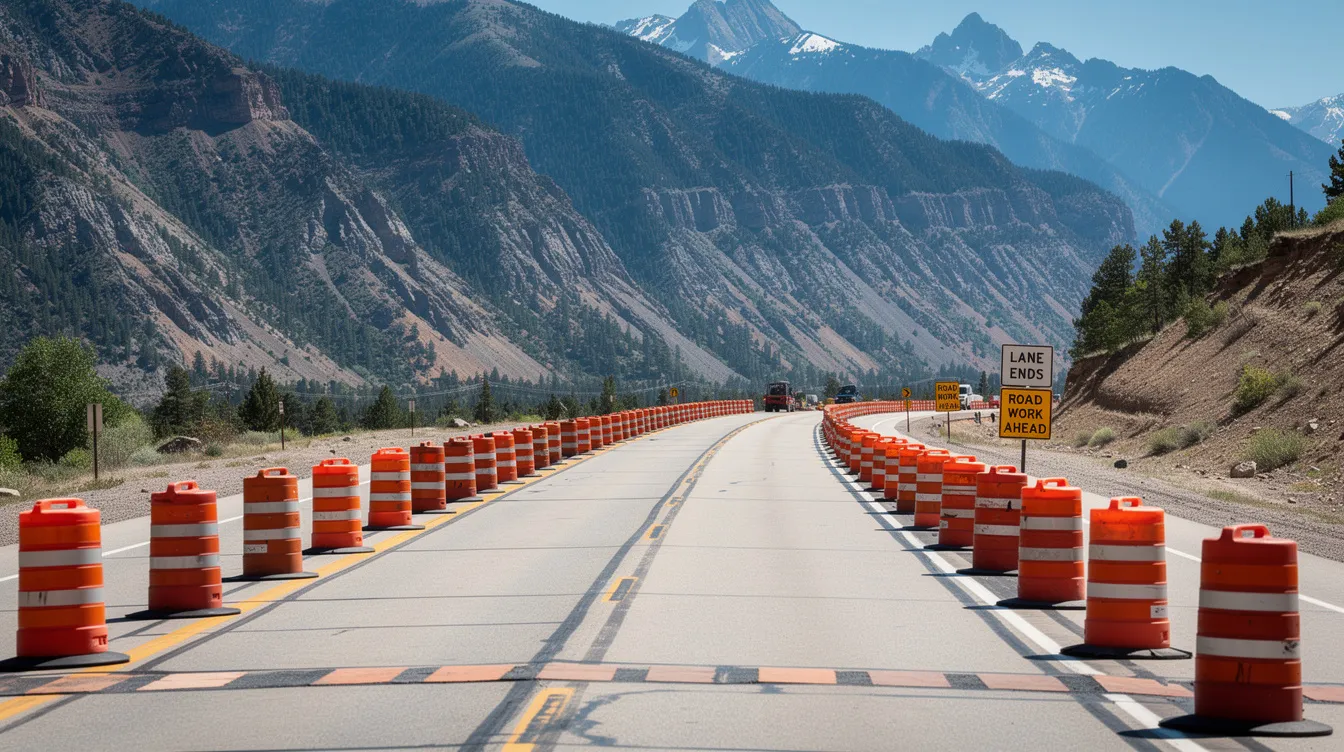
Immediate Steps After a Colorado Construction Zone Accident
If you were just hurt in a work zone crash, this section matters most. What you do in the next few hours can make or break your ability to hold the right people accountable.
-
Call 911. Request police and medical response. A police report is one of the first pieces of evidence your case will need.
-
Move to safety if you can, away from active lanes and equipment. Turn on hazard lights. Stay visible.
-
Document the work zone before it changes. Photograph cones, barrels, arrow boards, portable message signs, lane shifts, flaggers, and any missing or confusing warning signs. This evidence disappears fast - sometimes within hours of a crash.
-
Collect information from all drivers (including company vehicles), witnesses, foremen or flaggers on site, and any CDOT or city inspectors present. Photograph ID badges, company logos on trucks, and project signs listing contractor names.
-
Get medical attention immediately. Even for injuries that feel minor. Shock and adrenaline mask concussion symptoms, neck injuries, and back damage. Gaps in medical care become ammunition for insurance adjusters later.
-
Do not give recorded statements to any insurance adjuster - auto, contractor, or government - before speaking with an attorney familiar with Colorado construction accidents. Anything you say can be used to reduce your claim.
Talk With a Colorado Construction Zone Accident Lawyer Now
You don't need to figure out which insurance company covers which contractor, or whether the government or a private firm was running the project. That's our job.
Johnston Law Firm, LLC in Pueblo represents injured people throughout Colorado in construction zone, car accident, and work-related injury claims.
Call Steve Johnston at (719) 309-9484 to review what happened and get practical next-step advice. If you'd rather start in writing, Message Johnston Law Firm Online for a free, confidential consultation.
Common Causes of Construction Zone Accidents and Zone Crashes
Most construction zone crashes are preventable. They happen when drivers, contractors, or agencies cut corners on basic safety rules. Here's what typically goes wrong.
Driver-related causes:
-
Distracted driving - phones, GPS screens, passengers - increases risks in construction zones where conditions change rapidly
-
Speeding through reduced speed limits, which are critical for safety
-
Following too closely, leaving no room to stop when traffic suddenly slows
-
Sudden lane changes near merges or lane drops
-
Careless driving fueled by impatience with slow-moving traffic
Rear-end collisions are the most frequent construction zone accidents, often caused by sudden traffic stops that catch distracted drivers off guard.
Work zone design and maintenance failures:
-
Missing or late warning signs that don't give drivers enough time to react
-
Inadequate taper length for lane shifts
-
Poorly lit nighttime work areas - nighttime workers face a 300% higher risk of being struck by vehicles
-
Confusing detours or contradictory pavement markings
-
Improper signage that sends drivers into dangerous situations
-
Reduced visibility from dust, glare, or poorly placed barriers
Visible advance warning signs are crucial in construction zones. Poor signage can lead to accidents that might otherwise never happen.
Equipment and contractor-related causes:
-
Dump trucks backing into live lanes without spotters
-
Loaders crossing traffic without adequate signals
-
Unsecured equipment or debris left in the roadway
-
Defective equipment caused by poor maintenance or manufacturing flaws
Colorado weather adds another layer. Snow, ice, afternoon thunderstorms, and sun glare in canyons can combine with poor traffic control to sharply increase crash risk.
Typical Injuries in Colorado Construction Zone Accidents
Construction zone crashes often occur at highway speeds or involve heavy equipment. The injuries tend to be more severe than a typical fender-bender.
Common motorist injuries:
-
Whiplash and soft-tissue neck injuries
-
Herniated discs and back injuries
-
Broken bones - wrists, ribs, legs
-
Concussions and traumatic brain injuries
-
Shoulder and knee damage from bracing or twisting during impact
-
Internal injuries in high-speed collisions
Common construction worker injuries:
-
Crush injuries from vehicles or equipment
-
Pelvic and leg fractures
-
Degloving injuries
-
Spinal cord injuries leading to partial or full paralysis
-
Severe orthopedic damage requiring multiple surgeries
In 2019, 1 in 5 worker deaths were in construction, according to Bureau of Labor Statistics data. Colorado's construction fatality numbers climbed sharply - the state recorded 22 fatal construction injuries in 2024 compared to 15 the year before.
Injuries happen that go beyond the physical. PTSD, anxiety about driving, and fear of returning to roadside work are real conditions that can be part of an injury claim in Colorado.
Detailed medical documentation from Colorado providers - imaging, specialist notes, follow-up records - is crucial for both personal injury and workers compensation claims.
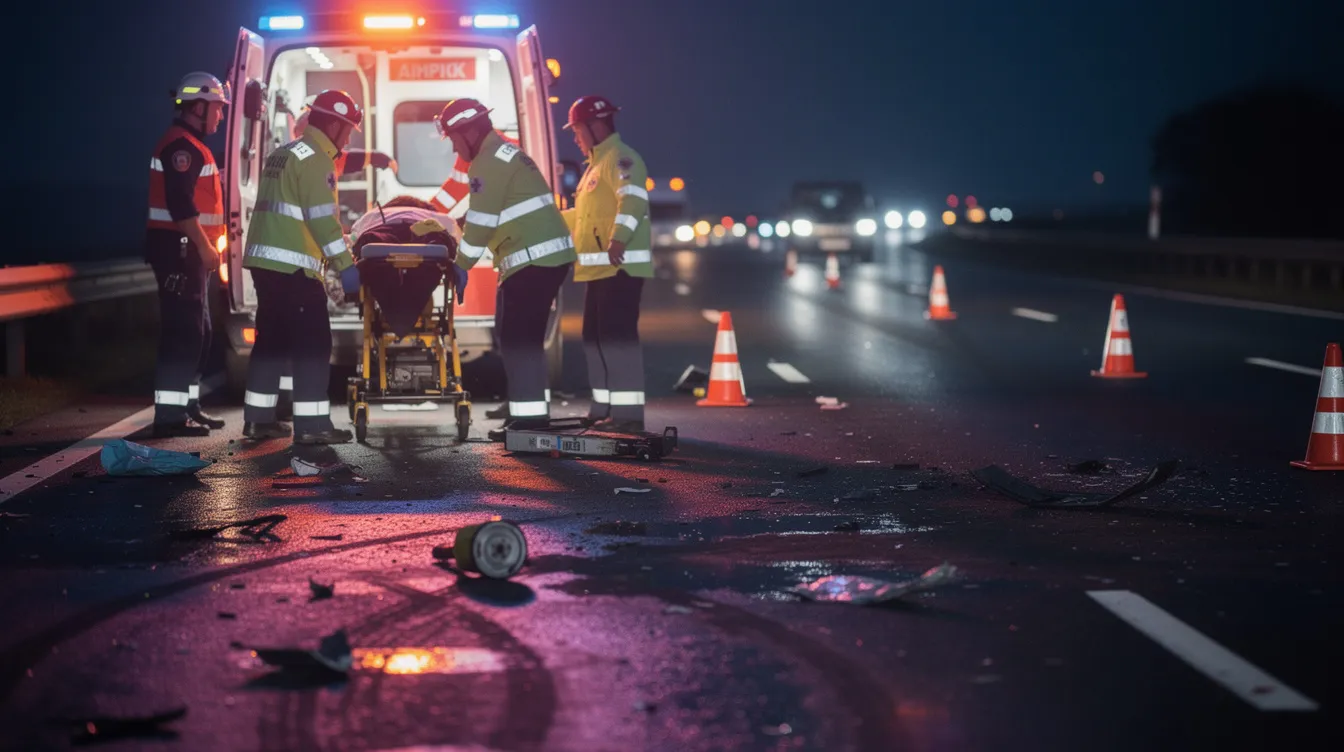
Who Can Be Held Liable After a Construction Zone Accident?
Colorado operates under a fault-based system for accidents. That means the person or company whose negligence contributed to the crash can be held liable for the resulting injuries and losses. Liability may extend to contractors for unsafe construction zones, and determining liability often involves several layers.
In a single work zone crash, potential liable parties include:
-
At-fault drivers (including commercial vehicle operators)
-
Construction companies and general contractors
-
Traffic-control subcontractors
-
Equipment manufacturers
-
State or local government entities responsible for design or oversight
Fault in a zone accident is rarely as simple as "the rear driver is always to blame." When traffic control didn't meet safety standards, or when a contractor left equipment in a dangerous position, responsibility shifts - sometimes dramatically.
Colorado's modified comparative negligence rules can reduce, but not necessarily bar, recovery when the victim is alleged to be partly at fault. We'll cover that in detail below.
Drivers and Other Motorists: When Are They at Fault?
Drivers must exercise heightened caution in construction zones. Colorado law imposes a duty to slow down, obey posted speed limits, and follow flaggers' directions.
Driver negligence causes construction zone accidents in Colorado in several common ways:
-
Speeding through "Cone Zone" areas
-
Texting, browsing social media, or otherwise not paying attention
-
Ignoring lane-closed posted signs
-
Passing in no-passing areas
-
Driving impaired by alcohol, drugs, or fatigue
Colorado law mandates doubled fines for speeding in construction zones. Driving over 25 mph above the limit in a construction zone is a Class 2 misdemeanor - a criminal offense, not just a traffic ticket. These enhanced penalties also serve as evidence of heightened duty in civil cases.
Even where a driver made a clear mistake, unsafe roadway design or missing signage may still create liability for contractors or public entities. Multiple parties can share fault in the same crash.
Construction Companies, Subcontractors, and Traffic-Control Firms
Colorado construction companies must maintain safe work zones following standards like the Manual on Uniform Traffic Control Devices (MUTCD) and CDOT guidelines. When they don't, people suffer injuries that should never have happened.
Examples of contractor negligence include:
-
Using too few cones or barrels to delineate lane changes
-
Failing to provide proper advance-warning signs
-
Poorly planned lane shifts with inadequate transition space
-
Leaving heavy equipment too close to live traffic
-
Not training flaggers on proper procedures
-
Uneven pavement left unmarked
Negligently designed work zones can lead to increased liability for contractors and their insurers. Traffic-control companies may carry separate insurance policies, and their contracts, work diaries, and lane-closure plans often become key evidence in zone crash claims.
Johnston Law Firm can request and analyze project plans, change orders, and traffic control logs to show where safety rules were broken and which construction companies or subcontractors failed to protect the public.
Government Entities and the Colorado Governmental Immunity Act
CDOT, counties, and local governments often oversee or design road construction projects. Their decisions - from roadway design choices to inspection schedules - can contribute to dangerous work zones.
The Colorado Governmental Immunity Act (CGIA) limits when state and local government entities can be sued, but it also creates important exceptions for unsafe roads and negligent operation of motor vehicles.
Claims against government entities have strict notice requirements in Colorado. You must deliver written notice within 182 days (about six months) of discovering the injury. Miss that window and your claim against the government is likely dead - regardless of how strong the underlying facts are. Damages are also capped under the CGIA: currently up to $505,000 per person and $1,421,000 per incident for claims accruing on or after January 1, 2026.
A lawyer must quickly determine whether a project was run directly by a government agency or by private contractors, because this affects both legal options and filing deadlines.
Product Manufacturers and Defective Equipment
Some construction zone accidents stem from defective machinery, vehicles, or safety equipment rather than - or in addition to - driver error or bad planning.
Real-world scenarios include:
-
Brake failure on a dump truck entering traffic
-
Defective arrow boards or message signs giving wrong directions
-
Faulty safety barriers that collapse on impact instead of absorbing it
-
Defective equipment caused by manufacturing flaws in heavy equipment components
Product liability claims involve different legal theories (strict liability, negligence, breach of warranty) and often require engineering or human-factors experts to explain how the defect contributed to the crash.
Johnston Law Firm can coordinate with outside experts when defective equipment may have played a role in a construction zone crash.
Unsure Who Is Responsible? Get a Case-Specific Answer
Figuring out who's responsible among drivers, contractors, government agencies, and equipment manufacturers isn't something you should try to do from a hospital bed or your kitchen table.
Call Steve Johnston at (719) 309-9484 to walk through exactly how the crash happened and who may be held responsible. If you'd rather write, Contact Johnston Law Firm Online - you can upload photos, police reports, or letters you've received for review.
Initial consultations are free for Colorado construction zone accident and car accident cases.
Colorado's Modified Comparative Negligence Rule in Work Zone Crashes
Colorado law allows recovery if you are less than 50% at fault for the accident. If your share of fault hits 50% or more, you're barred from recovering anything. If it's under 50%, your compensation is reduced proportionally.
A simple example: if your damages total $200,000 and you're found 20% at fault, your recovery drops to $160,000. At 50% fault, you recover nothing.
Insurance companies know this rule well. They routinely try to blame injured Colorado drivers for "following too closely" or "going too fast for conditions" in work zones - even when the real problem was missing signage, a botched lane shift, or construction vehicles blocking sightlines.
A careful investigation of traffic control, contractor conduct, and zone design can push fault percentages back where they belong - on the parties who created the danger - instead of unfairly on the injured person.
Special Issues for Injured Construction Workers in Colorado
If you're a road crew member, flagger, or equipment operator who was hurt near traffic, you're facing a situation that most people never have to deal with - and the legal rules that apply to you are different from those that apply to motorists.
Workers' compensation covers most injuries on construction sites in Colorado, regardless of who caused the accident. If you were hurt on the job, your employer's workers compensation insurance should cover your medical treatment and a portion of your lost wages.
But workers' comp has limits. It doesn't fully cover pain and suffering or all economic losses. That's where work related injuries get more complex.
A construction worker may have both a workers compensation claim and a separate third-party personal injury claim if a negligent driver, outside subcontractor, or defective equipment contributed to the crash. These dual claims require careful coordination.
Workers' Compensation vs. Third-Party Injury Claims
Think of it this way: workers' comp is usually faster but more limited. Third-party lawsuits can provide broader compensation than workers' compensation but require proof that someone else's negligence caused your injuries.
Colorado workers' comp for construction workers covers:
-
Medical care through an authorized treating physician
-
Wage-loss benefits during temporary disability
-
Permanent impairment ratings and benefits
-
Death benefits for surviving families
Third-party claims arise when:
-
A speeding driver strikes a flagger
-
A subcontractor's truck rolls into a worker on a construction site
-
Defective equipment from an outside manufacturer fails during operation
-
Negligent drivers enter a live work area
Coordination between the two claims is critical. Workers' comp insurers may place a lien on any third-party recovery, and mishandling one claim can weaken the other. Injured workers can seek compensation for pain and suffering through third-party claims - something workers' comp alone won't provide.
Protect Both Your Injury Claim and Your Workers' Comp Case
If you're an injured worker facing both a workers compensation claim and a possible third-party case, early advice from a lawyer who handles both - like Steve Johnston - can prevent mistakes that weaken one claim while you're focused on the other.
Call (719) 309-9484 to review your situation before signing insurance forms or settlement offers. Or Request a Free Consultation Online - mention if a workers' comp claim is already open so the firm can evaluate the entire picture from the start.
Types of Compensation After a Construction Zone Accident
The value of a construction zone accident case depends on the severity of injuries, available insurance, fault allocation, and whether the claim involves workers' comp, personal injury, or both.
Personal injury damages may include:
-
Medical expenses - past and future surgeries, therapy, prescriptions
-
Lost wages and loss of earning capacity
-
Pain and suffering
-
Emotional distress
-
Loss of enjoyment of life
Property damage claims can cover vehicle repair or replacement, towing, rental cars, and damaged personal items.
Workers' compensation benefits typically include medical care, temporary disability payments, permanent impairment benefits, and potential disfigurement payments under Colorado law.
Wrongful death cases allow surviving family members to pursue separate claims for funeral expenses, loss of financial support, and loss of companionship. Colorado law allows personal injury claims after construction zone accidents - and when those accidents are fatal, the family's right to seek fair compensation doesn't disappear.
How Insurance Companies Handle Construction Zone Accident Claims
Multi-vehicle, multi-party zone crashes often involve several insurance carriers at once: auto insurers, commercial policies for contractors, and sometimes government risk pools. Each one has an incentive to shift blame.
Common insurance company tactics include:
-
Disputing how the crash happened
-
Claiming the work zone was "clearly marked" when it wasn't
-
Minimizing injuries as "soft tissue" or blaming pre-existing conditions
-
Pressuring victims to give recorded statements before they've talked to a lawyer
-
Pushing the injured person's fault percentage toward 50% to trigger the comparative negligence bar
MedPay and uninsured/underinsured motorist (UM/UIM) coverage under your own auto policy can be crucial when liability coverage is insufficient or fault is hotly disputed.
Investigating a Construction Zone Crash in Colorado
Thorough investigation is often the difference between an adjuster saying "you rear-ended someone, case closed" and proving that faulty traffic control or contractor negligence was the real cause.
Key evidence in work zone crashes includes:
-
Police crash reports
-
CDOT or local traffic-engineering reports
-
Photographs and video of the work zone - taken before conditions change
-
Dash-cam and phone footage from drivers or witnesses
-
Witness statements from both drivers and workers on site
Project documents - traffic-control plans, lane-closure permits, daily work logs, and subcontractor agreements - can show whether required safety standards were followed. Construction phases change quickly. Early site visits and evidence preservation letters are critical before cones, signs, and barrier placements are altered or removed entirely.
Time Limits and Deadlines for Colorado Construction Zone Injury Claims
Missing a deadline can destroy an otherwise strong case. Don't wait to get legal advice.
|
Claim Type |
Deadline |
|---|---|
|
Motor vehicle personal injury |
3 years from the date of the crash (C.R.S. § 13-80-101(1)(n)) |
|
General personal injury (non-vehicle) |
2 years from the date of injury (C.R.S. § 13-80-102) |
|
Claims against government entities |
182 days written notice under the CGIA |
|
Workers' comp injury report to employer |
4 days (or as soon as reasonably possible) |
In Colorado, you have two years to file a personal injury lawsuit for most non-vehicle claims, and three years for motor vehicle crashes. But claims against state or local government entities require formal written notice within 182 days - roughly six months. This notice is separate from simply reporting the accident, and missing it eliminates your claim.
Workers' compensation also has strict timelines. Late reporting can reduce or jeopardize benefits entirely.
How Johnston Law Firm Helps Colorado Construction Zone Accident Victims
Johnston Law Firm, LLC is a Pueblo-based practice that regularly represents injured people across Colorado in personal injury, automobile accident, and workers' compensation cases - including claims arising from construction zone crashes.
Specific ways the firm helps in construction accidents:
-
Examining crash reports and traffic-control plans for safety violations
-
Coordinating with accident reconstruction experts and traffic engineers
-
Managing communications with multiple insurers and defense attorneys
-
Analyzing both workers' comp and third-party options to maximize recovery
-
Meeting every critical deadline - CGIA notices, workers' comp reports, and statutes of limitations
Clients work directly with attorney Steve Johnston, receive clear explanations in plain English, and get regular updates throughout their case.
Every Construction Zone Crash Is Different: Get Advice Tailored to You
No article - including this one - can fully account for your specific injuries, medical history, insurance policies, or the unique circumstances of your work zone crash. General information helps you prepare, but it's no substitute for a thorough understanding of your individual case.
Call Steve Johnston directly at (719) 309-9484 to get an honest opinion about your legal options and likely next steps. If you're still in treatment or recovering at home, Speak With Johnston Law Firm Online and schedule a consultation around your medical appointments.
Initial consultations are free, and the firm typically works on a contingency-fee basis for injury claims - meaning you don't pay attorney fees unless there's a recovery.
Safety Tips for Driving Through Colorado Construction Zones
Accidents in Colorado construction zones can never be eliminated entirely, but simple habits reduce the risk for both Colorado drivers and construction workers.
Practical driving tips:
-
Slow down before entering the work zone, not after you're already in it
-
Avoid lane changes in the middle of the zone
-
Follow posted signs and flaggers' instructions - drivers must yield to construction vehicles and flaggers in work zones
-
Stay alert and put your phone away completely
-
Drivers are encouraged to maintain a greater following distance in work zones, where sudden stops are common
Colorado-specific guidance:
-
Watch for sudden weather changes at higher elevations along I-70 and mountain passes
-
Prepare for nighttime work near ski-town corridors where reduced visibility compounds existing dangers
-
Be cautious in canyon areas where uneven pavement and tight space leave almost no margin for error
Colorado emphasizes work zone safety through public awareness campaigns, and the state recently began deploying speed cameras in certain work zones to improve Colorado's roads and enforce reduced speed limits.
Even careful drivers can be hurt when zones are set up unsafely. Legal action against those who created dangerous conditions helps encourage safer practices statewide - and holds the right people accountable.
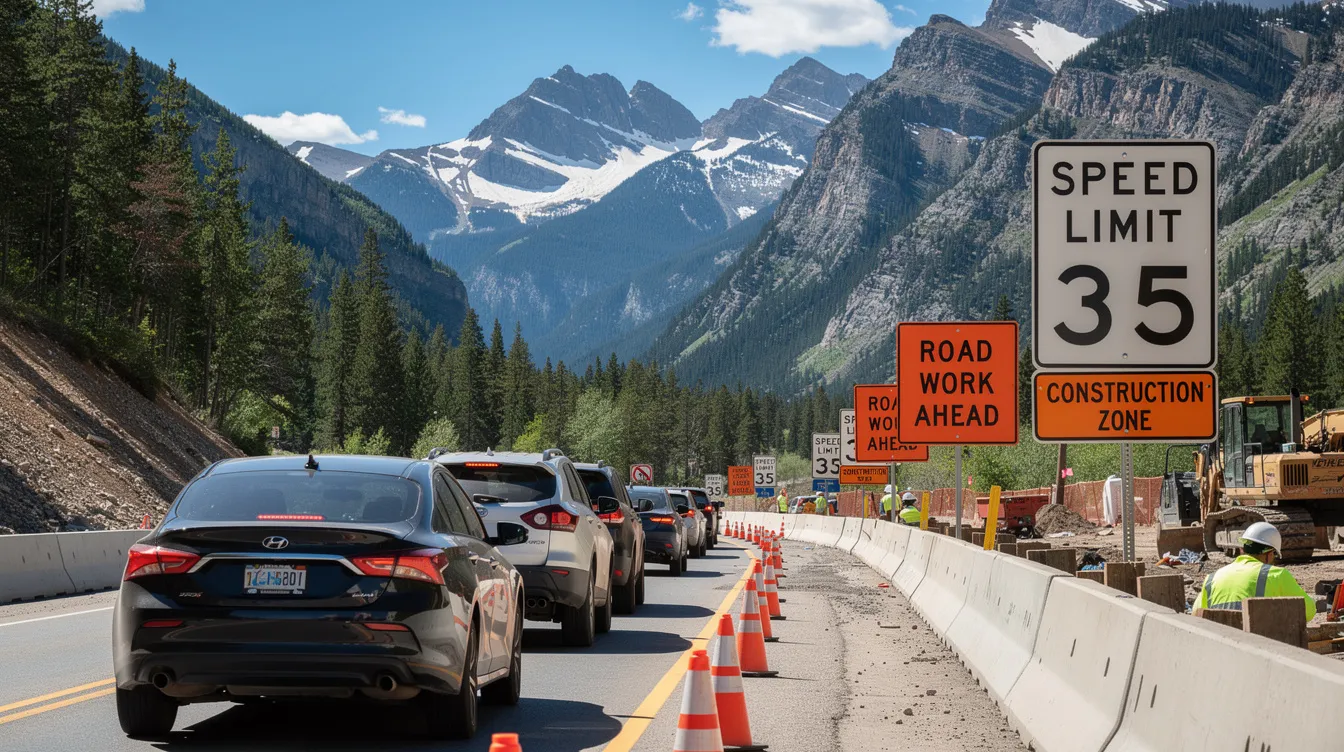
Frequently Asked Questions About Colorado Construction Zone Accidents
These FAQs address common concerns that go beyond what's covered above. If your question isn't answered here, a free consultation with Johnston Law Firm can help.
Do I still have a case if the police report says I was at fault in the work zone crash?
A police report is important, but it's not the final word. Officers arrive after the crash and often have limited time to assess how the zone was set up before the collision. They may not know whether signage was missing, whether the lane shift met Federal Highway Administration standards, or whether a contractor violated the traffic control plan.
A detailed legal review can uncover issues with signage, roadway design, or contractor negligence that the initial report didn't address. Don't give up on your case solely because of a fault finding on the report.
What if I was hurt in a construction zone while just passing through for work?
Commuters and delivery drivers injured while driving for work in a construction zone may have both a workers compensation claim through their employer and a personal injury claim against the at-fault driver or contractor. Coordination between these claims is important - mishandling one can cost you benefits or rights in the other.
Can I choose my own doctor after a Colorado work-related construction zone injury?
Colorado's workers' comp system generally requires you to use providers from a designated list maintained by your employer's insurer. You may have limited options to change doctors later in the process, but requesting a change incorrectly can create disputes over authorized care. Talk with a workers' comp attorney before making any provider changes to avoid jeopardizing your coverage.
What if the construction company or government agency fixed the work zone right after my crash?
This happens all the time - and it's exactly why early documentation matters. Conditions at a construction site change quickly after an accident. Traffic control plans get revised, cones and signs get repositioned, and temporary lighting gets adjusted. Prior versions of these plans and maintenance logs may still be obtainable, but acting promptly gives you the best chance of preserving this evidence before it's gone.
How much does it cost to hire Johnston Law Firm for a construction zone accident case?
For most Colorado personal injury and construction zone accident cases, Johnston Law Firm works on a contingency-fee basis. That means you don't pay attorney fees unless the firm recovers money for you. The firm offers a free consultation to explain the fee structure, answer cost questions up front, and help you decide whether legal action makes sense for your situation.
Talk With Johnston Law Firm About Your Colorado Construction Zone Accident
Construction zone accidents involve complex facts, serious injuries, and multiple insurance companies pulling in different directions. But injured people - whether they're drivers, passengers, or construction workers - don't have to handle it alone.
Johnston Law Firm, LLC in Pueblo represents injured drivers and construction workers across Colorado in personal injury, car accident, and work-related injury claims arising from unsafe work zones.
Call Steve Johnston directly at (719) 309-9484 to discuss what happened, how Colorado law applies to your situation, and what legal options you may have. You can also Message Johnston Law Firm Online if you prefer to start the conversation in writing or need to upload accident photos, medical records, or insurance letters for review.
Seeking timely legal guidance can protect crucial evidence, clarify your legal options, and reduce the stress of dealing with a construction zone accident in Colorado. The sooner you reach out, the more we can do to help.