Company Vehicle Accident Colorado – Injury Claims Involving Work Drivers And Employers
A company vehicle accident in Colorado can involve more than one claim, more than one insurance policy, and more than one legal deadline. This guide is for Colorado employees, employers, and accident victims seeking to understand their rights and responsibilities after a company vehicle accident. It covers workers’ compensation, personal injury claims, insurance issues, and employer liability specific to Colorado law. Johnston Law Firm, LLC in Pueblo helps injured workers and drivers across Colorado understand workers’ compensation, personal injury, automobile accidents, insurance disputes, and employer liability after a company car accident.
Key Takeaways
If you were hurt while driving for work, do not assume the employer, the insurance company, or the other driver will explain your full rights.
-
A work related car accident may create both a workers comp claim and a separate personal injury claim against an at fault driver.
-
Colorado workers compensation is a no fault system, but it does not pay pain and suffering or emotional distress.
-
Colorado is an at-fault state, meaning the insurance provider of the party responsible for the accident pays for the damages.
-
Report the crash, get medical care, preserve evidence, and speak with an attorney quickly.
-
For a free consultation, call Johnston Law Firm at (719) 309-9484 or message us online .
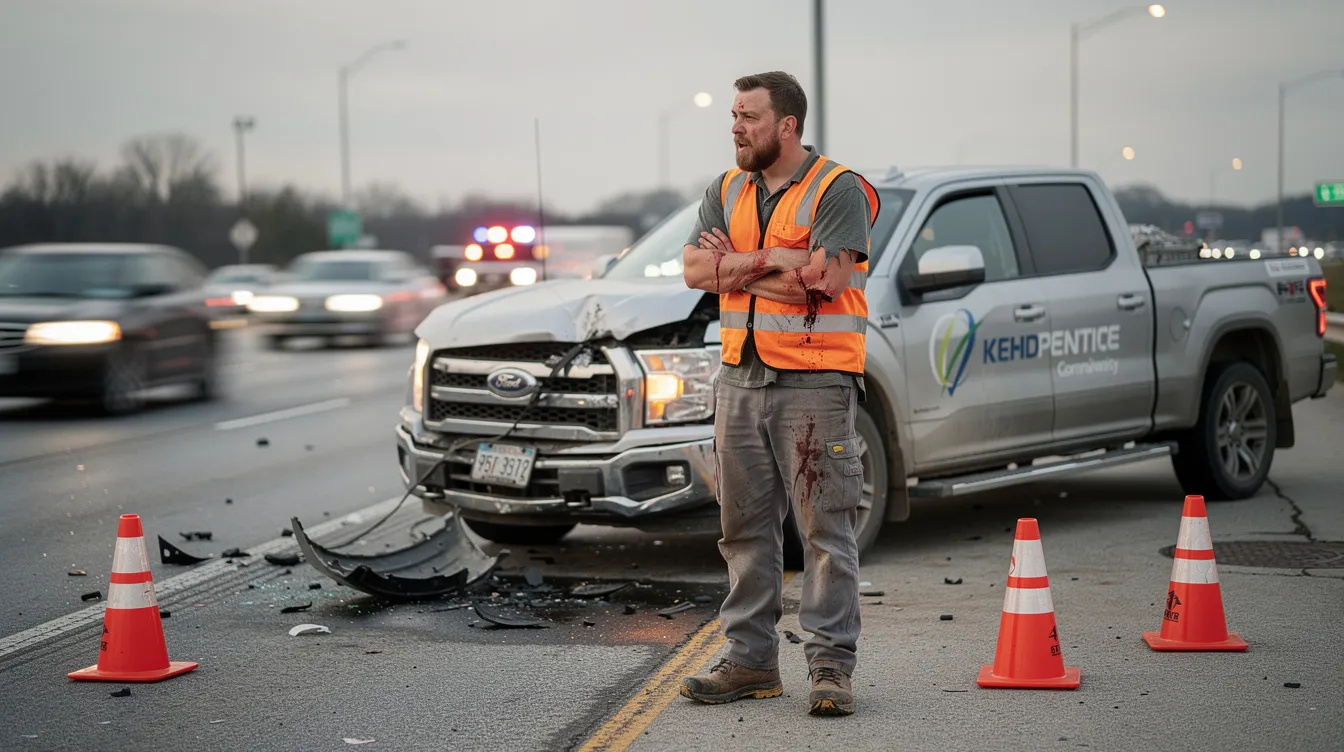
What To Do Immediately After a Company Vehicle Accident in Colorado
Whether the crash happened in Pueblo, Colorado Springs, Denver, Otero County, Fremont County, or elsewhere, these steps protect your health and legal claims.
Steps to Take at the Scene
-
Call 911 and seek emergency medical treatment, even for “minor” pain. Whiplash, concussion, and back injuries often worsen after a car accident.
-
Stay at the scene, move to safety if possible, and cooperate with police. Drivers must notify local police immediately if an accident results in injury, death, or property damage under Colorado law. Ask for the traffic report number.
-
Photograph vehicle damage, skid marks, road conditions, visible injuries sustained, and all company vehicles involved.
-
Get names, phone numbers, registration, insurance policy details, and witness information.
After Leaving the Scene
-
Report the accident happened to your employer in writing. Employees must notify their employer in writing within 10 days of any on-the-job injury to preserve workers compensation benefits.
-
Avoid recorded statements to any insurance carrier, employer’s insurance carrier, or workers comp insurance company before legal advice.
Need help in the first few days? Call (719) 309-9484 or send us a message online .
When a Company Car Accident Is “Work-Related” Under Colorado Law
Determining whether a car accident is work-related in Colorado depends on whether the employee was acting within the scope of their employment at the time of the crash. For example, a Pueblo sales representative driving to a client meeting in Otero or Fremont County may be within job duties.
-
A car accident is generally covered by workers’ compensation if it occurred while performing job duties, such as making deliveries or running errands for an employer.
-
Covered work vehicle accidents may include deliveries, driving between job sites, visiting customers, transporting tools in a personal truck, or driving a company car between Pueblo and Colorado Springs.
-
In Colorado, personal vehicles used for work can qualify for workers’ compensation coverage if the driving was work-related.
-
Commuting to a regular workplace is usually not covered, but exceptions apply when travel is central to the job or the employee is on a special errand.
-
A personal errand may trigger disputes over workers comp benefits and employer liability.
-
Johnston Law Firm can evaluate whether the accident occurred in the course and scope of employment.
Who Is Legally Liable After a Company Vehicle Accident in Colorado?
Determining liability may involve the at fault party, the driver’s employer, the injured worker, a vehicle manufacturer, or several insurance policies.
-
Under vicarious liability, a driver’s employer may be responsible when an employee’s negligent driving driver caused harm while performing job duties.
-
In many instances, an employer can be held liable for expenses related to car accidents caused by their employees if the accident occurred while the employee was performing job duties.
-
If an employee causes an accident while making a delivery as part of their job, the employer is likely to be liable for damages stemming from that accident.
-
If another driver ran a red light, drove drunk, or caused the crash, that other driver and insurer may be primarily responsible while the injured worker still receives workers comp.
-
If an employee is involved in a car accident while using their personal vehicle for work purposes, the employer may still be liable for damages if the employee was acting within the scope of their job duties.
-
Defective brakes, tires, or negligent maintenance may create a third party claim against a repair shop, fleet contractor, or manufacturer.
-
Colorado’s comparative fault rules can affect liability and financial compensation.
Unsure whose insurance should pay? Call Johnston Law Firm at (719) 309-9484 .
Company Cars, Personal Detours, and “Frolic” in Colorado
Employers and insurers often argue about whether the crash occurred while the driver was truly on the job.
-
A work-related detour is a minor deviation, such as stopping for fuel, supplies, lunch, or a restroom break while driving between Pueblo and Cañon City.
-
A frolic is a substantial personal errand, like using a company car to visit a friend in Colorado Springs.
-
The distinction between a ‘frolic’ and a ‘detour’ is important in determining employer liability; if an employee is on a detour related to work, the employer may still be liable, whereas a frolic may make the employee personally liable.
-
An employer may not be liable for damages if the employee was involved in an accident while running a personal errand, as this may fall outside the scope of employment.
-
Review any company car contract, car contract, or vehicle-use policy for limits on personal use, geography, and off-clock driving.
-
DUI, racing, or reckless conduct can shift responsibility, affect liability, and create criminal exposure under colorado law.
Colorado Workers’ Compensation After a Work Vehicle Accident
Johnston Law Firm handles workplace injuries across Pueblo, Pueblo West, Otero, Crowley, Custer, Huerfano, Las Animas, and throughout Colorado.
-
Workers’ compensation in Colorado is a no-fault system, meaning that employees can receive benefits for work-related injuries regardless of who caused the accident, as long as it occurred within the scope of employment.
-
If an employee is injured in a work-related car accident, they may be entitled to workers’ compensation benefits, which can cover medical expenses and a portion of lost wages, even if the employee was at fault for the accident.
-
Workers’ compensation in Colorado provides benefits for medical expenses and a portion of lost wages for employees injured while performing job duties, regardless of fault.
-
Benefits may include medical care, medical treatment related to the crash, mileage, wage replacement based on average weekly wage, temporary total disability, temporary partial disability, permanent partial disability, permanent total disability, and disfigurement.
-
Workers’ compensation does not pay full pre injury wages, loss of enjoyment, or pain and suffering.
-
Employers must file an Employer’s First Report of Injury within 10 days of learning about any workplace injury to comply with Colorado regulations.
-
Most workers compensation claims have a two-year filing limit, but notice deadlines come much earlier.
Speak with a Pueblo workers comp attorney before accepting a settlement or compromise and release.
Personal Injury Claims vs. Workers’ Comp Claims After a Company Car Crash
Many injured employees have both a workers comp claim and a separate claim under personal injury law. How personal injury claims interact with workers’ compensation can change the value of the case.
-
Workers comp claims are against the employer’s workers’ compensation insurer and do not require proving fault.
-
Personal injury claims are fault-based cases against negligent third parties and may seek compensation for full lost wages, future care, emotional distress, and pain and suffering.
-
Workers’ compensation is typically the exclusive remedy against the employer in case of workplace injuries, but employees can file separate personal injury lawsuits against negligent third parties.
-
In Colorado, if you are injured in a work-related car accident, you may be eligible for both workers’ compensation benefits and a personal injury claim against a third party if another driver was at fault.
-
Personal injury claims allow injured workers to seek compensation for non-economic damages such as pain and suffering, which are not covered by workers’ compensation.
-
Subrogation may allow the workers comp insurer to seek repayment from a settlement, so do not sign releases without advice.
Comparative Fault and Company Car Accidents in Colorado
Fault matters in a personal injury case, even when workers comp eligibility is usually not affected.
-
Colorado operates under a comparative fault system, meaning that an injured party’s compensation may be reduced based on their percentage of fault in the accident, and they must be less than 50% at fault to recover any damages.
-
Determining fault in a work-related car accident is crucial as it establishes who is financially responsible for damages and injuries resulting from the crash.
-
In Colorado, the determination of fault can affect whether an employee can file a personal injury claim against another driver in addition to receiving workers’ compensation benefits.
-
If the accident victim is 20% at fault, the personal injury recovery may be reduced by 20%.
-
Insurance companies often overstate fault to reduce fair compensation.
-
Accident reconstruction, witnesses, traffic law, GPS, and dashcam evidence can help prove how the crash occurred.
For an honest fault review, call (719) 309-9484 .
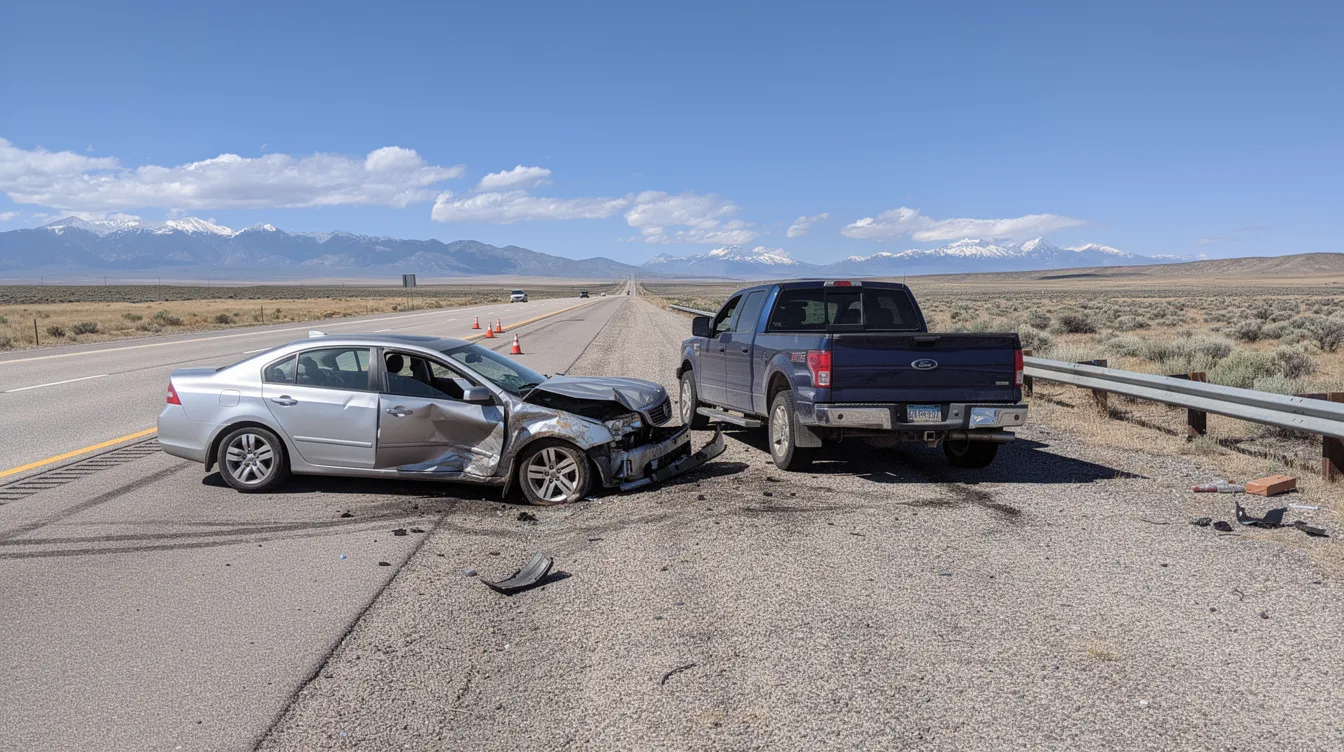
Common Insurance and Company Car Contract Issues
Accidents in Colorado involving company vehicles often involve commercial auto coverage, personal insurance, workers comp, and UM/UIM coverage.
-
Review declarations pages, exclusions, endorsements, and the company car contract.
-
Company policies may have higher limits, but coverage disputes arise if the employee was outside the scope of employment.
-
Employees using a personal car for work may need both personal auto coverage and employer coverage.
-
UM/UIM benefits may matter when the at fault driver has no insurance or low limits.
-
Coverage fights can delay payment of medical bills for injury victims who sustained personal injuries.
Colorado Minimum Insurance Limits
|
Coverage Type |
Minimum Limit |
|---|---|
|
Bodily Injury (per person) |
$25,000 |
|
Bodily Injury (per accident) |
$50,000 |
|
Property Damage |
$15,000 |
Wrongful Death Claims After a Fatal Company Vehicle Accident
Some severe injuries from work vehicle accidents tragically result in wrongful death, devastating families in Pueblo, Custer, Huerfano, Las Animas, and beyond.
-
Surviving dependents may receive Colorado workers compensation death benefits, including burial expenses and partial wage replacement.
-
A family may also have a third-party wrongful death lawsuit if another negligent driver, maintenance company, or vehicle manufacturer contributed.
-
Victims of vehicle accidents involving commercial motor vehicles generally have three years to file a personal injury claim in Colorado, while many wrongful death claims have different deadlines.
-
Liens and subrogation must be handled carefully to maximize the family’s net recovery.
-
For a confidential consultation, call Johnston Law Firm at (719) 309-9484 or message us online .
How Johnston Law Firm, LLC Helps After a Company Vehicle Accident
Stephen M. Johnston is a Pueblo-based trial lawyer with decades of experience in workers’ compensation, personal injury, automobile accidents, criminal law, Social Security law, and estate planning.
-
The law firm investigates crash reports, witnesses, photos, surveillance, dashcam footage, medical records, and expert reconstruction.
-
We analyze whether injured workers have workers compensation claims, personal injury claims, or both.
-
We communicate with the insurance company, workers comp insurance company, commercial carrier, and personal insurance providers.
-
We evaluate serious injuries, harm caused, lost wages, medical bills, future care, and available financial compensation.
-
Many personal injury cases are handled on a contingency fee basis, and consultations are free.
-
We provide direct updates, practical expectations, and litigation support across Colorado.
What Injured Workers Should Do Next
Early action can protect workers compensation benefits and any personal injury recovery after an auto accident involving a company vehicle.
Ongoing Actions After the Accident
-
Continue medical treatment and follow all physician restrictions.
-
Keep medical records, bills, work notes, and proof of missed time.
-
Track pain, job changes, daily limitations, and whether injuries affect work.
Documentation and Communication
-
Save texts, dispatch records, GPS routes, supervisor communications, and HR emails.
-
Do not post about the accident or injuries online.
-
Schedule a free consultation by calling (719) 309-9484 or sending us a confidential message online .
FAQ: Company Vehicle Accidents and Work-Related Car Crashes in Colorado
Can I still get workers’ comp if I caused the company car accident?
Usually, yes. Colorado workers’ comp is generally no-fault, so an employee may receive benefits after a driving mistake if the crash was within the scope of employment. Serious misconduct, intoxication, or intentional harm can change the analysis.
Does it matter that I was driving my own car instead of a company vehicle?
Ownership is not the only issue. If you were driving a personal vehicle for work, such as visiting a customer or job site, workers comp may still apply. Insurance analysis may differ based on policy language.
Can my employer make me pay for damages to the company car?
It depends on Colorado employment law, the company’s policies, and any signed company car contract. Do not agree to payroll deductions or repayment before speaking with a lawyer.
How long do I have to bring a personal injury claim after a work vehicle accident?
Most Colorado motor vehicle personal injury claims have a three-year statute of limitations from the date of the crash. Workers comp has shorter notice and filing rules, so waiting can forfeit rights.
Do I need a local attorney if the crash happened outside Pueblo?
Not necessarily. Johnston Law Firm represents clients throughout Colorado, including Otero, Fremont, Custer, Huerfano, Las Animas, Crowley, and other counties. Call (719) 309-9484 or message us online .