Colorado Springs Slip and Fall Accident Lawyer – Premises Liability and Injury Claims
If you have been hurt in a slip and fall accident at a Colorado Springs store, parking lot, apartment complex, or workplace, you may have the right to seek compensation from the property owner responsible for your injuries. Colorado premises liability law holds landowners accountable when unsafe conditions cause harm, but pursuing a claim requires acting quickly, preserving evidence, and understanding the legal rules that govern fault and damages in El Paso County and throughout southern Colorado.
Johnston Law Firm, LLC, led by attorney Steve Johnston, represents injured clients across the Colorado Springs area and beyond. This guide explains what you need to know about filing a premises liability claim, the deadlines that apply, the types of damages you can recover, and how an experienced personal injury attorney can help protect your rights from the moment you make the call.
Key Takeaways
-
Johnston Law Firm, LLC helps Colorado Springs and El Paso County slip and fall victims pursue premises liability claims for injuries caused by unsafe property conditions, including ice, wet floors, broken stairs, and poor lighting.
-
Colorado generally gives injured people two years from the date of a slip and fall to file most premises liability lawsuits under C.R.S. § 13-80-102, with shorter deadlines-sometimes as brief as 182 days-for claims against government entities.
-
Steve Johnston is a Pueblo-based trial lawyer who has been practicing since 2002 and represents clients across Colorado, including Colorado Springs, on a contingency fee basis, meaning there are no attorney fees unless there is a recovery.
-
The firm handles negotiations with the insurance company, documents medical treatment and lost wages, and prepares every case as if it will go to court if a fair settlement cannot be reached.
-
Contact Johnston Law Firm today: call (719) 309-9484 or message us online for a free consultation about your slip and fall claim.
Why You Need a Colorado Springs Slip and Fall Lawyer Now
Evidence in a slip and fall case starts disappearing the moment you walk away from the scene. Surveillance cameras at Colorado Springs retail stores, restaurants, and apartment complexes often overwrite footage within days. Employees who witnessed the fall change shifts or leave jobs. The puddle dries, the ice melts, and the broken step gets quietly repaired, leaving no trace of the hazard that caused your injuries.
A Colorado Springs slip and fall accident lawyer acting as your personal injury lawyer can step in quickly to secure that surveillance footage, demand copies of incident reports, and collect witness statements before they are lost. Just as importantly, an attorney can manage all communications with the property owner's insurance company, preventing you from making statements that could be twisted against you later.
Colorado Springs residents who are hurt in falls are often blamed for their own accidents. Under Colorado's comparative negligence rules, the insurance company will look for any reason to argue you should have been watching where you were going, that you were wearing the wrong shoes, or that you ignored a warning sign. Early legal guidance from an experienced personal injury attorney is critical to protecting yourself from these tactics.
If you have been injured in a fall, do not wait. Call (719) 309-9484 or send us a message online for a free slip and fall case review with Johnston Law Firm.
About Johnston Law Firm, LLC and Attorney Steve Johnston
Johnston Law Firm, LLC is a Pueblo-based law firm representing individuals throughout Colorado, including Colorado Springs, El Paso County, and the surrounding communities of Otero, Fremont, Custer, Huerfano, Las Animas, and Crowley Counties. The firm was built on the principle that injured people deserve direct access to their attorney, clear communication at every stage, and aggressive representation backed by genuine courtroom experience.
Steve Johnston has been practicing law since 2002, with hundreds of cases litigated in Colorado state district courts, administrative courts, and appellate courts. He is admitted to practice in Colorado and Wyoming, in the U.S. District Courts for both states, and in the U.S. Court of Appeals for the Tenth Circuit. His J.D. is from the University of Wyoming College of Law, and he holds three undergraduate degrees from the University of Wyoming.
Steve's six key practice groups are workers' compensation, personal injury, automobile accidents, estate planning, criminal law, and social security law. Slip and fall premises liability claims are an important part of the firm's Colorado Springs personal injury practice. When you choose a lawyer with experience in slip and fall cases and a track record of successful settlements, you are choosing someone who understands Colorado's premises liability laws inside and out. Attorneys should have specific experience handling premises liability cases, and Steve brings exactly that depth to every claim.
At Johnston Law Firm, clients speak directly with Steve Johnston when major decisions arise. The entire team values clear communication, regular updates, and a relationship where clients never feel like they are being passed between staff members without answers. Consultations with personal injury lawyers at the firm are always free.
Serving Colorado Springs, El Paso County, and Southern Colorado
Although Johnston Law Firm's main office is in Pueblo, the firm regularly represents Colorado Springs clients in El Paso County courts and handles premises liability claims arising throughout the Pikes Peak region. Steve Johnston is no stranger to the courthouses, insurers, and property management companies that operate in the Colorado Springs area.
Many Colorado Springs slip and fall claims are filed in the Fourth Judicial District, which covers El Paso and Teller Counties. The main courthouse is the Terry R. Harris Judicial Complex in downtown Colorado Springs, Colorado Springs CO-a venue where Steve has extensive experience litigating personal injury cases and other civil matters.
Clients injured in falls come from locations across the region, including:
-
Retail stores along Academy Boulevard and Powers Boulevard
-
Restaurants and bars in downtown Colorado Springs
-
Apartment complexes in northern Colorado Springs and near Fort Carson
-
Parking lots and sidewalks in Fountain, Manitou Springs, and Monument
The firm also serves smaller communities in southern and central Colorado, such as Pueblo West, La Junta, Canon City, and Walsenburg. That broad geographic reach gives Johnston Law Firm a wide-angle view of how local insurers, landlords, and property owners handle claims arising in different parts of the state.
Common Slip and Fall Hazards in Colorado Springs
Colorado Springs sits at over 6,000 feet of elevation, and conditions here create recurring hazards that can lead to serious slip and fall injuries. Winter storms, rapid temperature swings, heavily trafficked shopping centers, and aging infrastructure all contribute to dangerous property conditions that property owners must address.
Common hazards that give rise to premises liability claims include:
-
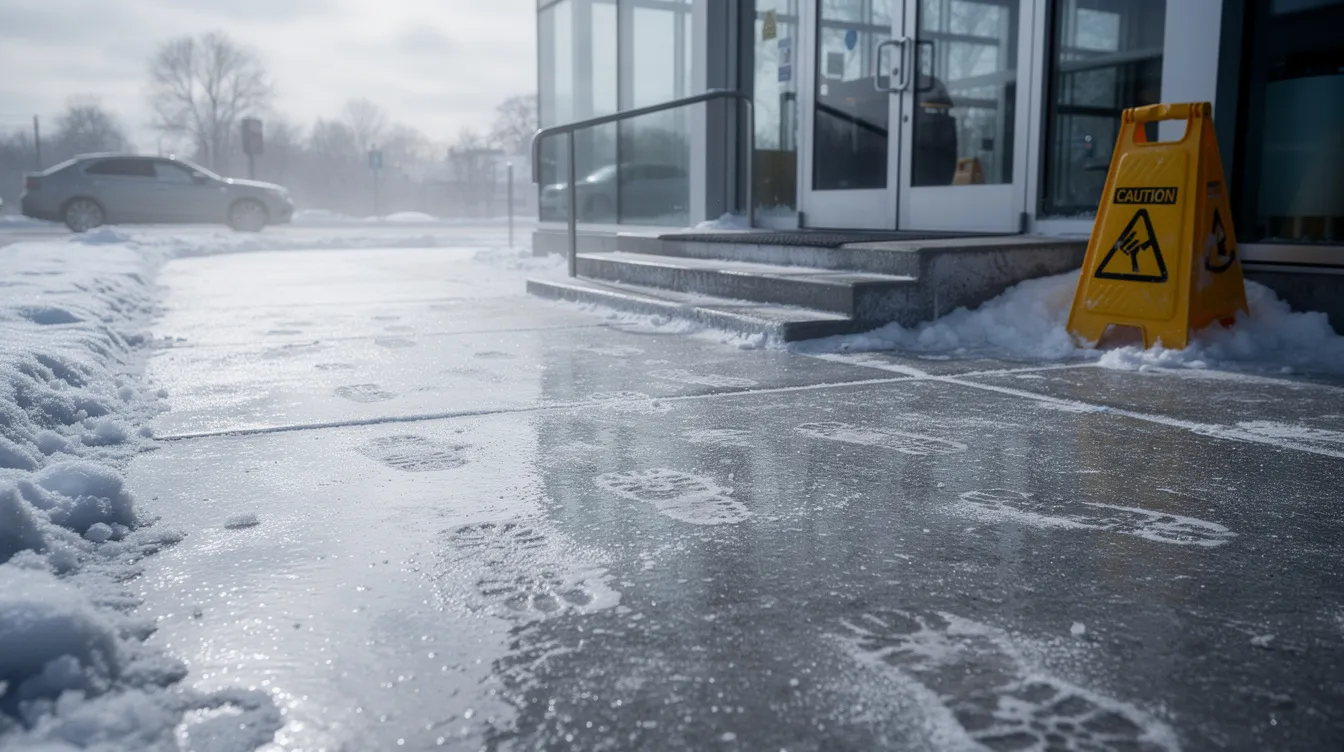
Ice and packed snow on sidewalks, driveways, parking lots, and building entrances, especially during January and February when black ice forms overnight
-
Wet floors inside grocery stores, big-box retailers, and restaurants from mopped surfaces, spilled liquids, or produce on the floor
-
Tracked-in snow and slush near entryways of stores along North Powers Boulevard and other busy retail corridors
-
Loose or wrinkled floor mats at building entrances
-
Broken stairs, missing handrails, and deteriorating steps in apartment complexes and older commercial buildings
-
Uneven concrete on sidewalks, parking lot curbs, and walkways
-
Poor lighting in parking structures, stairwells, and outdoor walkways
These hazards can exist at commercial properties, apartment complexes, single-family rental homes, public buildings, and workplaces. Each setting raises different legal and insurance issues. Property owners must maintain safe premises under Colorado law, and a failure to do so can result in liability when someone gets hurt.

Types of Colorado Springs Slip and Fall Cases We Handle
Premises liability law applies to many different locations and fact patterns. Johnston Law Firm tailors strategy to the specific property, hazard, and circumstances involved in each client's case. The firm handles a wide range of slip and fall personal injury claims, including:
-
Grocery and retail store falls (Safeway, King Soopers, Walmart, Target, Costco) caused by uncleaned spills, water on tile floors, or produce left in aisles
-
Apartment and condo complex falls from icy stairways, loose railings, broken steps, or unlit common areas
-
Parking lot and sidewalk falls at shopping centers near I-25, Powers Boulevard, and Austin Bluffs Parkway due to ice, potholes, or inadequate lighting
-
Hotel, motel, and short-term rental falls in Colorado Springs and Manitou Springs
-
Office building, medical clinic, and business park falls where maintenance has been neglected
-
Restaurant and bar falls from grease, spilled drinks, or uneven flooring
The firm also handles trip-and-fall claims-for example, from raised sidewalk slabs, hidden extension cords, or unsecured carpet edges-under the same general premises liability framework. Whether you suffered injuries inside a national chain store or on a cracked public sidewalk, the legal question remains the same: did the property owner fail to keep the premises safe?
Colorado Premises Liability Law: Basic Concepts
Premises liability is the body of Colorado law governing when property owners, landlords, and tenants are responsible for injuries that occur on their property. The Colorado Premises Liability Act, codified at C.R.S. § 13-21-115, outlines landowner liability and visitor status and establishes the duties owed to different categories of visitors.
Under the statute, liability depends on three things: the injured person's legal status on the property (invitee, licensee, or trespasser), whether the property owner knew or should have known about the dangerous condition, and whether the owner took reasonable steps to address it.
-
Invitees (such as shoppers at a Colorado Springs retail store or patients at a medical office) are owed the highest duty of care. The property owner must exercise reasonable care to discover and fix or warn about dangers.
-
Licensees (social guests visiting a friend's home) receive a lower duty. The owner must warn of known dangers that are not open and obvious.
-
Trespassers receive the least protection. Liability generally applies only for willful or deliberate harm.
Property owners are liable if they knew about hazards and did nothing to correct them or warn visitors. Evidence must show property owners knew about hazards, either through actual knowledge (an employee saw the spill) or constructive knowledge (the hazard existed long enough that it should have been discovered). The Colorado Supreme Court's decision in Larrieu v. Best Buy Stores, L.P. (2013) confirmed that § 13-21-115 applies broadly to conditions, activities, or circumstances on the property. Property owners must maintain safe premises under Colorado law, and failing to do so creates the foundation for a premises liability claim.
Deadlines: Colorado's Statute of Limitations for Slip and Fall Claims
Missing a deadline can completely destroy a valid injury claim, no matter how serious the injury. There is no exception, no do-over, and no second chance once the clock runs out.
Slip and fall claims in Colorado have a two-year limit. Under C.R.S. § 13-80-102, most personal injury claims, including premises liability and slip and fall lawsuits, must be filed within two years of the date of the accident. The statute of limitations starts from the date of the injury. Missing the statute of limitations means your case will be dismissed, regardless of how strong the evidence might be.
This two-year window is shorter than the three-year deadline for most car accident injury claims. Motor vehicle accident claims in Colorado have a three-year statute of limitations under C.R.S. § 13-80-101, so people who are familiar with that longer deadline sometimes assume they have more time for a fall claim. They do not.
If a slip and fall occurs on government property-such as a City of Colorado Springs building, an El Paso County facility, or a public transit stop-a shorter notice period may apply. You must file a notice within 182 days for claims against public entities under the Colorado Governmental Immunity Act. Failing to meet this notice requirement can bar the claim entirely.
Because some injuries slowly worsen over time-herniated discs, for example, or traumatic brain injuries that do not show full symptoms for weeks or months-it is important to talk with an attorney long before these time limits expire. Most personal injury claims in Colorado must be filed within two years, and waiting until month 23 to start looking for legal assistance is a gamble no injured person should take.
How Fault and Comparative Negligence Work in Colorado Slip and Fall Cases
Insurance adjusters in Colorado Springs routinely argue that the injured person "should have been watching where they were going." This is not just a throwaway comment. It is a deliberate strategy to reduce the payout by assigning fault to the victim under Colorado's comparative negligence system.
Colorado follows a modified comparative negligence rule for liability, codified under C.R.S. § 13-21-111. Under this rule, an injured person's damages can be reduced by their percentage of fault. You can recover damages even if partially at fault, under 50%. However, if you are found 50 percent or more at fault for your own fall, you cannot recover anything.
Here is how this works in practice. Suppose you slip on a wet floor inside a Colorado Springs grocery store and suffer a broken wrist. A jury determines your total damages are $100,000 but finds you were 20 percent at fault because you were looking at your phone. Your recovery would be reduced by 20 percent, leaving you with $80,000.
Colorado's modified comparative negligence allows recovery if under 50 percent at fault, but the insurance company will push hard to inflate your share of blame. One of the lawyer's central roles is to gather evidence-store cleaning logs, surveillance footage, photographs, witness testimony, and corporate safety policies-for proving fault and pushing back against exaggerated fault arguments by the insurance company. The difference between 15 percent fault and 45 percent fault can mean tens of thousands of dollars in your pocket or theirs.
What to Do Immediately After a Slip and Fall in Colorado Springs
If you have just been hurt in a fall at a business, apartment complex, or public place in Colorado Springs, the steps you take in the next few hours can make or break your legal claim. Here is a practical checklist:
-
Get medical attention right away. Go to the emergency room, urgent care, or your doctor, even if your injuries seem minor. Some serious conditions, like concussions and herniated discs, do not produce obvious symptoms immediately.
-
Report the incident. Tell the property owner, store manager, or landlord what happened and ask them to create a written incident report. Get a copy if possible.
-
Photograph everything. Use your phone to take photos or short videos of the hazard that caused your fall, the surrounding area, your shoes, and any visible injuries. Include a timestamp if your camera allows it.
-
Collect witness information. Write down the names, phone numbers, and email addresses of anyone who saw the fall or noticed the dangerous condition before you arrived.
-
Do not give a recorded statement. The property owner's insurance adjusters may contact you quickly and ask for a recorded account. Politely decline until you have spoken with an attorney. Anything you say can be used to minimize your claim.
-
Preserve your clothing and footwear. Do not wash or throw away the shoes or clothes you were wearing. They may be relevant evidence.
If you have already taken some of these steps but are unsure what to do next, call (719) 309-9484 or contact Johnston Law Firm online for guidance tailored to your specific situation.

Evidence That Strengthens a Premises Liability Claim
Slip and fall claims in Colorado Springs often turn on the quality of evidence about what the property owner knew and when they knew it. Without solid documentation, it becomes a he-said-she-said dispute that the insurance company will exploit.
The types of evidence Johnston Law Firm looks for include:
-
Photographs and video of the hazard at or near the time of the fall
-
Surveillance footage from security cameras inside or outside the property-surveillance footage can help establish how long a hazard existed before anyone addressed it
-
Incident reports filed with the property manager or store
-
Employee and witness statements about conditions at the time of the fall
-
Cleaning and maintenance logs that show whether regular inspections were performed
-
Weather records documenting snow, ice, or rain conditions in Colorado Springs on the day of the fall
-
Prior complaints or similar accidents on the same property, which can demonstrate the owner's knowledge of recurring hazards
Incident reports and maintenance logs are crucial evidence. Many Colorado businesses only retain surveillance footage for a short period-often just days or weeks-making prompt legal action essential to preserving it. The firm sends preservation letters demanding that the property owner retain this evidence before it is destroyed.
Medical records, diagnostic imaging such as X-rays and MRIs, and treating doctor opinions are also vital to proving the nature and extent of injuries. Without consistent medical documentation linking your condition to the fall, the insurance company will argue your injuries came from something else.
Common Slip and Fall Injuries in Colorado Springs
Even a quick fall in a grocery aisle or on an icy sidewalk can cause life-changing injuries, particularly for older adults whose bones and joints are more vulnerable. Slip and fall injuries can lead to significant medical expenses, lengthy rehabilitation, and permanent changes in quality of life.
Common injuries seen in Colorado Springs slip and fall cases include:
-
Broken hips, wrists, and ankle fractures
-
Broken bones in the hands, feet, or ribs
-
Torn ligaments (ACL, MCL, meniscus tears)
-
Herniated discs and other spinal injuries
-
Spinal cord damage leading to partial or full paralysis
-
Concussions and traumatic brain injuries
-
Shoulder tears, including rotator cuff injuries
-
Facial fractures and dental injuries
-
Chronic pain syndromes
The Impact of Falls on Older Adults and Long-Term Health
Falls are a leading cause of injury-related emergency room visits for older adults nationally, and Colorado Springs' winter conditions increase these risks considerably. Catastrophic injuries from falls can include traumatic brain injury, spinal cord damage, and multiple fractures that require surgical intervention.
The long-term consequences of these injuries extend well beyond the emergency room. Many clients face months or years of physical therapy, reduced mobility, time away from work, and serious effects on family life. Life changing injuries from a single fall can alter everything from your ability to earn a living to your capacity to pick up your children or grandchildren.
Medical Treatment and Documentation After a Fall
Prompt medical evaluation after a slip and fall is essential not only for your health, but also to create a clear connection between the fall and your injuries in the medical record. If there is a gap of days or weeks between the fall and your first doctor visit, the insurance company will argue your injuries were caused by something else entirely.
Types of Medical Providers
Care settings commonly involved in slip and fall recovery include:
-
Emergency rooms at local hospitals such as UCHealth Memorial or Penrose-St. Francis
-
Urgent care clinics throughout Colorado Springs
-
Primary care physicians for initial evaluation and referrals
-
Orthopedic specialists for fractures and joint injuries
-
Neurologists for head injuries and nerve damage
-
Physical therapists for rehabilitation and mobility recovery
Importance of Consistent Treatment
Follow through with every prescribed treatment. Attend all appointments, take prescribed medications, and keep copies of all medical bills, receipts, and work restriction documentation. Gaps in medical treatment give the defense ammunition to argue your injuries are not as serious as you claim.
Johnston Law Firm can help organize medical records and bills and can coordinate with health insurers, Medicare, Medicaid, or workers' compensation where claims overlap. Managing the paperwork so clients can focus on getting better is a core part of the firm's service.
Recoverable Damages in Colorado Springs Slip and Fall Cases
The purpose of a premises liability claim is to compensate injured people for both the financial and human losses caused by someone else's negligence. Colorado law recognizes several categories of damages that may be available depending on the facts of the case.
Economic Damages
Economic damages cover medical expenses and lost wages. These include:
-
Past and future medical expenses, including surgeries, hospital stays, prescriptions, and rehabilitation
-
Medical bills from emergency rooms, specialists, and therapy
-
Lost wages and lost income from time missed at work
-
Lost future earning capacity if the injury permanently limits what you can earn
-
Out-of-pocket costs such as travel to medical appointments, assistive devices, and home modifications
Non-Economic Damages
Non-economic damages address pain, suffering, and emotional distress. These include:
-
Physical pain and ongoing discomfort
-
Emotional distress, anxiety, and depression resulting from the injury
-
Loss of enjoyment of life and inability to participate in activities you previously enjoyed
-
Inconvenience and disruption to daily routines
Colorado caps non-economic damages at $1.5 million for personal injury cases filed on or after January 1, 2025, following the passage of HB 24-1472. This is a significant increase from the prior cap of $250,000 and reflects a major shift in what seriously injured Coloradans can recover for their suffering. The cap will adjust for inflation every two years starting in 2028.
Punitive Damages
In rare cases, punitive damages may be available. Punitive damages punish reckless behavior by the responsible party, such as a landlord who knowingly ignored a structural hazard for months despite repeated tenant complaints. These damages go beyond compensation and serve as a deterrent against egregious conduct.
If a fall is fatal, surviving family members may also have a wrongful death claim in addition to other remedies available under Colorado law.
Financial compensation in a slip and fall case is not limited to one category. The full picture-economic losses, non economic damages, and in extreme cases punitive damages-must be evaluated together to determine fair compensation for the injured person.
How Johnston Law Firm Builds a Strong Slip and Fall Case
Johnston Law Firm takes a methodical, evidence-driven approach to every premises liability claim. This approach has been refined through decades of personal injury and workers' compensation litigation, and it reflects the firm's belief that thorough preparation leads to better outcomes whether a case settles or goes to trial.
Key steps the firm typically takes include:
-
Detailed client interview. Steve Johnston conducts a thorough review of how the fall occurred, what the client observed before and after the accident, and the full impact on work and daily life.
-
Preservation letters. The firm sends formal letters to property owners and businesses in Colorado Springs and El Paso County demanding they retain surveillance footage, incident reports, maintenance records, and cleaning logs.
-
Scene investigation. When helpful, the firm visits the location, documents current conditions, and identifies any ongoing hazards or changes made after the fall.
-
Expert consultation. In complex cases, the firm works with safety experts, engineers, or medical professionals to establish what went wrong and why the property owner should be held accountable.
-
Legal research. The firm reviews applicable Colorado statutes, local building codes, and safety regulations that may support the claim, including municipal sidewalk maintenance ordinances and fire code requirements.
The firm prepares each case as though it could go to trial, which often improves settlement negotiations with the insurance company. Insurance companies often offer lower settlements if they believe a lawyer primarily settles cases and avoids trial. Johnston Law Firm's willingness to litigate creates leverage that benefits every client, whether the case resolves at the negotiating table or in a courtroom.
Dealing With Insurance Companies After a Slip and Fall
Property owners and businesses in Colorado Springs almost always carry liability insurance. When you file a premises liability claim, you are dealing with a professional insurance company that has trained adjusters, defense lawyers, and corporate resources dedicated to minimizing what they pay.
Common insurer tactics include:
-
Quick lowball offers. Offering a small check before you know the full extent of your injuries, hoping you will sign a release and go away.
-
Recorded statements. Asking you to provide a recorded account of the fall, then using your own words to argue you were at fault or your injuries are minor.
-
Blame-shifting. Arguing that you were careless, wearing inappropriate footwear, or distracted, to increase your share of fault under comparative negligence.
-
Disputing medical treatment. Questioning whether your injuries were really caused by the fall, whether the treatment was necessary, or whether you had pre-existing conditions.
Johnston Law Firm takes over all communications with the insurance adjuster so injured clients can focus on medical recovery rather than negotiating with professionals trained to save the insurer money. The firm reviews settlement offers, advises clients about whether they are fair in light of future medical needs, ongoing medical care, and wage loss, and is prepared to file a lawsuit in El Paso County or other Colorado courts if the insurance company refuses to offer maximum compensation.
Work-Related Slip and Fall Accidents and Workers' Compensation
Steve Johnston's extensive workers' compensation practice connects directly with slip and fall incidents that happen on the job. Falls at warehouses, construction sites, offices, hospitals, and retail stores are among the most common workplace injuries in Colorado.
If someone falls at work in Colorado Springs-for example, slipping on a wet breakroom floor at a distribution center or tripping over debris at a construction site-they may have both a workers' compensation claim and a separate premises liability claim against a third party. Workers' compensation covers medical care, temporary disability wage loss, and permanent impairment benefits regardless of fault. A third-party premises liability claim against the property owner can provide additional financial compensation, including pain and suffering damages that workers' compensation does not cover.
Johnston Law Firm has deep experience coordinating these overlapping claims. Careful handling is needed to avoid jeopardizing one claim while pursuing another, and to address any workers' compensation lien on a slip and fall settlement. The firm manages both types of cases under one roof, which simplifies the process for clients who are already dealing with enough stress.
How Slip and Fall Claims Differ From Car Accident Cases
Johnston Law Firm has a strong track record handling automobile accidents and motor vehicle accidents throughout Colorado. While both car accidents caused by negligent drivers and slip and fall accidents caused by unsafe property conditions fall under personal injury law, the two types of cases raise distinct legal and factual issues.
Car accident claims typically revolve around traffic laws, police reports, and auto insurance policies. Premises liability claims focus on the condition of property, maintenance practices, and guest status-whether the injured person was an invitee, licensee, or trespasser. Auto accident attorneys deal with different insurance structures than those that apply in premises liability.
The deadlines are also different. Motor vehicle accident claims in Colorado have a three-year statute of limitations, while slip and fall claims must be filed within two years. That one-year difference catches people off guard when they assume the same deadline applies to both types of personal injury lawsuits.
Some clients experience both types of injuries. For example, a person recovering from a car accident may suffer a secondary fall at a medical facility due to mobility limitations. Johnston Law Firm can coordinate strategies across multiple personal injury claims to pursue full compensation.
Connections to Other Practice Areas: Estate Planning, Criminal Law, and Social Security
Serious slip and fall injuries can create legal needs that extend well beyond the immediate premises liability claim. Johnston Law Firm's breadth of practice means clients can address multiple issues with one firm rather than hiring separate attorneys for each problem.
Estate planning becomes important when a client suffers a long-term disability. Preparing wills, powers of attorney, and medical directives protects family members and assets during a period of uncertainty. Steve Johnston's estate planning practice allows him to advise clients on these steps as part of a comprehensive approach.
Criminal law issues occasionally overlap with premises liability cases. For example, if an assault on a property contributed to a fall, or if a property owner's conduct was criminal in nature, Johnston Law Firm can evaluate whether there are overlapping criminal and civil issues.
Social security law comes into play when injured clients cannot return to work. Some fall victims remain disabled beyond a year and need to apply for Social Security Disability benefits. Because this is another core practice area at the firm, clients receive coordinated representation under one roof-eliminating the confusion and delay that come with bouncing between multiple lawyers.
Johnston Law Firm's Client-Focused Process
From first contact through resolution, Johnston Law Firm's goal is to make the legal system as straightforward and transparent as possible. The process mirrors what the firm provides across all its practice areas:
-
Free initial consultation. By phone, video, or in person, Steve reviews what happened and assesses whether a premises liability claim makes sense. There is no charge and no obligation.
-
Clear fee agreement. The firm handles Colorado Springs slip and fall cases on a contingency fee basis. Clients pay no upfront fees and no hourly charges. Attorney fees are only owed if the firm recovers money through settlement or verdict. Look for attorneys who work on a contingency fee basis-it aligns the lawyer's incentives with yours.
-
Case roadmap. The firm develops a plan with estimated timelines and key milestones, so clients know what to expect and when.
-
Regular updates. Clients receive updates by phone or email, with prompt responses to questions throughout the claims process.
Many Colorado Springs clients appreciate being able to speak directly with Steve Johnston, not just staff, when major decisions arise-such as accepting a fair settlement or deciding to file suit. The firm's approach is built on the belief that direct access to your attorney should be the standard, not the exception. Check for a lawyer's track record of successful settlements, and you will find that Johnston Law Firm consistently delivers results for its clients.
Common Mistakes That Can Hurt Your Colorado Springs Slip and Fall Claim
Insurance companies exploit predictable errors that injured people make in the days and weeks after a fall. Avoiding these mistakes can significantly improve the strength of your injury claim:
-
Failing to report the fall to the property owner or manager the same day it happens
-
Leaving the scene without documentation—no photos, no witness names, no written record of what you saw
-
Posting about the accident on social media—even a casual post about your day can be taken out of context and used against you
-
Missing follow-up medical appointments or leaving large gaps in treatment, which the defense will argue means your injuries are not serious
-
Accepting a quick settlement check or signing a release without understanding what you are giving up
-
Giving a recorded statement to the insurance company before consulting a lawyer
-
Waiting too long to seek legal assistance, putting you at risk of missing Colorado's statute of limitations
Simply calling (719) 309-9484 or reaching out online early in the process can prevent many of these mistakes and give your case the strongest possible foundation.
Frequently Asked Questions About Colorado Springs Slip and Fall Claims
Do I have a case if there was no "Wet Floor" sign?
Warning signs are one factor among many, but the absence of a sign does not automatically mean you have a case-and its presence does not automatically mean you do not. Property owners have a duty to act reasonably to discover and fix hazards. If the owner or employees knew or should have known about the danger and did not warn visitors or clean it up in a timely manner, there may still be a valid claim even without a sign.
The lawyer will examine how long the hazard existed, whether store policies required regular inspections, and what witnesses observed. If you are unsure whether your situation qualifies, contact Johnston Law Firm for a specific assessment. Select a lawyer familiar with Colorado's premises liability laws to get an accurate evaluation of your options.
Can I bring a claim if I fell at a friend's or family member's home?
Yes, and you should not feel guilty about exploring it. Many Colorado homeowners and renters carry liability insurance that can cover medical bills and other damages after a fall. The claim is usually against the insurance company, not the friend or relative personally. Your relationship does not need to suffer because an insurance policy exists to cover exactly this type of situation.
This is especially important when injuries are serious and medical expenses are substantial. The Colorado Bar Association provides resources to find licensed attorneys who can help you evaluate these situations. Call Johnston Law Firm to discuss your legal options confidentially.
What happens if my slip and fall injury keeps me from working?
Lost wages and future loss of earning capacity are recoverable damages in many Colorado premises liability cases. Johnston Law Firm documents time missed from work, collects employer verification of lost income, and gathers medical evidence of work restrictions to support these claims. Financial strain from inability to work should not be borne by the person who was hurt through no fault of their own.
For clients who remain disabled beyond a year, the firm can also advise on potential Social Security Disability claims as part of a coordinated strategy. Having one firm handle both the premises liability case and the disability benefits application eliminates duplication and delays.
Will I have to go to court in El Paso County for my slip and fall case?
Many cases settle without a trial through negotiation, mediation, or demand-and-response processes. The majority of personal injury cases in Colorado resolve before a courtroom is ever needed. However, some must be filed in the Fourth Judicial District Court in Colorado Springs to obtain fair compensation, particularly when the insurance company refuses to make a reasonable offer.
If litigation becomes necessary, Steve Johnston has decades of trial and hearing experience and will guide you through each step-from filing to discovery to mediation to trial if needed. Having experienced attorneys who are genuinely willing to go to court often produces better settlement offers, because the insurance company knows you are not bluffing. The national trial lawyers who achieve the best results for clients are those prepared to try a case, not just talk about it.
How much does it cost to hire Johnston Law Firm for a slip and fall case?
The firm handles Colorado Springs slip and fall cases on a contingency fee basis. That means clients pay no upfront fees and no hourly charges. Attorney fees are only owed if the firm recovers money through settlement or verdict. If there is no recovery, there is no fee.
The free consultation allows you to discuss your case, understand your legal options, and make an informed decision without any financial risk. Schedule yours by calling (719) 309-9484 or using the firm's online contact form to learn more about how fees and costs work in your specific situation.
Contact a Colorado Springs Slip and Fall Accident Lawyer Today
A serious fall can upend your life in ways you never expected. The physical pain, the mounting medical bills, the lost wages, the emotional distress, and the uncertainty about the future can feel overwhelming. If your injuries were caused by someone else's negligence-a property owner who failed to clear ice, a store that ignored a spill, a landlord who let a stairway deteriorate-you have the right to seek justice and recover compensation for what you have been through.
Johnston Law Firm, LLC offers free consultations, handles premises liability cases on a contingency fee basis, and brings extensive experience in Colorado personal injury, workers' compensation, automobile accidents, estate planning, criminal law, and social security law. Steve Johnston and his team represent victims across Colorado Springs, El Paso County, and throughout southern Colorado with the preparation, persistence, and courtroom readiness that serious cases demand.
Do not wait. You have two years to file a slip and fall lawsuit in Colorado, and critical evidence like surveillance footage can disappear within days. The sooner you act, the stronger your claim will be.
Call (719) 309-9484 now or message us online to speak with a Colorado Springs slip and fall accident lawyer about your legal options. The consultation is free, and there are no fees unless we recover for you.